Vocabulary
- look at: To use your eyes to focus on something
- for example: As an illustration or instance.
- cradle to grave: From birth to death; encompassing an entire lifespan.
- also known as: Also called; alternatively named.
- used to: Did regularly before, but don't do now
- from cradle to grave: Covering someone’s entire life, from birth to death.
- account for: To explain the cause or reason for something
- fit in: To mix with others so you get on well with them
- see in: To accompany someone to the entrance of a building or room.
- left and right: In both the left and right directions.
- make up: To invent or create a story
- for instance: As an example.
- based on: To use something as the foundation or starting point for something else.
- per year: For each year; annually.
- add up to: To amount to a particular sum or total.
- think about: To consider something carefully.
- in terms of
- as well as: Also; in addition to
- talking about: To discuss a particular topic.
- down the drain: Wasted or lost completely.
- care of: Used in an address to indicate the person who will receive the mail for someone else.
- critical to: Extremely important or essential.
- farm: Land used for growing crops or raising animals
- milk: White liquid produced by females to feed babies
- animal: A living creature that is not a plant or person
- life: All the living things e.g. animals, plants, humans
- plant: Factory or a place where things are made
- meat: Flesh of a dead animal that you eat
- big: Popular
- graph: Image expressing numerical data in lines or shapes
- gas: Elements in our air, like oxygen or nitrogen
- cycle: Series of regular and repeated actions
- kilogram: 1000g
- chain: To feel to be bound or tied to
- include: To make someone, something part of a group
- gate: Place in a fence which can be opened or closed
- pound: The # key on a keyboard
- electricity: Energy generated positive and negative charges
- high: Excited or relaxed from taking drugs
- level: Specific height of something
- cycling: To go through a series of events repeatedly
- activity: An action or task, e.g. sports, washing clothes
- product: Item that can be bought
- beef: Red meat from cows
- atmosphere: Air around us
- pork: Meat of a pig, used for food
- produce: Fresh foods such as fruits and vegetables
- total: Whole number or amount of something
- approximately: Around; nearly; almost; about (a number)
- environmental: Of the natural world of plants and animals
- primarily: In the most basic or important way
- amount: Quantity of something
- feed: To give food, e.g. to animals or a baby
- ocean: Large body of salt water; a large sea
- system: Set of organized, planned ideas that work together
- unit: One apartment in a building
- human: A person; a man, woman or child
- carbon: Chemical element with an atomic number of 6
- agriculture: The science of farming
- production: Process of producing or growing food naturally
- footprint: Mark left by a foot of an animal or human
- assessment: Conclusion, opinion formed after due consideration
- dairy: Concerning or made from milk
- dioxide: An oxide containing two oxides per molecule
- consume: To eat, drink, buy or use up something
- impact: A striking effect or result to hit with force
- agricultural: Concerning farming, or the land
- management: People who are in control of a business or group
- supply: Availability of products and services for use
- soil: Conditions in which something develops
- analysis: Careful study to better understand something
- global: Concerning, involving, affecting all of something
- emission: A substance (e.g. gas) released into the air
- coal: Dark hard substance from the earth burnt as a fuel
- consumption: The act of buying and using products
- equivalent: Equal to something in value, use or meaning
- sector: Part that a place is divided into
- comply: To obey; follow a rule, another's wishes etc.
- sow: To plant seeds in an area of ground
- evaluate: To form an idea to judge something carefully
- emit: To release or send out (a gas, etc.)
- emitter: Electrode in transistor where electrons originate
- fertilizer: Substance added to soil to help plants grow
- greenhouse: Greenhouse gas that makes the Earth get warmer
- manure: Animal waste put on soil to help plants grow
- methane: Colorless gas without smell often used as fuel
- gallon: Unit of liquid equal to 4 US quarts (3.785 liters)
- reservoir: A lake storing water for use by the community
- fermentation: Chemical change that produces alcohol in a liquid
- cradle: Small bed for a baby, with rockers and sides
- oxide: Compound from combining oxygen with a chemical
- metric: Based on the meter as a standard of measurement
- molecule: Two or more atoms chemically combined
- encompass: To encircle; cover completely
- microbial: Concerning, involving or caused by being microbes
- swine: A pig
- vapor: Tiny droplets or pieces of some substance spread thinly throughout the air
- united: To join or come together for the same goal
Get the full experience in the app
Learn anywhere with detailed sentence and usage analysis
01:03
She took a brave step forward, leaving behind her comfort zone to chase her dreams.
Vocabulary
- brave
adj. Having courage
- comfort zone
phr. A familiar situation where one feels safe
Explanation
a brave step is a noun phrase, where brave is an adjective modifying the noun step, meaning "a courageous step".
forward is an adverb modifying step, meaning "ahead".
The whole phrase serves as the object, answering the "what" of took (verb) — she took a brave step forward.
Get the full experience in the app
Look up words anytime with pronunciation, part of speech, and usage
brave
US/brev/
UK/breɪv/
adj.Brave
v.t.To bravely face
A2 Elementary
Get the full experience in the app
Practice speaking anytime and get instant pronunciation feedback
Try this speaking exercise.
Try practicing with this sentence.
80
Life Cycle Assessment and Greenhouse Gas Emissions from Animal Agriculture
0
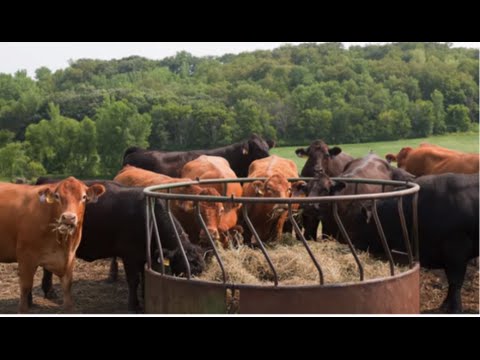
April Lu posted on 2016/11/03Ever wondered how animal agriculture impacts our planet? This video dives deep into Life Cycle Assessments and greenhouse gas emissions, explaining complex terms like enteric fermentation and CO2 equivalence. You'll boost your vocabulary and understanding of environmental science with this informative look at emissions intensity!
Learn this video on the APP!
The VoiceTube App has more in-depth practice for videos!