Vocabulary
- have to: Must do
- look at: To use your eyes to focus on something
- for instance: As an example.
- of course: Sure ; Certainly
- in the world: Used to emphasize a question expressing surprise, confusion, or disbelief.
- instead of: When one thing is replaced by another
- in fact: Used to emphasize the truth of a statement, especially one that contrasts with or contradicts something else.
- at home: In one's own residence or country.
- in general: Typically; usually; on the whole.
- used to: Did regularly before, but don't do now
- look for: To try to find a thing or person that is lost
- book on: A book about a particular subject.
- in effect: In reality; in practice; virtually
- at the same time: Simultaneously; at the identical moment.
- same time: Occurring simultaneously or at the same point in time.
- to let: Indicates that a property is available for rent.
- go on: To continue doing something
- at a time: Separately; one by one
- at least: As a minimum
- in the weeds: Overwhelmed by complexity or amount of work.
- with respect to: In relation to; regarding.
- courtesy of: Provided or permitted by (someone or something).
- as with: In the same way that something happens or is true of something else.
- physical things: Tangible objects that can be touched or seen; material items.
- turned out: To arrive for a public event or entertainment
- at work: Located at one's place of employment
- cut it out: Stop doing something annoying or disruptive.
- in any case: Whatever happens; regardless of what has happened or may happen.
- on the shelf: Located on a shelf.
- on the table: Located on the surface of a table.
- prior to: Before a particular time or event.
- catch up: To become equal with another person
- think about: To consider something carefully.
- halfway through: At or in the middle of a period of time or an activity.
- flip through: To look quickly through a book or magazine.
- breeze through: To succeed very easily in something.
- terrible at: Very bad or unskilled at something.
- look to: Be looking to. be planning to (do something)
- after all: In spite of what was expected; used to introduce a statement that supports a previous statement or explains why it was made
- out of order: Not in proper working condition; broken.
- with it: Intelligent, alert, and up-to-date.
- set up
- as well as: Also; in addition to
- just kind of: Used to express a feeling or state in a vague or hesitant way.
- by default: Automatically, unless the user specifies otherwise.
- from the outset: From the beginning of a process or event.
- failure rate: The percentage or proportion of something that fails.
- side note: A brief piece of additional information or a comment that is related to the main subject but is not essential to it.
- wake up: To stop sleeping
- speak of: To mention someone or something in conversation.
- pick out: To choose or select one item from many
- almost all of: Nearly the entire quantity or number of something.
- off to the races: Starting an activity or process quickly and with enthusiasm.
- with just: Using only; with no more than.
- old school: Traditional or old-fashioned in style, behavior, or attitude.
- on the floor: Located on the ground or bottom surface of a room.
- out there: In or to a place that is far away
- brush off: To ignore or dismiss something or someone.
- in terms of
- rather than: More exactly; more correctly
- second nature: A behavior that has become automatic or habitual.
- through with: Having had enough (of trouble); wanting to stop
- in person: Physically present; not by proxy or remotely.
- break down: To forcibly break, destroy or make collapse
- think of: To look on as (being something specific); consider
- connected with: Related to; associated with.
- work to do: Tasks or activities that need to be accomplished.
- as soon as: In a short time after (something happens)
- based on: To use something as the foundation or starting point for something else.
- for example: As an illustration or instance.
- in isolation: Separately from other people or things; alone.
- in particular: Specifically; especially.
- trouble in: Problems or difficulties existing within a specific place or situation.
- depending on: To rely on for support (financial or emotional)
- contrasted with: To be strikingly different from something else.
- lay out: To show or explain your plans carefully
- neurodegenerative diseases: Diseases characterized by the progressive degeneration and death of nerve cells in the brain and spinal cord.
- over the counter: Denoting a security traded directly between two parties, not on an exchange.
- on the internet: Located or available on the internet.
- phase in: To start using or doing things gradually
- book: (Police) to officially record someone's crimes
- learn: To get knowledge or skills by study or experience
- people: Persons sharing culture, country, background, etc.
- cooking: To heat food until it is ready to eat
- food: What people and animals eat to live
- lot: What happens to a person in life from chance; fate
- hour: 60 minutes
- fat: Amount beyond what is usual or necessary
- knife: Long piece of metal you use for cutting things
- language: Words or signs used to communicate messages
- body: The physical structure of a person or animal.
- time: Speed at which music is played; tempo
- cook: To heat food until it is ready to eat
- coffee: A brown drink made from roasted beans and water
- test: To be given a medical examination
- pretty: Being attractive to the eye in a simple way
- chef: Person whose job is to cook food in a restaurant
- steak: Thick slice of meat from animal or large fish
- side: To decide to agree with one point, not the other
- lose: To be unable to keep in check or control something
- high: Excited or relaxed from taking drugs
- call: A order or request for action
- guy: Man; boy; any person
- quickly: Without taking a lot of time; fast
- awesome: Great; wonderful; stupendous
- spend: To use money to pay for something
- oil: A liquid used for frying foods
- video: Recording capturing action with sound
- weight: How heavy something is
- instance: An example of something; case
- stuff: Generic description for things, materials, objects
- performance: Act of doing something
- progress: To move forward or toward a place or goal
- presentation: Act of giving a formal talk about something
- freezer: Electric refrigerator operating below zero degrees
- rate: To assess something or consider its qualities
- quit: To leave a job
- research: To study in order to discover new ideas and facts
- thought: To have an idea about something without certainty
- couple: To join something to something else
- olive: Person's name
- produce: Fresh foods such as fruits and vegetables
- apply: To spread a substance or liquid over a surface
- referee: Sports official who makes sure rules are followed
- muscle: Physical power
- loss: Friend, family, or other loved person's death
- code: To express information in a series of numbers
- aggressive: Using energy and determination to achieve a goal
- adopt: To legally take a child into your family
- sequence: Part of a movie showing one part of the story
- protein: Group of molecules made from amino acids
- fiber: Basic character and nature of a person
- simplify: To make something easier to do, use or understand
- rank: To rate or class things
- podcast: A digital recording (e.g. radio show) for download
- whatnot: Miscellaneous curios
- insulin: Substance in the body processing sugar into energy
- tango: Type of sexy ballroom dance from Argentina
- accelerated: To cause to occur earlier than expected
- sear: To use high heat to quickly burn the surface of
- nutrition: Scientific study of the effects of foods on health
- glycemic
- hormone: Chemical produced by the body to control functions
- reclaim: To get back something that was lost; recover
Get the full experience in the app
Learn anywhere with detailed sentence and usage analysis
01:03
She took a brave step forward, leaving behind her comfort zone to chase her dreams.
Vocabulary
- brave
adj. Having courage
- comfort zone
phr. A familiar situation where one feels safe
Explanation
a brave step is a noun phrase, where brave is an adjective modifying the noun step, meaning "a courageous step".
forward is an adverb modifying step, meaning "ahead".
The whole phrase serves as the object, answering the "what" of took (verb) — she took a brave step forward.
Get the full experience in the app
Look up words anytime with pronunciation, part of speech, and usage
brave
US/brev/
UK/breɪv/
adj.Brave
v.t.To bravely face
A2 Elementary
Get the full experience in the app
Practice speaking anytime and get instant pronunciation feedback
Try this speaking exercise.
Try practicing with this sentence.
80
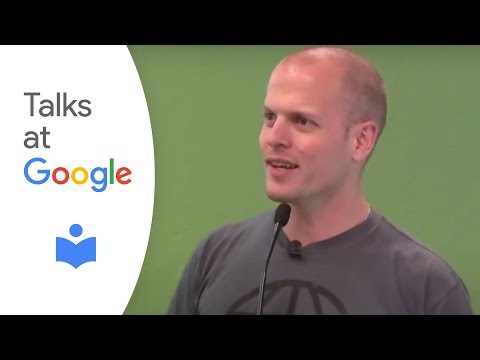
Tim Ferriss, "The Four-Hour Chef": Authors at Google
0
林挺裕高中部教師 posted on 2013/05/22Ever wondered how to master any skill, from cooking to coding? Tim Ferriss shares his fascinating approach to accelerated learning, using cooking as a unique 'dojo' to build manual literacy and overcome perceived limitations. You'll get a glimpse into his '4-Hour Chef' philosophy and discover how to test assumptions to achieve mastery in any field!
Learn this video on the APP!
The VoiceTube App has more in-depth practice for videos!