Vocabulary
- have to: Must do
- keep the peace: To maintain order and prevent conflict or disturbance.
- as well as: Also; in addition to
- at home: In one's own residence or country.
- thanks to: Because of; as a result of.
- in the world: Used to emphasize a question expressing surprise, confusion, or disbelief.
- at stake: At risk; that can be lost if something is not successful
- threat to: A person or thing likely to cause damage or danger.
- on behalf of: As the representative of someone
- stand for: To support a particular idea, e.g. in politics
- in school: Attending an educational institution.
- do in: To make completely tired out and exhausted
- reflect on: To think deeply or carefully about something.
- in fact: Used to emphasize the truth of a statement, especially one that contrasts with or contradicts something else.
- slip away: To leave a place quietly or secretly, often to avoid attention.
- think about: To consider something carefully.
- on earth: Used to emphasize a question expressing surprise or anger.
- in public: In a place where anyone can see or hear you.
- in the hands of: Under the control or responsibility of someone.
- do harm: To cause damage or injury.
- at least: As a minimum
- not surprisingly: In a way that is not unexpected or predictable.
- around the world: In or to many countries.
- in the face of: When confronted with something difficult or challenging.
- in the future: At a later time; in times to come.
- come after: To follow someone in order to threaten them
- draw in: To attract or entice someone or something.
- grow up: To develop from a child into an adult
- lead on: To encourage someone to believe something that is not true.
- at the outset: At the very beginning; from the start.
- in danger: Exposed to the risk of harm, injury, or loss.
- tough questions: Difficult or challenging questions that require careful consideration and honest answers.
- on the other hand : Considering a different aspect of the matter; alternatively.
- go it alone: To act or do something without help or partners.
- lead to: To result in some action
- for the foreseeable: Referring to a time period that can be predicted or expected in the near future.
- experience in: Knowledge or skill gained from doing something for a period of time.
- stir up: To cause trouble; incite unrest.
- together with: In addition to; along with.
- move to: To change the place where you live or work.
- force in: To enter a place by applying physical force.
- stand up against: To resist or oppose someone or something; to defend oneself against an attack or injustice.
- up against: Facing or contending with something difficult or challenging.
- contend with: To struggle or deal with something difficult.
- ramp up: To increase the level or amount of something sharply.
- coordinate with: To work together efficiently and harmoniously with someone or a group to achieve a common goal.
- take off: To remove, e.g. your clothes
- turn to: To go to someone for help, advice, or information.
- play out: To use up or exhaust
- work through: To deal with something systematically until it is completed
- for example: As an illustration or instance.
- order in: To request food from a restaurant to be delivered to one's home or other location.
- in mind: Being aware of or considering something.
- on to: Toward something; forward
- by example: Through demonstration or serving as a model.
- call on: To order or ask someone to do a specific activity
- despite the fact: In spite of; notwithstanding.
- no matter: Regardless of; it does not matter.
- act on: To have an effect on something.
- based on: To use something as the foundation or starting point for something else.
- in ways: In a manner or by methods that.
- cut off: To end a process, e.g. a phone call
- look at: To use your eyes to focus on something
- in favor of: Expressing support or approval for someone or something.
- at times: Sometimes; occasionally.
- apart from: Except for; not considering
- for the sake of: For the purpose of; in the interest of.
- people: Persons sharing culture, country, background, etc.
- effort: Amount of work used trying to do something
- applause: The sound made by clapping a performance or speech
- general: Widespread, normal or usual
- force: Group of persons trained for military action; army
- lead: Wire for electricity, computer, etc.; cable
- world: All the humans, events, activities on the earth
- effective: Working efficiently to produce a desired result
- point: An item to be discussed
- direct: To tell someone in a very clear way to do something
- security: Department in a company in charge of protection
- combat: To fight someone or something physically
- country: An area of land that is controlled by a government
- ignore: To not listen to, look at, or pay attention to
- human: A person; a man, woman or child
- military: Army or armed forces
- threat: Warning of probable trouble
- action: Something that a person or thing does
- economy: Using money, resources in a careful, effective way
- help: To act to enable a person to do something; assist
- support: To give assistance or advice to someone
- civil: Of citizens of a country; not military, criminal
- foreign: Being of a different place or country
- American: Person from the USA
- train: Line of people, animals moving the same direction
- history: Established pattern or record
- international: Of or relating to several countries
- graduate: Concerning a Masters or Ph.D. university courses
- terrorist: Radical who employs terror as a political weapon
- harm: To damage, injure, or hurt someone or something
- united: To join or come together for the same goal
- peace: Calm and quiet state
- war: Situation where armies fight each other
- global: Concerning, involving, affecting all of something
- commander: Person with authority who commands or controls
- diplomacy: Tactful handling of sensitive relationships
- armed: To activate a weapon or bomb for use
- leadership: Quality of being able to guide or influence others
Get the full experience in the app
Learn anywhere with detailed sentence and usage analysis
01:03
She took a brave step forward, leaving behind her comfort zone to chase her dreams.
Vocabulary
- brave
adj. Having courage
- comfort zone
phr. A familiar situation where one feels safe
Explanation
a brave step is a noun phrase, where brave is an adjective modifying the noun step, meaning "a courageous step".
forward is an adverb modifying step, meaning "ahead".
The whole phrase serves as the object, answering the "what" of took (verb) — she took a brave step forward.
Get the full experience in the app
Look up words anytime with pronunciation, part of speech, and usage
brave
US/brev/
UK/breɪv/
adj.Brave
v.t.To bravely face
A2 Elementary
Get the full experience in the app
Practice speaking anytime and get instant pronunciation feedback
Try this speaking exercise.
Try practicing with this sentence.
80
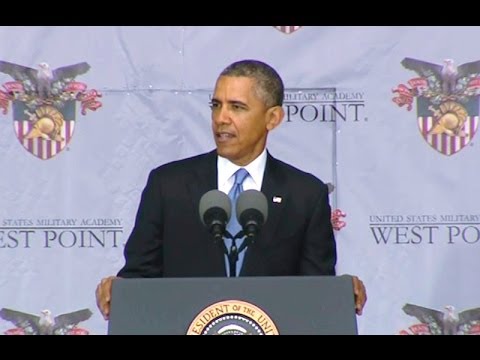
President Obama Speaks to West Point Graduates
0
倪文璞 posted on 2016/08/22President Obama delivers a powerful speech to West Point graduates, reflecting on America's role in a changing world and the challenges ahead. You'll hear insightful commentary on global leadership, international relations, and the importance of service, picking up key phrases for discussing complex geopolitical topics.
Learn this video on the APP!
The VoiceTube App has more in-depth practice for videos!