
absolutely
US /ˈæbsəˌlutli, ˌæbsəˈlutli/
UK /ˈæbsəlu:tli/
- Adverb
- Completely; totally; very
- Considered independently and without relation to other things; viewed abstractly; as, quantity absolutely considered.
A2Morealgebra
US /ˈældʒəbrə/
UK /ˈældʒɪbrə/
- Uncountable Noun
- Math using letters or symbols in place of numbers
C1Moreanalysis
US /əˈnælɪsɪs/
UK /əˈnæləsɪs/
- Uncountable Noun
- Careful study to better understand something
B1TOEICMorebother
US /ˈbɑðɚ/
UK /'bɒðə(r)/
- Transitive Verb
- To cause problems, concerns or worry for someone
- To take the trouble to do something
- Noun (Countable/Uncountable)
- Problems, concern or worry for someone
- A disturbance; trouble
A2TOEICMorebreak down
US /brek daʊn/
UK /breik daun/
- Phrasal Verb
- To forcibly break, destroy or make collapse
- (Machine) to stop working or become weaker
A1Morebreak me down
US
UK
- Phrasal Verb
- To cause someone to lose emotional strength; to make someone feel overwhelmed or defeated.
- To cause physical exhaustion or weakness.
A1Morecompensate
US /ˈkɑ:mpenseɪt/
UK /ˈkɒmpenseɪt/
- Transitive Verb
- To give (money) to as a form of correcting a loss
- To reduce or counteract (something unwelcome or unpleasant); offset.
A2Morecomplex
US /kəmˈplɛks, ˈkɑmˌplɛks/
UK /'kɒmpleks/
- Countable Noun
- Group of buildings all used for the same purpose
- Adjective
- Not being simple; having many parts or aspects
A2Moredamage
US /ˈdæmɪdʒ/
UK /ˈdæmɪdʒ/
- Noun (Countable/Uncountable)
- Physical harm that is done to something
- Transitive Verb
- To harm physically; to hurt or break something
- To harm the reputation of someone.
A2TOEICMoredepth
US /dɛpθ/
UK /depθ/
- Noun
- Distance below a surface
A2Moredestroy
US /dɪˈstrɔɪ/
UK /dɪ'strɔɪ/
- Transitive Verb
- To damage so badly that something no longer exists
- To defeat someone or something easily
A2TOEICMoredispute
US /dɪˈspjut/
UK /dɪ'spju:t/
- Verb (Transitive/Intransitive)
- To argue with someone about something
- To disagree about who owns or controls something
- Noun (Countable/Uncountable)
- Argument with someone about something
- A question or doubt about something
B1TOEICMoredivide
US /dɪˈvaɪd/
UK /dɪ'vaɪd/
- Verb (Transitive/Intransitive)
- To split numbers by another number, e.g. 6 / 2 = 3
- To separate something into equal pieces
- Noun
- A separation or distinction.
A2TOEICMorefix
US /fɪks/
UK /fɪks/
- Noun
- Answer to a problem
- Transitive Verb
- To arrange or prepare something
- To attach something so it will not move or change
A2TOEICMorefor example
US
UK
- Phrase
- As an illustration or instance.
give up
US /ɡɪv ʌp/
UK /ɡiv ʌp/
- Phrasal Verb
- To lose hope or admit defeat
- To decide to not start to try solving a problem
- Verb Phrase
- to surrender an item; hand over an item
A1Moregloomy
US /ˈɡlumi/
UK /'ɡlu:mɪ/
- Adjective
- (E.g. of a room) dark; dim; poorly lit
- Feeling distressed or pessimistic.
B1Morein depth
US /ɪn dɛpθ/
UK /in depθ/
- Adverb
- Thoroughly and carefully; in detail.
linear
US /ˈlɪniər/
UK /ˈlɪniə(r)/
- Adjective
- Made of lines
- Series of progressing from one stage to another
B1Morelock horns
US /lɑk hɔrnz/
UK /lɒk hɔ:nz/
- other
- To engage in an argument or conflict with someone.
C1Morelook at
US /lʊk æt/
UK /luk æt/
- Phrasal Verb
- To use your eyes to focus on something
- To focus your eyes on something carefully
A1Moremention
US /ˈmɛnʃən/
UK /'menʃn/
- Transitive Verb
- To refer to or talk or write about something
- Uncountable Noun
- Act of referring to or talking about something
- A formal acknowledgement of something
A2TOEICMorephrasal
US
UK
- Adjective
- Concerning or consisting of a phrase
B1Moreresolve
US /rɪˈzɑlv/
UK /rɪ'zɒlv/
- Verb (Transitive/Intransitive)
- To make a decision to do something
- To find an answer, solution to a problem/ question
- Uncountable Noun
- Firm determination to do something.
B1TOEICMoreruin
US /ˈruɪn/
UK /'ru:ɪn/
- Transitive Verb
- To damage or completely destroy something
- To cause someone to lose their money or status
- Noun (Countable/Uncountable)
- Remains of a building that has been destroyed
- The state of being destroyed or severely damaged.
B1Moreseparate
US /'sepəreɪt/
UK /'sepəreɪt/
- Adjective
- Being different from or unrelated to another
- Not connected; different.
- Transitive Verb
- To divide two things by being in between them
- To move things away from each other
A2TOEICMoresolve
US /sɑ:lv/
UK /sɒlv/
- Transitive Verb
- To figure out a way to handle a difficult problem
A2TOEICMoretask
US /tæsk/
UK /tɑ:sk/
- Noun (Countable/Uncountable)
- Big or small piece of work someone has to do
- Transitive Verb
- To be given something to do, e.g. wash dishes
A2TOEICMoretemporary
US /'tempəreri/
UK /ˈtemprəri/
- Adjective
- Continuing for a limited time; not permanent
- Noun
- A temporary worker.
A2TOEICMoreterrorist
US /ˈtɛrərɪst/
UK /ˈterərɪst/
- Noun (Countable/Uncountable)
- Radical who employs terror as a political weapon
- Adjective
- Relating to or characteristic of terrorism or terrorists.
A2Moreunable
US /ʌnˈebəl/
UK /ʌnˈeɪbl/
- Adjective
- Not being able to do something
B1TOEICMore
Vocabulary
- break down: To forcibly break, destroy or make collapse
- for example: As an illustration or instance.
- in depth: Thoroughly and carefully; in detail.
- give up: To lose hope or admit defeat
- look at: To use your eyes to focus on something
- break me down: To cause someone to lose emotional strength; to make someone feel overwhelmed or defeated.
- lock horns: To engage in an argument or conflict with someone.
- absolutely: Completely; totally; very
- break: To create a new record e.g. running the 100m dash
- force: Group of persons trained for military action; army
- task: Big or small piece of work someone has to do
- good: Proper, appropriate or right
- ruin: To damage or completely destroy something
- complex: Group of buildings all used for the same purpose
- moment: Very short or brief period of time
- separate: Being different from or unrelated to another
- give: Degree of flexibility in something, a material
- English: Language of the UK, USA, Nigeria and elsewhere
- divide: To split numbers by another number, e.g. 6 / 2 = 3
- mention: To refer to or talk or write about something
- problem: Something difficult to deal with or causes trouble
- secret: Kept hidden from others; Known only to a few people
- today: This day; day that is happening now
- verb: Word that expresses an action or state
- depth: Distance below a surface
- bother: To cause problems, concerns or worry for someone
- lesson: Something done to learn or teach something; class
- meaning: To express a particular idea or thought
- promise: To say you will certainly do something
- quick: Using very little time; moving far in little time
- solve: To figure out a way to handle a difficult problem
- fix: Answer to a problem
- service: Work that a person does to assist others
- destroy: To damage so badly that something no longer exists
- temporary: Continuing for a limited time; not permanent
- dispute: To argue with someone about something
- damage: Physical harm that is done to something
- compensate: To give (money) to as a form of correcting a loss
- analysis: Careful study to better understand something
- terrorist: Radical who employs terror as a political weapon
- algebra: Math using letters or symbols in place of numbers
- resolve: To make a decision to do something
- phrasal: Concerning or consisting of a phrase
- gloomy: (E.g. of a room) dark; dim; poorly lit
- unable: Not being able to do something
- linear: Made of lines
Get the full experience in the app
Learn anywhere with detailed sentence and usage analysis
01:03
She took a brave step forward, leaving behind her comfort zone to chase her dreams.
Vocabulary
- brave
adj. Having courage
- comfort zone
phr. A familiar situation where one feels safe
Explanation
a brave step is a noun phrase, where brave is an adjective modifying the noun step, meaning "a courageous step".
forward is an adverb modifying step, meaning "ahead".
The whole phrase serves as the object, answering the "what" of took (verb) — she took a brave step forward.
Get the full experience in the app
Look up words anytime with pronunciation, part of speech, and usage
brave
US/brev/
UK/breɪv/
adj.Brave
v.t.To bravely face
A2 Elementary
Get the full experience in the app
Practice speaking anytime and get instant pronunciation feedback
Try this speaking exercise.
Try practicing with this sentence.
80
0
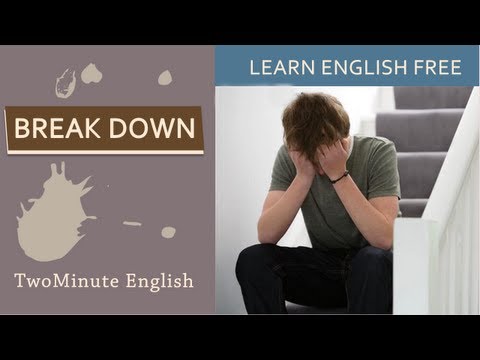
Jjli Li posted on 2016/07/22Ever wondered what 'break down' really means? This super quick lesson breaks down all the practical ways to use this common phrasal verb, from your car to your feelings! You'll pick up essential vocabulary and everyday phrases that will boost your English confidence in no time.
Learn this video on the APP!
The VoiceTube App has more in-depth practice for videos!