
after all
US /ˈæftɚ ɔl/
UK /ˈɑ:ftə ɔ:l/
- Adverb
- In spite of what was expected; used to introduce a statement that supports a previous statement or explains why it was made
- Considering everything; used to indicate that something is happening or is true despite some difficulty or obstacle
- Phrase
- Despite what was expected or thought; in spite of everything.
- Taking everything into consideration; considering that.
B1Morealgorithm
US /ˈælɡəˌrɪðəm/
UK /'ælɡərɪðəm/
- Noun
- A step-by-step problem-solving feature
B2Moreallow for
US
UK
- Verb (Transitive/Intransitive)
- To take into consideration
A1Moreas one
US
UK
- Adverb
- Acting or moving together at the same time.
- In complete agreement or unity.
- Phrase
- With a single voice or opinion; unanimously.
- In perfect harmony or unison.
A1Moreas per
US
UK
- Preposition
- According to; in accordance with.
- As specified by; in the manner of.
A2Moreat a time
US /æt e taɪm/
UK /æt ə taim/
- Phrase
- Separately; one by one
- Simultaneously; together
A1Moreat last
US /æt læst/
UK /æt lɑ:st/
- Adverb
- Finally; after a long delay.
B1Moreat least
US /æt list/
UK /æt li:st/
- Adverb
- As a minimum
- Not less than
- Phrase
- No less than; at the minimum
- Used to indicate that something is positive in a bad situation.
C2Moreat some point
US /æt sʌm pɔɪnt/
UK /æt sʌm pɔint/
- Phrase
- At an unspecified time, usually in the future.
A1Moreat the end of the day
US
UK
- Phrase
- Ultimately; when everything else is considered.
- After a day's work or activities.
A1Moreback then
US
UK
- Phrase
- At that time in the past.
A1Moreback up
US /bæk ʌp/
UK /bæk ʌp/
- Phrasal Verb
- To save a copy of your computer data
- To confirm the truth of what someone says
A1Morebang on
US /bæŋ ɑn/
UK /bæŋ ɔn/
- Phrase
- Exactly (used with numbers, time, for emphasis)
- Phrasal Verb
- To keep talking so it becomes annoying
A2Morebased on
US
UK
- Phrasal Verb
- To use something as the foundation or starting point for something else.
- Preposition
- Using something as the main idea or foundation.
- Relying on something as evidence or justification.
A1Morebefore long
US /bɪˈfɔr lɔŋ/
UK /biˈfɔ: lɔŋ/
- Phrase
- Soon; in a short time.
A1Moreby contrast
US /baɪ ˈkɑntræst/
UK /bai ˈkɔntræst/
- Phrase
- Used to introduce an idea or situation that is very different from one you have just mentioned.
B2Morecampus
US /ˈkæmpəs/
UK /'kæmpəs/
- Noun (plural)
- Grounds of an institution, e.g. a university
- Noun
- The grounds and buildings of a university or college.
- The grounds of a college or school.
B1Morechip away
US /tʃɪp əˈwe/
UK /tʃip əˈwei/
- Phrasal Verb
- To gradually make something weaker or smaller.
- To remove small pieces of something by hitting it with a tool.
A2Morecode
US /kod/
UK /kəʊd/
- Transitive Verb
- To express information in a series of numbers
- To write a secret message using secret symbols
- Noun
- A password made of a set of letters or numbers
- Set of rules for behavior
A2Morecolumn
US /ˈkɑ:ləm/
UK /ˈkɒləm/
- Noun (Countable/Uncountable)
- Regular series of articles in a newspaper/magazine
- Strong vertical stone pillar that holds up a roof
B1Morecome back
US /kʌm bæk/
UK /kʌm bæk/
- Phrasal Verb
- To reply to someone, often forcefully
- To be remembered
A1Morecome up
US /kʌm ʌp/
UK /kʌm ʌp/
- Phrasal Verb
- To come closer to someone; approach
- (Of sun) to rise into the sky in the morning
A1Morecome up with
US /kʌm ʌp wɪð/
UK /kʌm ʌp wið/
- Phrasal Verb
- To think of an idea or solution; produce
A1Morecontrary to
US /ˈkɑnˌtrɛri tu/
UK /ˈkɔntrəri tu:/
- Preposition
- In opposition to; against.
- Differing from; not in agreement with.
A1Morecount
US /kaʊnt/
UK /kaʊnt/
- Verb (Transitive/Intransitive)
- To add things together to find the total number
- To matter or be important
- Countable Noun
- Number of things added together, e.g. votes
- With the number of crimes, knockouts, as stated
A2Morecount in
US /kaʊnt ɪn/
UK /kaunt in/
- Phrasal Verb
- To include someone in an activity or plan.
B1Morecount up
US /kaʊnt ʌp/
UK /kaunt ʌp/
- Phrasal Verb
- To add numbers together to find a total; to increase gradually.
B1Morecrank up
US
UK
- Phrasal Verb
- To increase the level of something, such as sound or intensity.
- To start or initiate something, often with energy or enthusiasm.
A1Moredelight in
US
UK
- Phrasal Verb
- To take great pleasure in something.
depending on
US
UK
- Phrasal Verb
- To rely on for support (financial or emotional)
- Influenced or determined by.
- Preposition
- Subject to; contingent on
- Relying on someone or something for support or assistance.
A2Moredig into
US
UK
- Phrasal Verb
- To start eating food enthusiastically.
- To investigate or research something thoroughly.
B1Moredot
US /dɑt/
UK /dɒt/
- Transitive Verb
- To place small amounts/things in various places
- To mark something by placing a small, round spot
- Noun
- Small round mark
B1TOEICMorefeel like
US
UK
- Intransitive Verb
- To have a desire or inclination for something.
- To have a particular quality or sensation; resemble.
A1Morefigure out
US /ˈfɪɡjɚ aʊt/
UK /ˈfiɡə aut/
- Phrasal Verb
- To understand the behavior of someone
- To think through logically to find a solution
- Verb (Transitive/Intransitive)
- To understand or find an answer to something.
- To find a solution to a problem or understand something.
A1Morefinal project
US
UK
- Noun (Countable/Uncountable)
- A culminating academic assignment, often involving research or creative work.
- The last or concluding undertaking in a series of tasks or developments.
A2Morefor instance
US /fɔr ˈɪnstəns/
UK /fɔ: ˈinstəns/
- Adverb
- As an example.
- Phrase
- As an example.
- As an illustration or case in point
B1Morefor now
US /fɔr naʊ/
UK /fɔ: nau/
- Phrase
- Temporarily; for the present time.
- In the short term; for the immediate future.
A1Morego ahead
US /ɡo əˈhɛd/
UK /ɡəu əˈhed/
- Phrasal Verb
- To start an activity; start doing, working etc.
- To give permission to do something
- Intransitive Verb
- To start or proceed with something
- To proceed despite potential obstacles or doubts.
A1Moregot to
US /ɡɑt tu/
UK /gɔt tu:/
- Verb (Transitive/Intransitive)
- To arrive at some place
- To have the opportunity or permission to do something
- Phrasal Verb
- To appeal to the emotions of; move
- To finally begin to start something after a delay
A1Morehave to
US /hæv tu/
UK /ˈhæv tə/
- Auxiliary Verb
- Must do
A1Morein addition to
US /ɪn əˈdɪʃən tu/
UK /in əˈdiʃən tu:/
- Preposition
- Besides; as well as
- Phrase
- Besides; as well as.
- Furthermore; moreover.
B1Morein advance
US /ɪn ædˈvæns/
UK /in ədˈvɑ:ns/
- Phrase
- Ahead of time; before something happens
- Noun
- A payment made before it is due, especially for work to be done
A2Morein different ways
US
UK
- Phrase
- Using various methods or approaches; with variety.
- In varying manners or styles; not uniformly.
A1Morein fact
US /ɪn fækt/
UK /in fækt/
- Adverb
- Used to emphasize the truth of a statement, especially one that contrasts with or contradicts something else.
- Used to introduce a more detailed or surprising piece of information.
- Phrase
- Used to emphasize the truth of a statement, especially one that is surprising or contrary to what might be expected.
C1Morein general
US /ɪn ˈdʒɛnərəl/
UK /in ˈdʒenərəl/
- Phrase
- Typically; usually; on the whole.
- Not specific or detailed; broadly.
- Adjective
- Not detailed or specific; overall.
C2Morein half
US /ɪn hæf/
UK /in hɑ:f/
- Adverb
- Divided into two equal parts.
- Partially; to some extent.
A1Morein mind
US /ɪn maɪnd/
UK /in maind/
- Phrase
- Being aware of or considering something.
- To remember or consider something.
A2Morein other words
US
UK
- Phrase
- Stating something in a different way, often to make it clearer or more understandable.
in reality
US /ɪn riˈælɪti/
UK /in riˈæliti/
- Phrase
- Actually; in fact; truly.
B2Morein sight
US /ɪn saɪt/
UK /in sait/
- Phrase
- Visible; able to be seen.
- Near to being achieved; imminent.
in store
US /ɪn stɔr/
UK /in stɔ:/
- Idiom
- About to happen in the future
A2Morein terms of
US
UK
- Phrase
- With regard to; concerning a particular aspect.
A1Morein the future
US /ɪn ði ˈfjutʃɚ/
UK /in ðə ˈfju:tʃə/
- Phrase
- At a later time; in times to come.
A1Morein the house
US
UK
- Phrase
- Located inside a building used as a dwelling.
- Within a legislative body, such as a parliament or congress.
A1Moreinside of
US /ɪnˈsaɪd ʌv/
UK /inˈsaid ɔv/
- Preposition
- Within; in the inner part of.
- Within a certain period of time.
A1Moreinstead of
US /ɪnˈstɛd ʌv/
UK /inˈsted ɔv/
- Preposition
- When one thing is replaced by another
- Adverb
- As a substitute or alternative.
A1Morejust kind of
US
UK
- Phrase
- Used to express a feeling or state in a vague or hesitant way.
- Used to indicate something is approximately or generally similar to something else.
A2Morelay ahead
US
UK
- Phrasal Verb
- To be going to happen in the future.
B1Moreleft standing
US
UK
- Adjective
- Remaining erect or in existence after others have fallen or been removed.
- Unresolved or not dealt with.
A2Morelend a hand
US /lɛnd e hænd/
UK /lend ə hænd/
- Idiom
- To give assistance; to help someone.
light on
US /laɪt ɑn/
UK /lait ɔn/
- Phrasal Verb
- To illuminate something.
- To discover something unexpectedly.
- Adjective
- Gentle or delicate in the use of something.
A1Morelook at
US /lʊk æt/
UK /luk æt/
- Phrasal Verb
- To use your eyes to focus on something
- To focus your eyes on something carefully
A1Morelook for
US /lʊk fɔr/
UK /luk fɔ:/
- Phrasal Verb
- To try to find a thing or person that is lost
- To expect or anticipate something.
A1Moremove into
US /muv ˈɪntu/
UK /mu:v ˈɪntuː/
- Phrasal Verb
- To start living in a new house or building
- To start being involved in a new area of business or activity.
move on
US /muv ɑn/
UK /mu:v ɔn/
- Phrasal Verb
- To decide to change or go to a different place
- To start talking about something different.
A1Morenot surprisingly
US
UK
- Phrase
- In a way that is not unexpected or predictable.
B1Morenumber of people
US /ˈnʌmbɚ ʌv ˈpipəl/
UK /ˈnʌmbə ɔv ˈpi:pl/
- Phrase
- The total count of individuals within a group or gathering.
- A statistical figure representing the population size or a subset thereof.
A1Moreof interest
US /əv ˈɪntrɪst/
UK /əv ˈɪntrəst/
- other
- Relevant or important to someone or something.
B2Moreof itself
US /ʌv ɪtˈself/
UK /əv ɪtˈself/
- other
- Happening automatically without external cause or help.
B1Moreof ours
US /ʌv ˈaʊɚz/
UK /əv ˈaʊəz/
- other
- Belonging to us; associated with us.
A2Moreof sorts
US
UK
- Phrase
- Of a kind, but not a very good one.
- Used to describe something when you cannot be more precise.
A1Moreoff of
US /ɔf ʌv/
UK /ɔf ɔv/
- Preposition
- From a position on something; down from.
A1Moreon and off
US /ɑn ənd ɔf/
UK /ɔn ænd ɔf/
- Adverb
- Intermittently; not continuously.
- Adjective
- Characterized by periods of involvement and separation.
A1Moreon camera
US /ɑn ˈkæmərə/
UK /ɔn ˈkæmərə/
- Adverb
- While being filmed or recorded.
- Adjective
- Having qualities that make one appear good or effective when filmed.
A1Moreon the back of
US /ɑn ðə bæk əv/
UK /ɒn ðə bæk əv/
- other
- As a result of or following something.
B2Moreon the internet
US
UK
- Phrase
- Located or available on the internet.
- Using the internet as a medium or platform.
A1Moreon to
US /ɑn tu/
UK /ɔn tu:/
- Preposition
- Toward something; forward
- Aware of someone's activities.
- Adjective
- Aware of someone's deception or illegal activities.
A1Moreonce upon a time
US /wʌns əˈpɑn e taɪm/
UK /wʌns əˈpɔn ə taim/
- Phrase
- A conventional phrase used to begin fairy tales and other stories.
B1Morepage in
US /peɪʤ ɪn/
UK /peɪʤ ɪn/
- other
- Contact someone by pager urgently.
C1Morepair off
US /pɛr ɔf/
UK /pɛə ɔf/
- Phrasal Verb
- To form pairs or couples.
- To arrange people or things in pairs.
A2Morephone book
US
UK
- Noun (Countable/Uncountable)
- A book containing an alphabetical list of telephone subscribers in a particular area, with their telephone numbers.
A1Moreplug in
US /plʌɡ ɪn/
UK /plʌɡ in/
- Phrase
B1Morepoint at
US
UK
- Phrasal Verb
- To aim (gun, etc.) at someone or something
A1Morerather than
US
UK
- Adverb
- More exactly; more correctly
- Preferably; instead
- Preposition
- Instead of
A1Morereduce to
US /rɪˈdus tu/
UK /riˈdju:s tu:/
- Phrasal Verb
- To simplify or condense something.
- To bring someone to a lower or worse state or condition.
B1Morerepresent
US /ˌrɛprɪˈzɛnt/
UK /ˌreprɪ'zent/
- Transitive Verb
- To depict art objects, figures, scenes; to portray
- To show or describe something in a particular way
A2TOEICMorerun by
US
UK
- Phrasal Verb
- To be managed or controlled by someone or a group.
- To show or tell something to someone briefly to get their opinion or approval.
A1Moresit down
US /sit daʊn/
UK /sit daun/
- Phrasal Verb
- To take a seat
A1Morespell out
US /spɛl aʊt/
UK /spel aut/
- Phrasal Verb
- To explain something in a very clear and detailed way.
- To say or write the letters of a word in the correct order.
- Transitive Verb
- To say or write the letters of a word one by one.
A2Moretake a bow
US /tek e bo/
UK /teik ə bəu/
- Intransitive Verb
- To bend your head or body forward as a sign of respect or thanks to an audience.
A2Moretake on
US /tek ɑn/
UK /teik ɔn/
- Phrasal Verb
- To acquire a new characteristic
- To accept a new responsibility, role
A1Moretear at
US /tɛr æt/
UK /teə ət/
- other
- To cause intense emotional pain or distress.
B2Morethanks to
US /θæŋks tu/
UK /θæŋks tu:/
- Preposition
- Because of; as a result of.
A1Morethe following
US
UK
- Adjective
- Next in order or sequence.
- Uncountable Noun
- What is about to be said or written.
B1Morethink about
US /θɪŋk əˈbaʊt/
UK /θiŋk əˈbaut/
- Phrasal Verb
- To consider something carefully.
- To remember or call to mind.
A1Moreto let
US /tu lɛt/
UK /tu let/
- Preposition
- Indicates that a property is available for rent.
A2Moreto the left
US
UK
- Phrase
- In or toward the left direction.
- Situated on the left side of.
turn off
US
UK
- Phrasal Verb
- To make someone feel negatively about something
A1Moreup top
US
UK
- Adverb
- In or at the highest position or location.
- Interjection
- A gesture involving raising a hand for a high-five, often used as a greeting or congratulatory signal.
B2Moreupon a time
US
UK
- Phrase
- An introductory phrase used to begin a story, typically a fairy tale.
A1Moreused to
US /juzd tu/
UK /ˈju:st tə/
- Adjective
- Did regularly before, but don't do now
- Auxiliary Verb
- Have done before, but do not do now
A1Morewarm up
US /wɔːrm ʌp/
UK
- Phrasal Verb
- To gently exercise muscles before doing sport
A1Morewith it
US /wɪð ɪt/
UK /wið it/
- Adjective
- Intelligent, alert, and up-to-date.
- Understanding and knowledgeable about current trends or information.
A1Morewith just
US
UK
- Phrase
- Using only; with no more than.
- Barely; by a narrow margin.
A2Morework on
US /wɚk ɑn/
UK /wə:k ɔn/
- Phrasal Verb
- To devote effort to improve or develop something
- To try to persuade or influence someone.
A1Morezoom out
US /zum aʊt/
UK /zu:m aut/
- Phrasal Verb
- To decrease the magnification of an image, showing more of the scene.
- To take a broader perspective; to consider the overall context.
Vocabulary
- phone book: A book containing an alphabetical list of telephone subscribers in a particular area, with their telephone numbers.
- go ahead: To start an activity; start doing, working etc.
- in fact: Used to emphasize the truth of a statement, especially one that contrasts with or contradicts something else.
- number of people: The total count of individuals within a group or gathering.
- at the end of the day: Ultimately; when everything else is considered.
- for instance: As an example.
- take on: To acquire a new characteristic
- have to: Must do
- at least: As a minimum
- for now: Temporarily; for the present time.
- in half: Divided into two equal parts.
- at a time: Separately; one by one
- inside of: Within; in the inner part of.
- count up: To add numbers together to find a total; to increase gradually.
- come back: To reply to someone, often forcefully
- before long: Soon; in a short time.
- think about: To consider something carefully.
- on and off: Intermittently; not continuously.
- rather than: More exactly; more correctly
- come up: To come closer to someone; approach
- figure out: To understand the behavior of someone
- based on: To use something as the foundation or starting point for something else.
- on to: Toward something; forward
- move on: To decide to change or go to a different place
- of ours: Belonging to us; associated with us.
- with it: Intelligent, alert, and up-to-date.
- look for: To try to find a thing or person that is lost
- count in: To include someone in an activity or plan.
- sit down: To take a seat
- in other words: Stating something in a different way, often to make it clearer or more understandable.
- of sorts: Of a kind, but not a very good one.
- in the future: At a later time; in times to come.
- final project: A culminating academic assignment, often involving research or creative work.
- in terms of
- in mind: Being aware of or considering something.
- contrary to: In opposition to; against.
- chip away: To gradually make something weaker or smaller.
- reduce to: To simplify or condense something.
- not surprisingly: In a way that is not unexpected or predictable.
- light on: To illuminate something.
- come up with: To think of an idea or solution; produce
- on camera: While being filmed or recorded.
- on the internet: Located or available on the internet.
- on the back of: As a result of or following something.
- spell out: To explain something in a very clear and detailed way.
- to let: Indicates that a property is available for rent.
- back up: To save a copy of your computer data
- take a bow: To bend your head or body forward as a sign of respect or thanks to an audience.
- as one: Acting or moving together at the same time.
- at last: Finally; after a long delay.
- in store: About to happen in the future
- back then: At that time in the past.
- used to: Did regularly before, but don't do now
- work on: To devote effort to improve or develop something
- once upon a time: A conventional phrase used to begin fairy tales and other stories.
- upon a time: An introductory phrase used to begin a story, typically a fairy tale.
- in reality: Actually; in fact; truly.
- with just: Using only; with no more than.
- in different ways: Using various methods or approaches; with variety.
- page in: Contact someone by pager urgently.
- move into: To start living in a new house or building
- just kind of: Used to express a feeling or state in a vague or hesitant way.
- look at: To use your eyes to focus on something
- of itself: Happening automatically without external cause or help.
- point at: To aim (gun, etc.) at someone or something
- after all: In spite of what was expected; used to introduce a statement that supports a previous statement or explains why it was made
- bang on: Exactly (used with numbers, time, for emphasis)
- instead of: When one thing is replaced by another
- pair off: To form pairs or couples.
- up top: In or at the highest position or location.
- lend a hand: To give assistance; to help someone.
- got to: To arrive at some place
- depending on: To rely on for support (financial or emotional)
- left standing: Remaining erect or in existence after others have fallen or been removed.
- thanks to: Because of; as a result of.
- the following: Next in order or sequence.
- turn off
- crank up: To increase the level of something, such as sound or intensity.
- zoom out: To decrease the magnification of an image, showing more of the scene.
- of interest: Relevant or important to someone or something.
- at some point: At an unspecified time, usually in the future.
- dig into: To start eating food enthusiastically.
- in general: Typically; usually; on the whole.
- feel like: To have a desire or inclination for something.
- in addition to: Besides; as well as
- warm up: To gently exercise muscles before doing sport
- as per: According to; in accordance with.
- by contrast: Used to introduce an idea or situation that is very different from one you have just mentioned.
- plug in
- off of: From a position on something; down from.
- in the house: Located inside a building used as a dwelling.
- in advance: Ahead of time; before something happens
- lay ahead: To be going to happen in the future.
- allow for: To take into consideration
- in sight: Visible; able to be seen.
- delight in: To take great pleasure in something.
- run by: To be managed or controlled by someone or a group.
- to the left: In or toward the left direction.
- tear at: To cause intense emotional pain or distress.
- people: Persons sharing culture, country, background, etc.
- count: To add things together to find the total number
- language: Words or signs used to communicate messages
- represent: To depict art objects, figures, scenes; to portray
- line: Border that divides two places or regions
- problem: Something difficult to deal with or causes trouble
- number: Symbols such as 1, 2, 56, 793
- year: Unit of time equal to 12 months or 365 or 366 days
- column: Regular series of articles in a newspaper/magazine
- algorithm: A step-by-step problem-solving feature
- code: To express information in a series of numbers
- book: (Police) to officially record someone's crimes
- dot: To place small amounts/things in various places
- campus: Grounds of an institution, e.g. a university
- student: Person studying at school
Get the full experience in the app
Learn anywhere with detailed sentence and usage analysis
01:03
She took a brave step forward, leaving behind her comfort zone to chase her dreams.
Vocabulary
- brave
adj. Having courage
- comfort zone
phr. A familiar situation where one feels safe
Explanation
a brave step is a noun phrase, where brave is an adjective modifying the noun step, meaning "a courageous step".
forward is an adverb modifying step, meaning "ahead".
The whole phrase serves as the object, answering the "what" of took (verb) — she took a brave step forward.
Get the full experience in the app
Look up words anytime with pronunciation, part of speech, and usage
brave
US/brev/
UK/breɪv/
adj.Brave
v.t.To bravely face
A2 Elementary
Get the full experience in the app
Practice speaking anytime and get instant pronunciation feedback
Try this speaking exercise.
Try practicing with this sentence.
80
0
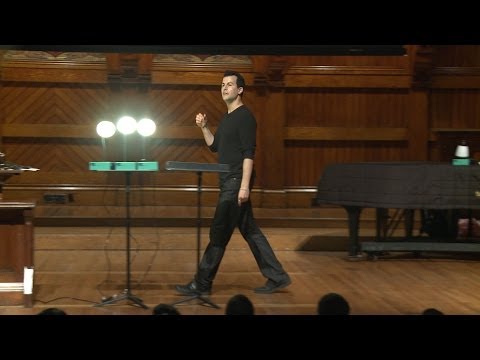
Geng posted on 2016/07/08Ever wondered how computers talk to each other? This video dives into the fascinating world of binary numbers and algorithms, perfect for beginners wanting to understand the basics of computer science from Harvard's CS50! You'll pick up essential vocabulary and see live demos that make complex ideas super clear.
Learn this video on the APP!
The VoiceTube App has more in-depth practice for videos!