
access
US /ˈæksɛs/
UK /'ækses/
- Noun (Countable/Uncountable)
- Way to enter a place, e.g. a station or stadium
- The opportunity or right to use something or to see someone.
- Transitive Verb
- To be able to use or have permission to use
A2TOEICMoreat home
US /æt hom/
UK /æt həum/
- Phrase
- In one's own residence or country.
- Adjective
- Feeling comfortable and relaxed.
at sea
US /æt si/
UK /æt si:/
- Phrase
- Adjective
- Confused; not knowing what to do.
A1Morebreak with
US /brek wɪð/
UK /breik wið/
- Phrasal Verb
- To end a relationship or association.
- To publicly disagree with or separate from a group or organization.
A2Moreby now
US /baɪ naʊ/
UK /bai nau/
- Phrase
- At the present time or already; before the present.
A2Morecontinent
US /ˈkɑntənənt/
UK /ˈkɒntɪnənt/
- Noun (Countable/Uncountable)
- Very large piece of land, e.g. Africa or Asia
- Adjective
- Able to control excretory functions (bowel and bladder).
B1Moredeal with
US /dil wɪð/
UK /di:l wið/
- Verb (Transitive/Intransitive)
- To buy or sell goods or services.
- Phrasal Verb
- To take action to solve a problem or manage a situation.
- To be about; concern.
A1Moreeconomic
US /ˌɛkəˈnɑmɪk, ˌikə-/
UK /ˌi:kəˈnɒmɪk/
- Adjective
- Concerning trade, industry, and money
- Financially worthwhile; profitable.
- Noun
- A system relating to economics
- A factor relating to economics
A2Moreforget about
US /fɚˈɡɛt əˈbaʊt/
UK /fəˈɡet əˈbaut/
- Phrasal Verb
- To stop thinking about something; to ignore something.
A1Moregive up
US /ɡɪv ʌp/
UK /ɡiv ʌp/
- Phrasal Verb
- To lose hope or admit defeat
- To decide to not start to try solving a problem
- Verb Phrase
- to surrender an item; hand over an item
A1Morego it alone
US /goʊ ɪt əˈloʊn/
UK /gəu ɪt əˈləun/
- other
- To act or do something without help or partners.
B2Morehave to
US /hæv tu/
UK /ˈhæv tə/
- Auxiliary Verb
- Must do
A1Morehold on
US /hold ɑn/
UK /həuld ɔn/
- Phrasal Verb
- To wait for someone (e.g. on a phone call)
- To wait for a short time.
A1Morein fact
US /ɪn fækt/
UK /in fækt/
- Adverb
- Used to emphasize the truth of a statement, especially one that contrasts with or contradicts something else.
- Used to introduce a more detailed or surprising piece of information.
- Phrase
- Used to emphasize the truth of a statement, especially one that is surprising or contrary to what might be expected.
C1Morein the world
US /ɪn ði wɜrld/
UK /in ðə wɜː(r)ld/
- Phrase
- Used to emphasize a question expressing surprise, confusion, disbelief
- Used to indicate the extent or degree of something, often in a superlative sense
A1Morelie in
US /lai ɪn/
UK /lai in/
- Phrasal Verb
- To stay in bed later than usual in the morning.
A2Moreloose
US /lus/
UK /lu:s/
- Transitive Verb
- To shoot or fire something from a gun
- Adjective
- (Idea, thought, or work) unclear or imprecise
- Not tightly attached or held
A2Morelose out
US /luz aʊt/
UK /lu:z aut/
- Phrasal Verb
A1Moremodel
US /ˈmɑ:dl/
UK /ˈmɒdl/
- Adjective
- Being an excellent example of
- Countable Noun
- Person who wears fashion to show it to the public
- A small scale copy of a full original
A2Moremovement
US /ˈmuvmənt/
UK /ˈmu:vmənt/
- Noun (Countable/Uncountable)
- Part of a piece of classical music
- Group with a shared interest or goal
A2Moremultiple
US /ˈmʌltəpəl/
UK /ˈmʌltɪpl/
- Adjective
- Having or involving more than one of something
- Having or involving several parts, elements, or members.
- Countable Noun
- Number produced by multiplying a smaller number
- A number of identical circuit elements connected in parallel or series.
B1Moreon display
US /ɑn dɪˈsple/
UK /ɔn disˈplei/
- Adjective
- In a place where something can be seen by the public.
- Adverb
- Available for viewing.
A1Moresuch as
US /sʌtʃ æz/
UK /sʌtʃ æz/
- Preposition
- For example; like
A1Morethink of
US /θɪŋk ʌv/
UK /θiŋk ɔv/
- Phrasal Verb
- To look on as (being something specific); consider
- To consider or remember something.
- Verb (Transitive/Intransitive)
- To imagine or call something to mind
A1Moretrade
US /treid/
UK /treɪd/
- Noun (Countable/Uncountable)
- A specific industry, e.g. shoe making
- Action of buying and selling things in business
- Transitive Verb
- To buy, sell and exchange goods in business
- To give something in return for something else
A2TOEICMoretrade in
US /treid ɪn/
UK /treid in/
- Phrasal Verb
- To give something as part of the payment for something else.
B1More
Vocabulary
- trade in: To give something as part of the payment for something else.
- on display: In a place where something can be seen by the public.
- go it alone: To act or do something without help or partners.
- break with: To end a relationship or association.
- forget about: To stop thinking about something; to ignore something.
- in the world: Used to emphasize a question expressing surprise, confusion, disbelief
- at sea
- deal with
- such as: For example; like
- lie in: To stay in bed later than usual in the morning.
- by now: At the present time or already; before the present.
- hold on: To wait for someone (e.g. on a phone call)
- think of: To look on as (being something specific); consider
- have to: Must do
- give up: To lose hope or admit defeat
- lose out
- at home: In one's own residence or country.
- in fact: Used to emphasize the truth of a statement, especially one that contrasts with or contradicts something else.
- common: Area in a city or town that is open to everyone
- access: Way to enter a place, e.g. a station or stadium
- multiple: Having or involving more than one of something
- single: One run in cricket or a hit baseball
- continent: Very large piece of land, e.g. Africa or Asia
- number: Symbols such as 1, 2, 56, 793
- movement: Part of a piece of classical music
- trade: A specific industry, e.g. shoe making
- economic: Concerning trade, industry, and money
- free: Living, happening without being controlled
- cut: Act/instance of reducing the size or amount of
- loose: To shoot or fire something from a gun
- choice: Decision between two or more possibilities
- model: Being an excellent example of
- britain: The island of Great Britain, or the United Kingdom.
Get the full experience in the app
Learn anywhere with detailed sentence and usage analysis
01:03
She took a brave step forward, leaving behind her comfort zone to chase her dreams.
Vocabulary
- brave
adj. Having courage
- comfort zone
phr. A familiar situation where one feels safe
Explanation
a brave step is a noun phrase, where brave is an adjective modifying the noun step, meaning "a courageous step".
forward is an adverb modifying step, meaning "ahead".
The whole phrase serves as the object, answering the "what" of took (verb) — she took a brave step forward.
Get the full experience in the app
Look up words anytime with pronunciation, part of speech, and usage
brave
US/brev/
UK/breɪv/
adj.Brave
v.t.To bravely face
A2 Elementary
Get the full experience in the app
Practice speaking anytime and get instant pronunciation feedback
Try this speaking exercise.
Try practicing with this sentence.
80
EU models for a post-Brexit UK | PunkFT
0
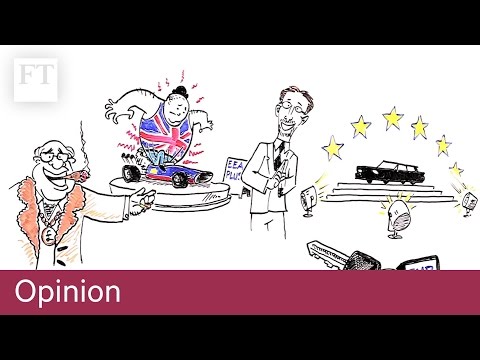
20000011 posted on 2016/07/06Ever wondered what kind of relationship the UK could have with the EU after Brexit? This video dives into different models, like the Norway model, and breaks down the trade policy implications in a super clear way! You'll pick up some great vocabulary related to international trade and politics while understanding this complex topic.
Learn this video on the APP!
The VoiceTube App has more in-depth practice for videos!