
absolutely
US /ˈæbsəˌlutli, ˌæbsəˈlutli/
UK /ˈæbsəlu:tli/
- Adverb
- Completely; totally; very
- Considered independently and without relation to other things; viewed abstractly; as, quantity absolutely considered.
A2Moreall the things
US
UK
- Pronoun
- Everything; all items or aspects
- Determiner
- Every item or object being considered or discussed.
A1Moreapplause
US /əˈplɔz/
UK /ə'plɔ:z/
- Noun (Countable/Uncountable)
- The sound made by clapping a performance or speech
B1Moreas well as
US /æz wɛl æz/
UK /æz wel æz/
- Adverb
- Also; in addition to
- Preposition
- In addition to; and also.
A1Moreat least
US /æt list/
UK /æt li:st/
- Adverb
- As a minimum
- Not less than
- Phrase
- No less than; at the minimum
- Used to indicate that something is positive in a bad situation.
C2Moreat some point
US /æt sʌm pɔɪnt/
UK /æt sʌm pɔint/
- Phrase
- At an unspecified time, usually in the future.
A1Moreat the hands of
US
UK
- Phrase
- By the agency or through the actions of.
- Through the responsibility or fault of.
A1Moreat the same time
US
UK
- Phrase
- Simultaneously; at the identical moment.
- Nevertheless; however; used to introduce a contrasting or qualifying statement.
A1Moreback into
US /bæk ˈɪntu/
UK /bæk ˈɪntuː/
- Phrasal Verb
- To drive a vehicle backwards into a space or area.
- To accidentally collide with something while moving backwards.
A1Morebe with
US /bi wɪð/
UK /bi: wið/
- Phrasal Verb
- To accompany someone; to be in someone's presence.
- To support someone's opinion or cause.
A1Morecare of
US /kɛr ʌv/
UK /kɛə ɔv/
- Preposition
- Used in an address to indicate the person who will receive the mail for someone else.
A2Morecheck out
US /tʃɛk aʊt/
UK /tʃek aut/
- Phrase
- Phrasal Verb
- To find out information about something
- To take books out of a library
A1Morechill out
US /tʃɪl aʊt/
UK /tʃil aut/
- Verb (Transitive/Intransitive)
- To relax and stop being angry or nervous about something.
- To calm down; to become less excited or agitated.
- Phrasal Verb
- To relax and stop being angry or nervous about something.
B2Morecome at
US /kʌm æt/
UK /kʌm æt/
- Phrasal Verb
- To approach someone to attack them
A1Morecome together
US /kʌm təˈɡɛðɚ/
UK /kʌm təˈɡeðə/
- Phrasal Verb
- To assemble or unite; to start working together.
- To form a close relationship or bond.
A1Morecount on
US /kaʊnt ɑn/
UK /kaunt ɔn/
- Phrasal Verb
- To depend on someone
- To be confident of and expect something
A2Moredeal with
US /dil wɪð/
UK /di:l wið/
- Verb (Transitive/Intransitive)
- To buy or sell goods or services.
- Phrasal Verb
- To take action to solve a problem or manage a situation.
- To be about; concern.
A1Moredo in
US
UK
- Phrasal Verb
- To make completely tired out and exhausted
- To destroy or cause damage to someone
A1Morefamily dynamic
US
UK
- Noun
- The pattern of relationships and interactions between family members.
A1Morefeel like
US
UK
- Intransitive Verb
- To have a desire or inclination for something.
- To have a particular quality or sensation; resemble.
A1Morefigure out
US /ˈfɪɡjɚ aʊt/
UK /ˈfiɡə aut/
- Phrasal Verb
- To understand the behavior of someone
- To think through logically to find a solution
- Verb (Transitive/Intransitive)
- To understand or find an answer to something.
- To find a solution to a problem or understand something.
A1Morefor example
US
UK
- Phrase
- As an illustration or instance.
for sure
US /fɔr ʃʊr/
UK /fɔ: ʃuə/
- Adverb
- Definitely; certainly; without a doubt.
- Used to emphasize a statement.
- Interjection
- An expression of strong agreement or affirmation.
A2Morefor the rest
US /fɔr ði rɛst/
UK /fɔ: ðə rest/
- Phrase
- Concerning the remaining people or things.
- During the remaining part of a period of time.
A1Morefound out
US
UK
- Phrasal Verb
- To learn or discover something, often after some effort.
- To become known; be revealed.
B2Morefull day
US
UK
- Noun
- A complete day, from morning to night.
get it on
US /ɡɛt ɪt ɑn/
UK /ɡet it ɔn/
- Phrasal Verb
- To start doing what you say you will do
- To start something.
A1Moregive it up
US
UK
- Phrasal Verb
- To stop trying to do something
A1Moregiven time
US /ˈɡɪvən taɪm/
UK /ˈɡivən taim/
- Noun (Countable/Uncountable)
- A specific time that has been scheduled or agreed upon.
- The amount of time available or allotted for a task or activity.
A1Morego back to
US /ɡo bæk tu/
UK /ɡəu bæk tu:/
- Phrasal Verb
- To return to a starting point
A1Morego on
US /ɡo ɑn/
UK /ɡəu ɔn/
- Phrasal Verb
- To continue doing something
- To happen (usually negative)
- Interjection
- Used to encourage someone
A1Morego shopping
US /ɡo ˈʃɑpɪŋ/
UK /ɡəu ˈʃɔpɪŋ/
- Intransitive Verb
- To go to stores to buy things
A1Moregoing on
US /ˈɡoɪŋ ɑn/
UK /ˈgəʊɪŋ ɔn/
- Phrasal Verb
- To continue doing something
- To happen (usually negative)
A1Moregot to
US /ɡɑt tu/
UK /gɔt tu:/
- Verb (Transitive/Intransitive)
- To arrive at some place
- To have the opportunity or permission to do something
- Phrasal Verb
- To appeal to the emotions of; move
- To finally begin to start something after a delay
A1Moregrow up
US /ɡro ʌp/
UK /ɡrəu ʌp/
- Phrasal Verb
- To develop from a child into an adult
A1Morehave to
US /hæv tu/
UK /ˈhæv tə/
- Auxiliary Verb
- Must do
A1Morehome in
US /ˈhoʊm ɪn/
UK /ˈhəum ɪn/
- other
- Move or direct toward a specific target or goal.
B2Morein order to
US /ɪn ˈɔrdɚ tu/
UK /in ˈɔ:də tu:/
- Preposition
- For the purpose of; with the aim of.
- Phrase
- In a specific sequence or arrangement.
- With the aim of; for the purpose of.
C1Morein peace
US /ɪn pis/
UK /in pi:s/
- Phrase
- In a state of tranquility, without disturbance or conflict.
- In a state of non-war, without armed conflict.
B1Morein public
US /ɪn ˈpʌblɪk/
UK /in ˈpʌblik/
- Phrase
- In a place where anyone can see or hear you.
- Adjective
- Relating to the government or the people as a whole.
B1Morein recent times
US
UK
- Phrase
- During the period of time that has most recently passed; lately.
- In the modern era; in the current period of history.
B1Morein school
US /ɪn skul/
UK /ɪn sku:l/
- other
- Attending an educational institution.
A1Morein service
US /ɪn 'sɝvɪs/
UK /in ˈsɜːvɪs/
- Adjective
- Available for use; operational
B1Morein the midst of
US
UK
- Phrase
- Surrounded by; in the middle of.
- During; while something is happening.
A1Morein the world
US /ɪn ði wɜrld/
UK /in ðə wɜː(r)ld/
- Phrase
- Used to emphasize a question expressing surprise, confusion, disbelief
- Used to indicate the extent or degree of something, often in a superlative sense
A1Morein ways
US
UK
- Phrase
- In a manner or by methods that.
- In certain respects or aspects.
A1Moreinstead of
US /ɪnˈstɛd ʌv/
UK /inˈsted ɔv/
- Preposition
- When one thing is replaced by another
- Adverb
- As a substitute or alternative.
A1Morejust chill out
US
UK
- Intransitive Verb
- To relax and stop being angry or upset about something
laughter
US /ˈlæftɚ, ˈlɑf-/
UK /ˈlɑ:ftə(r)/
- Uncountable Noun
- Action or sound of laughing
- The feeling of amusement that makes you laugh.
A2Morelight on
US /laɪt ɑn/
UK /lait ɔn/
- Phrasal Verb
- To illuminate something.
- To discover something unexpectedly.
- Adjective
- Gentle or delicate in the use of something.
A1Morelive up
US /liv ʌp/
UK /liv ʌp/
- Phrasal Verb
- To be as good as expected or promised.
A1Morelook around
US /lʊk əˈraʊnd/
UK /luk əˈraund/
- Phrasal Verb
- To explore a place; search for something.
A1Morelook at
US /lʊk æt/
UK /luk æt/
- Phrasal Verb
- To use your eyes to focus on something
- To focus your eyes on something carefully
A1Morelooking out
US
UK
- Phrasal Verb
- To take care and watch something carefully
- To be careful; to be vigilant
- Intransitive Verb
- To be careful or vigilant
A1Moremess up
US /mɛs ʌp/
UK /mes ʌp/
- Phrasal Verb
- To make a mistake
- To make something untidy or dirty.
- Verb (Transitive/Intransitive)
- To make something untidy or dirty.
- To spoil or ruin something.
A2Moremiss out
US /mɪs aʊt/
UK /mis aut/
- Phrasal Verb
- To exclude; not include in something
- To fail to take advantage of something; to lose an opportunity.
A1Moremove out
US /muv aʊt/
UK /mu:v aut/
- Phrasal Verb
- To leave a house or flat permanently.
- To advance from a defensive position.
A2Moreof any kind
US
UK
- Phrase
- Of any type or variety whatsoever.
- To any degree or extent.
A1Moreof course
US /ʌv kɔː(r)s/
UK /ɔv kɔː(r)s/
- Adverb
- Sure ; Certainly
- Phrase
- For sure; certainly
A2Moreof value
US /ʌv ˈvælju/
UK /ɔv ˈvælju/
- Adjective
- Having worth, importance, or usefulness.
- Providing a benefit or advantage.
A1Moreon earth
US /ɑn ɚθ/
UK /ɔn ə:θ/
- Phrase
- Used to emphasize a question expressing surprise or anger.
- Used to emphasize that something is not possible or will not happen.
A1Moreonce a month
US
UK
- Phrase
- Happening or appearing one time in each month.
A1Moreout there
US /aʊt ðɛr/
UK /aut ðɛə/
- Adverb
- In or to a place that is far away
- Existing in the universe
- Adjective
- Unconventional; strange; avant-garde
- Existing or available.
A1Moreoutside of
US /aʊtˈsaɪd ʌv/
UK /ˌautˈsaid ɔv/
- Preposition
- Located or situated beyond the boundaries or confines of something.
- Beyond the scope, range, or limits of something.
A1Moreover to
US
UK
- Preposition
- Used to hand over to someone else to speak
- The responsibility is now yours
president
US /ˈprɛzɪdənt,-ˌdɛnt/
UK /ˈprezɪdənt/
- Noun
- Person in charge of a country, or organization
- The highest-ranking executive in a corporation or organization.
A2TOEICMoresame time
US
UK
- Phrase
- Occurring simultaneously or at the same point in time.
- At the identical time as before; recurring at a fixed hour.
- Noun
- An equal duration or period.
A1Moreset up
US /sɛt ʌp/
UK /set ʌp/
- Phrasal Verb
- To make arrangements for something; establish
- Verb (Transitive/Intransitive)
- To arrange or prepare something for use.
- To start a business, organization, etc.
A1Moresettle for
US /ˈsɛtl fɔr/
UK /ˈsetl fɔ:/
- Phrasal Verb
- To accept something although not satisfied with it
A2Moreshut up
US /ʃʌt ʌp/
UK /ʃʌt ʌp/
- Phrasal Verb
- To close something, e.g. a shop
- To (cause someone to) be silent or not speak
- Interjection
- An expression of disbelief or surprise
A2Moresit down
US /sit daʊn/
UK /sit daun/
- Phrasal Verb
- To take a seat
A1Morespeak for itself
US
UK
- Intransitive Verb
- To be clear and obvious without needing further explanation.
A1Moretalking about
US
UK
- Phrasal Verb
- To discuss a particular topic.
- To be constantly mentioning or bringing up a subject.
A1Morethink about
US /θɪŋk əˈbaʊt/
UK /θiŋk əˈbaut/
- Phrasal Verb
- To consider something carefully.
- To remember or call to mind.
A1Morethink of
US /θɪŋk ʌv/
UK /θiŋk ɔv/
- Phrasal Verb
- To look on as (being something specific); consider
- To consider or remember something.
- Verb (Transitive/Intransitive)
- To imagine or call something to mind
A1Moreto do with
US
UK
- Phrasal Verb
- To be about something; concern
A1Moreturn off
US
UK
- Phrasal Verb
- To make someone feel negatively about something
A1Moreused to
US /juzd tu/
UK /ˈju:st tə/
- Adjective
- Did regularly before, but don't do now
- Auxiliary Verb
- Have done before, but do not do now
A1Morewake up
US /wek ʌp/
UK /weik ʌp/
- Phrasal Verb
- To stop sleeping
- To become fully aware and alert to a situation.
A1Morewalk down
US /wɔk daʊn/
UK /wɔ:k daun/
- Phrasal Verb
- To walk along or down something.
- To proceed along an aisle, especially at a wedding.
A1Morewith age
US
UK
- Phrase
- As someone gets older; as time passes.
- Improving in quality or value as it gets older.
A1Morewith it
US /wɪð ɪt/
UK /wið it/
- Adjective
- Intelligent, alert, and up-to-date.
- Understanding and knowledgeable about current trends or information.
A1Morework out
US /wɚk aʊt/
UK /wə:k aut/
- Phrasal Verb
- To find a way to do something, by thinking
A1More
Vocabulary
- have to: Must do
- got to: To arrive at some place
- go shopping: To go to stores to buy things
- used to: Did regularly before, but don't do now
- out there: In or to a place that is far away
- feel like: To have a desire or inclination for something.
- wake up: To stop sleeping
- live up: To be as good as expected or promised.
- deal with
- talking about: To discuss a particular topic.
- think about: To consider something carefully.
- with it: Intelligent, alert, and up-to-date.
- going on: To continue doing something
- in public: In a place where anyone can see or hear you.
- go back to: To return to a starting point
- grow up: To develop from a child into an adult
- look at: To use your eyes to focus on something
- full day: A complete day, from morning to night.
- of course: Sure ; Certainly
- as well as: Also; in addition to
- come together: To assemble or unite; to start working together.
- over to: Used to hand over to someone else to speak
- looking out: To take care and watch something carefully
- for sure: Definitely; certainly; without a doubt.
- miss out: To exclude; not include in something
- with age: As someone gets older; as time passes.
- chill out: To relax and stop being angry or nervous about something.
- just chill out: To relax and stop being angry or upset about something
- figure out: To understand the behavior of someone
- on earth: Used to emphasize a question expressing surprise or anger.
- in the midst of: Surrounded by; in the middle of.
- found out: To learn or discover something, often after some effort.
- settle for: To accept something although not satisfied with it
- count on: To depend on someone
- get it on: To start doing what you say you will do
- set up
- turn off
- home in: Move or direct toward a specific target or goal.
- shut up: To close something, e.g. a shop
- of value: Having worth, importance, or usefulness.
- speak for itself: To be clear and obvious without needing further explanation.
- be with: To accompany someone; to be in someone's presence.
- all the things: Everything; all items or aspects
- to do with: To be about something; concern
- in order to: For the purpose of; with the aim of.
- in ways: In a manner or by methods that.
- light on: To illuminate something.
- do in: To make completely tired out and exhausted
- sit down: To take a seat
- come at: To approach someone to attack them
- once a month: Happening or appearing one time in each month.
- at least: As a minimum
- back into: To drive a vehicle backwards into a space or area.
- instead of: When one thing is replaced by another
- at some point: At an unspecified time, usually in the future.
- in service: Available for use; operational
- in peace: In a state of tranquility, without disturbance or conflict.
- give it up: To stop trying to do something
- in the world: Used to emphasize a question expressing surprise, confusion, disbelief
- at the hands of: By the agency or through the actions of.
- of any kind: Of any type or variety whatsoever.
- look around: To explore a place; search for something.
- go on: To continue doing something
- at the same time: Simultaneously; at the identical moment.
- same time: Occurring simultaneously or at the same point in time.
- for example: As an illustration or instance.
- in school: Attending an educational institution.
- given time: A specific time that has been scheduled or agreed upon.
- care of: Used in an address to indicate the person who will receive the mail for someone else.
- think of: To look on as (being something specific); consider
- in recent times: During the period of time that has most recently passed; lately.
- family dynamic: The pattern of relationships and interactions between family members.
- move out: To leave a house or flat permanently.
- walk down: To walk along or down something.
- check out
- work out
- for the rest: Concerning the remaining people or things.
- outside of: Located or situated beyond the boundaries or confines of something.
- mess up: To make a mistake
- know: To be familiar with a person or place, thing
- absolutely: Completely; totally; very
- time: Speed at which music is played; tempo
- people: Persons sharing culture, country, background, etc.
- applause: The sound made by clapping a performance or speech
- life: All the living things e.g. animals, plants, humans
- work: The product of some artistic or literary endeavor
- part: Division of a book
- president: Person in charge of a country, or organization
- public: Owned by the government
- laughter: Action or sound of laughing
- service: Work that a person does to assist others
- man: Humans in general, including male and female
- house: Place where a specific activity or business occurs
- walk: To move with your legs at a slowish pace
Get the full experience in the app
Learn anywhere with detailed sentence and usage analysis
01:03
She took a brave step forward, leaving behind her comfort zone to chase her dreams.
Vocabulary
- brave
adj. Having courage
- comfort zone
phr. A familiar situation where one feels safe
Explanation
a brave step is a noun phrase, where brave is an adjective modifying the noun step, meaning "a courageous step".
forward is an adverb modifying step, meaning "ahead".
The whole phrase serves as the object, answering the "what" of took (verb) — she took a brave step forward.
Get the full experience in the app
Look up words anytime with pronunciation, part of speech, and usage
brave
US/brev/
UK/breɪv/
adj.Brave
v.t.To bravely face
A2 Elementary
Get the full experience in the app
Practice speaking anytime and get instant pronunciation feedback
Try this speaking exercise.
Try practicing with this sentence.
80
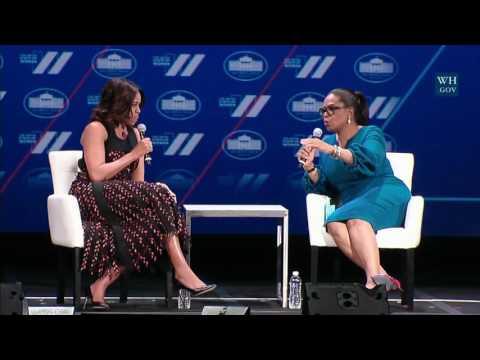
First Lady Michelle Obama and Oprah Winfrey Hold a Conversation on the Next Generation of Women
0
shirley posted on 2016/06/19Ever wondered how to balance a busy life with your dreams? Join Michelle Obama and Oprah Winfrey for an inspiring chat about self-worth, girls' education, and navigating life's challenges, picking up advanced vocabulary and practical tips along the way!
Learn this video on the APP!
The VoiceTube App has more in-depth practice for videos!