
argument
US /ˈɑrɡjəmənt/
UK /ˈɑ:gjumənt/
- Noun (Countable/Uncountable)
- Discussion in which you disagree with someone
- A presentation of reasons for or against an idea
A2TOEICMorecode
US /kod/
UK /kəʊd/
- Transitive Verb
- To express information in a series of numbers
- To write a secret message using secret symbols
- Noun
- A password made of a set of letters or numbers
- Set of rules for behavior
A2Morecommand
US /kəˈmænd/
UK /kə'mɑ:nd/
- Transitive Verb
- To be able to see far from a certain location
- To give an order; have control over others
- Noun (Countable/Uncountable)
- Electronic order to a computer to do something
- An order to control things or others
A2Moreend in
US /ɛnd ɪn/
UK /end in/
- Phrasal Verb
- To have something as the final result.
for now
US /fɔr naʊ/
UK /fɔ: nau/
- Phrase
- Temporarily; for the present time.
- In the short term; for the immediate future.
A1Morefor the best
US
UK
- Phrase
- Resulting in the most positive or beneficial outcome, even if it's difficult or painful in the short term.
- Hoping for a positive outcome.
A1Morefunction
US /ˈfʌŋkʃən/
UK /'fʌŋkʃn/
- Noun
- Social event, or party such as a wedding
- Mathematical operation used in calculations
- Intransitive Verb
- To serve a certain purpose or role
- To be operating, working or achieving its purpose
A2TOEICMorehave to
US /hæv tu/
UK /ˈhæv tə/
- Auxiliary Verb
- Must do
A1Morein a series
US
UK
- Phrase
- Arranged or happening one after another.
- Occurring sequentially or in a specific order.
B1Morein brackets
US /ɪn ˈbrækɪts/
UK /in ˈbrakits/
- other
- Placed within parentheses () in writing.
B1Morein general
US /ɪn ˈdʒɛnərəl/
UK /in ˈdʒenərəl/
- Phrase
- Typically; usually; on the whole.
- Not specific or detailed; broadly.
- Adjective
- Not detailed or specific; overall.
C2Moreinstead of
US /ɪnˈstɛd ʌv/
UK /inˈsted ɔv/
- Preposition
- When one thing is replaced by another
- Adverb
- As a substitute or alternative.
A1Moremove to
US /muv tu/
UK /mu:v tu:/
- Phrasal Verb
- To change the place where you live or work.
- Verb (Transitive/Intransitive)
- To proceed to the next stage or action.
A2Moremuch about
US /mʌtʃ əˈbaʊt/
UK /mʌtʃ əˈbaut/
- Phrase
- A lot of information or knowledge concerning something.
- To a great extent or degree regarding something; caring.
A1Morenote
US /noʊ/
UK /nəʊt/
- Verb
- To notice or pay particular attention to something.
- Noun
- A short informal letter or written record.
- A piece of paper money issued by a central bank or government authority that acts as legal tender
A2TOEICMoreof course
US /ʌv kɔː(r)s/
UK /ɔv kɔː(r)s/
- Adverb
- Sure ; Certainly
- Phrase
- For sure; certainly
A2Moreon a day-to-day basis
US /ɑn ə ˈdeɪ tə ˈdeɪ ˈbeɪsɪs/
UK /ɒn ə ˈdei tə ˈdei ˈbeisis/
- other
- Happening regularly every day as a routine.
B1Morepick apart
US
UK
- Phrasal Verb
- To find faults/problems with by examining closely
A1Morescope
US /skoʊp/
UK /skəʊp/
- Noun (Countable/Uncountable)
- Opportunity for action or thought
- Range of things included or dealt with
- Verb (Transitive/Intransitive)
- to look at especially for the purpose of evaluation —usually used with out
B1TOEICMorestandard
US /ˈstændəd/
UK /'stændəd/
- Noun
- Official unit of measuring something
- Principle of behaving in a moral way
- Adjective
- Being the accepted normal level of quality
- (Of a language) being the most accepted in a place
A2TOEICMorestatement
US / ˈstetmənt/
UK /ˈsteɪtmənt/
- Noun (Countable/Uncountable)
- Record of activity in a bank account over time
- Act or process of saying something formally
A2TOEICMoresuch as
US /sʌtʃ æz/
UK /sʌtʃ æz/
- Preposition
- For example; like
A1Morewait for
US /wet fɔr/
UK /weit fɔ:/
- Phrasal Verb
- To wait until someone comes, or something happens
A1More
Vocabulary
- end in: To have something as the final result.
- in a series: Arranged or happening one after another.
- move to: To change the place where you live or work.
- in general: Typically; usually; on the whole.
- for the best: Resulting in the most positive or beneficial outcome, even if it's difficult or painful in the short term.
- on a day-to-day basis: Happening regularly every day as a routine.
- pick apart: To find faults/problems with by examining closely
- such as: For example; like
- in brackets: Placed within parentheses () in writing.
- much about: A lot of information or knowledge concerning something.
- instead of: When one thing is replaced by another
- have to: Must do
- wait for: To wait until someone comes, or something happens
- for now: Temporarily; for the present time.
- of course: Sure ; Certainly
- feel: To be aware of or experience an emotion, sensation
- function: Social event, or party such as a wedding
- language: Words or signs used to communicate messages
- standard: Official unit of measuring something
- statement: Record of activity in a bank account over time
- line: Border that divides two places or regions
- argument: Discussion in which you disagree with someone
- program: To make someone act or think in a certain way
- command: To be able to see far from a certain location
- free: Living, happening without being controlled
- note: To notice or pay particular attention to something.
- scope: Opportunity for action or thought
- code: To express information in a series of numbers
- return: To hit something back to the other player or team
- main: Most important; most often used
Get the full experience in the app
Learn anywhere with detailed sentence and usage analysis
01:03
She took a brave step forward, leaving behind her comfort zone to chase her dreams.
Vocabulary
- brave
adj. Having courage
- comfort zone
phr. A familiar situation where one feels safe
Explanation
a brave step is a noun phrase, where brave is an adjective modifying the noun step, meaning "a courageous step".
forward is an adverb modifying step, meaning "ahead".
The whole phrase serves as the object, answering the "what" of took (verb) — she took a brave step forward.
Get the full experience in the app
Look up words anytime with pronunciation, part of speech, and usage
brave
US/brev/
UK/breɪv/
adj.Brave
v.t.To bravely face
A2 Elementary
Get the full experience in the app
Practice speaking anytime and get instant pronunciation feedback
Try this speaking exercise.
Try practicing with this sentence.
80
Hello World in C: Computer Programming 1: 24HourAnswers Tutorials
0
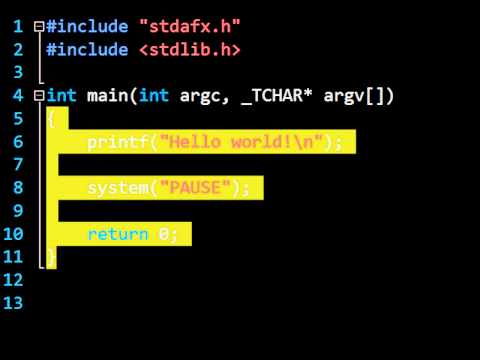
Jjli Li posted on 2016/06/05Ever wondered how to make a computer say 'Hello World'? This video dives into the basics of C programming, perfect for beginners looking to understand procedural programming and the essential printf function. You'll pick up key vocabulary and get practical compilation tips to kickstart your coding journey!
Learn this video on the APP!
The VoiceTube App has more in-depth practice for videos!