
applause
US /əˈplɔz/
UK /ə'plɔ:z/
- Noun (Countable/Uncountable)
- The sound made by clapping a performance or speech
B1Morearound the world
US /əˈraʊnd ði wɜrld/
UK /əˈraund ðə wɜː(r)ld/
- Phrase
- In or to many countries.
- In various places throughout the world.
A2Moreas well as
US /æz wɛl æz/
UK /æz wel æz/
- Adverb
- Also; in addition to
- Preposition
- In addition to; and also.
A1Moreat home
US /æt hom/
UK /æt həum/
- Phrase
- In one's own residence or country.
- Adjective
- Feeling comfortable and relaxed.
at least
US /æt list/
UK /æt li:st/
- Adverb
- As a minimum
- Not less than
- Phrase
- No less than; at the minimum
- Used to indicate that something is positive in a bad situation.
C2Moreat times
US /æt taɪmz/
UK /æt taɪmz/
- Phrase
- Sometimes; occasionally.
A1Moreclimate
US /ˈklaɪmɪt/
UK /ˈklaɪmət/
- Noun (Countable/Uncountable)
- Typical weather conditions in a particular place
- The general attitudes, feelings, or opinions that people have at a particular time.
A2Morecollege
US /'kɑːlɪdʒ/
UK /'kɒlɪdʒ/
- Noun (Countable/Uncountable)
- School or educational institution for adults
- A constituent body of a university.
A2Moreconquer the world
US
UK
- Transitive Verb
- To gain control of the world through military force or other means.
A1Morecontrary to
US /ˈkɑnˌtrɛri tu/
UK /ˈkɔntrəri tu:/
- Preposition
- In opposition to; against.
- Differing from; not in agreement with.
A1Morecourtesy of
US
UK
- Preposition
- Provided or permitted by (someone or something).
- Because of; as a result of.
B2Moredebate
US / dɪˈbet/
UK /dɪ'beɪt/
- Noun (Countable/Uncountable)
- General public discussion of a topic
- A formal event where two sides discuss a topic
- Verb (Transitive/Intransitive)
- To consider options before making a decision
- To take part in a formal discussion
A2TOEICMoredemocracy
US /dɪˈmɑkrəsi/
UK /dɪ'mɒkrəsɪ/
- Noun (Countable/Uncountable)
- System of government in which everyone is equal
- Principles of social equality and respect for the individual within a society.
B1Moredisagree with
US /ˌdɪsəˈɡri wɪð/
UK /ˌdisəˈɡri: wið/
- Phrasal Verb
- To have a different opinion from someone else.
- Intransitive Verb
- To cause someone to feel ill or uncomfortable.
A1Morefalling apart
US
UK
- Phrasal Verb
- To suffer a nervous breakdown
- To break into pieces; stop functioning
A1Morefeel like
US
UK
- Intransitive Verb
- To have a desire or inclination for something.
- To have a particular quality or sensation; resemble.
A1Morefollow through
US /ˈfɑlo θru/
UK /ˈfɔləu θru:/
- Phrasal Verb
- To fulfill a promise
- Intransitive Verb
- To continue the motion of a stroke after hitting the ball, especially in golf or tennis.
A1Morefor example
US
UK
- Phrase
- As an illustration or instance.
for the better
US /fɔr ði ˈbɛtɚ/
UK /fɔ: ðə ˈbetə/
- Phrase
- Resulting in improvement; to a more favorable condition.
A1Moregeneration
US /ˌdʒɛnəˈreʃən/
UK /ˌdʒenəˈreɪʃn/
- Noun (Countable/Uncountable)
- Act or process of producing or causing something
- People born and living at about the same time
A2TOEICMorego out
US /ɡo aʊt/
UK /ɡəu aut/
- Phrase
- To leave a building (e.g. a house)
- Phrasal Verb
- (Of a fire) to burn out; be extinguished
- Go out of fashion to stop being fashionable
A1Moregot to
US /ɡɑt tu/
UK /gɔt tu:/
- Verb (Transitive/Intransitive)
- To arrive at some place
- To have the opportunity or permission to do something
- Phrasal Verb
- To appeal to the emotions of; move
- To finally begin to start something after a delay
A1Morehave to
US /hæv tu/
UK /ˈhæv tə/
- Auxiliary Verb
- Must do
A1Morein business
US /ɪn ˈbɪznɪs/
UK /in ˈbiznis/
- Phrase
- Actively operating as a commercial enterprise.
- Having a commercial partnership or association.
A1Morein fact
US /ɪn fækt/
UK /in fækt/
- Adverb
- Used to emphasize the truth of a statement, especially one that contrasts with or contradicts something else.
- Used to introduce a more detailed or surprising piece of information.
- Phrase
- Used to emphasize the truth of a statement, especially one that is surprising or contrary to what might be expected.
C1Morein half
US /ɪn hæf/
UK /in hɑ:f/
- Adverb
- Divided into two equal parts.
- Partially; to some extent.
A1Morein isolation
US
UK
- Phrase
- Separately from other people or things; alone.
- Considered separately and without reference to other related things.
C1Morein the face of
US //ɪn ðə feɪs ɑv//
UK
- Phrase
- When confronted with something difficult or challenging.
- Despite; in defiance of; when confronted with.
A1Morein the middle of
US
UK
- Phrase
- In the central part or point of something.
- Engaged or occupied with something.
A2Morein the past
US
UK
- Phrase
- During a former period of time; previously.
A1Morein times
US
UK
- Phrase
- During periods or moments of.
- During a particular era or period in history.
A1Moreintellectual property
US
UK
- Uncountable Noun
- Creations of the mind, such as inventions; literary and artistic works; designs; and symbols, names and images used in commerce.
B2Moreknow better
US
UK
- Verb (Transitive/Intransitive)
- To be wise enough not to do something.
- To be expected to have the sense to not do something.
A1Morelong for
US /lɔŋ fɔr/
UK /lɔŋ fɔ:/
- Phrasal Verb
- To have a strong desire or yearning for something.
A1Morelook at
US /lʊk æt/
UK /luk æt/
- Phrasal Verb
- To use your eyes to focus on something
- To focus your eyes on something carefully
A1Moremake up
US /mek ʌp/
UK /meik ʌp/
- Phrasal Verb
- To invent or create a story
- To add up to
- Verb (Transitive/Intransitive)
- To invent a story, excuse, etc.
- To compensate for something lost, missed, or deficient.
A1Moreon a level
US
UK
- Phrase
- In a fair and equal manner; with equal opportunities.
- At the same height or plane as something else.
A1Moreon average
US /ɑn ˈævərɪdʒ/
UK /ɔn ˈævəridʒ/
- Phrase
- Typically; usually; based on an average calculation.
B1Moreon behalf of
US /ɑn bɪˈhæf ʌv/
UK /ɔn biˈhɑ:f ɔv/
- Phrase
- As the representative of someone
- Acting as a representative of.
B1Moreon the double
US /ɑn ði ˈdʌbəl/
UK /ɔn ðə ˈdʌbl/
- Phrase
- Very quickly; immediately
A1Moreout there
US /aʊt ðɛr/
UK /aut ðɛə/
- Adverb
- In or to a place that is far away
- Existing in the universe
- Adjective
- Unconventional; strange; avant-garde
- Existing or available.
A1Morepast it
US
UK
- Adjective
- No longer capable or effective due to age or declining condition.
- Beyond the point of being useful or functional.
A1Morepast time
US
UK
- Noun
- An activity done regularly for enjoyment; a hobby.
- A point in time that is later than when something should have happened.
phone in
US /foʊn ɪn/
UK /fəʊn ɪn/
- other
- Call someone by phone, often to report or notify remotely.
B2Morepoint out
US /pɔɪnt aʊt/
UK /pɔint aut/
- Phrasal Verb
- To make others aware of an idea
- To draw attention to something or someone
A1Morepolitical
US /pəˈlɪtɪkəl/
UK /pəˈlɪtɪkl/
- Adjective
- Being active or interested in government matters
- Diplomatic
A2Morepresident
US /ˈprɛzɪdənt,-ˌdɛnt/
UK /ˈprezɪdənt/
- Noun
- Person in charge of a country, or organization
- The highest-ranking executive in a corporation or organization.
A2TOEICMoreprogress
US /ˈprɑɡˌrɛs, -rəs, ˈproˌɡrɛs/
UK /'prəʊɡres/
- Verb (Transitive/Intransitive)
- To move forward or toward a place or goal
- To make progress; develop or improve.
- Uncountable Noun
- Act of moving forward
- The process of improving or developing something over a period of time.
A2TOEICMorerather than
US
UK
- Adverb
- More exactly; more correctly
- Preferably; instead
- Preposition
- Instead of
A1Moresearch for
US /sɚtʃ fɔr/
UK /sə:tʃ fɔ:/
- Phrasal Verb
- To try to find someone or something.
B1Moreset aside
US
UK
- Phrasal Verb
- To reject or throw away, e.g. an idea
- To separate and save for another use or time
- Transitive Verb
- To keep or save something for use at a later time.
- To designate or allocate something for a specific purpose or group.
A1Moresit back
US /sit bæk/
UK /sit bæk/
- Phrasal Verb
- To relax and take it easy.
- To refrain from taking action or getting involved.
A1Morestand up for
US /stænd ʌp fɔr/
UK /stænd ʌp fɔ:/
- Phrasal Verb
- To support someone or an idea, e.g. human rights
A1Morestep back
US /stɛp bæk/
UK /step bæk/
- Phrasal Verb
- To move backwards; to move away from something.
- To take a break from something; to gain perspective.
A1Morestick with
US /stɪk wɪð/
UK /stik wið/
- Phrasal Verb
- To continue to support or stay loyal to someone or something.
- To continue doing or using something; to persevere.
A1Morestrike up
US /straɪk ʌp/
UK /straik ʌp/
- Phrasal Verb
- To begin a friendship, relationship, or conversation.
- To begin to play music.
A1Moretake in
US
UK
- Phrasal Verb
- To allow to enter; receive as a guest
- To include or add
- Transitive Verb
- To absorb (liquid).
- To understand or comprehend something.
A1Moretake on
US /tek ɑn/
UK /teik ɔn/
- Phrasal Verb
- To acquire a new characteristic
- To accept a new responsibility, role
A1Moretalking about
US
UK
- Phrasal Verb
- To discuss a particular topic.
- To be constantly mentioning or bringing up a subject.
A1Morethink about
US /θɪŋk əˈbaʊt/
UK /θiŋk əˈbaut/
- Phrasal Verb
- To consider something carefully.
- To remember or call to mind.
A1Moretough questions
US
UK
- Phrase
- Difficult or challenging questions that require careful consideration and honest answers.
up for grabs
US
UK
- Adjective
- Available to anyone who wants them.
- Phrase
- Available to be won or obtained.
A1Moreused to
US /juzd tu/
UK /ˈju:st tə/
- Adjective
- Did regularly before, but don't do now
- Auxiliary Verb
- Have done before, but do not do now
A1Morevote in
US /voʊt ɪn/
UK /vəut ɪn/
- other
- To elect someone into a position by voting.
B1Morewant in
US
UK
- Intransitive Verb
- To desire to participate or be included in something.
A1Morewith it
US /wɪð ɪt/
UK /wið it/
- Adjective
- Intelligent, alert, and up-to-date.
- Understanding and knowledgeable about current trends or information.
A1More
Vocabulary
- got to: To arrive at some place
- have to: Must do
- look at: To use your eyes to focus on something
- talking about: To discuss a particular topic.
- for example: As an illustration or instance.
- take on: To acquire a new characteristic
- know better: To be wise enough not to do something.
- in the middle of: In the central part or point of something.
- set aside: To reject or throw away, e.g. an idea
- at home: In one's own residence or country.
- feel like: To have a desire or inclination for something.
- as well as: Also; in addition to
- disagree with: To have a different opinion from someone else.
- strike up: To begin a friendship, relationship, or conversation.
- on the double: Very quickly; immediately
- step back: To move backwards; to move away from something.
- at times: Sometimes; occasionally.
- up for grabs: Available to anyone who wants them.
- on average: Typically; usually; based on an average calculation.
- conquer the world: To gain control of the world through military force or other means.
- go out: To leave a building (e.g. a house)
- out there: In or to a place that is far away
- in times: During periods or moments of.
- long for: To have a strong desire or yearning for something.
- around the world: In or to many countries.
- in fact: Used to emphasize the truth of a statement, especially one that contrasts with or contradicts something else.
- in business: Actively operating as a commercial enterprise.
- past time: An activity done regularly for enjoyment; a hobby.
- point out: To make others aware of an idea
- in isolation: Separately from other people or things; alone.
- falling apart: To suffer a nervous breakdown
- make up: To invent or create a story
- sit back: To relax and take it easy.
- intellectual property: Creations of the mind, such as inventions; literary and artistic works; designs; and symbols, names and images used in commerce.
- on a level: In a fair and equal manner; with equal opportunities.
- want in: To desire to participate or be included in something.
- phone in: Call someone by phone, often to report or notify remotely.
- search for: To try to find someone or something.
- rather than: More exactly; more correctly
- think about: To consider something carefully.
- follow through: To fulfill a promise
- on behalf of: As the representative of someone
- for the better: Resulting in improvement; to a more favorable condition.
- in half: Divided into two equal parts.
- take in: To allow to enter; receive as a guest
- used to: Did regularly before, but don't do now
- in the past: During a former period of time; previously.
- past it: No longer capable or effective due to age or declining condition.
- courtesy of: Provided or permitted by (someone or something).
- vote in: To elect someone into a position by voting.
- contrary to: In opposition to; against.
- tough questions: Difficult or challenging questions that require careful consideration and honest answers.
- stand up for: To support someone or an idea, e.g. human rights
- at least: As a minimum
- stick with: To continue to support or stay loyal to someone or something.
- with it: Intelligent, alert, and up-to-date.
- in the face of: When confronted with something difficult or challenging.
- applause: The sound made by clapping a performance or speech
- debate: General public discussion of a topic
- world: All the humans, events, activities on the earth
- progress: To move forward or toward a place or goal
- change: To exchange one set of clothes for another
- political: Being active or interested in government matters
- climate: Typical weather conditions in a particular place
- generation: Act or process of producing or causing something
- country: An area of land that is controlled by a government
- president: Person in charge of a country, or organization
- suggest: To mention something that could be done; propose
- economy: Using money, resources in a careful, effective way
- democracy: System of government in which everyone is equal
- college: School or educational institution for adults
- organize: To arrange and plan things, e.g. a party
Get the full experience in the app
Learn anywhere with detailed sentence and usage analysis
01:03
She took a brave step forward, leaving behind her comfort zone to chase her dreams.
Vocabulary
- brave
adj. Having courage
- comfort zone
phr. A familiar situation where one feels safe
Explanation
a brave step is a noun phrase, where brave is an adjective modifying the noun step, meaning "a courageous step".
forward is an adverb modifying step, meaning "ahead".
The whole phrase serves as the object, answering the "what" of took (verb) — she took a brave step forward.
Get the full experience in the app
Look up words anytime with pronunciation, part of speech, and usage
brave
US/brev/
UK/breɪv/
adj.Brave
v.t.To bravely face
A2 Elementary
Get the full experience in the app
Practice speaking anytime and get instant pronunciation feedback
Try this speaking exercise.
Try practicing with this sentence.
80
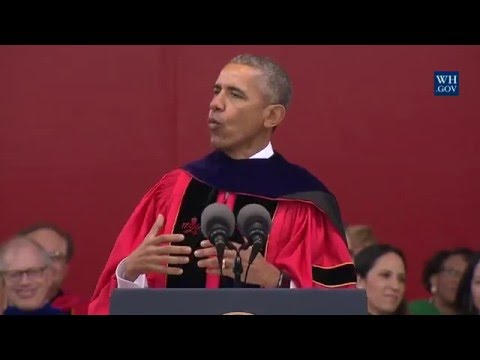
President Obama Delivers the Rutgers University Commencement Address
0
CHRISTY posted on 2016/05/27Ever wondered what President Obama had to say at Rutgers? You'll get to hear his inspiring commencement address, packed with insights on civic engagement and global challenges! Plus, you'll pick up some advanced vocabulary and get a deeper understanding of American culture.
Learn this video on the APP!
The VoiceTube App has more in-depth practice for videos!