
above all
US /əˈbʌv ɔl/
UK /əˈbʌv ɔ:l/
- Phrase
- Most importantly; more than anything else.
A1Morealong with
US /əˈlɔŋ wɪð/
UK /əˈlɔŋ wið/
- Preposition
- In addition to; together with.
- Adverb
- In company or together with someone or something.
- Including; in addition to.
A2Moreambassador
US /æmˈbæsədɚ, -ˌdɔr/
UK /æm'bæsədə(r)/
- Countable Noun
- Official representing a country in another country
- A person who acts as a representative or promoter of a specified activity.
B1Morearound the world
US /əˈraʊnd ði wɜrld/
UK /əˈraund ðə wɜː(r)ld/
- Phrase
- In or to many countries.
- In various places throughout the world.
A2Moreas long as
US /æz lɔŋ æz/
UK /æz lɔŋ æz/
- Conjunction
- For the period that; provided that.
- For the length of time that
- Preposition
- On the condition that; providing that.
- Having the same length as.
A1Moreas one
US
UK
- Adverb
- Acting or moving together at the same time.
- In complete agreement or unity.
- Phrase
- With a single voice or opinion; unanimously.
- In perfect harmony or unison.
A1Moreas opposed to
US
UK
- Preposition
- In contrast to; rather than.
- Instead of; in place of.
A1Moreas well as
US /æz wɛl æz/
UK /æz wel æz/
- Adverb
- Also; in addition to
- Preposition
- In addition to; and also.
A1Moreat least
US /æt list/
UK /æt li:st/
- Adverb
- As a minimum
- Not less than
- Phrase
- No less than; at the minimum
- Used to indicate that something is positive in a bad situation.
C2Morebring about
US
UK
- Phrasal Verb
- To cause to happen
A1Morebring back
US /brɪŋ bæk/
UK /briŋ bæk/
- Phrasal Verb
- To cause to remember
- To return something
A1Morebuild upon
US
UK
- Phrasal Verb
- To use something as a base for further development.
B1Morecall on
US /kɔl ɑn/
UK /kɔ:l ɔn/
- Phrasal Verb
- To order or ask someone to do a specific activity
- To visit someone
A1Morecome at
US /kʌm æt/
UK /kʌm æt/
- Phrasal Verb
- To approach someone to attack them
A1Morecome from
US /kʌm frʌm/
UK /kʌm frɔm/
- Phrasal Verb
- To have as your native country or city
A1Morecommon humanity
US
UK
- Phrase
- The shared characteristics, feelings, and vulnerabilities that make us human.
B1Moredate back
US /det bæk/
UK /deit bæk/
- Intransitive Verb
- To have existed since a particular time in the past.
- Phrasal Verb
- To have originated at a certain time in the past.
A1Moredespite the fact
US
UK
- Preposition
- In spite of; notwithstanding.
- Conjunction
- Even though; although.
A2Moredialogue
US /ˈdaɪəˌlɔɡ, -ˌlɑɡ/
UK /'daɪəlɒɡ/
- Noun (Countable/Uncountable)
- Conversation between two or more individuals
- A discussion or series of discussions between people or groups, especially ones aimed at resolving a problem.
B1Moredisagree with
US /ˌdɪsəˈɡri wɪð/
UK /ˌdisəˈɡri: wið/
- Phrasal Verb
- To have a different opinion from someone else.
- Intransitive Verb
- To cause someone to feel ill or uncomfortable.
A1Moredo in
US
UK
- Phrasal Verb
- To make completely tired out and exhausted
- To destroy or cause damage to someone
A1Moredue to
US /du tu/
UK /dju: tu:/
- Preposition
- Because of; owing to
- Adjective
- Attributable to; caused by.
A1Moreenergy
US /ˈɛnədʒi/
UK /'enədʒɪ/
- Noun (Countable/Uncountable)
- Physical or mental strength
- Enthusiasm and determination.
A2Morefor example
US
UK
- Phrase
- As an illustration or instance.
for instance
US /fɔr ˈɪnstəns/
UK /fɔ: ˈinstəns/
- Adverb
- As an example.
- Phrase
- As an example.
- As an illustration or case in point
B1Moreget out of
US /ɡɛt aʊt ʌv/
UK /ɡet aut ɔv/
- Phrasal Verb
- To leave or escape responsibilities, troubles
- To leave a small, enclosed vehicle
A1Morego ahead
US /ɡo əˈhɛd/
UK /ɡəu əˈhed/
- Phrasal Verb
- To start an activity; start doing, working etc.
- To give permission to do something
- Intransitive Verb
- To start or proceed with something
- To proceed despite potential obstacles or doubts.
A1Morego beyond
US /ɡo biˈɑnd/
UK /ɡəu biˈjɔnd/
- Phrasal Verb
- To do more than planned or expected; exceed
A1Morego on
US /ɡo ɑn/
UK /ɡəu ɔn/
- Phrasal Verb
- To continue doing something
- To happen (usually negative)
- Interjection
- Used to encourage someone
A1Morehave to
US /hæv tu/
UK /ˈhæv tə/
- Auxiliary Verb
- Must do
A1Morehold on
US /hold ɑn/
UK /həuld ɔn/
- Phrasal Verb
- To wait for someone (e.g. on a phone call)
- To wait for a short time.
A1Morein addition to
US /ɪn əˈdɪʃən tu/
UK /in əˈdiʃən tu:/
- Preposition
- Besides; as well as
- Phrase
- Besides; as well as.
- Furthermore; moreover.
B1Morein fact
US /ɪn fækt/
UK /in fækt/
- Adverb
- Used to emphasize the truth of a statement, especially one that contrasts with or contradicts something else.
- Used to introduce a more detailed or surprising piece of information.
- Phrase
- Used to emphasize the truth of a statement, especially one that is surprising or contrary to what might be expected.
C1Morein mind
US /ɪn maɪnd/
UK /in maind/
- Phrase
- Being aware of or considering something.
- To remember or consider something.
A2Morein person
US /ɪn ˈpɜːrsn/
UK /in ˈpɜːsn/
- Adverb
- Physically present; not by proxy or remotely.
- Face-to-face; not through electronic communication.
A1Morein places
US
UK
- Phrase
- In some locations but not others
A1Morein terms of
US
UK
- Phrase
- With regard to; concerning a particular aspect.
A1Morein the future
US /ɪn ði ˈfjutʃɚ/
UK /in ðə ˈfju:tʃə/
- Phrase
- At a later time; in times to come.
A1Morein the midst of
US
UK
- Phrase
- Surrounded by; in the middle of.
- During; while something is happening.
A1Morein the past
US
UK
- Phrase
- During a former period of time; previously.
A1Morein the world
US /ɪn ði wɜrld/
UK /in ðə wɜː(r)ld/
- Phrase
- Used to emphasize a question expressing surprise, confusion, disbelief
- Used to indicate the extent or degree of something, often in a superlative sense
A1Morein ways
US
UK
- Phrase
- In a manner or by methods that.
- In certain respects or aspects.
A1Moreinternet access
US
UK
- Uncountable Noun
- The ability to connect to the internet.
- A service that allows you to connect to the internet.
A1Moreinternet users
US
UK
- Noun (plural)
- People who use the internet.
A1Moreknow about
US /noʊ əˈbaʊt/
UK /nəʊ əˈbaut/
- Phrasal Verb
- To have information or understanding of a subject or situation.
lead to
US /lid tu/
UK /li:d tu:/
- Phrasal Verb
- To result in some action
- Verb (Transitive/Intransitive)
- To have something as a consequence or result.
A1Morelive out
US /liv aʊt/
UK /liv aut/
- Phrasal Verb
- To experience something, especially something that you have planned or hoped for.
- To live somewhere that is not the place where you work.
A1Morelook at
US /lʊk æt/
UK /luk æt/
- Phrasal Verb
- To use your eyes to focus on something
- To focus your eyes on something carefully
A1Moremeet with
US /mit wɪð/
UK /mi:t wið/
- Phrasal Verb
- To have a meeting with someone in order to discuss something.
- To encounter or experience something, often something negative.
much about
US /mʌtʃ əˈbaʊt/
UK /mʌtʃ əˈbaut/
- Phrase
- A lot of information or knowledge concerning something.
- To a great extent or degree regarding something; caring.
A1Morenot surprisingly
US
UK
- Phrase
- In a way that is not unexpected or predictable.
B1Moreof course
US /ʌv kɔː(r)s/
UK /ɔv kɔː(r)s/
- Adverb
- Sure ; Certainly
- Phrase
- For sure; certainly
A2Moreof old
US /ʌv oʊld/
UK /əv əuld/
- other
- From a long time ago; in the past.
B2Moreon a day-to-day basis
US /ɑn ə ˈdeɪ tə ˈdeɪ ˈbeɪsɪs/
UK /ɒn ə ˈdei tə ˈdei ˈbeisis/
- other
- Happening regularly every day as a routine.
B1Moreon behalf of
US /ɑn bɪˈhæf ʌv/
UK /ɔn biˈhɑ:f ɔv/
- Phrase
- As the representative of someone
- Acting as a representative of.
B1Moreon the basis of
US
UK
- Phrase
- Because of; using as a reason or justification.
A1Moreon the contrary
US
UK
- Phrase
- In contrast; from the opposite standpoint
B1Moreon the internet
US
UK
- Phrase
- Located or available on the internet.
- Using the internet as a medium or platform.
A1Moreon the other hand
US
UK
- Phrase
- Considering a different aspect of the matter; alternatively.
A1Moreon the phone
US
UK
- Phrase
- Talking on the telephone.
- Adjective
- Using a phone, especially a mobile phone.
A1Moreon the road
US /ɑn ði rəʊd/
UK /ɔn ðə roʊd/
- Phrase
- Traveling, especially as part of a tour or journey.
- Making progress; advancing towards a goal.
- Idiom
- Making progress towards a goal or achievement.
A1Moreonly from
US
UK
- Preposition
- Exclusively originating or sourced from a particular place or entity.
- Phrase
- Solely as a result of; exclusively due to.
A1Moreout of time
US /aʊt ʌv taɪm/
UK /aut ɔv taim/
- Adjective
- Having no more time available to do something.
A1Moreover time
US /ˈovɚ taɪm/
UK /ˈəuvə taim/
- Phrase
- Gradually; as time passes.
- During a long period.
- Adverb
- Gradually; as time passes.
B1Morepeace
US /pis/
UK /pi:s/
- Uncountable Noun
- Calm and quiet state
- Time when there is no war or fighting
A2TOEICMorepresident
US /ˈprɛzɪdənt,-ˌdɛnt/
UK /ˈprezɪdənt/
- Noun
- Person in charge of a country, or organization
- The highest-ranking executive in a corporation or organization.
A2TOEICMoreregardless of
US /rɪˈɡɑrdlɪs ʌv/
UK /riˈɡɑ:dlis ɔv/
- Phrase
- Preposition
- Without being affected or influenced by something; despite.
A2Morerelationship
US /rɪˈleʃənˌʃɪp/
UK /rɪˈleɪʃnʃɪp/
- Noun (Countable/Uncountable)
- Connection between two or more people or things
- Way people interact or live with each other
A2TOEICMorerise above
US /raɪz əˈbʌv/
UK /raiz əˈbʌv/
- Phrasal Verb
- To overcome or surmount a difficult situation or challenge.
- To not allow oneself to be affected by negative emotions or behaviors.
A1Moreroot out
US /rut aʊt/
UK /ru:t aut/
- Phrasal Verb
- To find and get rid of something completely, especially something unpleasant or unwanted.
B2Moreset up
US /sɛt ʌp/
UK /set ʌp/
- Phrasal Verb
- To make arrangements for something; establish
- Verb (Transitive/Intransitive)
- To arrange or prepare something for use.
- To start a business, organization, etc.
A1Moreshift in
US
UK
- Phrasal Verb
- A change or alteration in something.
B2Morespeak out
US /spik aʊt/
UK /spi:k aut/
- Phrasal Verb
- To express your opinion frankly and publicly, especially about something that you disagree with.
A1Morespeak to
US /spik tu/
UK /spi:k tu:/
- Verb (Transitive/Intransitive)
- To address or communicate with someone.
- To indicate or suggest something; to be relevant to.
A1Morestand for
US /stænd fɔr/
UK /stænd fɔ:/
- Phrasal Verb
- To support a particular idea, e.g. in politics
- To represent or symbolize
A1Morestand here
US
UK
- Intransitive Verb
- To remain in or move to this specific location.
symbol of
US
UK
- Phrase
- Something that represents or stands for something else, especially an object representing an abstract idea.
- A visible sign of something intangible.
B2Morethink about
US /θɪŋk əˈbaʊt/
UK /θiŋk əˈbaut/
- Phrasal Verb
- To consider something carefully.
- To remember or call to mind.
A1Morethreat to
US
UK
- Phrase
- A person or thing likely to cause damage or danger.
- A statement of an intention to inflict pain, injury, damage, or other hostile action on someone in retribution for or opposition to something done or not done.
B2Moreto the point
US /tu ði pɔɪnt/
UK /tu: ðə pɔint/
- Adjective
- Expressing something directly and without unnecessary detail.
- Phrase
- Relevant and pertinent to the matter at hand.
A2Moreturn into
US /tɚn ˈɪntu/
UK /tə:n ˈɪntuː/
- Phrasal Verb
- To change to become something else
- To change your direction to go into a place
A1Moreunited
US /juˈnaɪtɪd/
UK /jʊ'naɪtɪd/
- Verb (Transitive/Intransitive)
- To join or come together for the same goal
- Adjective
- Joined or combined together
A2Morewait for
US /wet fɔr/
UK /weit fɔ:/
- Phrasal Verb
- To wait until someone comes, or something happens
A1Morewith respect to
US /wɪð rɪˈspɛkt tu/
UK /wið risˈpekt tu:/
- Preposition
- In relation to; regarding.
- Phrase
- In relation to; concerning.
A1Morework together
US /wɚk təˈɡɛðɚ/
UK /wə:k təˈɡeðə/
- Verb (Transitive/Intransitive)
- To collaborate or cooperate with others to achieve a common goal.
A1More
Vocabulary
- around the world: In or to many countries.
- have to: Must do
- call on: To order or ask someone to do a specific activity
- in terms of
- of course: Sure ; Certainly
- meet with: To have a meeting with someone in order to discuss something.
- in the world: Used to emphasize a question expressing surprise, confusion, disbelief
- think about: To consider something carefully.
- as well as: Also; in addition to
- speak out: To express your opinion frankly and publicly, especially about something that you disagree with.
- in the future: At a later time; in times to come.
- in addition to: Besides; as well as
- on the internet: Located or available on the internet.
- date back: To have existed since a particular time in the past.
- go ahead: To start an activity; start doing, working etc.
- speak to: To address or communicate with someone.
- in the midst of: Surrounded by; in the middle of.
- come from: To have as your native country or city
- get out of: To leave or escape responsibilities, troubles
- to the point: Expressing something directly and without unnecessary detail.
- in the past: During a former period of time; previously.
- for example: As an illustration or instance.
- look at: To use your eyes to focus on something
- internet access: The ability to connect to the internet.
- bring about: To cause to happen
- only from: Exclusively originating or sourced from a particular place or entity.
- for instance: As an example.
- common humanity: The shared characteristics, feelings, and vulnerabilities that make us human.
- as one: Acting or moving together at the same time.
- lead to: To result in some action
- along with: In addition to; together with.
- on the basis of: Because of; using as a reason or justification.
- build upon: To use something as a base for further development.
- live out: To experience something, especially something that you have planned or hoped for.
- stand for: To support a particular idea, e.g. in politics
- know about: To have information or understanding of a subject or situation.
- above all: Most importantly; more than anything else.
- come at: To approach someone to attack them
- on the contrary: In contrast; from the opposite standpoint
- go beyond: To do more than planned or expected; exceed
- wait for: To wait until someone comes, or something happens
- bring back: To cause to remember
- on the other hand : Considering a different aspect of the matter; alternatively.
- regardless of
- despite the fact: In spite of; notwithstanding.
- disagree with: To have a different opinion from someone else.
- of old: From a long time ago; in the past.
- on behalf of: As the representative of someone
- in person: Physically present; not by proxy or remotely.
- due to: Because of; owing to
- with respect to: In relation to; regarding.
- as opposed to: In contrast to; rather than.
- much about: A lot of information or knowledge concerning something.
- hold on: To wait for someone (e.g. on a phone call)
- shift in: A change or alteration in something.
- symbol of: Something that represents or stands for something else, especially an object representing an abstract idea.
- root out: To find and get rid of something completely, especially something unpleasant or unwanted.
- work together: To collaborate or cooperate with others to achieve a common goal.
- in mind: Being aware of or considering something.
- not surprisingly: In a way that is not unexpected or predictable.
- internet users: People who use the internet.
- on the phone: Talking on the telephone.
- on a day-to-day basis: Happening regularly every day as a routine.
- in fact: Used to emphasize the truth of a statement, especially one that contrasts with or contradicts something else.
- set up
- in ways: In a manner or by methods that.
- stand here: To remain in or move to this specific location.
- go on: To continue doing something
- on the road: Traveling, especially as part of a tour or journey.
- rise above: To overcome or surmount a difficult situation or challenge.
- as long as: For the period that; provided that.
- out of time: Having no more time available to do something.
- turn into: To change to become something else
- threat to: A person or thing likely to cause damage or danger.
- in places: In some locations but not others
- do in: To make completely tired out and exhausted
- over time: Gradually; as time passes.
- at least: As a minimum
- people: Persons sharing culture, country, background, etc.
- relationship: Connection between two or more people or things
- world: All the humans, events, activities on the earth
- question: To ask for or try to get information
- great: Very good; better than before
- country: An area of land that is controlled by a government
- energy: Physical or mental strength
- president: Person in charge of a country, or organization
- dialogue: Conversation between two or more individuals
- nation: Area or region controlled by a government and army
- university: High-level educational institution; college
- Internet: Worldwide computer network system
- ambassador: Official representing a country in another country
- united: To join or come together for the same goal
- peace: Calm and quiet state
Get the full experience in the app
Learn anywhere with detailed sentence and usage analysis
01:03
She took a brave step forward, leaving behind her comfort zone to chase her dreams.
Vocabulary
- brave
adj. Having courage
- comfort zone
phr. A familiar situation where one feels safe
Explanation
a brave step is a noun phrase, where brave is an adjective modifying the noun step, meaning "a courageous step".
forward is an adverb modifying step, meaning "ahead".
The whole phrase serves as the object, answering the "what" of took (verb) — she took a brave step forward.
Get the full experience in the app
Look up words anytime with pronunciation, part of speech, and usage
brave
US/brev/
UK/breɪv/
adj.Brave
v.t.To bravely face
A2 Elementary
Get the full experience in the app
Practice speaking anytime and get instant pronunciation feedback
Try this speaking exercise.
Try practicing with this sentence.
80
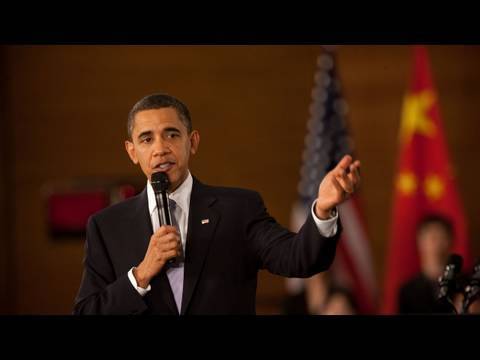
President Obama Holds Town Hall with Chinese Youth | 提供中文字幕
0
TS posted on 2016/04/19Ever wondered how leaders navigate complex global issues? Dive into President Obama's town hall with Chinese youth, where he discusses US-China relations, global trade, and climate change, offering a fantastic chance to pick up advanced vocabulary and complex sentence structures used in diplomatic dialogue!
Learn this video on the APP!
The VoiceTube App has more in-depth practice for videos!