
against you
US
UK
- Preposition
- In opposition to you.
- Expressing disagreement or disapproval of you.
A2Moreaid
US /ed/
UK /eɪd/
- Transitive Verb
- To help others and provide things
- Noun (Countable/Uncountable)
- Action of giving help to others
- Money or help given to those who need it
A2TOEICMorearound the world
US /əˈraʊnd ði wɜrld/
UK /əˈraund ðə wɜː(r)ld/
- Phrase
- In or to many countries.
- In various places throughout the world.
A2Moreat home
US /æt hom/
UK /æt həum/
- Phrase
- In one's own residence or country.
- Adjective
- Feeling comfortable and relaxed.
at that time
US /æt ðæt taɪm/
UK /æt ðæt taim/
- Phrase
- During a specific point in the past.
A1Moreat the point of
US /ət ðə ˈpɔɪnt ʌv/
UK /ət ðə ˈpɒint əv/
- Preposition
- Just about to do something or reach a state.
B2Moreat work
US /æt wɚk/
UK /æt wə:k/
- Phrase
- Located at one's place of employment
A1Morebackseat driver
US
UK
- Noun
- A passenger in a car who gives unwanted advice to the driver.
- A person who tries to control a situation without being directly involved.
A1Morebe with
US /bi wɪð/
UK /bi: wið/
- Phrasal Verb
- To accompany someone; to be in someone's presence.
- To support someone's opinion or cause.
A1Morecare of
US /kɛr ʌv/
UK /kɛə ɔv/
- Preposition
- Used in an address to indicate the person who will receive the mail for someone else.
A2Morecome back
US /kʌm bæk/
UK /kʌm bæk/
- Phrasal Verb
- To reply to someone, often forcefully
- To be remembered
A1Morecome together
US /kʌm təˈɡɛðɚ/
UK /kʌm təˈɡeðə/
- Phrasal Verb
- To assemble or unite; to start working together.
- To form a close relationship or bond.
A1Moredevil's advocate
US /ˈdɛvəlz ˈædvəkət/
UK /ˈdevəlz ˈædvəkət/
- other
- One who argues against a position to test its strength.
C1Moredo in
US
UK
- Phrasal Verb
- To make completely tired out and exhausted
- To destroy or cause damage to someone
A1Moredo your best
US
UK
- Verb (Transitive/Intransitive)
- To try as hard as you can; put in maximum effort.
A1Moredue to
US /du tu/
UK /dju: tu:/
- Preposition
- Because of; owing to
- Adjective
- Attributable to; caused by.
A1Morefigure out
US /ˈfɪɡjɚ aʊt/
UK /ˈfiɡə aut/
- Phrasal Verb
- To understand the behavior of someone
- To think through logically to find a solution
- Verb (Transitive/Intransitive)
- To understand or find an answer to something.
- To find a solution to a problem or understand something.
A1Morefor example
US
UK
- Phrase
- As an illustration or instance.
for instance
US /fɔr ˈɪnstəns/
UK /fɔ: ˈinstəns/
- Adverb
- As an example.
- Phrase
- As an example.
- As an illustration or case in point
B1Morefor the last time
US /fɚ ðə læst taɪm/
UK /fə ðə lɑ:st taɪm/
- other
- Used to emphasize that something is said or done finally or repeatedly.
A2Moregoing on
US /ˈɡoɪŋ ɑn/
UK /ˈgəʊɪŋ ɔn/
- Phrasal Verb
- To continue doing something
- To happen (usually negative)
A1Morehave to
US /hæv tu/
UK /ˈhæv tə/
- Auxiliary Verb
- Must do
A1Morehome in
US /ˈhoʊm ɪn/
UK /ˈhəum ɪn/
- other
- Move or direct toward a specific target or goal.
B2Morein general
US /ɪn ˈdʒɛnərəl/
UK /in ˈdʒenərəl/
- Phrase
- Typically; usually; on the whole.
- Not specific or detailed; broadly.
- Adjective
- Not detailed or specific; overall.
C2Morein order to
US /ɪn ˈɔrdɚ tu/
UK /in ˈɔ:də tu:/
- Preposition
- For the purpose of; with the aim of.
- Phrase
- In a specific sequence or arrangement.
- With the aim of; for the purpose of.
C1Morein relation to
US /ɪn rɪˈleʃən tu/
UK /in riˈleiʃən tu:/
- Phrase
- Concerning; with reference to; regarding.
- Compared with.
B1Morein school
US /ɪn skul/
UK /ɪn sku:l/
- other
- Attending an educational institution.
A1Morein solidarity
US
UK
- Phrase
- With unity or agreement of feeling or action, especially among individuals with a common interest; showing support or sympathy.
C1Morein the end
US /ɪn ði ɛnd/
UK /in ðə end/
- Phrase
- Finally; after a period of time or series of events.
- Ultimately; as the final result or consequence.
A1Morein the future
US /ɪn ði ˈfjutʃɚ/
UK /in ðə ˈfju:tʃə/
- Phrase
- At a later time; in times to come.
A1Morein the past
US
UK
- Phrase
- During a former period of time; previously.
A1Morein the world
US /ɪn ði wɜrld/
UK /in ðə wɜː(r)ld/
- Phrase
- Used to emphasize a question expressing surprise, confusion, disbelief
- Used to indicate the extent or degree of something, often in a superlative sense
A1Moreinstead of
US /ɪnˈstɛd ʌv/
UK /inˈsted ɔv/
- Preposition
- When one thing is replaced by another
- Adverb
- As a substitute or alternative.
A1Morelocal communities
US
UK
- Noun (plural)
- Groups of people living in the same area or having particular characteristics in common.
- Neighborhoods or districts where people share social connections and common interests.
B2Morelong list
US
UK
- Noun
- An extensive or detailed enumeration of items, names, or details.
- A list that is excessively long and therefore boring or difficult to manage.
A2Morelook at
US /lʊk æt/
UK /luk æt/
- Phrasal Verb
- To use your eyes to focus on something
- To focus your eyes on something carefully
A1Morelook back
US /lʊk bæk/
UK /luk bæk/
- Phrasal Verb
- To think about past events
A1Moreof a sudden
US
UK
- Phrase
- Quickly and unexpectedly; suddenly.
B2Moreof course
US /ʌv kɔː(r)s/
UK /ɔv kɔː(r)s/
- Adverb
- Sure ; Certainly
- Phrase
- For sure; certainly
A2Moreon end
US /ɑn ɛnd/
UK /ɔn end/
- Phrase
- Continuously; without stopping.
- In an upright position; standing vertically.
A1Moreon purpose
US /ɑn ˈpɚpəs/
UK /ɔn ˈpə:pəs/
- Idiom
- Intentionally; deliberately.
- Phrase
- Intentionally; deliberately.
A1Moreon television
US /ɑn ˈtɛləvɪʒən/
UK /ɒn ˈtelɪvɪʒən/
- other
- Appearing or broadcast on TV.
A2Moreproperly
US /ˈprɑːpərli/
UK /ˈprɔpəlɪ/
- Adverb
- In an appropriate or correct manner
- In a way that is suitable or appropriate.
A2Morerefugee
US /ˌrɛfjʊˈdʒi/
UK /ˌrefjuˈdʒi:/
- Countable Noun
- Person forced to leave their home e.g. due to war
B2Moresecurity
US /sɪˈkjʊrɪti/sə'kjurətɪ/
UK /sɪ'kjʊərətɪ/
- Noun
- Department in a company in charge of protection
- Financial document, like stocks, bonds and notes
A2TOEICMoresudden
US /ˈsʌdn/
UK /ˈsʌdn/
- Adjective
- Happening or done quickly or unexpectedly
B1Moretalking about
US
UK
- Phrasal Verb
- To discuss a particular topic.
- To be constantly mentioning or bringing up a subject.
A1Moreterrorist
US /ˈtɛrərɪst/
UK /ˈterərɪst/
- Noun (Countable/Uncountable)
- Radical who employs terror as a political weapon
- Adjective
- Relating to or characteristic of terrorism or terrorists.
A2Moreto a large extent
US /tə ə ˌlɑrdʒ ɪkˈstɛnt/
UK /tə ə ˌlɑ:dʒ ikˈstent/
- other
- Mostly or for the most part; primarily.
B2Moreturn into
US /tɚn ˈɪntu/
UK /tə:n ˈɪntuː/
- Phrasal Verb
- To change to become something else
- To change your direction to go into a place
A1Morework in
US /wɚk ɪn/
UK /wə:k in/
- Phrasal Verb
- To make an opening for something in your schedule
- To fit person/thing into a schedule or sequence
A1More
Vocabulary
- look at: To use your eyes to focus on something
- of course: Sure ; Certainly
- in relation to: Concerning; with reference to; regarding.
- in the world: Used to emphasize a question expressing surprise, confusion, disbelief
- of a sudden: Quickly and unexpectedly; suddenly.
- for instance: As an example.
- talking about: To discuss a particular topic.
- at the point of: Just about to do something or reach a state.
- in the end: Finally; after a period of time or series of events.
- home in: Move or direct toward a specific target or goal.
- on television: Appearing or broadcast on TV.
- in the past: During a former period of time; previously.
- to a large extent: Mostly or for the most part; primarily.
- at that time: During a specific point in the past.
- for example: As an illustration or instance.
- come together: To assemble or unite; to start working together.
- in solidarity: With unity or agreement of feeling or action, especially among individuals with a common interest; showing support or sympathy.
- devil's advocate: One who argues against a position to test its strength.
- instead of: When one thing is replaced by another
- turn into: To change to become something else
- at home: In one's own residence or country.
- care of: Used in an address to indicate the person who will receive the mail for someone else.
- do in: To make completely tired out and exhausted
- long list: An extensive or detailed enumeration of items, names, or details.
- in general: Typically; usually; on the whole.
- come back: To reply to someone, often forcefully
- local communities: Groups of people living in the same area or having particular characteristics in common.
- in order to: For the purpose of; with the aim of.
- in school: Attending an educational institution.
- going on: To continue doing something
- figure out: To understand the behavior of someone
- on end: Continuously; without stopping.
- around the world: In or to many countries.
- against you: In opposition to you.
- on purpose: Intentionally; deliberately.
- be with: To accompany someone; to be in someone's presence.
- work in: To make an opening for something in your schedule
- due to: Because of; owing to
- in the future: At a later time; in times to come.
- look back: To think about past events
- at work: Located at one's place of employment
- for the last time: Used to emphasize that something is said or done finally or repeatedly.
- backseat driver: A passenger in a car who gives unwanted advice to the driver.
- do your best: To try as hard as you can; put in maximum effort.
- have to: Must do
- situation: Place, position or area that something is in
- come: To arrive at a place
- people: Persons sharing culture, country, background, etc.
- world: All the humans, events, activities on the earth
- properly: In an appropriate or correct manner
- security: Department in a company in charge of protection
- country: An area of land that is controlled by a government
- today: This day; day that is happening now
- clear: Empty; without anything in it or on it
- aid: To help others and provide things
- support: To give assistance or advice to someone
- refugee: Person forced to leave their home e.g. due to war
- sudden: Happening or done quickly or unexpectedly
- international: Of or relating to several countries
- terrorist: Radical who employs terror as a political weapon
Get the full experience in the app
Learn anywhere with detailed sentence and usage analysis
01:03
She took a brave step forward, leaving behind her comfort zone to chase her dreams.
Vocabulary
- brave
adj. Having courage
- comfort zone
phr. A familiar situation where one feels safe
Explanation
a brave step is a noun phrase, where brave is an adjective modifying the noun step, meaning "a courageous step".
forward is an adverb modifying step, meaning "ahead".
The whole phrase serves as the object, answering the "what" of took (verb) — she took a brave step forward.
Get the full experience in the app
Look up words anytime with pronunciation, part of speech, and usage
brave
US/brev/
UK/breɪv/
adj.Brave
v.t.To bravely face
A2 Elementary
Get the full experience in the app
Practice speaking anytime and get instant pronunciation feedback
Try this speaking exercise.
Try practicing with this sentence.
80
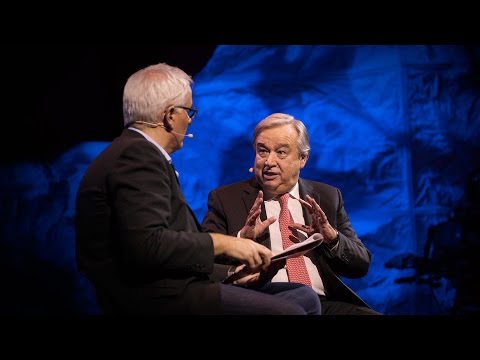
【TED】António Guterres: Refugees have the right to be protected (Refugees have the right to be protected | António Guterres)
0
Max Lin posted on 2016/01/21Ever wondered about the real stories behind the refugee crisis? This powerful TED Talk from António Guterres dives deep into the rights and protection of refugees, offering a crucial look at humanitarian aid and integration challenges. You'll pick up advanced vocabulary and gain a richer understanding of complex global issues!
Learn this video on the APP!
The VoiceTube App has more in-depth practice for videos!