
bang
US /bæŋ/
UK /bæŋ/
- Transitive Verb
- To strike something loudly or forcefully
- Noun
- Sudden loud noise, as when a bomb explodes
- A loud noise
A2Morebased on
US
UK
- Phrasal Verb
- To use something as the foundation or starting point for something else.
- Preposition
- Using something as the main idea or foundation.
- Relying on something as evidence or justification.
A1Moreevidence of
US
UK
- Phrase
- Facts, objects, or signs that make you believe that something is true.
- Something that shows that something else exists or is true.
A1Morefor example
US
UK
- Phrase
- As an illustration or instance.
hanging out
US
UK
- Phrasal Verb
- To spend time with your friends
- To spend times with friends or relax doing nothing
A2Morehave to
US /hæv tu/
UK /ˈhæv tə/
- Auxiliary Verb
- Must do
A1Morein the future
US /ɪn ði ˈfjutʃɚ/
UK /in ðə ˈfju:tʃə/
- Phrase
- At a later time; in times to come.
A1Morelook at
US /lʊk æt/
UK /luk æt/
- Phrasal Verb
- To use your eyes to focus on something
- To focus your eyes on something carefully
A1Moremake a promise
US
UK
- Verb (Transitive/Intransitive)
- To give someone your word that you will do something.
A1Moreon time
US /ɑn taɪm/
UK /ɔn taim/
- Phrase
- Adjective
- Arriving at or done by the required time
- Meeting a deadline; punctual in fulfilling obligations.
A1Moreroutine
US /ruˈtin/
UK /ru:ˈti:n/
- Adjective
- Happening or done regularly or habitually
- Always the same; boring through lack of variety
- Noun (Countable/Uncountable)
- Regular or habitual way of behaving or doing
- Series of actions that make up a performance
A2TOEICMoreschedule
US /ˈskedʒu:l/
UK /ˈʃedju:l/
- Noun (Countable/Uncountable)
- A list of events and their times
- A plan to do something at a certain time
- Transitive Verb
- To plan to do something at a certain time
A2TOEICMoresimple present
US
UK
- Noun
- A verb tense used to describe habits, unchanging situations, general truths, and fixed arrangements.
A1Moretalking about
US
UK
- Phrasal Verb
- To discuss a particular topic.
- To be constantly mentioning or bringing up a subject.
A1Morethink about
US /θɪŋk əˈbaʊt/
UK /θiŋk əˈbaut/
- Phrasal Verb
- To consider something carefully.
- To remember or call to mind.
A1Morethink of
US /θɪŋk ʌv/
UK /θiŋk ɔv/
- Phrasal Verb
- To look on as (being something specific); consider
- To consider or remember something.
- Verb (Transitive/Intransitive)
- To imagine or call something to mind
A1Moreto do with
US
UK
- Phrasal Verb
- To be about something; concern
A1Moretv show
US /ˈtiˈvi ʃo/
UK /ˈti:ˈvi: ʃəu/
- Noun
- A television program.
Vocabulary
- simple present: A verb tense used to describe habits, unchanging situations, general truths, and fixed arrangements.
- talking about: To discuss a particular topic.
- for example: As an illustration or instance.
- in the future: At a later time; in times to come.
- look at: To use your eyes to focus on something
- hanging out: To spend time with your friends
- to do with: To be about something; concern
- tv show: A television program.
- think of: To look on as (being something specific); consider
- based on: To use something as the foundation or starting point for something else.
- think about: To consider something carefully.
- on time
- evidence of: Facts, objects, or signs that make you believe that something is true.
- have to: Must do
- make a promise: To give someone your word that you will do something.
- present: Being in attendance; being there; having turned up
- evidence: Factual proof that helps to establish the truth
- routine: Happening or done regularly or habitually
- English: Language of the UK, USA, Nigeria and elsewhere
- simple: Not hard to understand or do; not complex
- future: Time that is to come after the present
- study: To focus on learning something usually at school
- lot: What happens to a person in life from chance; fate
- verb: Word that expresses an action or state
- schedule: A list of events and their times
- happen: To take place or occur
- talk: Style of speaking
- promise: To say you will certainly do something
- bang: To strike something loudly or forcefully
- week: Period of seven days from Sunday to Saturday
Get the full experience in the app
Learn anywhere with detailed sentence and usage analysis
01:03
She took a brave step forward, leaving behind her comfort zone to chase her dreams.
Vocabulary
- brave
adj. Having courage
- comfort zone
phr. A familiar situation where one feels safe
Explanation
a brave step is a noun phrase, where brave is an adjective modifying the noun step, meaning "a courageous step".
forward is an adverb modifying step, meaning "ahead".
The whole phrase serves as the object, answering the "what" of took (verb) — she took a brave step forward.
Get the full experience in the app
Look up words anytime with pronunciation, part of speech, and usage
brave
US/brev/
UK/breɪv/
adj.Brave
v.t.To bravely face
A2 Elementary
Get the full experience in the app
Practice speaking anytime and get instant pronunciation feedback
Try this speaking exercise.
Try practicing with this sentence.
80
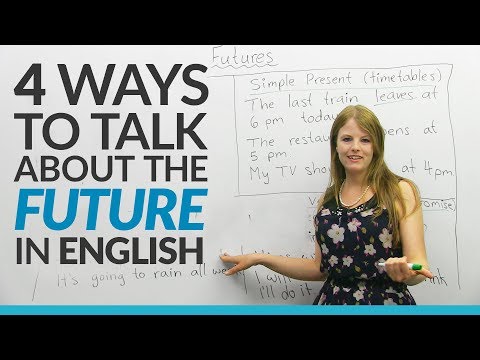
Learn English Tenses: 4 ways to talk about the FUTURE
0
Chris posted on 2015/12/05Confused about how to talk about the future in English? This video breaks down the four essential ways to discuss future plans, schedules, and even promises, using the present continuous, simple present, 'be going to,' and 'will.' You'll pick up practical grammar and everyday phrases that make discussing tomorrow a breeze!
Learn this video on the APP!
The VoiceTube App has more in-depth practice for videos!