
aspect
US /ˈæspɛkt/
UK /'æspekt/
- Noun (Countable/Uncountable)
- Way something looks or seems to be
- An element, feature, or quality of something
A2TOEICMoreat least
US /æt list/
UK /æt li:st/
- Adverb
- As a minimum
- Not less than
- Phrase
- No less than; at the minimum
- Used to indicate that something is positive in a bad situation.
C2Moreat the moment
US
UK
- Adverb
- At this time; now
A1Morecare of
US /kɛr ʌv/
UK /kɛə ɔv/
- Preposition
- Used in an address to indicate the person who will receive the mail for someone else.
A2Morecoat
US /koʊt/
UK /kəʊt/
- Noun
- Clothing worn outside over your normal clothes
- Transitive Verb
- To cover something thinly with something
A2Morecondition
US /kənˈdɪʃən/
UK /kənˈdɪʃn/
- Transitive Verb
- To improve something to make it better
- To cause to behave automatically in a certain way
- Noun (Countable/Uncountable)
- Disease or other medical problem
- The state of living you are in, e.g. good health
A2Morediary
US /ˈdaɪəri/
UK /ˈdaɪəri/
- Noun (Countable/Uncountable)
- Book in which you write what you did each day
- A book with spaces for each day of the year, used to record appointments and other arrangements.
A2TOEICMoredrawer
US /ˈdrɔɚ/
UK /drɔ:(r)/
- Countable Noun
- Sliding box of a desk, closet used to store things
- An undergarment covering the lower part of the body and having two holes for the legs.
B1Moreenjoyable
US /ɪnˈdʒɔɪəbl/
UK /ɪnˈdʒɔɪəbl/
- Adjective
- Satisfying or pleasurable
A2Morefare
US /fer/
UK /feə(r)/
- Noun (Countable/Uncountable)
- Money people pay to travel on buses, taxis, boats
- Food of a particular type.
- Intransitive Verb
- To perform well or poorly
- To succeed or manage in a particular situation.
B1TOEICMorefor example
US
UK
- Phrase
- As an illustration or instance.
for now
US /fɔr naʊ/
UK /fɔ: nau/
- Phrase
- Temporarily; for the present time.
- In the short term; for the immediate future.
A1Morefreezer
US /ˈfrizɚ/
UK /ˈfri:zə(r)/
- Countable Noun
- Electric refrigerator operating below zero degrees
B1Moregarage
US /ɡəˈrɑʒ, -ˈrɑdʒ/
UK /'ɡærɑ:ʒ/
- Countable Noun
- Place for keeping a car
- A place where vehicles are repaired.
- Uncountable Noun
- A style of rock music characterized by a raw, energetic sound, often associated with amateur bands practicing in garages.
A2Moregenerous
US /ˈdʒɛnərəs/
UK /ˈdʒenərəs/
- Adjective
- Giving or ready to give freely
- (Of an amount) larger than usual; lavish
A2TOEICMoreget lost
US /ɡɛt lɔst/
UK /ɡet lɔ:st/
- Intransitive Verb
- An impolite way of telling someone to go away.
- To become unable to find your way; to lose your sense of direction.
- Interjection
- An impolite way of telling someone to go away.
A1Moregoing on
US /ˈɡoɪŋ ɑn/
UK /ˈgəʊɪŋ ɔn/
- Phrasal Verb
- To continue doing something
- To happen (usually negative)
A1Moregot to
US /ɡɑt tu/
UK /gɔt tu:/
- Verb (Transitive/Intransitive)
- To arrive at some place
- To have the opportunity or permission to do something
- Phrasal Verb
- To appeal to the emotions of; move
- To finally begin to start something after a delay
A1Moregrass
US /græs/
UK /grɑ:s/
- Verb (Transitive/Intransitive)
- To betray someone
- To cover an area of ground to make a lawn or field
- Uncountable Noun
- Slang name for marijuana
A2Morehave to
US /hæv tu/
UK /ˈhæv tə/
- Auxiliary Verb
- Must do
A1Morein different ways
US
UK
- Phrase
- Using various methods or approaches; with variety.
- In varying manners or styles; not uniformly.
A1Morein good condition
US
UK
- Phrase
- Being in a satisfactory or healthy state; not damaged or deteriorated.
- Well-maintained and showing little sign of wear or damage.
A1Morein sight
US /ɪn saɪt/
UK /in sait/
- Phrase
- Visible; able to be seen.
- Near to being achieved; imminent.
in touch
US /ɪn tʌtʃ/
UK /in tʌtʃ/
- Adjective
- Having contact or communication with someone.
- Aware of or informed about something.
B1Morejournal
US /ˈdʒɚnəl/
UK /ˈdʒə:nl/
- Noun (Countable/Uncountable)
- A diary; record of what you do every day
- Magazine of academic papers
B1TOEICMorejourney
US /ˈdʒɚni/
UK /'dʒɜ:nɪ/
- Noun
- Act of traveling from one place to another; trip
- Intransitive Verb
- To travel through a place
A2TOEICMorekeep off
US
UK
- Phrasal Verb
- To not walk on something e.g. the grass
A1Morelook at
US /lʊk æt/
UK /luk æt/
- Phrasal Verb
- To use your eyes to focus on something
- To focus your eyes on something carefully
A1Moremaintain
US /menˈten/
UK /meɪn'teɪn/
- Transitive Verb
- To keep saying something a certain way
- To keep (machine) working by checking, repairing
A2TOEICMoremarker
US /ˈmɑ:rkə(r)/
UK /ˈmɑ:kə(r)/
- Noun (Countable/Uncountable)
- Something that is easy to recognize or identify
- Thick pen used for writing, e.g. on boards
B1Moremove on
US /muv ɑn/
UK /mu:v ɔn/
- Phrasal Verb
- To decide to change or go to a different place
- To start talking about something different.
A1Moremuddy
US /ˈmʌdi/
UK /ˈmʌdi/
- Adjective
- (Of the ground) soft and watery
- Unclear or confused
- Transitive Verb
- To make something muddy
- To make something unclear or confused
A2Moreneglect
US /nɪˈɡlɛkt/
UK /nɪ'ɡlekt/
- Uncountable Noun
- Act of failing to do something important, required
- State or condition of not receiving proper care
- Transitive Verb
- To not do something that is important or required
- To fail to take care of something; ignore
B1TOEICMoreon the table
US /ɑn ði ˈtebəl/
UK /ɔn ðə ˈteibl/
- Phrase
- Located on the surface of a table.
- Available for consideration or discussion.
A1Moreon to
US /ɑn tu/
UK /ɔn tu:/
- Preposition
- Toward something; forward
- Aware of someone's activities.
- Adjective
- Aware of someone's deception or illegal activities.
A1Morepen
US /pɛn/
UK /pen/
- Countable Noun
- Small fenced area where people or animals are kept
- Writing tool that uses ink
- Transitive Verb
- To put animals, people in a fenced or closed area
- To write (a song, love letter, etc.)
A2Morepreserve
US /prɪˈzɜ:rv/
UK /prɪˈzɜ:v/
- Transitive Verb
- To cook food so it can be kept for long periods
- To protect something from harm, loss or damage
- Noun (Countable/Uncountable)
- Sweet fruit spread; jam
- Protected area of land with plants and animals
B1TOEICMoreregularly
US /ˈregjələrli/
UK /ˈregjələli/
- Adverb
- At the usual time each day, week, or month
- In a normal or customary way.
B1TOEICMorerepair
US /rɪˈper/
UK /rɪˈpeə(r)/
- Noun (Countable/Uncountable)
- How well cared for a thing is; physical condition
- Action to fix or restore something that is broken
- Transitive Verb
- To fix or restore something that is broken
- To remedy or set right.
A2TOEICMoreretain
US /rɪˈten/
UK /rɪ'teɪn/
- Transitive Verb
- To continue to have or use; keep the quality of
- To keep one thing inside another for a time
A2Moresession
US /ˈsɛʃən/
UK /ˈseʃn/
- Noun (Countable/Uncountable)
- Period of time used for a specific activity
- Series of meetings for e.g. a court, legislature
A2TOEICMoresight
US /saɪt/
UK /saɪt/
- Transitive Verb
- To aim (a gun) at something to get your range
- To see something rare or unusual
- Noun (Countable/Uncountable)
- Things or people that one can see
- Range or distance that someone can see
A2TOEICMoresimilarly
US /ˈsɪmələrli/
UK /ˈsɪmələli/
- Adverb
- In a way almost the same as something else
A2Moreslightly
US /ˈslaɪtli/
UK /ˈslaɪtli/
- Adverb
- Only a little
B1Moretake it out of
US /teɪk ɪt aʊt əv/
UK /teɪk ɪt aʊt ɒv/
- other
- To cause someone to feel very tired or exhausted.
B2Moretaxi
US /ˈtæksi/
UK /'tæksɪ/
- Countable Noun
- Car that transports people for money
- Intransitive Verb
- (Plane) to move before taking off or after landing
A2Moretemporary
US /'tempəreri/
UK /ˈtemprəri/
- Adjective
- Continuing for a limited time; not permanent
- Noun
- A temporary worker.
A2TOEICMoretempting
US /ˈtɛmptɪŋ/
UK /ˈtemptɪŋ/
- Transitive Verb
- To make someone want something even if it's bad
A2Moretip
US /tɪp/
UK /tɪp/
- Transitive Verb
- To pour or move something from a place, container
- To give extra money for good service
- Noun
- End point of e.g. a pencil or finger
- Extra money given for good service
A2Moreto do with
US
UK
- Phrasal Verb
- To be about something; concern
A1Moreusage
US /ˈjusɪdʒ, -zɪdʒ/
UK /ˈju:sɪdʒ/
- Noun (Countable/Uncountable)
- Amount something is used
- Way something is actually used
B2Morewrite down
US /raɪt daʊn/
UK /rait daun/
- Phrasal Verb
- To record in writing
A1Morewrite in
US
UK
- Phrasal Verb
- To add text to a document or form.
- To vote for a candidate whose name is not printed on the ballot by writing it in.
A1More
Vocabulary
- have to: Must do
- in sight: Visible; able to be seen.
- keep off: To not walk on something e.g. the grass
- for example: As an illustration or instance.
- look at: To use your eyes to focus on something
- on to: Toward something; forward
- in good condition: Being in a satisfactory or healthy state; not damaged or deteriorated.
- got to: To arrive at some place
- get lost: An impolite way of telling someone to go away.
- in different ways: Using various methods or approaches; with variety.
- at the moment: At this time; now
- on the table: Located on the surface of a table.
- going on: To continue doing something
- move on: To decide to change or go to a different place
- care of: Used in an address to indicate the person who will receive the mail for someone else.
- write down: To record in writing
- at least: As a minimum
- write in: To add text to a document or form.
- to do with: To be about something; concern
- take it out of: To cause someone to feel very tired or exhausted.
- in touch: Having contact or communication with someone.
- for now: Temporarily; for the present time.
- pen: Small fenced area where people or animals are kept
- grass: To betray someone
- taxi: Car that transports people for money
- car: A vehicle with wheels and engine to carry people
- swim: To move through water by moving parts of the body
- summer: Part of the year when the weather is hot
- leg: Part of the body from the hips down
- bag: Soft container to put things in and carry with you
- food: What people and animals eat to live
- driver: People who move cattle from one place to another
- change: To exchange one set of clothes for another
- lesson: Something done to learn or teach something; class
- coat: Clothing worn outside over your normal clothes
- stop: To block or close something
- write: To compose letters and words on paper or a screen
- diary: Book in which you write what you did each day
- verb: Word that expresses an action or state
- drawer: Sliding box of a desk, closet used to store things
- hold: To agree to keep something for someone
- building: To establish e.g. a reputation, over time
- journey: Act of traveling from one place to another; trip
- break: To create a new record e.g. running the 100m dash
- finally: used especially at the beginning of a sentence to introduce the last point or idea
- lovely: Attractive or beautiful
- keep: Large, strong tower in the middle of a castle
- notice: To become aware by sight, touch, or hearing
- repair: How well cared for a thing is; physical condition
- lose: To be unable to keep in check or control something
- rest: Time when one relaxes, sleeps, or is inactive
- garage: Place for keeping a car
- secret: Kept hidden from others; Known only to a few people
- temporary: Continuing for a limited time; not permanent
- meaning: To express a particular idea or thought
- freezer: Electric refrigerator operating below zero degrees
- sight: To aim (a gun) at something to get your range
- condition: To improve something to make it better
- continue: To do something without stopping, or after pausing
- tip: To pour or move something from a place, container
- fare: Money people pay to travel on buses, taxis, boats
- enjoyable: Satisfying or pleasurable
- beautifully: Having dome something well
- generous: Giving or ready to give freely
- session: Period of time used for a specific activity
- regularly: At the usual time each day, week, or month
- promise: To say you will certainly do something
- preserve: To cook food so it can be kept for long periods
- slightly: Only a little
- muddy: (Of the ground) soft and watery
- maintain: To keep saying something a certain way
- tempting: To make someone want something even if it's bad
- aspect: Way something looks or seems to be
- similarly: In a way almost the same as something else
- neglect: Act of failing to do something important, required
- usage: Amount something is used
- journal: A diary; record of what you do every day
- retain: To continue to have or use; keep the quality of
- marker: Something that is easy to recognize or identify
Get the full experience in the app
Learn anywhere with detailed sentence and usage analysis
01:03
She took a brave step forward, leaving behind her comfort zone to chase her dreams.
Vocabulary
- brave
adj. Having courage
- comfort zone
phr. A familiar situation where one feels safe
Explanation
a brave step is a noun phrase, where brave is an adjective modifying the noun step, meaning "a courageous step".
forward is an adverb modifying step, meaning "ahead".
The whole phrase serves as the object, answering the "what" of took (verb) — she took a brave step forward.
Get the full experience in the app
Look up words anytime with pronunciation, part of speech, and usage
brave
US/brev/
UK/breɪv/
adj.Brave
v.t.To bravely face
A2 Elementary
Get the full experience in the app
Practice speaking anytime and get instant pronunciation feedback
Try this speaking exercise.
Try practicing with this sentence.
80
0
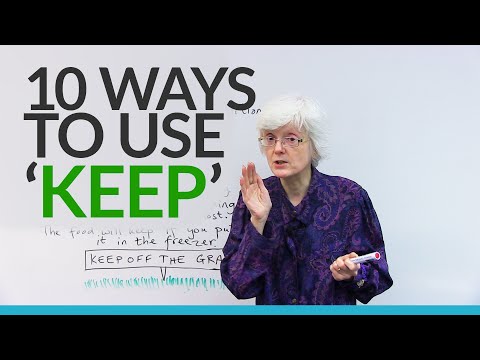
VoiceTube posted on 2015/09/04Ever get confused by the versatile verb 'keep'? This video breaks down 10 super practical ways to use 'keep' in everyday English conversations, from keeping secrets to keeping the change! You'll pick up useful phrases and boost your grammar confidence in no time.
Learn this video on the APP!
The VoiceTube App has more in-depth practice for videos!