
a couple hundred
US
UK
- Determiner
- Approximately two hundred.
- Phrase
- A small number of hundreds; more than one hundred but not many.
A2Moreall the things
US
UK
- Pronoun
- Everything; all items or aspects
- Determiner
- Every item or object being considered or discussed.
A1Morealternative energy
US
UK
- Noun
- Energy generated from natural resources, such as sunlight, wind, rain, tides, and geothermal heat, which are renewable.
at least
US /æt list/
UK /æt li:st/
- Adverb
- As a minimum
- Not less than
- Phrase
- No less than; at the minimum
- Used to indicate that something is positive in a bad situation.
C2Moreat night
US /æt naɪt/
UK /æt nait/
- Phrase
- During the night; in the nighttime.
A1Morebacteria
US /bækˈtɪriə/
UK /bæk'tɪərɪə/
- Noun (plural)
- The very small creatures that can cause disease
B2Morebacterial
US /bæk'tɪərɪrl/
UK /bæk'tɪərɪəl/
- Adjective
- Concerning or caused by bacteria
B2Morebacterium
US /bækˈtɪriəm/
UK /bæk'tɪərɪəm/
- Countable Noun
- The very small creatures that can cause disease
B2Morebeef up
US /bif ʌp/
UK /bi:f ʌp/
- Phrasal Verb
- To be made stronger and stronger
A2Morebells and whistles
US
UK
- Noun (Countable/Uncountable)
- Attractive but often nonessential features; ornamentation.
- Extra features that are not essential but add to the appeal or functionality.
B1Morebiology
US /baɪˈɑlədʒi/
UK /baɪˈɒlədʒi/
- Uncountable Noun
- The study of living things
A2Morebody
US /ˈbɑdi/
UK /ˈbɒdi/
- Noun
- The physical structure of a person or animal.
- Noun (Countable/Uncountable)
- The main or central part of something.
- The weight and texture of a drink (like wine or coffee) in the mouth.
A2Morecarry out
US /ˈkæri aʊt/
UK /ˈkæri aut/
- Phrasal Verb
- To fulfill or perform your instructions, duty
- Verb (Transitive/Intransitive)
- To perform or execute a task, order, or plan.
- To remove something or someone from a place.
A1Morecell
US /sɛl/
UK /sel/
- Countable Noun
- Smallest unit of living things in biology
- Group of people - often from a secret organization
A2Morechemical
US /ˈkɛmɪkəl/
UK /ˈkemɪkl/
- Noun (Countable/Uncountable)
- Basic substance produced by mixing elements
- The branch of science concerned with the substances of which matter is composed, the investigation of their properties and reactions, and the use of such reactions to form new substances.
- Adjective
- Made of various elements
A2Morechemistry
US /ˈkɛmɪstri/
UK /'kemɪstrɪ/
- Uncountable Noun
- The study of the structure of substances
B1Morecollective
US /kəˈlɛktɪv/
UK /kəˈlektɪv/
- Noun
- Business owned or controlled by its workers
- Adjective
- Formed by working together as a group
A2Morecommunication
US /kəˌmjunɪˈkeʃən/
UK /kəˌmju:nɪ'keɪʃn/
- Noun (Countable/Uncountable)
- Talking to people; giving information to people
- The process of conveying information, ideas, or feelings through language or other means.
A2Morecount
US /kaʊnt/
UK /kaʊnt/
- Verb (Transitive/Intransitive)
- To add things together to find the total number
- To matter or be important
- Countable Noun
- Number of things added together, e.g. votes
- With the number of crimes, knockouts, as stated
A2Moredemographic
US /ˌdemə'ɡræfɪk/
UK /ˌdemə'ɡræfɪk/
- Noun
- Group of people with similar characteristics
- A particular sector of a population.
- Adjective
- Characterizing human populations
C2Moredepending on
US
UK
- Phrasal Verb
- To rely on for support (financial or emotional)
- Influenced or determined by.
- Preposition
- Subject to; contingent on
- Relying on someone or something for support or assistance.
A2Moredepict
US /dɪˈpɪkt/
UK /dɪ'pɪkt/
- Transitive Verb
- To represent or describe something using words
- To represent or show something in a picture or painting; to portray visually.
B1TOEICMoredilute
US /daɪˈlut, dɪ-/
UK /daɪˈlu:t/
- Transitive Verb
- To make something weaker or less efficient
B2Morediscover
US /dɪˈskʌvɚ/
UK /dɪˈskʌvə(r)/
- Transitive Verb
- To find something new that was not known before
- To learn or find out (something previously unknown or secret).
A2TOEICMoredivide
US /dɪˈvaɪd/
UK /dɪ'vaɪd/
- Verb (Transitive/Intransitive)
- To split numbers by another number, e.g. 6 / 2 = 3
- To separate something into equal pieces
- Noun
- A separation or distinction.
A2TOEICMoreDouble
US /ˈdʌbəl/
UK /'dʌbl/
- Countable Noun
- Person that is exactly like someone else
- Adjective
- Concerning or intended for use by two people
- Two times the amount or degree; twice
A2Moreenzyme
US /ˈɛnzaɪm/
UK /ˈenzaɪm/
- Noun
- A protein made by cells
B2TOEICMoreexcept that
US /ɪkˈsɛpt ðæt/
UK /ikˈsept ðæt/
- Conjunction
- But; with the exception that.
A2Moreextracellular
US /ˌekstrə'seljʊlə/
UK /ˌekstrə'seljʊlə/
- Adjective
- Located or occurring outside a cell or cells
B2Morefigure out
US /ˈfɪɡjɚ aʊt/
UK /ˈfiɡə aut/
- Phrasal Verb
- To understand the behavior of someone
- To think through logically to find a solution
- Verb (Transitive/Intransitive)
- To understand or find an answer to something.
- To find a solution to a problem or understand something.
A1Morefinish with
US
UK
- Phrasal Verb
- To end a relationship
A1Morefloat away
US
UK
- Phrasal Verb
- To drift or move gently away on water or in the air.
A2Moregeneric
US /dʒəˈnɛrɪk/
UK /dʒə'nerɪk/
- Adjective
- Concerning a product without a brand name
- Concerning an entire class, category, or group
B2Moregenetic
US /dʒəˈnɛtɪk/
UK /dʒəˈnetɪk/
- Adjective
- Of, relating to, or controlled by genes
- Relating to genes or heredity.
B1Moregenetic information
US /dʒəˈnɛtɪk ˌɪnfɚˈmeʃən/
UK /dʒiˈnetik ˌɪnfəˈmeiʃən/
- Uncountable Noun
- Hereditary information encoded in the genetic material (DNA or RNA) of an organism.
going on
US /ˈɡoɪŋ ɑn/
UK /ˈgəʊɪŋ ɔn/
- Phrasal Verb
- To continue doing something
- To happen (usually negative)
A1Morehave to
US /hæv tu/
UK /ˈhæv tə/
- Auxiliary Verb
- Must do
A1Morehormone
US /ˈhɔrˌmon/
UK /'hɔ:məʊn/
- Noun
- Chemical produced by the body to control functions
B2Morein conjunction with
US /ɪn kənˈdʒʌŋkʃən wɪð/
UK /in kənˈdʒʌŋkʃən wið/
- Phrase
- Together with; along with
A1Morein fact
US /ɪn fækt/
UK /in fækt/
- Adverb
- Used to emphasize the truth of a statement, especially one that contrasts with or contradicts something else.
- Used to introduce a more detailed or surprising piece of information.
- Phrase
- Used to emphasize the truth of a statement, especially one that is surprising or contrary to what might be expected.
C1Morein parallel
US /ɪn ˈpærəˌlɛl/
UK /in ˈpærəlel/
- Adverb
- Done at the same time; simultaneously.
- Adjective
- Relating to a system where multiple operations are carried out simultaneously, especially in computing.
C2Morein the dark
US /ɪn ði dɑrk/
UK /in ðə dɑ:k/
- Adjective
- Uninformed about something; unaware.
- Phrase
- In a state of secrecy or ignorance.
- In a place with little or no light.
A1Morein the past
US
UK
- Phrase
- During a former period of time; previously.
A1Morein unison
US /ɪn ˈjunɪsən/
UK /in ˈju:nɪsən/
- Adverb
- Together; at the same time; in a way that shows complete agreement
- Adjective
- Performing the same notes or movements at the same time.
A1Moreincredibly
US /ɪnˈkrɛdəblɪ/
UK /ɪnˈkredəbli/
- Adverb
- To a great degree; very; amazingly
- Extremely; so much so it is hard to believe
A2Moreincredibly important
US
UK
- Adjective
- Extremely significant or crucial.
A1Moreinitiate
US /ɪˈnɪʃ.i.eɪt/
UK /ɪˈnɪʃ.i.eɪt/
- Transitive Verb
- To cause something to begin
- To allow someone into a group by a special ceremony
- Noun
- A person who has been initiated into an organization or activity.
A2TOEICMorelaunch
US /lɔntʃ, lɑntʃ/
UK /lɔ:ntʃ/
- Noun
- Starting a new project; introducing new product
- Act of firing rockets into the air
- Transitive Verb
- To start a new project; start selling a product
- To put a rocket into the air
A2TOEICMorelive on
US /lɪv ɒn/
UK /lɪv ɒn/
- Phrasal Verb
- To continue to exist or be remembered.
- To eat a particular type of food as the main thing.
B2Morelook at
US /lʊk æt/
UK /luk æt/
- Phrasal Verb
- To use your eyes to focus on something
- To focus your eyes on something carefully
A1Moremake up
US /mek ʌp/
UK /meik ʌp/
- Phrasal Verb
- To invent or create a story
- To add up to
- Verb (Transitive/Intransitive)
- To invent a story, excuse, etc.
- To compensate for something lost, missed, or deficient.
A1Moremolecular
US /məˈlɛkjəlɚ/
UK /mə'lekjələ(r)/
- Adjective
- About or caused by molecules
B2Moremolecule
US /ˈmɑlɪˌkjul/
UK /ˈmɒlɪkju:l/
- Noun
- Two or more atoms chemically combined
B2Moremoonlight
US /ˈmunˌlaɪt/
UK /ˈmu:nlaɪt/
- Intransitive Verb
- To work at a second job (often late at night)
- Uncountable Noun
- Light of the moon
B2Morename for
US
UK
- Phrasal Verb
- To give someone or something a particular name, often in honor of someone else.
A1Moreocean
US /ˈoʃən/
UK /'əʊʃn/
- Uncountable Noun
- Large body of salt water; a large sea
A2Moreof course
US /ʌv kɔː(r)s/
UK /ɔv kɔː(r)s/
- Adverb
- Sure ; Certainly
- Phrase
- For sure; certainly
A2Morepercent
US /pɚˈsɛnt/
UK /pə'sent/
- Adverb
- One one-hundredth of a whole; the symbol %
- Noun (Countable/Uncountable)
- A proportion multiplied by 100
- A specified amount in every hundred
A2TOEICMorepink
US /pɪŋk/
UK /pɪŋk/
- Adjective
- Color made by mixing red and white
A2Morepractical
US /ˈpræktɪkəl/
UK /ˈpræktɪkl/
- Adjective
- Relating to what is sensible, real or useful
- Relating to experience, action, or practice; not theoretical or ideal.
- Noun
- A practical exam or lesson.
- A person concerned chiefly with the practice of something; a person with practical skills.
A2TOEICMoreprimitive
US /ˈprɪmɪtɪv/
UK /ˈprɪmətɪv/
- Adjective
- Lacking a written language and advanced technology
- Being rough and underdeveloped
- Noun (Countable/Uncountable)
- Self-taught artist; the art done in this style
- Offensive people considered lacking a culture
B1Moreput up with
US /pʊt ʌp wɪð/
UK /put ʌp wið/
- Phrasal Verb
- To suffer (a difficult thing) without complaining
- To endure or accept something undesirable.
A1Morereceptor
US /rɪˈseptər /
UK /rɪˈseptə(r)/
- Noun
- A nerve ending that changes stimuli into impulses
B2Morerecognize
US /ˈrek.əɡ.naɪz/
UK /ˈrek.əɡ.naɪz/
- Transitive Verb
- To accept the truth or reality of something
- To consider something as important or special
A2TOEICMoreresistant
US /rɪˈzɪstənt/
UK /rɪˈzɪstənt/
- Adjective
- Not affected by something
- Being opposed to or wanting to prevent something
- Noun
- A person who resists authority or control.
A2Moreridiculous
US /rɪˈdɪkjələs/
UK /rɪˈdɪkjələs/
- Adjective
- Funny or foolish; deserving to be laughed at
A2Moresame time
US
UK
- Phrase
- Occurring simultaneously or at the same point in time.
- At the identical time as before; recurring at a fixed hour.
- Noun
- An equal duration or period.
A1Moresand
US /sænd/
UK /sænd/
- Uncountable Noun
- Area composed of tiny pieces of rock near an ocean
- Small pieces of rock that make beaches and deserts
- Transitive Verb
- To cover a surface with grit e.g. roads
- To smoothen a surface with sandpaper
A2Moreshutter
US /ˈʃʌtɚ/
UK /ˈʃʌtə(r)/
- Noun (Countable/Uncountable)
- Part of a camera that opens to allow in light
- Piece of wood or metal that covers a window
- Transitive Verb
- To close a business permanently
- To close the shutters over a window
B2Moreslide
US /slaɪd/
UK /slaɪd/
- Noun
- Part of machines that slides backward and forward
- Reduction in amount, price, quality
- Verb (Transitive/Intransitive)
- To pass or move smoothly and rapidly into or out
- To move smoothly and rapidly over a surface
A2Moresquid
US /skwɪd/
UK /skwɪd/
- Noun
- Sea creature with ten arms, and a long thin body
B1Moresuppose
US /səˈpoʊz/
UK /sə'pəʊz/
- Verb (Transitive/Intransitive)
- To imagine or guess what might happen
- Conjunction
- What if
A2TOEICMoretarget
US /ˈtɑrɡɪt/
UK /'tɑ:ɡɪt/
- Noun (Countable/Uncountable)
- A goal or amount you are trying to achieve
- Group you are trying to sell to or influence
- Transitive Verb
- To try to influence; direct a message toward
- (Army) to aim an attack at something
A2TOEICMorethink about
US /θɪŋk əˈbaʊt/
UK /θiŋk əˈbaut/
- Phrasal Verb
- To consider something carefully.
- To remember or call to mind.
A1Morethink of
US /θɪŋk ʌv/
UK /θiŋk ɔv/
- Phrasal Verb
- To look on as (being something specific); consider
- To consider or remember something.
- Verb (Transitive/Intransitive)
- To imagine or call something to mind
A1Moreturn on
US /tɚn ɑn/
UK /tə:n ɔn/
- Phrasal Verb
- To cause someone to be interested or excited
- Transitive Verb
- To activate or switch on a device or appliance.
- To suddenly attack or criticize someone.
A1Morevital for
US
UK
- Adjective
- Absolutely necessary or important; essential.
A1Morevote
US /vot/
UK /vəʊt/
- Verb (Transitive/Intransitive)
- To make a choice for or against, as in an election
- Noun
- Act of deciding who to choose in an election
A2More
Vocabulary
- of course: Sure ; Certainly
- think of: To look on as (being something specific); consider
- carry out
- think about: To consider something carefully.
- turn on
- make up: To invent or create a story
- depending on: To rely on for support (financial or emotional)
- at night: During the night; in the nighttime.
- look at: To use your eyes to focus on something
- in fact: Used to emphasize the truth of a statement, especially one that contrasts with or contradicts something else.
- genetic information: Hereditary information encoded in the genetic material (DNA or RNA) of an organism.
- except that: But; with the exception that.
- all the things: Everything; all items or aspects
- incredibly important: Extremely significant or crucial.
- vital for: Absolutely necessary or important; essential.
- have to: Must do
- float away: To drift or move gently away on water or in the air.
- put up with: To suffer (a difficult thing) without complaining
- figure out: To understand the behavior of someone
- in the past: During a former period of time; previously.
- in the dark: Uninformed about something; unaware.
- in unison: Together; at the same time; in a way that shows complete agreement
- name for: To give someone or something a particular name, often in honor of someone else.
- in parallel: Done at the same time; simultaneously.
- in conjunction with: Together with; along with
- same time: Occurring simultaneously or at the same point in time.
- at least: As a minimum
- a couple hundred: Approximately two hundred.
- going on: To continue doing something
- bells and whistles: Attractive but often nonessential features; ornamentation.
- finish with: To end a relationship
- live on: To continue to exist or be remembered.
- beef up: To be made stronger and stronger
- alternative energy: Energy generated from natural resources, such as sunlight, wind, rain, tides, and geothermal heat, which are renewable.
- light: To cause something to burn; put a burning match to
- talk: Style of speaking
- language: Words or signs used to communicate messages
- live: To be alive
- carry: To have a child, be pregnant
- red: Being the color of blood
- animal: A living creature that is not a plant or person
- make: To arrange or prepare something e.g. dinner
- body: The physical structure of a person or animal.
- number: Symbols such as 1, 2, 56, 793
- start: First time or place that a thing exists; beginning
- important: Having power or authority
- small: Little in size; not big
- picture: General situation or state of being
- study: To focus on learning something usually at school
- hope: When you wish something will happen; what you wish
- grow: To get bigger and more mature; make plants do this
- sort: To organize things by putting them into groups
- collective: Business owned or controlled by its workers
- biology: The study of living things
- healthy: In good condition physically, or financially; well
- chemistry: The study of the structure of substances
- turn: To become (a particular age)
- information: Collection of facts and details about something
- suppose: To imagine or guess what might happen
- single: One run in cricket or a hit baseball
- pink: Color made by mixing red and white
- bore: To accept (responsibilities or duties)
- bit: Device put in a horse's mouth to control it
- Double: Person that is exactly like someone else
- sense: Certain mental feeling or emotion
- human: A person; a man, woman or child
- communication: Talking to people; giving information to people
- system: Set of organized, planned ideas that work together
- ocean: Large body of salt water; a large sea
- count: To add things together to find the total number
- sand: Area composed of tiny pieces of rock near an ocean
- percent: One one-hundredth of a whole; the symbol %
- vote: To make a choice for or against, as in an election
- recognize: To accept the truth or reality of something
- figured: To appear in a game, play or event
- earth: Wire connecting an electrical device to the ground
- amount: Quantity of something
- divide: To split numbers by another number, e.g. 6 / 2 = 3
- discover: To find something new that was not known before
- cell: Smallest unit of living things in biology
- chemical: Basic substance produced by mixing elements
- incredibly: To a great degree; very; amazingly
- slide: Part of machines that slides backward and forward
- resistant: Not affected by something
- launch: Starting a new project; introducing new product
- moonlight: To work at a second job (often late at night)
- target: A goal or amount you are trying to achieve
- practical: Relating to what is sensible, real or useful
- genetic: Of, relating to, or controlled by genes
- ridiculous: Funny or foolish; deserving to be laughed at
- treat: To pay for the food or enjoyment of someone else
- bacteria: The very small creatures that can cause disease
- bacterium: The very small creatures that can cause disease
- bacterial: Concerning or caused by bacteria
- primitive: Lacking a written language and advanced technology
- initiate: To cause something to begin
- depict: To represent or describe something using words
- molecule: Two or more atoms chemically combined
- squid: Sea creature with ten arms, and a long thin body
- receptor: A nerve ending that changes stimuli into impulses
- molecular: About or caused by molecules
- enzyme: A protein made by cells
- generic: Concerning a product without a brand name
- demographic: Group of people with similar characteristics
- shutter: Part of a camera that opens to allow in light
- dilute: To make something weaker or less efficient
- hormone: Chemical produced by the body to control functions
- extracellular: Located or occurring outside a cell or cells
Get the full experience in the app
Learn anywhere with detailed sentence and usage analysis
01:03
She took a brave step forward, leaving behind her comfort zone to chase her dreams.
Vocabulary
- brave
adj. Having courage
- comfort zone
phr. A familiar situation where one feels safe
Explanation
a brave step is a noun phrase, where brave is an adjective modifying the noun step, meaning "a courageous step".
forward is an adverb modifying step, meaning "ahead".
The whole phrase serves as the object, answering the "what" of took (verb) — she took a brave step forward.
Get the full experience in the app
Look up words anytime with pronunciation, part of speech, and usage
brave
US/brev/
UK/breɪv/
adj.Brave
v.t.To bravely face
A2 Elementary
Get the full experience in the app
Practice speaking anytime and get instant pronunciation feedback
Try this speaking exercise.
Try practicing with this sentence.
80
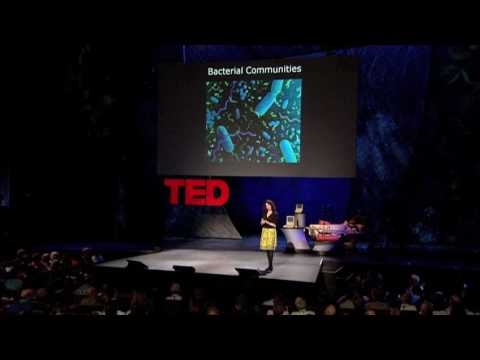
【TED】Bonnie Bassler: The secret, social lives of bacteria
0
Shuishui posted on 2015/08/25Ever wondered how bacteria chat with each other? This fascinating TED Talk dives into the secret social lives of bacteria, revealing how they communicate using 'quorum sensing'! You'll pick up some awesome advanced vocabulary related to the microbiome and antibiotic resistance while learning about this incredible scientific phenomenon.
Learn this video on the APP!
The VoiceTube App has more in-depth practice for videos!