
add up to
US /æd ʌp tu/
UK /æd ʌp tu:/
- Phrasal Verb
- To amount to a particular sum or total.
- To have a particular result or effect; to be equal to.
A2Moreapplause
US /əˈplɔz/
UK /ə'plɔ:z/
- Noun (Countable/Uncountable)
- The sound made by clapping a performance or speech
B1Moreat a time
US /æt e taɪm/
UK /æt ə taim/
- Phrase
- Separately; one by one
- Simultaneously; together
A1Moreat least
US /æt list/
UK /æt li:st/
- Adverb
- As a minimum
- Not less than
- Phrase
- No less than; at the minimum
- Used to indicate that something is positive in a bad situation.
C2Moreaudio
US /ˈɔ:dioʊ/
UK /ˈɔ:diəʊ/
- Adjective
- Concerning sound
- Uncountable Noun
- Sound, especially when recorded or transmitted.
B2TOEICMorebang on
US /bæŋ ɑn/
UK /bæŋ ɔn/
- Phrase
- Exactly (used with numbers, time, for emphasis)
- Phrasal Verb
- To keep talking so it becomes annoying
A2Morebased on
US
UK
- Phrasal Verb
- To use something as the foundation or starting point for something else.
- Preposition
- Using something as the main idea or foundation.
- Relying on something as evidence or justification.
A1Morecapture
US /ˈkæptʃɚ/
UK /'kæptʃə(r)/
- Transitive Verb
- To attract and hold e.g. interest, attention
- To record, tape, or film something
- Noun
- The act of seizing or taking control of something.
B1Moreexperiment
US /ɪkˈspɛrəmənt/
UK /ɪk'sperɪmənt/
- Noun (Countable/Uncountable)
- Test performed to assess new ideas or theories
- A course of action tentatively adopted without being sure of the eventual outcome.
- Verb (Transitive/Intransitive)
- To create and perform tests to research something
- To try something new that you haven't tried before
A2TOEICMorefigure out
US /ˈfɪɡjɚ aʊt/
UK /ˈfiɡə aut/
- Phrasal Verb
- To understand the behavior of someone
- To think through logically to find a solution
- Verb (Transitive/Intransitive)
- To understand or find an answer to something.
- To find a solution to a problem or understand something.
A1Morefor example
US
UK
- Phrase
- As an illustration or instance.
for instance
US /fɔr ˈɪnstəns/
UK /fɔ: ˈinstəns/
- Adverb
- As an example.
- Phrase
- As an example.
- As an illustration or case in point
B1Morefrom a distance
US
UK
- Phrase
- Not close; far away.
B1Moregoing on
US /ˈɡoɪŋ ɑn/
UK /ˈgəʊɪŋ ɔn/
- Phrasal Verb
- To continue doing something
- To happen (usually negative)
A1Morehave to
US /hæv tu/
UK /ˈhæv tə/
- Auxiliary Verb
- Must do
A1Moreimage
US /ˈɪmɪdʒ/
UK /'ɪmɪdʒ/
- Noun (Countable/Uncountable)
- Picture, sculpture or painting of something
- General idea or opinion of something
- Transitive Verb
- To obtain pictures by scanning them with a machine
- To create a visual representation of something.
A2TOEICMorein fact
US /ɪn fækt/
UK /in fækt/
- Adverb
- Used to emphasize the truth of a statement, especially one that contrasts with or contradicts something else.
- Used to introduce a more detailed or surprising piece of information.
- Phrase
- Used to emphasize the truth of a statement, especially one that is surprising or contrary to what might be expected.
C1Morein mind
US /ɪn maɪnd/
UK /in maind/
- Phrase
- Being aware of or considering something.
- To remember or consider something.
A2Morein perspective
US /ɪn pɚˈspɛktɪv/
UK /in pəˈspektiv/
- Phrase
- Considered in relation to other things, so as to judge what is truly important.
- Adverb
- Judged in relation to other things and so not seeming as bad or extreme.
C1Moreinteract with
US /ˌɪntɚˈækt wɪð/
UK /ˌɪntərˈækt wið/
- Phrase
- Verb (Transitive/Intransitive)
- To engage in communication or action involving mutual or reciprocal influence.
- To use a computer interface to achieve a specific goal.
A2Morelaughter
US /ˈlæftɚ, ˈlɑf-/
UK /ˈlɑ:ftə(r)/
- Uncountable Noun
- Action or sound of laughing
- The feeling of amusement that makes you laugh.
A2Morelook at
US /lʊk æt/
UK /luk æt/
- Phrasal Verb
- To use your eyes to focus on something
- To focus your eyes on something carefully
A1Moremotion
US /ˈmoʃən/
UK /'məʊʃn/
- Noun (Countable/Uncountable)
- Suggestion at a meeting
- A movement; the process of moving
- Intransitive Verb
- To communicate by moving your head or hand
A2Morenext to
US /nɛkst tu/
UK /nekst tu:/
- Preposition
- Being located along side another
- In comparison with
- Adverb
- Almost; nearly
A1Moreobject
US /ˈɑbdʒɪkt/
UK /'ɒbdʒɪkt/
- Noun (Countable/Uncountable)
- Something you can see or touch, but is not alive
- Goal or purpose of a particular plan or activity
- Verb (Transitive/Intransitive)
- To disagree; to protest against an idea or plan
- To state one's reason for disagreement
A2TOEICMoreof course
US /ʌv kɔː(r)s/
UK /ɔv kɔː(r)s/
- Adverb
- Sure ; Certainly
- Phrase
- For sure; certainly
A2Moreon the surface
US /ɑn ði ˈsɚfəs/
UK /ɔn ðə ˈsə:fis/
- Phrase
- Appearing to be true or real until examined more closely.
- Located on the outer part or uppermost layer of something.
B2Moreout there
US /aʊt ðɛr/
UK /aut ðɛə/
- Adverb
- In or to a place that is far away
- Existing in the universe
- Adjective
- Unconventional; strange; avant-garde
- Existing or available.
A1Moreoutside of
US /aʊtˈsaɪd ʌv/
UK /ˌautˈsaid ɔv/
- Preposition
- Located or situated beyond the boundaries or confines of something.
- Beyond the scope, range, or limits of something.
A1Moreregular
US /ˈrɛɡjəlɚ/
UK /ˈregjələ(r)/
- Adjective
- Having an equal amount of space or time in between
- Occurring or being done frequently
- Noun (Countable/Uncountable)
- Customers who frequently visit a place
- Soldier who has a permanent job in the army
A2TOEICMorescratch the surface
US
UK
- Idiom
- To deal with a subject or problem without analyzing it thoroughly.
A1Moresee into
US /si ˈɪntu/
UK /si: ˈɪntə/
- other
- To investigate or examine closely.
B2Moresilent
US /ˈsaɪlənt/
UK /'saɪlənt/
- Adjective
- Without making any noise; soundless
- Usually speaking very little
B1Morespeak to
US /spik tu/
UK /spi:k tu:/
- Verb (Transitive/Intransitive)
- To address or communicate with someone.
- To indicate or suggest something; to be relevant to.
A1Morespeed
US /spid/
UK /spi:d/
- Uncountable Noun
- How fast or slow something is or is done
- Verb (Transitive/Intransitive)
- To move quickly when completing an action
- To drive a vehicle faster than laws allow
A2TOEICMorespy on
US /spaɪ ɑn/
UK /spai ɔn/
- Phrasal Verb
- To secretly watch someone in order to gather information about them.
step back
US /stɛp bæk/
UK /step bæk/
- Phrasal Verb
- To move backwards; to move away from something.
- To take a break from something; to gain perspective.
A1Moresubtle
US /ˈsʌtl/
UK /'sʌtl/
- Adjective
- Delicate or slight so it is difficult to perceive
- Clever or indirect but hides the true purpose
B1Morethink about
US /θɪŋk əˈbaʊt/
UK /θiŋk əˈbaut/
- Phrasal Verb
- To consider something carefully.
- To remember or call to mind.
A1Morethink of
US /θɪŋk ʌv/
UK /θiŋk ɔv/
- Phrasal Verb
- To look on as (being something specific); consider
- To consider or remember something.
- Verb (Transitive/Intransitive)
- To imagine or call something to mind
A1Moreup to something
US
UK
- Phrase
- Doing something; planning something, often secret or mischievous.
- Capable of doing something; equal to a task.
A1Moreused to
US /juzd tu/
UK /ˈju:st tə/
- Adjective
- Did regularly before, but don't do now
- Auxiliary Verb
- Have done before, but do not do now
A1Morevideo
US /ˈvɪdiˌo/
UK /'vɪdɪəʊ/
- Noun (Countable/Uncountable)
- Recording capturing action with sound
- A recording of moving visual images made digitally or on videotape.
- Transitive Verb
- To make a moving film of, with sound
- To make a video call.
A2Morewith it
US /wɪð ɪt/
UK /wið it/
- Adjective
- Intelligent, alert, and up-to-date.
- Understanding and knowledgeable about current trends or information.
A1Morewith just
US
UK
- Phrase
- Using only; with no more than.
- Barely; by a narrow margin.
A2More
Vocabulary
- figure out: To understand the behavior of someone
- look at: To use your eyes to focus on something
- think of: To look on as (being something specific); consider
- have to: Must do
- from a distance: Not close; far away.
- think about: To consider something carefully.
- in fact: Used to emphasize the truth of a statement, especially one that contrasts with or contradicts something else.
- going on: To continue doing something
- see into: To investigate or examine closely.
- in perspective: Considered in relation to other things, so as to judge what is truly important.
- up to something: Doing something; planning something, often secret or mischievous.
- add up to: To amount to a particular sum or total.
- speak to: To address or communicate with someone.
- next to: Being located along side another
- at a time: Separately; one by one
- spy on: To secretly watch someone in order to gather information about them.
- out there: In or to a place that is far away
- in mind: Being aware of or considering something.
- step back: To move backwards; to move away from something.
- with it: Intelligent, alert, and up-to-date.
- at least: As a minimum
- based on: To use something as the foundation or starting point for something else.
- interact with
- with just: Using only; with no more than.
- on the surface: Appearing to be true or real until examined more closely.
- bang on: Exactly (used with numbers, time, for emphasis)
- for instance: As an example.
- of course: Sure ; Certainly
- for example: As an illustration or instance.
- outside of: Located or situated beyond the boundaries or confines of something.
- used to: Did regularly before, but don't do now
- scratch the surface: To deal with a subject or problem without analyzing it thoroughly.
- applause: The sound made by clapping a performance or speech
- experiment: Test performed to assess new ideas or theories
- subtle: Delicate or slight so it is difficult to perceive
- sound: Sensible, dependable and reliable
- regular: Having an equal amount of space or time in between
- object: Something you can see or touch, but is not alive
- capture: To attract and hold e.g. interest, attention
- video: Recording capturing action with sound
- laughter: Action or sound of laughing
- motion: Suggestion at a meeting
- high: Excited or relaxed from taking drugs
- silent: Without making any noise; soundless
- speed: How fast or slow something is or is done
- audio: Concerning sound
- image: Picture, sculpture or painting of something
Get the full experience in the app
Learn anywhere with detailed sentence and usage analysis
01:03
She took a brave step forward, leaving behind her comfort zone to chase her dreams.
Vocabulary
- brave
adj. Having courage
- comfort zone
phr. A familiar situation where one feels safe
Explanation
a brave step is a noun phrase, where brave is an adjective modifying the noun step, meaning "a courageous step".
forward is an adverb modifying step, meaning "ahead".
The whole phrase serves as the object, answering the "what" of took (verb) — she took a brave step forward.
Get the full experience in the app
Look up words anytime with pronunciation, part of speech, and usage
brave
US/brev/
UK/breɪv/
adj.Brave
v.t.To bravely face
A2 Elementary
Get the full experience in the app
Practice speaking anytime and get instant pronunciation feedback
Try this speaking exercise.
Try practicing with this sentence.
80
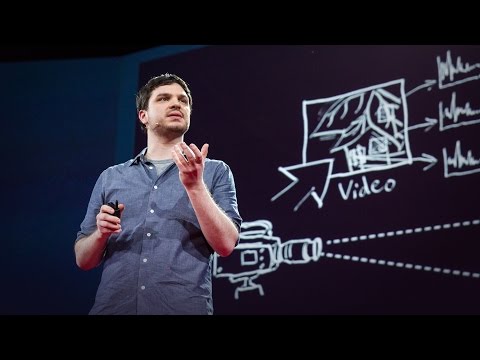
【TED】Abe Davis: New video technology that reveals an object's hidden properties (Abe Davis: New video technology that reveals an object's hidden properties)
0
ChunHan Chen posted on 2015/07/16Ever wondered if you could 'see' sound? This fascinating TED talk introduces incredible new video technology that can reveal an object's hidden properties by analyzing its vibrations, essentially turning them into sound! You'll pick up some advanced vocabulary related to computer vision and motion magnification while exploring this cutting-edge science.
Learn this video on the APP!
The VoiceTube App has more in-depth practice for videos!