
basically
US /ˈbesɪkəli,-kli/
UK /ˈbeɪsɪkli/
- Adverb
- Used before you explain something simply, clearly
- In essence; when you consider the most important aspects of something.
A2Morebold
US /bold/
UK /bəʊld/
- Adjective
- Brave; very confident; too confident
- Having a strong, vivid, or striking appearance or flavor
- Noun
- Darker heavier shade of a font
B1Morechaos
US /ˈkeˌɑs/
UK /'keɪɒs/
- Noun (plural)
- State of utter confusion or disorder
- Uncountable Noun
- Complete disorder and confusion.
- Behavior so unpredictable as to appear random, owing to great sensitivity to small changes in conditions.
B1Moredisorder
US /dɪsˈɔrdɚ/
UK /dɪs'ɔ:də(r)/
- Uncountable Noun
- State of confusion or a lack of organization
- Illness when the body is not functioning well
- Transitive Verb
- To disrupt the order or arrangement of something.
B2Moreescape
US /ɪˈskep/
UK /ɪ'skeɪp/
- Noun (Countable/Uncountable)
- Act to briefly ignoring boring or bad things
- The 'esc key' on a keyboard
- Verb (Transitive/Intransitive)
- To avoid something undesirable, dangerous or bad
- To get away from a place where you are being kept
A2Morefight back
US /faɪt bæk/
UK /fait bæk/
- Phrasal Verb
- To make your point more strongly against opponent
A1Moreget out of
US /ɡɛt aʊt ʌv/
UK /ɡet aut ɔv/
- Phrasal Verb
- To leave or escape responsibilities, troubles
- To leave a small, enclosed vehicle
A1Morein the world
US /ɪn ði wɜrld/
UK /in ðə wɜː(r)ld/
- Phrase
- Used to emphasize a question expressing surprise, confusion, or disbelief.
- Used to indicate the extent or degree of something, often in a superlative sense.
A1Morelook at
US /lʊk æt/
UK /luk æt/
- Phrasal Verb
- To use your eyes to focus on something
- To focus your eyes on something carefully
A1Morenerve
US /nɚv/
UK /nə:v/
- Noun (Countable/Uncountable)
- Fibers in the body that enable feeling, movement
- Courage to do something that is difficult or risky
- Verb (Transitive/Intransitive)
- To summon one's courage; brace oneself.
A2Morenext to
US /nɛkst tu/
UK /nekst tu:/
- Preposition
- Being located along side another
- In comparison with
- Adverb
- Almost; nearly
A1Morerefer
US /rɪˈfɚ/
UK /rɪ'fɜ:(r)/
- Verb (Transitive/Intransitive)
- To talk about or write about something
- To give information about something
A2TOEICMorethink about
US /θɪŋk əˈbaʊt/
UK /θiŋk əˈbaut/
- Phrasal Verb
- To consider something carefully.
- To remember or call to mind.
A1Morevocabulary
US /voˈkæbjəˌlɛri/
UK /və'kæbjələrɪ/
- Uncountable Noun
- Words that have to do with a particular subject
- The words that a person knows
B1TOEICMore
Vocabulary
- next to: Being located along side another
- look at: To use your eyes to focus on something
- think about: To consider something carefully.
- in the world: Used to emphasize a question expressing surprise, confusion, or disbelief.
- get out of: To leave or escape responsibilities, troubles
- fight back: To make your point more strongly against opponent
- situation: Place, position or area that something is in
- common: Area in a city or town that is open to everyone
- basically: Used before you explain something simply, clearly
- people: Persons sharing culture, country, background, etc.
- vocabulary: Words that have to do with a particular subject
- position: Person's opinion or attitude about something
- sentence: (Of a judge) to decide the punishment of
- disorder: State of confusion or a lack of organization
- bold: Brave; very confident; too confident
- word: Unit of language that has a meaning
- chaos: State of utter confusion or disorder
- compare: To consider how similar and different things are
- escape: Act to briefly ignoring boring or bad things
- refer: To talk about or write about something
- nerve: Fibers in the body that enable feeling, movement
Get the full experience in the app
Learn anywhere with detailed sentence and usage analysis
01:03
She took a brave step forward, leaving behind her comfort zone to chase her dreams.
Vocabulary
- brave
adj. Having courage
- comfort zone
phr. A familiar situation where one feels safe
Explanation
a brave step is a noun phrase, where brave is an adjective modifying the noun step, meaning "a courageous step".
forward is an adverb modifying step, meaning "ahead".
The whole phrase serves as the object, answering the "what" of took (verb) — she took a brave step forward.
Get the full experience in the app
Look up words anytime with pronunciation, part of speech, and usage
brave
US/brev/
UK/breɪv/
adj.Brave
v.t.To bravely face
A2 Elementary
Get the full experience in the app
Practice speaking anytime and get instant pronunciation feedback
Try this speaking exercise.
Try practicing with this sentence.
80
0
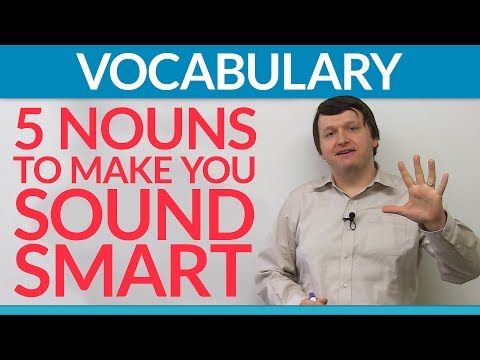
Sam posted on 2015/04/09Want to sound super smart in your next conversation or essay? Alex from engVid is here to share five advanced nouns that will instantly elevate your vocabulary, like 'juxtaposition' and 'quagmire'! You'll learn how to use these powerful words correctly in formal and academic settings.
Learn this video on the APP!
The VoiceTube App has more in-depth practice for videos!