
axis
US /ˈæksɪs/
UK /ˈæksɪs/
- Noun
- A line about which a rotating body turns
B1Morebasis
US /ˈbesɪs/
UK /ˈbeɪsɪs/
- Noun
- Main ingredient or part of something
- Starting situation, fact, idea to develop from
A2TOEICMoreby itself
US /baɪ ɪtˈsɛlf/
UK /bai itˈself/
- Adverb
- Alone; without help or assistance.
- Without any external influence or aid.
A2Moreby now
US /baɪ naʊ/
UK /bai nau/
- Phrase
- At the present time or already; before the present.
A2Morecolumn
US /ˈkɑ:ləm/
UK /ˈkɒləm/
- Noun (Countable/Uncountable)
- Regular series of articles in a newspaper/magazine
- Strong vertical stone pillar that holds up a roof
B1Morecomplicate
US /ˈkɑ:mplɪkeɪt/
UK /ˈkɒmplɪkeɪt/
- Transitive Verb
- To make more difficult to do, understand or use
B1Moreconceptual
US /kənˈsɛptʃuəl/
UK /kənˈseptʃuəl/
- Adjective
- Including concepts or the forming of concepts
B1Morecoordinate
US /ko'ɔrdəˈnet/
UK /kəʊ'ɔ:dɪneɪt/
- Transitive Verb
- To match styles or colors that go well together
- To cause body parts to move smoothly together
- Noun
- Point on a map defining a location e.g. 135N, 34W
- A matching set of clothes.
B1Morecorrespond
US /ˌkɔ:rəˈspɑ:nd/
UK /ˌkɒrəˈspɒnd/
- Intransitive Verb
- To have similarity or equality with something
- To write letters or emails to someone
B1Morediagonal
US /daɪˈæɡənəl/
UK /daɪˈægənl/
- Adjective
- Joining two opposite corners at an angle
- Noun
- A straight line joining two opposite corners of a square, rectangle, or other straight-sided shape.
- A diagonal pattern or design.
B2Moredimension
US /dɪˈmɛnʃən, daɪ-/
UK /daɪˈmenʃn/
- Noun (Countable/Uncountable)
- Number of planes (X, Y, Z axes) an object has
- Measurement in space, e.g. length or diameter
B1Moreexpression
US /ɪkˈsprɛʃən/
UK /ɪk'spreʃn/
- Noun (Countable/Uncountable)
- Act of making your thoughts and feelings known
- Group of words that have a specific meaning
A2TOEICMorefactor
US /ˈfæktɚ/
UK /'fæktə(r)/
- Noun
- Something that influences a result
- Transitive Verb
- To consider or include in an estimate or judgment
- To find the two numbers a number can be divided by
A2TOEICMorefactor out
US /ˈfæktɚ aʊt/
UK /ˈfæktə aut/
- Phrasal Verb
- To rewrite an expression by removing a common factor from its terms.
- To exclude something when making a decision or calculation.
B2Morefigure out
US /ˈfɪɡjɚ aʊt/
UK /ˈfiɡə aut/
- Phrasal Verb
- To understand the behavior of someone
- To think through logically to find a solution
- Verb (Transitive/Intransitive)
- To understand or find an answer to something.
- To find a solution to a problem or understand something.
A1Morefinish off
US /ˈfɪnɪʃ ɔf/
UK /ˈfiniʃ ɔf/
- Phrasal Verb
- To complete the last part of something.
- To decisively defeat someone.
A2Morefix
US /fɪks/
UK /fɪks/
- Noun
- Answer to a problem
- Transitive Verb
- To arrange or prepare something
- To attach something so it will not move or change
A2TOEICMorefor example
US
UK
- Phrase
- As an illustration or instance.
foundation
US /faʊnˈdeʃən/
UK /faunˈdeiʃən/
- Noun (Countable/Uncountable)
- Base or important starting point
- Underground base on which building is constructed
C1TOEICMorefrom the first
US /frəm ðə ˈfɝst/
UK /frəm ðə ˈfɜ:st/
- other
- From the very beginning.
B2Morefrom the start
US /frʌm ði stɑrt/
UK /frɔm ðə stɑ:t/
- Phrase
- From the very beginning; from the outset.
A1Moreget at
US /ɡɛt æt/
UK /ɡet æt/
- Phrasal Verb
- To criticize someone, often personally
- To imply something; hint at
A1Morehave to
US /hæv tu/
UK /ˈhæv tə/
- Auxiliary Verb
- Must do
A1Moreidentity
US /aɪˈdɛntɪti/
UK /aɪ'dentətɪ/
- Noun (Countable/Uncountable)
- Collection of qualities that makes a person
- Who someone is; the name of a person
B1Morein action
US
UK
- Phrase
- Actively doing something; performing a task or duty.
in fact
US /ɪn fækt/
UK /in fækt/
- Adverb
- Used to emphasize the truth of a statement, especially one that contrasts with or contradicts something else.
- Used to introduce a more detailed or surprising piece of information.
- Phrase
- Used to emphasize the truth of a statement, especially one that is surprising or contrary to what might be expected.
C1Morein mind
US /ɪn maɪnd/
UK /in maind/
- Phrase
- Being aware of or considering something.
- To remember or consider something.
A2Morein on
US
UK
- Phrase
- To be involved in a secret or plan.
- To be aware of something that is secret or not generally known.
A1Morein particular
US /ɪn pɚˈtɪkjəlɚ/
UK /in pəˈtikjulə/
- Phrase
- Specifically; especially.
- Detailed or precise.
A1Morein terms of
US
UK
- Phrase
- With regard to; concerning a particular aspect.
A1Moreknock
US /nɑk/
UK /nɒk/
- Noun
- Bad experience that reduces a person's confidence
- Action of something solid hitting something hard
- Transitive Verb
- To criticize someone in an unreasonable way
- To hit something to get people's attention
A2Morelambda
US /'læmdə/
UK /ˈlæmdə/
- Noun
- 11th letter of the Greek alphabet
C1Morelinear
US /ˈlɪniər/
UK /ˈlɪniə(r)/
- Adjective
- Made of lines
- Series of progressing from one stage to another
B1Morelook at
US /lʊk æt/
UK /luk æt/
- Phrasal Verb
- To use your eyes to focus on something
- To focus your eyes on something carefully
A1Morelook for
US /lʊk fɔr/
UK /luk fɔ:/
- Phrasal Verb
- To try to find a thing or person that is lost
- To expect or anticipate something.
A1Morematrix
US /ˈmetrɪks/
UK /ˈmeɪtrɪks/
- Noun
- Rock that surrounds rare stones
- Pattern of lines, spaces, or numbers
B1Moremove on
US /muv ɑn/
UK /mu:v ɔn/
- Phrasal Verb
- To decide to change or go to a different place
- To start talking about something different.
A1Moremultiplication
US /ˌmʌltəplɪˈkeʃən/
UK /ˌmʌltɪplɪˈkeɪʃn/
- Uncountable Noun
- Increase in the number of something
- Process of multiplying one number by another
B1Moreof course
US /ʌv kɔː(r)s/
UK /ɔv kɔː(r)s/
- Adverb
- Sure ; Certainly
- Phrase
- For sure; certainly
A2Moreoff of
US /ɔf ʌv/
UK /ɔf ɔv/
- Preposition
- From a position on something; down from.
A1Moreon the line
US /ɑn ði laɪn/
UK /ɔn ðə lain/
- Phrase
- At risk; in a situation where something could be lost.
- Having a great deal of responsibility.
A1Moreon to
US /ɑn tu/
UK /ɔn tu:/
- Preposition
- Toward something; forward
- Aware of someone's activities.
- Adjective
- Aware of someone's deception or illegal activities.
A1Moreother than
US
UK
- Preposition
- Except for; apart from.
- Conjunction
- Different from.
A1Moreout of the blue
US
UK
- Phrase
- Unexpectedly; without warning
- Idiom
- Unexpectedly; without warning.
A1Moreover to
US
UK
- Preposition
- Used to hand over to someone else to speak
- The responsibility is now yours
pause
US /pɔz/
UK /pɔ:z/
- Verb (Transitive/Intransitive)
- To stop doing for a while before continuing
- To temporarily interrupt the execution of a program or process.
- Noun (Countable/Uncountable)
- A temporary break before continuing
- Function on a device to stop and restart it
A2Moreplug in
US /plʌɡ ɪn/
UK /plʌɡ in/
- Phrase
B1Moreponder
US /ˈpɑ:ndə(r)/
UK /ˈpɒndə(r)/
- Verb (Transitive/Intransitive)
- To think about something with great care
B2TOEICMoreput out
US /pʊt aʊt/
UK /put aut/
- Phrasal Verb
- To publish, e.g. a book
- To cause someone to be troubled or inconvenienced
A1Morerather than
US
UK
- Adverb
- More exactly; more correctly
- Preferably; instead
- Preposition
- Instead of
A1Moreread off
US /rid ɔf/
UK /ri:d ɔf/
- Phrasal Verb
- To recite or announce something from a list.
- To extract or interpret data from a storage medium.
- Verb (Transitive/Intransitive)
- To recite something from memory.
A1Moreremain
US /rɪˈmen/
UK /rɪˈmeɪn/
- Intransitive Verb
- To be left behind; to continue to exist
- To stay in a place when other people have gone
A2TOEICMorerepresent
US /ˌrɛprɪˈzɛnt/
UK /ˌreprɪ'zent/
- Transitive Verb
- To depict art objects, figures, scenes; to portray
- To show or describe something in a particular way
A2TOEICMoreresult
US /rɪˈzʌlt/
UK /rɪ'zʌlt/
- Noun
- Something produced through tests or experiments
- Final score of a competition, election or game
- Intransitive Verb
- To be the outcome of other causes and effects
- To happen or exist as a consequence of something.
A2Morerotate
US /ˈroʊteɪt/
UK /rəʊˈteɪt/
- Verb (Transitive/Intransitive)
- To regularly change people who perform a role
- To regularly change the crops that grow in a field
B2Morerotation
US /roʊˈteɪʃn/
UK /rəʊˈteɪʃn/
- Uncountable Noun
- Regular change of the crops grown in a field
- Group who take turns performing a certain task
B2Morescalar
US /ˈskelɚ, -ˌlɑr/
UK /ˈskeɪlə(r)/
- Adjective
- Variable quantity that cannot be resolved into components
C2Morescale
US /skel/
UK /skeɪl/
- Noun (Countable/Uncountable)
- Size, level, or amount when compared
- Small hard plates that cover the body of fish
- Verb (Transitive/Intransitive)
- To change the size of but keep the proportions
- To climb something large (e.g. a mountain)
A2TOEICMoreshear
US /ʃɪr/
UK /ʃɪə(r)/
- Transitive Verb
- To cut off fur or wool
B2Moresolid
US /ˈsɑlɪd/
UK /'sɒlɪd/
- Adjective
- Being able to be trusted; reliable
- Substance that is hard or of fixed shape
- Noun
- Something firm or hard; not gas or liquid
A2Morespan
US /spæn/
UK /spæn/
- Noun (Countable/Uncountable)
- Distance between two supports of a bridge
- Period of time that something continues for
- Verb (Transitive/Intransitive)
- To go across a certain distance between things
- To cover or extend over a time period
B1TOEICMorespot
US /spɑt/
UK /spɒt/
- Noun
- A certain place or area
- A difficult time; awkward situation
- Transitive Verb
- To see someone or something by chance
A2TOEICMoresquish
US /skwɪʃ/
UK /skwɪʃ/
- Intransitive Verb
- To walk through mud or puddles
C2Morestretch
US /strɛtʃ/
UK /stretʃ/
- Verb (Transitive/Intransitive)
- To make your arm, leg muscles long to ease them
- To make something bigger by pulling on it
- Noun
- Making arm, leg muscles longer to ease them
- A consecutive row of things
A2TOEICMoresubtract
US /səbˈtrækt/
UK /səbˈtrækt/
- Transitive Verb
- To take away a value or amount from another
- To take away a value or amount from another
B2TOEICMorethink about
US /θɪŋk əˈbaʊt/
UK /θiŋk əˈbaut/
- Phrasal Verb
- To consider something carefully.
- To remember or call to mind.
A1Moreto do with
US
UK
- Phrasal Verb
- To be about something; concern
A1Moretopic
US /ˈtɑpɪk/
UK /'tɒpɪk/
- Noun (Countable/Uncountable)
- Subject or issue people talk or write about
A2TOEICMoretransformation
US /ˌtrænsfərˈmeɪʃn/
UK /ˌtrænsfəˈmeɪʃn/
- Noun (Countable/Uncountable)
- A complete change in shape or form of something
C2Moreused to
US /juzd tu/
UK /ˈju:st tə/
- Adjective
- Did regularly before, but don't do now
- Auxiliary Verb
- Have done before, but do not do now
A1Morevariable
US /ˈveriəbl/
UK /ˈveəriəbl/
- Adjective
- Having the ability to change or vary
- Noun (Countable/Uncountable)
- Mathematical quantity with several values
- A keyword used in some programming languages to declare a variable.
A2Morevector
US /ˈvɛktɚ/
UK /'vektə(r)/
- Noun
- Math a quantity that has both size and direction
B2Morewhole point
US
UK
- Phrase
- The main purpose or most important aspect of something.
- The primary reason or objective.
A2Morewith it
US /wɪð ɪt/
UK /wið it/
- Adjective
- Intelligent, alert, and up-to-date.
- Understanding and knowledgeable about current trends or information.
A1Morework through
US
UK
- Phrasal Verb
- To deal with something systematically until it is completed
- To deal with a problem or difficult situation.
Vocabulary
- think about: To consider something carefully.
- for example: As an illustration or instance.
- of course: Sure ; Certainly
- in fact: Used to emphasize the truth of a statement, especially one that contrasts with or contradicts something else.
- off of: From a position on something; down from.
- have to: Must do
- from the start: From the very beginning; from the outset.
- in action: Actively doing something; performing a task or duty.
- in particular: Specifically; especially.
- put out: To publish, e.g. a book
- to do with: To be about something; concern
- in on: To be involved in a secret or plan.
- from the first: From the very beginning.
- over to: Used to hand over to someone else to speak
- by now: At the present time or already; before the present.
- with it: Intelligent, alert, and up-to-date.
- on the line: At risk; in a situation where something could be lost.
- rather than: More exactly; more correctly
- in terms of
- get at: To criticize someone, often personally
- factor out: To rewrite an expression by removing a common factor from its terms.
- read off: To recite or announce something from a list.
- out of the blue: Unexpectedly; without warning
- figure out: To understand the behavior of someone
- plug in
- look for: To try to find a thing or person that is lost
- in mind: Being aware of or considering something.
- on to: Toward something; forward
- move on: To decide to change or go to a different place
- finish off: To complete the last part of something.
- look at: To use your eyes to focus on something
- other than: Except for; apart from.
- by itself: Alone; without help or assistance.
- whole point: The main purpose or most important aspect of something.
- used to: Did regularly before, but don't do now
- work through: To deal with something systematically until it is completed
- stretch: To make your arm, leg muscles long to ease them
- expression: Act of making your thoughts and feelings known
- scale: Size, level, or amount when compared
- spot: A certain place or area
- solid: Being able to be trusted; reliable
- represent: To depict art objects, figures, scenes; to portray
- mean: Average of a set of numbers
- foundation: Base or important starting point
- series: Set of stories or articles on a particular subject
- remain: To be left behind; to continue to exist
- simply: In an easy or clear manner
- pause: To stop doing for a while before continuing
- factor: Something that influences a result
- effect: An advantage, benefit
- result: Something produced through tests or experiments
- identity: Collection of qualities that makes a person
- pretty: Being attractive to the eye in a simple way
- coordinate: To match styles or colors that go well together
- reason: To think and make conclusions in a logical manner
- span: Distance between two supports of a bridge
- topic: Subject or issue people talk or write about
- mind: To be bothered or upset by something
- leave: To go away from; depart
- notice: To become aware by sight, touch, or hearing
- lot: What happens to a person in life from chance; fate
- complicate: To make more difficult to do, understand or use
- important: Having power or authority
- place: To put someone in a particular type of situation
- kind: In a caring and helpful manner
- column: Regular series of articles in a newspaper/magazine
- system: Set of organized, planned ideas that work together
- fact: Something that is known or proved to be true
- basis: Main ingredient or part of something
- dimension: Number of planes (X, Y, Z axes) an object has
- rotation: Regular change of the crops grown in a field
- subtract: To take away a value or amount from another
- variable: Having the ability to change or vary
- axis: A line about which a rotating body turns
- fix: Answer to a problem
- knock: Bad experience that reduces a person's confidence
- squish: To walk through mud or puddles
- correspond: To have similarity or equality with something
- rotate: To regularly change people who perform a role
- ponder: To think about something with great care
- conceptual: Including concepts or the forming of concepts
- transformation: A complete change in shape or form of something
- linear: Made of lines
- multiplication: Increase in the number of something
- matrix: Rock that surrounds rare stones
- diagonal: Joining two opposite corners at an angle
- shear: To cut off fur or wool
- vector: Math a quantity that has both size and direction
- scalar: Variable quantity that cannot be resolved into components
- lambda: 11th letter of the Greek alphabet
Get the full experience in the app
Learn anywhere with detailed sentence and usage analysis
01:03
She took a brave step forward, leaving behind her comfort zone to chase her dreams.
Vocabulary
- brave
adj. Having courage
- comfort zone
phr. A familiar situation where one feels safe
Explanation
a brave step is a noun phrase, where brave is an adjective modifying the noun step, meaning "a courageous step".
forward is an adverb modifying step, meaning "ahead".
The whole phrase serves as the object, answering the "what" of took (verb) — she took a brave step forward.
Get the full experience in the app
Look up words anytime with pronunciation, part of speech, and usage
brave
US/brev/
UK/breɪv/
adj.Brave
v.t.To bravely face
A2 Elementary
Get the full experience in the app
Practice speaking anytime and get instant pronunciation feedback
Try this speaking exercise.
Try practicing with this sentence.
80
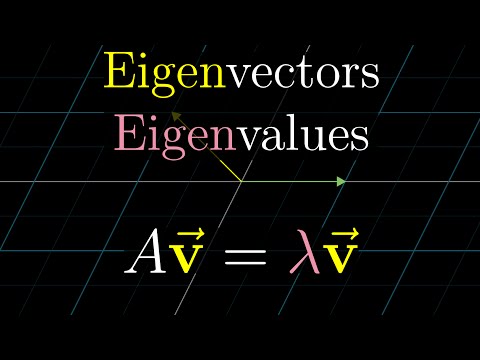
Eigenvectors and eigenvalues | Chapter 14, Essence of linear algebra
0
林宜悉 posted on 2026/11/20Do you find the concept of eigenvectors and eigenvalues a bit confusing? This video breaks down these linear algebra essentials by visualizing how transformations stretch or squish space, giving you a much clearer mental model for these mathematical tools. It is a fantastic way to sharpen your technical vocabulary while finally grasping why these concepts are so important for understanding rotation and movement in 3D space.
Learn this video on the APP!
The VoiceTube App has more in-depth practice for videos!