
advance
US /ædˈvæns/
UK /əd'vɑ:ns/
- Noun
- Forward movement by an army
- An attempt to seduce someone
- Verb (Transitive/Intransitive)
- (Of an army) to move forward
- To change or improve
A2TOEICMorealgebra
US /ˈældʒəbrə/
UK /ˈældʒɪbrə/
- Uncountable Noun
- Math using letters or symbols in place of numbers
C1Moreanalysis
US /əˈnælɪsɪs/
UK /əˈnæləsɪs/
- Uncountable Noun
- Careful study to better understand something
B1TOEICMoreancient history
US
UK
- Uncountable Noun
- The study of the distant past, from the earliest humans through the first great civilizations.
- Events from the distant past, especially those concerning the early civilizations.
axis
US /ˈæksɪs/
UK /ˈæksɪs/
- Noun
- A line about which a rotating body turns
B1Morebasically
US /ˈbesɪkəli,-kli/
UK /ˈbeɪsɪkli/
- Adverb
- Used before you explain something simply, clearly
- In essence; when you consider the most important aspects of something.
A2Moredebt
US /dɛt/
UK /det/
- Noun (Countable/Uncountable)
- Sum of money owed to someone that is not yet paid
- A moral or social obligation.
A2TOEICMoredegree
US /dɪˈɡri/
UK /dɪˈgri:/
- Noun (Countable/Uncountable)
- Amount or extent of something
- Unit for measuring temperature or angles
A2TOEICMoredimension
US /dɪˈmɛnʃən, daɪ-/
UK /daɪˈmenʃn/
- Noun (Countable/Uncountable)
- Number of planes (X, Y, Z axes) an object has
- Measurement in space, e.g. length or diameter
B1Moredimensional
US /dɪˈmɛnʃənl:/
UK /dɪ'menʃənəl/
- Adjective
- Concerning how many planes an object exists in
B1Moredisagree
US /ˌdɪsəˈɡri/
UK /ˌdɪsə'ɡri:/
- Intransitive Verb
- To have a different opinion; to fail to agree
B2TOEICMoredisagree with
US /ˌdɪsəˈɡri wɪð/
UK /ˌdisəˈɡri: wið/
- Phrasal Verb
- To have a different opinion from someone else.
- Intransitive Verb
- To cause someone to feel ill or uncomfortable.
A1Moredivide
US /dɪˈvaɪd/
UK /dɪ'vaɪd/
- Verb (Transitive/Intransitive)
- To split numbers by another number, e.g. 6 / 2 = 3
- To separate something into equal pieces
- Noun
- A separation or distinction.
A2TOEICMoreequation
US /ɪˈkweʒən, -ʃən/
UK /ɪˈkweɪʒn/
- Noun (Countable/Uncountable)
- Mathematical statement showing things to be equal
- Complex set of different facts, ideas or issues
B1Moreeventually
US /ɪˈvɛntʃuəli/
UK /ɪˈventʃuəli/
- Adverb
- After a long time; after many attempts; in the end
- At some later time; in the future
A2Moreextra
US /'ekstrə/
UK /'ekstrə/
- Adjective
- More than necessary; additional
- Of especially good quality or grade.
- Noun (Countable/Uncountable)
- Items more than you need; additional items
- Person who has a small part in a movie
A2Morefigure out
US /ˈfɪɡjɚ aʊt/
UK /ˈfiɡə aut/
- Phrasal Verb
- To understand the behavior of someone
- To think through logically to find a solution
- Verb (Transitive/Intransitive)
- To understand or find an answer to something.
- To find a solution to a problem or understand something.
A1Morefit into
US /fɪt ˈɪntu/
UK /fit ˈɪntuː/
- Phrasal Verb
- To be small enough to go inside something.
- To feel like you belong to a group.
A2Morefunction
US /ˈfʌŋkʃən/
UK /'fʌŋkʃn/
- Noun
- Social event, or party such as a wedding
- Mathematical operation used in calculations
- Intransitive Verb
- To serve a certain purpose or role
- To be operating, working or achieving its purpose
A2TOEICMorefundamental
US /ˌfʌndəˈmɛntl/
UK /ˌfʌndəˈmentl/
- Adjective
- Forming a necessary part, base, or core
- Of central importance.
- Noun (Countable/Uncountable)
- A basic part of something
- (Music) the lowest note in a harmony
A2TOEICMoregoing on
US /ˈɡoɪŋ ɑn/
UK /ˈgəʊɪŋ ɔn/
- Phrasal Verb
- To continue doing something
- To happen (usually negative)
A1Morein fact
US /ɪn fækt/
UK /in fækt/
- Adverb
- Used to emphasize the truth of a statement, especially one that contrasts with or contradicts something else.
- Used to introduce a more detailed or surprising piece of information.
- Phrase
- Used to emphasize the truth of a statement, especially one that is surprising or contrary to what might be expected.
C1Morein the first place
US
UK
- Phrase
- To begin with; as the first point or consideration.
- From the beginning; initially.
A1Morelateral
US /ˈlætərəl/
UK /'lætərəl/
- Adjective
- On the side; moving sideways
B2Morenegative
US /ˈnɛɡətɪv/
UK /'neɡətɪv/
- Noun
- The opposite to a positive electrical charge
- In grammar, containing words such as 'no' or 'not'
- Adjective
- Being harmful, unwanted or unhelpful
- In mathematics, being less than zero
A2Moreobvious
US /ˈɑbviəs/
UK /ˈɒbviəs/
- Adjective
- Easily understood and clear; plain to see
- Easy to see or notice.
A2TOEICMoreon board
US /ɑn bɔrd/
UK /ɔn bɔ:d/
- Phrase
- Being on a ship, plane, or other vehicle
- Adverb
- On or in a ship, aircraft, train, or other vehicle
A1Moreout there
US /aʊt ðɛr/
UK /aut ðɛə/
- Adverb
- In or to a place that is far away
- Existing in the universe
- Adjective
- Unconventional; strange; avant-garde
- Existing or available.
A1Moreplanet
US /ˈplænɪt/
UK /'plænɪt/
- Noun (Countable/Uncountable)
- One of the bodies that orbit the sun
- A different world or sphere of existence.
- Proper Noun
- The earth.
A2Moreplot
US /plɑt/
UK /plɒt/
- Countable Noun
- Small piece of land for a house growing crops etc.
- Series of events that form the main story
- Transitive Verb
- To mark a path, etc. on a map, using lines or dots
- To devise or develop a dramatic storyline
B1Moreplug
US /plʌɡ/
UK /plʌg/
- Noun
- Wood, rubber or metal used to block a hole
- Thing on a wire to connect to electricity supply
- Transitive Verb
- To use an object to block a hole
- To promote or advertise a product
B1TOEICMoreplug into
US
UK
- Phrasal Verb
- To connect an electrical device to a power source.
A1Morerandom
US /ˈrændəm/
UK /'rændəm/
- Adjective
- Chosen, done without a particular plan or pattern
B1Moreridiculous
US /rɪˈdɪkjələs/
UK /rɪˈdɪkjələs/
- Adjective
- Funny or foolish; deserving to be laughed at
A2Moreshow up
US /ʃo ʌp/
UK /ʃəu ʌp/
- Phrasal Verb
- To arrive or be seen at a place, e.g. a party
- To be noticeably better than (someone else)
A1Moresneak
US /snik/
UK /sni:k/
- Verb (Transitive/Intransitive)
- To move around in a way so no one will see you
- To take something somewhere/give secretly
- Intransitive Verb
- To move around in such a way no one will see you
B2Moresuch as
US /sʌtʃ æz/
UK /sʌtʃ æz/
- Preposition
- For example; like
A1Moresuspicion
US /səˈspɪʃən/
UK /sə'spɪʃn/
- Uncountable Noun
- Feeling that something or something is doubtful
- Feeling that someone could be guilty of something
B1Moresuspicious
US /səˈspɪʃəs/
UK /səˈspɪʃəs/
- Adjective
- Doubtful about someone's honesty
- Feeling that something is wrong; causing suspicion
B1Moretheorem
US /ˈθiərəm, ˈθɪrəm/
UK /ˈθɪərəm/
- Noun
- A statement that can be proved
B2Morethink of
US /θɪŋk ʌv/
UK /θiŋk ɔv/
- Phrasal Verb
- To look on as (being something specific); consider
- To consider or remember something.
- Verb (Transitive/Intransitive)
- To imagine or call something to mind
A1Moreto do with
US
UK
- Phrasal Verb
- To be about something; concern
A1Moretrack
US /træk/
UK /træk/
- Transitive Verb
- To use marks to follow a wild animal
- To move a certain way/follow a particular course
- Noun
- A circular course for running
- Course or way someone takes, e.g. in education
A2TOEICMoretypically
US /ˈtɪpɪklɪ/
UK /ˈtɪpɪkli/
- Adverb
- In a normal or usual way
B1Morevalid
US /ˈvælɪd/
UK /'vælɪd/
- Adjective
- Being in effect or in force, often legally
- Reasonable; based on sound assumptions
A2TOEICMoreweird
US /wɪrd/
UK /wɪəd/
- Adjective
- Odd or unusual; surprising; strange
- Eerily strange or disturbing.
B1More
Vocabulary
- show up: To arrive or be seen at a place, e.g. a party
- to do with: To be about something; concern
- figure out: To understand the behavior of someone
- disagree with: To have a different opinion from someone else.
- plug into: To connect an electrical device to a power source.
- think of: To look on as (being something specific); consider
- in fact: Used to emphasize the truth of a statement, especially one that contrasts with or contradicts something else.
- going on: To continue doing something
- on board: Being on a ship, plane, or other vehicle
- fit into: To be small enough to go inside something.
- ancient history: The study of the distant past, from the earliest humans through the first great civilizations.
- out there: In or to a place that is far away
- such as: For example; like
- in the first place: To begin with; as the first point or consideration.
- weird: Odd or unusual; surprising; strange
- eventually: After a long time; after many attempts; in the end
- obvious: Easily understood and clear; plain to see
- ridiculous: Funny or foolish; deserving to be laughed at
- basically: Used before you explain something simply, clearly
- negative: The opposite to a positive electrical charge
- typically: In a normal or usual way
- common: Area in a city or town that is open to everyone
- sense: Certain mental feeling or emotion
- consider: To think carefully about something
- random: Chosen, done without a particular plan or pattern
- express: To send something by fast mail
- track: To use marks to follow a wild animal
- fundamental: Forming a necessary part, base, or core
- sneak: To move around in a way so no one will see you
- suspicious: Doubtful about someone's honesty
- debt: Sum of money owed to someone that is not yet paid
- divide: To split numbers by another number, e.g. 6 / 2 = 3
- function: Social event, or party such as a wedding
- plot: Small piece of land for a house growing crops etc.
- address: Exact street location of a place
- extra: More than necessary; additional
- raise: To increase a bet above another when playing cards
- advance: Forward movement by an army
- planet: One of the bodies that orbit the sun
- board: Surface for posting or showing information
- reason: To think and make conclusions in a logical manner
- valid: Being in effect or in force, often legally
- fair: Neither very good nor very bad; average
- accept: To agree to receive or take something offered
- degree: Amount or extent of something
- equation: Mathematical statement showing things to be equal
- leave: To go away from; depart
- plug: Wood, rubber or metal used to block a hole
- lot: What happens to a person in life from chance; fate
- analysis: Careful study to better understand something
- century: Period of 100 years
- hit: To have a negative impact on a person/place/thing
- fact: Something that is known or proved to be true
- suspicion: Feeling that something or something is doubtful
- dimension: Number of planes (X, Y, Z axes) an object has
- algebra: Math using letters or symbols in place of numbers
- axis: A line about which a rotating body turns
- disagree: To have a different opinion; to fail to agree
- dimensional: Concerning how many planes an object exists in
- lateral: On the side; moving sideways
- theorem: A statement that can be proved
Get the full experience in the app
Learn anywhere with detailed sentence and usage analysis
01:03
She took a brave step forward, leaving behind her comfort zone to chase her dreams.
Vocabulary
- brave
adj. Having courage
- comfort zone
phr. A familiar situation where one feels safe
Explanation
a brave step is a noun phrase, where brave is an adjective modifying the noun step, meaning "a courageous step".
forward is an adverb modifying step, meaning "ahead".
The whole phrase serves as the object, answering the "what" of took (verb) — she took a brave step forward.
Get the full experience in the app
Look up words anytime with pronunciation, part of speech, and usage
brave
US/brev/
UK/breɪv/
adj.Brave
v.t.To bravely face
A2 Elementary
Get the full experience in the app
Practice speaking anytime and get instant pronunciation feedback
Try this speaking exercise.
Try practicing with this sentence.
80
Imaginary Numbers Are Real [Part 1: Introduction]
0
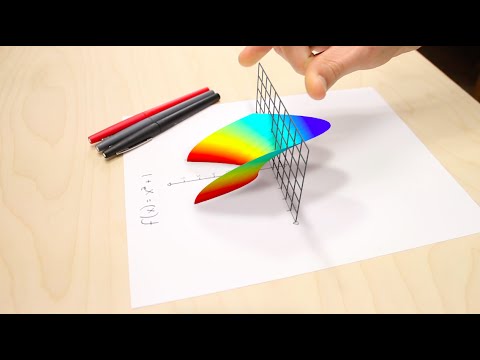
林宜悉 posted on 2026/11/17Ever wondered why math seems to hit a dead end when you try to solve certain equations? This video dives into the fascinating history of 'imaginary' numbers, explaining how they help us find missing solutions and why they are actually more real than their name suggests. It's a perfect way to brush up on your mathematical vocabulary while exploring how our number system evolved from simple counting to complex dimensions.
Learn this video on the APP!
The VoiceTube App has more in-depth practice for videos!