
approach
US /əˈprəʊtʃ/
UK /ə'prəʊtʃ/
- Verb (Transitive/Intransitive)
- To get close to reaching something or somewhere
- To request someone to do something specific
- Noun (Countable/Uncountable)
- Means of reaching a place, often a road or path
- Request of someone with a specific goal in mind
A2TOEICMoreas a whole
US /æz e hol/
UK /æz ə həul/
- Phrase
- Considering everything together; in general.
- Complete; not divided or incomplete.
- Adjective
- Complete; not divided or fragmented.
A1Moreas soon as
US /æz sun æz/
UK /æz su:n æz/
- Phrase
- In a short time after (something happens)
- Without any delay; immediately
- Conjunction
- At the moment that, or immediately after.
A1Moreat least
US /æt list/
UK /æt li:st/
- Adverb
- As a minimum
- Not less than
- Phrase
- No less than; at the minimum
- Used to indicate that something is positive in a bad situation.
C2Moreat night
US /æt naɪt/
UK /æt nait/
- Phrase
- During the night; in the nighttime.
A1Moreat random
US /æt ˈrændəm/
UK /æt ˈrændəm/
- Phrase
B1Moreat the same time
US
UK
- Phrase
- Simultaneously; at the identical moment.
- Nevertheless; however; used to introduce a contrasting or qualifying statement.
A1Moreback up
US /bæk ʌp/
UK /bæk ʌp/
- Phrasal Verb
- To save a copy of your computer data
- To confirm the truth of what someone says
A1Morebasically
US /ˈbesɪkəli,-kli/
UK /ˈbeɪsɪkli/
- Adverb
- Used before you explain something simply, clearly
- In essence; when you consider the most important aspects of something.
A2Morebenchmark
US /ˈbentʃmɑ:rk/
UK /ˈbentʃmɑ:k/
- Noun
- Standard by which other similar things are judged
B2TOEICMorebug
US /bʌɡ/
UK /bʌɡ/
- Transitive Verb
- To bother someone
- To hide an electronic device to spy on someone
- Countable Noun
- An insect
- Problem in the functioning of computer code
B1Moreburn out
US /bɚn aʊt/
UK /bə:n aut/
- Phrasal Verb
- To overwork to mental or physical exhaustion
- To stop burning because fuel is consumed
- Verb (Transitive/Intransitive)
- To become extremely tired or exhausted, often due to prolonged stress.
A1Moreby accident
US /baɪ ˈæksɪdənt/
UK /bai ˈæksidənt/
- Phrase
- Without intending to; unintentionally.
cluster
US /ˈklʌstɚ/
UK /'klʌstə(r)/
- Intransitive Verb
- To come together in a group, flock etc.
- Countable Noun
- A small group of things
B1Morecode
US /kod/
UK /kəʊd/
- Transitive Verb
- To express information in a series of numbers
- To write a secret message using secret symbols
- Noun
- A password made of a set of letters or numbers
- Set of rules for behavior
A2Morecome back
US /kʌm bæk/
UK /kʌm bæk/
- Phrasal Verb
- To reply to someone, often forcefully
- To be remembered
A1Morecomplicate
US /ˈkɑ:mplɪkeɪt/
UK /ˈkɒmplɪkeɪt/
- Transitive Verb
- To make more difficult to do, understand or use
B1Moreconfiguration
US /kənˌfɪɡjəˈreʃən/
UK /kənˌfɪgəˈreɪʃn/
- Noun
- A shape or outline; a method of arrangement
B2Moreconnection
US /kəˈnɛkʃən/
UK /kəˈnekʃn/
- Noun (Countable/Uncountable)
- Something that joins things together; being joined
- Person you know who can help you in some way
A2Moredatum
US /ˈdetəm, ˈdætəm, ˈdɑtəm/
UK /ˈdeɪtəm/
- Noun
- Item of factual information
B1Moredeal with
US /dil wɪð/
UK /di:l wið/
- Verb (Transitive/Intransitive)
- To buy or sell goods or services.
- Phrasal Verb
- To take action to solve a problem or manage a situation.
- To be about; concern.
A1Moredebug
US /diˈbʌɡ/
UK /ˌdi:'bʌɡ/
- Transitive Verb
- To locate and correct errors in a computer program
C2Moredepending on
US
UK
- Phrasal Verb
- To rely on for support (financial or emotional)
- Influenced or determined by.
- Preposition
- Subject to; contingent on
- Relying on someone or something for support or assistance.
A2Moredeterministic
US /dɪˌtɜ:mɪ'nɪstɪk/
UK /dɪˌtɜ:mɪ'nɪstɪk/
- Adjective
- Happening as an inevitable result of a prior cause
B2Moredisk
US /dɪsk/
UK /dɪsk/
- Noun
- Thin or flat, round object, e.g. for storing data
B1TOEICMoredistribute
US /dɪˈstrɪbjut/
UK /dɪˈstrɪbju:t/
- Transitive Verb
- To hand out or give to people
- To send products to stores to sell
A2Moredo in
US
UK
- Phrasal Verb
- To make completely tired out and exhausted
- To destroy or cause damage to someone
A1Moredrive in
US /draɪv ɪn/
UK /draiv in/
- Phrasal Verb
- To enter a place or area by driving a vehicle.
- To emphasize or impress something forcefully.
A1Moredumb
US /dʌm/
UK /dʌm/
- Adjective
- Senseless; stupid
B1Moreexact
US /ɪɡˈzækt/
UK /ɪɡ'zækt/
- Adjective
- Completely correct; accurate; specific
- Transitive Verb
- To get something, sometimes using force
A2TOEICMoreexplore
US /ɪkˈsplɔr/
UK /ɪk'splɔ:(r)/
- Transitive Verb
- To examine something in detail to learn about it
- To travel to a place to discover more about it
A2TOEICMoreexponent
US /ɪkˈsponənt, ˈɛkˌsponənt/
UK /ɪkˈspəʊnənt/
- Countable Noun
- Person who exemplifies an art movement, etc.
C1Morefeel like
US
UK
- Intransitive Verb
- To have a desire or inclination for something.
- To have a particular quality or sensation; resemble.
A1Morefine
US /faɪn/
UK /faɪn/
- Adjective
- Good, acceptable or satisfactory
- Of high quality; made with great skill
- Countable Noun
- Money you have to pay because you broke a rule
- (at the end of a piece of music) the end
A2TOEICMorefloat
US /floʊt/
UK /fləʊt/
- Verb (Transitive/Intransitive)
- To sell the shares of a company publicly
- To move slowly and easily through air
- Noun (Countable/Uncountable)
- Object designed to stay on the surface of water
- Decorated truck used in a festival
B1Moreflush out
US /flʌʃ aʊt/
UK /flʌʃ aut/
- Phrasal Verb
- To force someone or something out of a hiding place.
- To cleanse or purify something by flushing it with liquid.
for instance
US /fɔr ˈɪnstəns/
UK /fɔ: ˈinstəns/
- Adverb
- As an example.
- Phrase
- As an example.
- As an illustration or case in point
B1Morefor some reason
US /fɔr sʌm ˈrizən/
UK /fɔ: sʌm ˈri:zən/
- Phrase
- For a reason that is not known or not easily explained.
A1Morefound out
US
UK
- Phrasal Verb
- To learn or discover something, often after some effort.
- To become known; be revealed.
B2Moreframework
US /ˈfreɪmwɜ:rk/
UK /ˈfreɪmwɜ:k/
- Noun
- Skeleton structure of a building or construction
- Basic structure of something
B1TOEICMorefunction
US /ˈfʌŋkʃən/
UK /'fʌŋkʃn/
- Noun
- Social event, or party such as a wedding
- Mathematical operation used in calculations
- Intransitive Verb
- To serve a certain purpose or role
- To be operating, working or achieving its purpose
A2TOEICMoregenerate
US /ˈdʒɛnəˌret/
UK /ˈdʒenəreɪt/
- Transitive Verb
- To create or be produced or bring into existence
- To create electricity, heat, energy and power
A2TOEICMoregiven time
US /ˈɡɪvən taɪm/
UK /ˈɡivən taim/
- Noun (Countable/Uncountable)
- A specific time that has been scheduled or agreed upon.
- The amount of time available or allotted for a task or activity.
A1Moregot to
US /ɡɑt tu/
UK /gɔt tu:/
- Verb (Transitive/Intransitive)
- To arrive at some place
- To have the opportunity or permission to do something
- Phrasal Verb
- To appeal to the emotions of; move
- To finally begin to start something after a delay
A1Morehave to
US /hæv tu/
UK /ˈhæv tə/
- Auxiliary Verb
- Must do
A1Morein a state
US
UK
- Phrase
- In a particular condition or situation.
- In an emotional condition, often negative (e.g., panic, distress).
B2Morein fact
US /ɪn fækt/
UK /in fækt/
- Adverb
- Used to emphasize the truth of a statement, especially one that contrasts with or contradicts something else.
- Used to introduce a more detailed or surprising piece of information.
- Phrase
- Used to emphasize the truth of a statement, especially one that is surprising or contrary to what might be expected.
C1Morein reverse
US /ɪn rɪˈvɚs/
UK /in riˈvə:s/
- Adverb
- In the opposite direction.
- In the opposite order.
- Phrase
- Moving or operating backwards.
- With the sequence inverted.
B2Morein that order
US
UK
- Phrase
- Following the sequence or arrangement previously mentioned or understood.
C1Morein the way
US /ɪn ði we/
UK /in ðə wei/
- Phrase
- Obstructing someone or something; hindering progress.
- Stored or placed so as to be available or ready when needed.
A1Morein theory
US /ɪn ˈθiəri/
UK /in ˈθiəri/
- Adverb
- According to the stated ideas or principles
- Phrase
- According to the theoretical possibilities rather than actual practice.
B2Moreindependent
US /ˌɪndɪˈpɛndənt/
UK /ˌɪndɪˈpendənt/
- Adjective
- Making your own decisions; acting by yourself
- Not connected with or influenced by something else.
- Noun
- A person not connected to a political party
- Someone who is independent, especially in politics or business.
A2TOEICMoreinsane
US /ɪnˈsen/
UK /ɪnˈseɪn/
- Adjective
- Mentally ill; crazy
- Being crazy or stupid
B2Moreinstead of
US /ɪnˈstɛd ʌv/
UK /inˈsted ɔv/
- Preposition
- When one thing is replaced by another
- Adverb
- As a substitute or alternative.
A1Moreinteract with
US /ˌɪntɚˈækt wɪð/
UK /ˌɪntərˈækt wið/
- Phrase
- Verb (Transitive/Intransitive)
- To engage in communication or action involving mutual or reciprocal influence.
- To use a computer interface to achieve a specific goal.
A2Morejust kind of
US
UK
- Phrase
- Used to express a feeling or state in a vague or hesitant way.
- Used to indicate something is approximately or generally similar to something else.
A2Moreknow about
US /noʊ əˈbaʊt/
UK /nəʊ əˈbaut/
- Phrasal Verb
- To have information or understanding of a subject or situation.
left and right
US
UK
- Adverb
- In both the left and right directions.
- Everywhere; in all directions.
- Noun
- Referring to both liberal and conservative political viewpoints.
- Two opposing options or directions.
A1Morelook at
US /lʊk æt/
UK /luk æt/
- Phrasal Verb
- To use your eyes to focus on something
- To focus your eyes on something carefully
A1Morenext to
US /nɛkst tu/
UK /nekst tu:/
- Preposition
- Being located along side another
- In comparison with
- Adverb
- Almost; nearly
A1Moreof a sudden
US
UK
- Phrase
- Quickly and unexpectedly; suddenly.
B2Moreof course
US /ʌv kɔː(r)s/
UK /ɔv kɔː(r)s/
- Adverb
- Sure ; Certainly
- Phrase
- For sure; certainly
A2Moreof the like
US /ʌv ðə laɪk/
UK /əv ðə laɪk/
- other
- And similar kinds or types; alike in category.
B2Moreon and off
US /ɑn ənd ɔf/
UK /ɔn ænd ɔf/
- Adverb
- Intermittently; not continuously.
- Adjective
- Characterized by periods of involvement and separation.
A1Moreon earth
US /ɑn ɚθ/
UK /ɔn ə:θ/
- Phrase
- Used to emphasize a question expressing surprise or anger.
- Used to emphasize that something is not possible or will not happen.
A1Moreon purpose
US /ɑn ˈpɚpəs/
UK /ɔn ˈpə:pəs/
- Idiom
- Intentionally; deliberately.
- Phrase
- Intentionally; deliberately.
A1Moreon the internet
US
UK
- Phrase
- Located or available on the internet.
- Using the internet as a medium or platform.
A1Moreon the line
US /ɑn ði laɪn/
UK /ɔn ðə lain/
- Phrase
- At risk; in a situation where something could be lost.
- Having a great deal of responsibility.
A1Moreon the plus side
US /ɑn ðə ˈplʌs ˈsaɪd/
UK /ɒn ðə ˈplʌs ˈsaɪd/
- other
- Considering the advantages or positive aspects.
B1Moreout there
US /aʊt ðɛr/
UK /aut ðɛə/
- Adverb
- In or to a place that is far away
- Existing in the universe
- Adjective
- Unconventional; strange; avant-garde
- Existing or available.
A1Morephase in
US
UK
- Phrasal Verb
- To start using or doing things gradually
A2Morepower on
US /ˈpaʊɚ ɑn/
UK /ˈpauə ɔn/
- Phrasal Verb
- To activate or switch on a device or machine.
B1Moreprocess
US /ˈprɑsˌɛs, ˈproˌsɛs/
UK /prə'ses/
- Transitive Verb
- To organize and use data in a computer
- To deal with official forms in the way required
- Noun (Countable/Uncountable)
- Dealing with official forms in the way required
- Set of changes that occur slowly and naturally
A2TOEICMoreproduction
US /prəˈdʌkʃən, pro-/
UK /prəˈdʌkʃn/
- Uncountable Noun
- Process of producing or growing food naturally
- Process of making something on a large scale
A2TOEICMorerandom
US /ˈrændəm/
UK /'rændəm/
- Adjective
- Chosen, done without a particular plan or pattern
B1Morerandomly
US /'rændəmlɪ/
UK /'rændəmlɪ/
- Adverb
- With no pattern or clear purpose; by chance
B1TOEICMorerather than
US
UK
- Adverb
- More exactly; more correctly
- Preferably; instead
- Preposition
- Instead of
A1Moreright next to
US
UK
- Preposition
- Immediately adjacent to; in very close proximity to.
- Figuratively very close to; on the verge of.
A1Moreroll
US /rol/
UK /rəʊl/
- Countable Noun
- Small, round piece of bread for one person to eat
- Photographic film wrapped round and round itself
- Verb (Transitive/Intransitive)
- To continue along as time normally progresses
- To produce a very deep and continuous sound
A2TOEICMorerun in
US /rʌn ɪn/
UK /rʌn in/
- Phrasal Verb
- To arrest person and take them to police station
- To drive engine slowly until ready for normal use
A1Morerun on
US /rʌn ɑn/
UK /rʌn ɔn/
- Phrasal Verb
- To continue longer than expected, e.g. a meeting
- To talk without stopping, often on the same topic
- Intransitive Verb
- To continue without a break or clear separation, especially in writing.
A1Morerun through
US
UK
- Phrasal Verb
- To pierce with a sharp pointed object
- To practice or rehearse quickly, e.g. for a play
A1Moresame time
US
UK
- Phrase
- Occurring simultaneously or at the same point in time.
- At the identical time as before; recurring at a fixed hour.
- Noun
- An equal duration or period.
A1Morescrew with
US
UK
- Phrasal Verb
- To interfere with or tamper with something.
- To tease, trick, or annoy someone.
set up
US /sɛt ʌp/
UK /set ʌp/
- Phrasal Verb
- To make arrangements for something; establish
- Verb (Transitive/Intransitive)
- To arrange or prepare something for use.
- To start a business, organization, etc.
A1Moreshow up
US /ʃo ʌp/
UK /ʃəu ʌp/
- Phrasal Verb
- To arrive or be seen at a place, e.g. a party
- To be noticeably better than (someone else)
A1Moresimulate
US /ˈsɪmjəˌlet/
UK /'sɪmjʊleɪt/
- Transitive Verb
- To copy something or look or behave like it
B1TOEICMoresimulation
US /ˌsɪmjəˈleʃən/
UK /ˌsɪmjuˈleɪʃn/
- Noun
- A copying method to study the real world
B1TOEICMoresmoke out
US /smok aʊt/
UK /sməuk aut/
- Phrasal Verb
- To force someone or something out of a place by filling it with smoke.
- To discover or reveal something that is hidden or secret.
speed up
US /spid ʌp/
UK /spi:d ʌp/
- Phrasal Verb
- To move more quickly
A2Morestuff
US /stʌf/
UK /stʌf/
- Uncountable Noun
- Generic description for things, materials, objects
- Transitive Verb
- To push material inside something, with force
B1Moretake with
US
UK
- Phrasal Verb
- To bring something or someone along when you go somewhere.
- Verb (Transitive/Intransitive)
- To accept or endure something, especially something unpleasant, as a necessary part of an experience.
A1Moretalking about
US
UK
- Phrasal Verb
- To discuss a particular topic.
- To be constantly mentioning or bringing up a subject.
A1Moreterrible
US /ˈtɛrəbəl/
UK /ˈterəbl/
- Adjective
- Very bad; horrible
- Causing great fear; frightening
A2TOEICMorethink about
US /θɪŋk əˈbaʊt/
UK /θiŋk əˈbaut/
- Phrasal Verb
- To consider something carefully.
- To remember or call to mind.
A1Morethink of
US /θɪŋk ʌv/
UK /θiŋk ɔv/
- Phrasal Verb
- To look on as (being something specific); consider
- To consider or remember something.
- Verb (Transitive/Intransitive)
- To imagine or call something to mind
A1Moreto do with
US
UK
- Phrasal Verb
- To be about something; concern
A1Moretrack down
US /træk daʊn/
UK /træk daun/
- Phrasal Verb
- To find out where someone is; hunt; chase
- Transitive Verb
- To find someone or something after a long or difficult search.
A2Moretrain of thought
US /tren ʌv θɔt/
UK /trein ɔv θɔ:t/
- Noun
- A connected series of thoughts.
A1Moreturn on
US /tɚn ɑn/
UK /tə:n ɔn/
- Phrasal Verb
- To cause someone to be interested or excited
- Transitive Verb
- To activate or switch on a device or appliance.
- To suddenly attack or criticize someone.
A1Moreup and running
US /ʌp ənd ˈrʌnɪŋ/
UK /ʌp ænd ˈrʌnɪŋ/
- Adjective
- Fully operational; functioning correctly.
- Active and operating successfully.
A1Morewait for
US /wet fɔr/
UK /weit fɔ:/
- Phrasal Verb
- To wait until someone comes, or something happens
A1Moreweird
US /wɪrd/
UK /wɪəd/
- Adjective
- Odd or unusual; surprising; strange
- Eerily strange or disturbing.
B1Morewith it
US /wɪð ɪt/
UK /wið it/
- Adjective
- Intelligent, alert, and up-to-date.
- Understanding and knowledgeable about current trends or information.
A1Morework at
US /wɚk æt/
UK /wə:k æt/
- Phrasal Verb
- To have a job at a particular place or organization.
- To make an effort to improve something.
A1Morewrap up
US /ræp ʌp/
UK /ræp ʌp/
- Phrasal Verb
- To complete something, such as a film or project
- To finish; bring something to a conclusion
- Transitive Verb
- To enclose (something) in paper or soft material.
B1Morewrite in
US
UK
- Phrasal Verb
- To add text to a document or form.
- To vote for a candidate whose name is not printed on the ballot by writing it in.
A1More
Vocabulary
- have to: Must do
- show up: To arrive or be seen at a place, e.g. a party
- think about: To consider something carefully.
- look at: To use your eyes to focus on something
- wait for: To wait until someone comes, or something happens
- back up: To save a copy of your computer data
- got to: To arrive at some place
- as soon as: In a short time after (something happens)
- run through: To pierce with a sharp pointed object
- at the same time: Simultaneously; at the identical moment.
- same time: Occurring simultaneously or at the same point in time.
- instead of: When one thing is replaced by another
- as a whole: Considering everything together; in general.
- left and right: In both the left and right directions.
- on earth: Used to emphasize a question expressing surprise or anger.
- speed up: To move more quickly
- power on: To activate or switch on a device or machine.
- on and off: Intermittently; not continuously.
- think of: To look on as (being something specific); consider
- run in: To arrest person and take them to police station
- work at: To have a job at a particular place or organization.
- track down: To find out where someone is; hunt; chase
- in that order: Following the sequence or arrangement previously mentioned or understood.
- by accident: Without intending to; unintentionally.
- talking about: To discuss a particular topic.
- in theory: According to the stated ideas or principles
- on purpose: Intentionally; deliberately.
- write in: To add text to a document or form.
- deal with
- take with: To bring something or someone along when you go somewhere.
- on the internet: Located or available on the internet.
- in fact: Used to emphasize the truth of a statement, especially one that contrasts with or contradicts something else.
- right next to: Immediately adjacent to; in very close proximity to.
- next to: Being located along side another
- smoke out: To force someone or something out of a place by filling it with smoke.
- for instance: As an example.
- rather than: More exactly; more correctly
- in the way: Obstructing someone or something; hindering progress.
- of the like: And similar kinds or types; alike in category.
- at random
- flush out: To force someone or something out of a hiding place.
- in reverse: In the opposite direction.
- given time: A specific time that has been scheduled or agreed upon.
- in a state: In a particular condition or situation.
- out there: In or to a place that is far away
- on the line: At risk; in a situation where something could be lost.
- for some reason: For a reason that is not known or not easily explained.
- of course: Sure ; Certainly
- of a sudden: Quickly and unexpectedly; suddenly.
- to do with: To be about something; concern
- drive in: To enter a place or area by driving a vehicle.
- set up
- depending on: To rely on for support (financial or emotional)
- at least: As a minimum
- turn on
- burn out: To overwork to mental or physical exhaustion
- up and running: Fully operational; functioning correctly.
- come back: To reply to someone, often forcefully
- found out: To learn or discover something, often after some effort.
- wrap up: To complete something, such as a film or project
- phase in: To start using or doing things gradually
- feel like: To have a desire or inclination for something.
- train of thought: A connected series of thoughts.
- at night: During the night; in the nighttime.
- interact with
- just kind of: Used to express a feeling or state in a vague or hesitant way.
- do in: To make completely tired out and exhausted
- run on: To continue longer than expected, e.g. a meeting
- screw with: To interfere with or tamper with something.
- with it: Intelligent, alert, and up-to-date.
- on the plus side: Considering the advantages or positive aspects.
- know about: To have information or understanding of a subject or situation.
- stuff: Generic description for things, materials, objects
- weird: Odd or unusual; surprising; strange
- sort: To organize things by putting them into groups
- approach: To get close to reaching something or somewhere
- process: To organize and use data in a computer
- insane: Mentally ill; crazy
- basically: Used before you explain something simply, clearly
- immediately: Without any delay; straight away
- exact: Completely correct; accurate; specific
- random: Chosen, done without a particular plan or pattern
- dumb: Senseless; stupid
- failure: When things go wrong; lack of function
- explore: To examine something in detail to learn about it
- bit: Device put in a horse's mouth to control it
- function: Social event, or party such as a wedding
- state: Region within a country, with its own government
- generate: To create or be produced or bring into existence
- independent: Making your own decisions; acting by yourself
- pretty: Being attractive to the eye in a simple way
- reason: To think and make conclusions in a logical manner
- rest: Time when one relaxes, sleeps, or is inactive
- connection: Something that joins things together; being joined
- leave: To go away from; depart
- framework: Skeleton structure of a building or construction
- scary: Causing fear; frightening
- randomly: With no pattern or clear purpose; by chance
- totally: In a complete way; completely; absolutely
- lot: What happens to a person in life from chance; fate
- complicate: To make more difficult to do, understand or use
- single: One run in cricket or a hit baseball
- distribute: To hand out or give to people
- kind: In a caring and helpful manner
- system: Set of organized, planned ideas that work together
- terrible: Very bad; horrible
- cluster: To come together in a group, flock etc.
- roll: Small, round piece of bread for one person to eat
- float: To sell the shares of a company publicly
- simulate: To copy something or look or behave like it
- simulation: A copying method to study the real world
- fine: Good, acceptable or satisfactory
- production: Process of producing or growing food naturally
- configuration: A shape or outline; a method of arrangement
- benchmark: Standard by which other similar things are judged
- bug: To bother someone
- code: To express information in a series of numbers
- datum: Item of factual information
- disk: Thin or flat, round object, e.g. for storing data
- exponent: Person who exemplifies an art movement, etc.
- deterministic: Happening as an inevitable result of a prior cause
- debug: To locate and correct errors in a computer program
Get the full experience in the app
Learn anywhere with detailed sentence and usage analysis
01:03
She took a brave step forward, leaving behind her comfort zone to chase her dreams.
Vocabulary
- brave
adj. Having courage
- comfort zone
phr. A familiar situation where one feels safe
Explanation
a brave step is a noun phrase, where brave is an adjective modifying the noun step, meaning "a courageous step".
forward is an adverb modifying step, meaning "ahead".
The whole phrase serves as the object, answering the "what" of took (verb) — she took a brave step forward.
Get the full experience in the app
Look up words anytime with pronunciation, part of speech, and usage
brave
US/brev/
UK/breɪv/
adj.Brave
v.t.To bravely face
A2 Elementary
Get the full experience in the app
Practice speaking anytime and get instant pronunciation feedback
Try this speaking exercise.
Try practicing with this sentence.
80
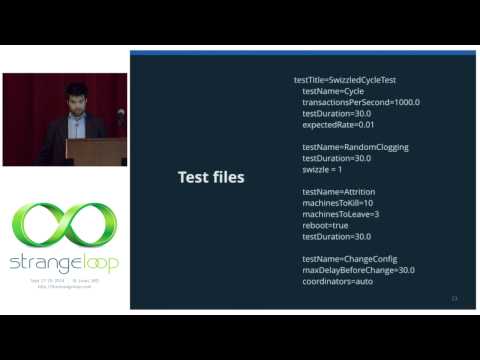
"Testing Distributed Systems w/ Deterministic Simulation" by Will Wilson
0
林宜悉 posted on 2026/11/13Ever wonder how engineers debug distributed systems when bugs only appear in the rarest, most chaotic network conditions? Will Wilson shares a fascinating look at deterministic simulation, explaining how to replace unpredictable environmental entropy with controlled, repeatable tests. It is a great way to pick up technical terminology like 'non-idempotent' and 'asymptomatic' while learning how to build software that actually stays reliable under pressure.
Learn this video on the APP!
The VoiceTube App has more in-depth practice for videos!