
amazingly
US /ə'meɪzɪŋlɪ/
UK /ə'meɪzɪŋlɪ/
- Adverb
- In a surprising and pleasing manner
B1Moreapocalypse
US /əˈpɑkəˌlɪps/
UK /əˈpɒkəlɪps/
- Noun (Countable/Uncountable)
- Great disaster; complete destruction
- A disclosure of something hidden from the majority of mankind.
B2Morearchitectural
US /ˌɑrkəˈtɛktʃərəl/
UK /ˌɑ:kɪˈtektʃərəl/
- Adjective
- Concerning architecture
B1Moreat least
US /æt list/
UK /æt li:st/
- Adverb
- As a minimum
- Not less than
- Phrase
- No less than; at the minimum
- Used to indicate that something is positive in a bad situation.
C2Morebachelor
US /ˈbætʃəlɚ, ˈbætʃlɚ/
UK /'bætʃələ(r)/
- Noun
- Person who earned a first degree at a university
- Man who has never married
B2Morecompound
US /kɑmˈpaUnd/
UK /'kɒmpaʊnd/
- Noun (Countable/Uncountable)
- Series of buildings that are walled or fenced off
- Chemical made up of several others
- Transitive Verb
- To pay interest on a loan including the interest
- To make something from various parts or components
B1Moreconcern
US /kənˈsɚn/
UK /kənˈsɜ:n/
- Verb (Transitive/Intransitive)
- To be about a particular topic
- To have a direct impact on someone
- Noun (Countable/Uncountable)
- Company, firm or business
- Feeling of worry or anxiety
A2TOEICMorecurious
US /ˈkjʊriəs/
UK /ˈkjʊəriəs/
- Adjective
- Wanting to know more about something
- Attracting interest by being strange or unusual
A2Morecurrent
US /ˈkɚrənt, ˈkʌr-/
UK /'kʌrənt/
- Uncountable Noun
- Electricity flowing through wires
- Movement of water in a river, or air in the sky
- Adjective
- Happening or being in the present time
- In general use or accepted by most people.
A2Moredatum
US /ˈdetəm, ˈdætəm, ˈdɑtəm/
UK /ˈdeɪtəm/
- Noun
- Item of factual information
B1Moreengineering
US /ˌendʒɪˈnɪrɪŋ/
UK /ˌendʒɪˈnɪərɪŋ/
- Uncountable Noun
- The practical application of science to industry
B1Moreeven out
US /ˈivən aʊt/
UK /ˈi:vən aut/
- Phrasal Verb
- To become level or uniform.
- To distribute something equally or uniformly.
A1Moreeventual
US /ɪˈvɛntʃuəl/
UK /ɪˈventʃuəl/
- Adjective
- Coming or happening at a later or end of the time
B2TOEICMorefantastic
US /fænˈtæstɪk/
UK /fænˈtæstɪk/
- Adjective
- Strange or unusual in design or appearance
- Very large, fast or great
A2Morefigure out
US /ˈfɪɡjɚ aʊt/
UK /ˈfiɡə aut/
- Phrasal Verb
- To understand the behavior of someone
- To think through logically to find a solution
- Verb (Transitive/Intransitive)
- To understand or find an answer to something.
- To find a solution to a problem or understand something.
A1Morefrankly
US /ˈfræŋkli/
UK /ˈfræŋkli/
- Adverb
- Speaking honestly and directly
- Used to express disagreement or mild disapproval.
B2Morefrontier
US /frʌnˈtɪr, frɑn-, ˈfrʌnˌtɪr, ˈfrɑn-/
UK /'frʌntɪə(r)/
- Noun
- Border crossing between countries
- Most advanced point of development or research
B1TOEICMorego on
US /ɡo ɑn/
UK /ɡəu ɔn/
- Phrasal Verb
- To continue doing something
- To happen (usually negative)
- Interjection
- Used to encourage someone
A1Moregot to
US /ɡɑt tu/
UK /gɔt tu:/
- Verb (Transitive/Intransitive)
- To arrive at some place
- To have the opportunity or permission to do something
- Phrasal Verb
- To appeal to the emotions of; move
- To finally begin to start something after a delay
A1Morehave to
US /hæv tu/
UK /ˈhæv tə/
- Auxiliary Verb
- Must do
A1Morehype
US /haɪp/
UK /haɪp/
- Uncountable Noun
- Advertising, writing, or talk to spark interest
- Transitive Verb
- To try to create interest or excitement about
B2Moreimpact
US /ˈɪmˌpækt/
UK /'ɪmpækt/
- Noun
- A striking effect or result to hit with force
- Act or force of one thing hitting something else
- Verb (Transitive/Intransitive)
- To hit or strike someone or something with force
- To have a strong effect on someone or something.
A2TOEICMorein fact
US /ɪn fækt/
UK /in fækt/
- Adverb
- Used to emphasize the truth of a statement, especially one that contrasts with or contradicts something else.
- Used to introduce a more detailed or surprising piece of information.
- Phrase
- Used to emphasize the truth of a statement, especially one that is surprising or contrary to what might be expected.
C1Morein the streets
US /ɪn ðə strits/
UK /ɪn ðə stri:ts/
- other
- Located or happening outdoors in public roads or areas.
A2Moreincredibly
US /ɪnˈkrɛdəblɪ/
UK /ɪnˈkredəbli/
- Adverb
- To a great degree; very; amazingly
- Extremely; so much so it is hard to believe
A2Moreinstead of
US /ɪnˈstɛd ʌv/
UK /inˈsted ɔv/
- Preposition
- When one thing is replaced by another
- Adverb
- As a substitute or alternative.
A1Moreintelligence
US /ɪnˈtɛlədʒəns/
UK /ɪn'telɪdʒəns/
- Uncountable Noun
- Collection of secret information about something
- Ability to learn things or to consider situations
- Adjective
- Of the spying services; acting in secrecy
A2TOEICMorelack
US /læk/
UK /læk/
- Verb (Transitive/Intransitive)
- To not have, or not have enough, of something
- Uncountable Noun
- The state of not having or not having enough of
A2TOEICMorelast summer
US
UK
- Noun
- The summer before this one.
- Phrase
- Referring to events or memories from the previous summer.
A1Morelook at
US /lʊk æt/
UK /luk æt/
- Phrasal Verb
- To use your eyes to focus on something
- To focus your eyes on something carefully
A1Morenative
US /ˈnetɪv/
UK /ˈneɪtɪv/
- Noun (Countable/Uncountable)
- Someone from or born in a specific country
- Original inhabitant, e.g. before others
- Adjective
- Caused by natural ability; innate
A2Morenegative
US /ˈnɛɡətɪv/
UK /'neɡətɪv/
- Noun
- The opposite to a positive electrical charge
- In grammar, containing words such as 'no' or 'not'
- Adjective
- Being harmful, unwanted or unhelpful
- In mathematics, being less than zero
A2Moreof course
US /ʌv kɔː(r)s/
UK /ɔv kɔː(r)s/
- Adverb
- Sure ; Certainly
- Phrase
- For sure; certainly
A2Moreoptimistic
US /ˌɑːptɪˈmɪstɪk/
UK /ˌɒptɪˈmɪstɪk/
- Adjective
- Tending to believe the future will be good
- Confident and hopeful about future outcomes.
B2Moreout of work
US /aʊt ʌv wɚk/
UK /aut ɔv wə:k/
- Phrase
- Adjective
- Unemployed; without a job
A1Moreplenty
US /ˈplɛnti/
UK /'plentɪ/
- Pronoun
- When there is not too little of something; a lot
- Uncountable Noun
- A large or sufficient amount or quantity; abundance.
- A lot of something
A2Moreprogress
US /ˈprɑɡˌrɛs, -rəs, ˈproˌɡrɛs/
UK /'prəʊɡres/
- Verb (Transitive/Intransitive)
- To move forward or toward a place or goal
- To make progress; develop or improve.
- Uncountable Noun
- Act of moving forward
- The process of improving or developing something over a period of time.
A2TOEICMorerather than
US
UK
- Adverb
- More exactly; more correctly
- Preferably; instead
- Preposition
- Instead of
A1Moreresearch
US /rɪˈsɚtʃ, ˈriˌsɚtʃ/
UK /rɪ'sɜ:tʃ/
- Verb (Transitive/Intransitive)
- To study in order to discover new ideas and facts
- To study the market relating to marketing products and services.
- Noun (Countable/Uncountable)
- Study done to discover new ideas and facts
- A particular area or topic of study.
A2TOEICMorescale
US /skel/
UK /skeɪl/
- Noun (Countable/Uncountable)
- Size, level, or amount when compared
- Small hard plates that cover the body of fish
- Verb (Transitive/Intransitive)
- To change the size of but keep the proportions
- To climb something large (e.g. a mountain)
A2TOEICMoresemiconductor
US /sɛmikənˈdʌktɚ/
UK /ˌsemikənˈdʌktə(r)/
- Noun
- Silicon chip used in computers
B1Moretask
US /tæsk/
UK /tɑ:sk/
- Noun (Countable/Uncountable)
- Big or small piece of work someone has to do
- Transitive Verb
- To be given something to do, e.g. wash dishes
A2TOEICMoreunemployment
US /ˌʌnɛmˈplɔɪmənt,-ɪm-/
UK /ˌʌnɪmˈplɔɪmənt/
- Uncountable Noun
- Number of people without jobs in a country
- State of not having a job
B1Moreused to
US /juzd tu/
UK /ˈju:st tə/
- Adjective
- Did regularly before, but don't do now
- Auxiliary Verb
- Have done before, but do not do now
A1More
Vocabulary
- have to: Must do
- look at: To use your eyes to focus on something
- in the streets: Located or happening outdoors in public roads or areas.
- out of work
- in fact: Used to emphasize the truth of a statement, especially one that contrasts with or contradicts something else.
- even out: To become level or uniform.
- used to: Did regularly before, but don't do now
- instead of: When one thing is replaced by another
- go on: To continue doing something
- at least: As a minimum
- of course: Sure ; Certainly
- figure out: To understand the behavior of someone
- rather than: More exactly; more correctly
- last summer: The summer before this one.
- got to: To arrive at some place
- incredibly: To a great degree; very; amazingly
- progress: To move forward or toward a place or goal
- term: Conditions applying to an agreement, contract
- native: Someone from or born in a specific country
- scale: Size, level, or amount when compared
- impact: A striking effect or result to hit with force
- negative: The opposite to a positive electrical charge
- plenty: When there is not too little of something; a lot
- intelligence: Collection of secret information about something
- fear: Unpleasant feeling caused by being aware of danger
- curious: Wanting to know more about something
- current: Electricity flowing through wires
- research: To study in order to discover new ideas and facts
- frankly: Speaking honestly and directly
- compound: Series of buildings that are walled or fenced off
- lack: To not have, or not have enough, of something
- fantastic: Strange or unusual in design or appearance
- mean: Average of a set of numbers
- concern: To be about a particular topic
- task: Big or small piece of work someone has to do
- similar: Nearly the same; alike
- simply: In an easy or clear manner
- optimistic: Tending to believe the future will be good
- pretty: Being attractive to the eye in a simple way
- rate: To assess something or consider its qualities
- hype: Advertising, writing, or talk to spark interest
- apocalypse: Great disaster; complete destruction
- lot: What happens to a person in life from chance; fate
- hit: To have a negative impact on a person/place/thing
- learn: To get knowledge or skills by study or experience
- bachelor: Person who earned a first degree at a university
- system: Set of organized, planned ideas that work together
- build: Your physical shape; physique
- argue: To fight or disagree over something
- change: To exchange one set of clothes for another
- front: Behavior not showing a person's true feelings
- frontier: Border crossing between countries
- unemployment: Number of people without jobs in a country
- datum: Item of factual information
- semiconductor: Silicon chip used in computers
- architectural: Concerning architecture
- engineering: The practical application of science to industry
- eventual: Coming or happening at a later or end of the time
- amazingly: In a surprising and pleasing manner
Get the full experience in the app
Learn anywhere with detailed sentence and usage analysis
01:03
She took a brave step forward, leaving behind her comfort zone to chase her dreams.
Vocabulary
- brave
adj. Having courage
- comfort zone
phr. A familiar situation where one feels safe
Explanation
a brave step is a noun phrase, where brave is an adjective modifying the noun step, meaning "a courageous step".
forward is an adverb modifying step, meaning "ahead".
The whole phrase serves as the object, answering the "what" of took (verb) — she took a brave step forward.
Get the full experience in the app
Look up words anytime with pronunciation, part of speech, and usage
brave
US/brev/
UK/breɪv/
adj.Brave
v.t.To bravely face
A2 Elementary
Get the full experience in the app
Practice speaking anytime and get instant pronunciation feedback
Try this speaking exercise.
Try practicing with this sentence.
80
AI won’t steal your job: Andrew Ng interview | The Economist
0
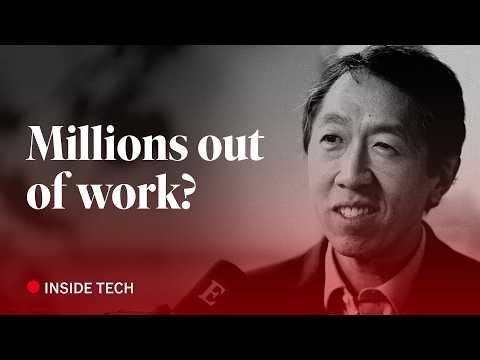
林宜悉 posted on 2026/10/24Are you worried that AI might take your job? Andrew Ng joins The Economist to explain why a 'jobs apocalypse' is unlikely and how professionals can instead thrive by becoming 'AI native' in their respective fields. You'll pick up practical vocabulary related to workforce trends and industry shifts while hearing a refreshing, optimistic perspective on the future of work.
Learn this video on the APP!
The VoiceTube App has more in-depth practice for videos!