
any sort of
US
UK
- Determiner
- Any kind of; any type of
- Phrase
- Somewhat; to some extent
A2Moreat a time
US /æt e taɪm/
UK /æt ə taim/
- Phrase
- Separately; one by one
- Simultaneously; together
A1Moreat least
US /æt list/
UK /æt li:st/
- Adverb
- As a minimum
- Not less than
- Phrase
- No less than; at the minimum
- Used to indicate that something is positive in a bad situation.
C2Moreat night
US /æt naɪt/
UK /æt nait/
- Phrase
- During the night; in the nighttime.
A1Moreat the moment
US
UK
- Adverb
- At this time; now
A1Moreat the same time
US
UK
- Phrase
- Simultaneously; at the identical moment.
- Nevertheless; however; used to introduce a contrasting or qualifying statement.
A1Moreback out
US /bæk aʊt/
UK /bæk aut/
- Phrasal Verb
- To say you will now not do something you promised
A1Morecalm
US /kɑm/
UK /kɑ:m/
- Adjective
- Without wind or storm; quiet; peaceful
- Relaxed and not worried or angry
- Verb (Transitive/Intransitive)
- To make or become relaxed and not worried or angry
A2Morecentrist
US /ˈsɛntrɪst/
UK /ˈsentrɪst/
- Noun
- Believers in concentrating power centrally
C1Morecome back
US /kʌm bæk/
UK /kʌm bæk/
- Phrasal Verb
- To reply to someone, often forcefully
- To be remembered
A1Morecome up with
US /kʌm ʌp wɪð/
UK /kʌm ʌp wið/
- Phrasal Verb
- To think of an idea or solution; produce
A1Morecouple
US /ˈkʌpəl/
UK /'kʌpl/
- Transitive Verb
- To join something to something else
- (Two animals) to engage in sexual relations
- Noun (Countable/Uncountable)
- Two people in a romantic relationship
- Two of something; two people; a pair
A2Morecrisis
US /ˈkraɪsɪs/
UK /'kraɪsɪs/
- Noun (Countable/Uncountable)
- Unstable situation of extreme danger or difficulty
- A turning point in a disease.
B1Morecut off
US /kʌt ɔf/
UK /kʌt ɔf/
- Phrasal Verb
- To end a process, e.g. a phone call
- To cut the end of something
- Transitive Verb
- To isolate or prevent access to a place or person.
- To interrupt someone while they are speaking.
A1Moredeal with
US /dil wɪð/
UK /di:l wið/
- Verb (Transitive/Intransitive)
- To buy or sell goods or services.
- Phrasal Verb
- To take action to solve a problem or manage a situation.
- To be about; concern.
A1Moredebt
US /dɛt/
UK /det/
- Noun (Countable/Uncountable)
- Sum of money owed to someone that is not yet paid
- A moral or social obligation.
A2TOEICMorediesel
US /ˈdizəl, -səl/
UK /ˈdi:zl/
- Uncountable Noun
- Heavy mineral oil used for power engines
- Countable Noun
- An internal combustion engine that uses the heat of compression to ignite the fuel.
- A vehicle powered by a diesel engine.
B1Moredue to
US /du tu/
UK /dju: tu:/
- Preposition
- Because of; owing to
- Adjective
- Attributable to; caused by.
A1Moreelection
US /ɪˈlɛkʃən/
UK /ɪ'lekʃn/
- Noun
- Process of choosing someone by voting
B1TOEICMoreessentially
US /ɪˈsenʃəli/
UK /ɪˈsenʃəli/
- Adverb
- Basically; (said when stating the basic facts)
- Used to emphasize the basic truth or fact of a situation.
A2Morefavor
US /ˈfevɚ/
UK /'feɪvə/
- Noun
- Support or approval from people
- Small gift given out at a party
- Transitive Verb
- To prefer or promote over another
A2Morefinancial
US /faɪˈnænʃ(ə)l/
UK /faɪˈnænʃl/
- Adjective
- Involving money
- Relating to investments.
- Countable Noun
- A person who provides advice on financial matters.
A2TOEICMorefor example
US
UK
- Phrase
- As an illustration or instance.
gather
US /ˈɡæðɚ/
UK /ˈgæðə(r)/
- Transitive Verb
- To bring objects together into one place
- To collect foods such as wild berries or crops
- Noun
- Fold in cloth, as in a full skirt
A2TOEICMoreget a grip
US /ɡɛt e ɡrɪp/
UK /ɡet ə ɡrip/
- Idiom
- To control your emotions and behave more calmly.
A1Moreget a sense
US
UK
- Verb (Transitive/Intransitive)
- To understand or perceive something intuitively.
A1Moreget through
US /ɡɛt θru/
UK /ɡet θru:/
- Phrasal Verb
- To arrive at the end of or finish something
- To succeed in contacting someone by phone
A1Morego ahead
US /ɡo əˈhɛd/
UK /ɡəu əˈhed/
- Phrasal Verb
- To start an activity; start doing, working etc.
- To give permission to do something
- Intransitive Verb
- To start or proceed with something
- To proceed despite potential obstacles or doubts.
A1Morehandle
US /ˈhændl/
UK /'hændl/
- Transitive Verb
- To cope with or take responsibility for
- To control a machine, car etc.
- Countable Noun
- The part of a door you hold to open it
- Thing you hold to carry or open a bag, pan etc.
A2TOEICMorehave to
US /hæv tu/
UK /ˈhæv tə/
- Auxiliary Verb
- Must do
A1Morein control
US /ɪn kənˈtrol/
UK /in kənˈtrəul/
- Adjective
- Having the power to direct or regulate something; able to manage or direct a situation or person.
- Possessing self-restraint and the ability to manage one's own behavior and emotions.
- Phrase
- Having command or authority; managing effectively.
C1Morein favor of
US /ɪn ˈfevɚ ʌv/
UK /in ˈfeivə ɔv/
- Phrase
- Expressing support or approval for someone or something.
- To the advantage of; benefiting.
- Preposition
- Supporting or approving of something.
- To the advantage of; to the benefit of.
A1Morein the middle of
US
UK
- Phrase
- In the central part or point of something.
- Engaged or occupied with something.
A2Moreinterior
US /ɪnˈtɪriɚ/
UK /ɪn'tɪərɪə(r)/
- Noun (Countable/Uncountable)
- Part of country that is far from the border, coast
- Remote central area of a continent
- Adjective
- Being the inside part of a building, car etc.
B1TOEICMoreknow about
US /noʊ əˈbaʊt/
UK /nəʊ əˈbaut/
- Phrasal Verb
- To have information or understanding of a subject or situation.
know better
US
UK
- Verb (Transitive/Intransitive)
- To be wise enough not to do something.
- To be expected to have the sense to not do something.
A1Morelack
US /læk/
UK /læk/
- Verb (Transitive/Intransitive)
- To not have, or not have enough, of something
- Uncountable Noun
- The state of not having or not having enough of
A2TOEICMoreleave it there
US
UK
- Phrase
- To put something down and not move it from that location.
- To stop working on something and postpone it for later.
- Transitive Verb
- To allow something to remain at a specific location.
literally
US /ˈlɪtərəli/
UK
- Adverb
- In a literal manner or sense; exactly as stated.
- Used for emphasis to describe something that is actually true, often to highlight surprise or intensity.
B1Morelook back
US /lʊk bæk/
UK /luk bæk/
- Phrasal Verb
- To think about past events
A1Moremake up
US /mek ʌp/
UK /meik ʌp/
- Phrasal Verb
- To invent or create a story
- To add up to
- Verb (Transitive/Intransitive)
- To invent a story, excuse, etc.
- To compensate for something lost, missed, or deficient.
A1Moremarine
US /məˈrin/
UK /mə'ri:n/
- Countable Noun
- Soldier trained to serve on land and sea
- Adjective
- Of the ocean or ocean plants and animals
- Concerning sailing or doing business by sea
B1Moreminister
US /ˈmɪnɪstɚ/
UK /'mɪnɪstə(r)/
- Noun
- An official who heads a government department
- Person who performs Christian services
A2Moreof course
US /ʌv kɔː(r)s/
UK /ɔv kɔː(r)s/
- Adverb
- Sure ; Certainly
- Phrase
- For sure; certainly
A2Moreon sunday
US
UK
- Phrase
- Every Sunday; each Sunday.
- Referring to a particular Sunday.
A1Moreon television
US /ɑn ˈtɛləvɪʒən/
UK /ɒn ˈtelɪvɪʒən/
- other
- Appearing or broadcast on TV.
A2Moreon the street
US /ɑn ði strit/
UK /ɔn ðə stri:t/
- Phrase
- Located on or along a public road in a town or city.
- Available or circulating, especially illegally or unofficially.
A1Moreon the streets
US /ɑn ðə strits/
UK /ɒn ðə stri:ts/
- other
- Without a home; homeless or exposed outdoors.
B2Moreother than
US
UK
- Preposition
- Except for; apart from.
- Conjunction
- Different from.
A1Moreout and about
US /aʊt ənd əˈbaʊt/
UK /aut ænd əˈbaut/
- Phrase
- Having returned to your usual activities after an illness.
- Traveling to different places.
out of control
US /aʊt ʌv kənˈtrol/
UK /aut ɔv kənˈtrəul/
- Adjective
- Impossible to manage or control.
- Not able to be directed or steered.
A1Moreovernight
US /ˈovɚˌnaɪt/
UK /ˌəʊvə'naɪt/
- Adverb
- (Becoming famous, etc.) in a short amount of time
- For or during the night
- Adjective
- Lasting or taking place during the night
- Delivered or intended to be delivered on the next day
B1Moreovertaken
US /ˌoʊvə'teɪkən/
UK /ˌəʊvə'teɪkən/
- Transitive Verb
- To pass and go in front of another car
- To become better or faster than another person at
B1Morepositive
US /ˈpɑzɪtɪv/
UK /ˈpɒzətɪv/
- Adjective
- Showing agreement or support for something
- Being sure about something; knowing the truth
- Noun
- A photograph in which light areas are light and dark areas are dark
A2Morepositive outlook
US
UK
- Noun
- A tendency to expect good things to happen; optimism.
- A forecast or expectation of favorable future developments.
president
US /ˈprɛzɪdənt,-ˌdɛnt/
UK /ˈprezɪdənt/
- Noun
- Person in charge of a country, or organization
- The highest-ranking executive in a corporation or organization.
A2TOEICMorepresidential
US /ˌprɛzɪˈdɛnʃəl/
UK /ˌprezɪ'denʃl/
- Adjective
- Concerning the president
B1Moreprime
US /praɪm/
UK /praɪm/
- Transitive Verb
- To get a person ready for; prepare someone
- To coat with paint to prepare it for the main coat
- Adjective
- Concerning the highest in quality or value
- Concerning the highest level of achievement
A2TOEICMorerally
US /ˈræli/
UK /'rælɪ/
- Noun (Countable/Uncountable)
- Public meeting to support or oppose something
- A race for motor vehicles over public roads
- Verb (Transitive/Intransitive)
- To meet publicly to support or oppose something
- To race cars in the countryside
B1Moreresign
US /rɪ'zaɪn/
UK /rɪ'zaɪn/
- Intransitive Verb
- To leave a job because you want to
- Verb (Transitive/Intransitive)
- To accept something unpleasant that one cannot do anything about.
B1TOEICMorerestore
US /rɪˈstɔr, -ˈstor/
UK /rɪˈstɔ:(r)/
- Transitive Verb
- To return a thing to its original condition
B1Moreriot
US /ˈraɪət/
UK /'raɪət/
- Noun
- Person, thing, or event that is extremely funny
- When there is a lot of something, e.g. color
- Intransitive Verb
- (Of a crowd) to protest and try to take control
B2Moresame time
US
UK
- Phrase
- Occurring simultaneously or at the same point in time.
- At the identical time as before; recurring at a fixed hour.
- Noun
- An equal duration or period.
A1Moresolution
US /səˈluʃən/
UK /səˈlu:ʃn/
- Noun (Countable/Uncountable)
- Mix of a liquid and a solid or a gas
- Way to solve or deal with a problem
A2Moretaken over
US
UK
- Phrasal Verb
- To gain control of (a company) from someone else
- To gain control of something.
A1Moretalking about
US
UK
- Phrasal Verb
- To discuss a particular topic.
- To be constantly mentioning or bringing up a subject.
A1Moreto do with
US
UK
- Phrasal Verb
- To be about something; concern
A1Moretoo heavy
US
UK
- Adjective
- Having excessive weight; difficult to lift or move.
- Excessively burdensome or difficult to manage.
trip
US /trɪp/
UK /trɪp/
- Verb (Transitive/Intransitive)
- To release an electrical switch
- To fall by catching your foot on something
- Noun
- Act of falling down; falling over an obstacle
- Journey or visit to a place
A2Moreunderestimate
US /ˌʌndɚˈɛstəmet/
UK /ˌʌndər'estɪmeɪt/
- Transitive Verb
- To make too low a guess of something's size, value
B2TOEICMoreunrest
US /ʌnˈrɛst, ˈʌnˌrɛst/
UK /ʌn'rest/
- Uncountable Noun
- Disturbance, e.g. of crowd in protest against
B2Moreviolence
US /ˈvaɪələns/
UK /ˈvaɪələns/
- Uncountable Noun
- Strong physical force of nature
- Use of physical force to harm someone
B1Morewatch out
US /wɑtʃ aʊt/
UK /wɔtʃ aut/
- Phrasal Verb
- To be careful; to be alert to danger
A1More
Vocabulary
- at the moment: At this time; now
- on sunday: Every Sunday; each Sunday.
- of course: Sure ; Certainly
- come up with: To think of an idea or solution; produce
- in control: Having the power to direct or regulate something; able to manage or direct a situation or person.
- on the street: Located on or along a public road in a town or city.
- other than: Except for; apart from.
- any sort of: Any kind of; any type of
- on the streets: Without a home; homeless or exposed outdoors.
- due to: Because of; owing to
- at the same time: Simultaneously; at the identical moment.
- same time: Occurring simultaneously or at the same point in time.
- at least: As a minimum
- at night: During the night; in the nighttime.
- cut off: To end a process, e.g. a phone call
- go ahead: To start an activity; start doing, working etc.
- know better: To be wise enough not to do something.
- get a sense: To understand or perceive something intuitively.
- positive outlook: A tendency to expect good things to happen; optimism.
- look back: To think about past events
- to do with: To be about something; concern
- taken over: To gain control of (a company) from someone else
- make up: To invent or create a story
- get a grip: To control your emotions and behave more calmly.
- have to: Must do
- come back: To reply to someone, often forcefully
- back out: To say you will now not do something you promised
- deal with
- get through: To arrive at the end of or finish something
- know about: To have information or understanding of a subject or situation.
- talking about: To discuss a particular topic.
- in the middle of: In the central part or point of something.
- at a time: Separately; one by one
- for example: As an illustration or instance.
- out and about: Having returned to your usual activities after an illness.
- in favor of: Expressing support or approval for someone or something.
- out of control: Impossible to manage or control.
- on television: Appearing or broadcast on TV.
- too heavy: Having excessive weight; difficult to lift or move.
- leave it there: To put something down and not move it from that location.
- watch out: To be careful; to be alert to danger
- literally: In a literal manner or sense; exactly as stated.
- sort: To organize things by putting them into groups
- essentially: Basically; (said when stating the basic facts)
- crisis: Unstable situation of extreme danger or difficulty
- positive: Showing agreement or support for something
- calm: Without wind or storm; quiet; peaceful
- bit: Device put in a horse's mouth to control it
- lack: To not have, or not have enough, of something
- underestimate: To make too low a guess of something's size, value
- financial: Involving money
- debt: Sum of money owed to someone that is not yet paid
- prime: To get a person ready for; prepare someone
- field: Area of study, such as physics or biology
- mean: Average of a set of numbers
- deal: To cope with something - usually troubles
- state: Region within a country, with its own government
- similar: Nearly the same; alike
- address: Exact street location of a place
- introduce: To open an essay to set the scene
- favor: Support or approval from people
- couple: To join something to something else
- due: When something is required or expected
- solution: Mix of a liquid and a solid or a gas
- riot: Person, thing, or event that is extremely funny
- violence: Strong physical force of nature
- marine: Soldier trained to serve on land and sea
- moment: Very short or brief period of time
- lot: What happens to a person in life from chance; fate
- interior: Part of country that is far from the border, coast
- place: To put someone in a particular type of situation
- trip: To release an electrical switch
- restore: To return a thing to its original condition
- rally: Public meeting to support or oppose something
- president: Person in charge of a country, or organization
- control: A device designed to operate a machine
- fact: Something that is known or proved to be true
- gather: To bring objects together into one place
- minister: An official who heads a government department
- election: Process of choosing someone by voting
- resign: To leave a job because you want to
- handle: To cope with or take responsibility for
- unrest: Disturbance, e.g. of crowd in protest against
- overnight: (Becoming famous, etc.) in a short amount of time
- diesel: Heavy mineral oil used for power engines
- presidential: Concerning the president
- overtaken: To pass and go in front of another car
- centrist: Believers in concentrating power centrally
Get the full experience in the app
Learn anywhere with detailed sentence and usage analysis
01:03
She took a brave step forward, leaving behind her comfort zone to chase her dreams.
Vocabulary
- brave
adj. Having courage
- comfort zone
phr. A familiar situation where one feels safe
Explanation
a brave step is a noun phrase, where brave is an adjective modifying the noun step, meaning "a courageous step".
forward is an adverb modifying step, meaning "ahead".
The whole phrase serves as the object, answering the "what" of took (verb) — she took a brave step forward.
Get the full experience in the app
Look up words anytime with pronunciation, part of speech, and usage
brave
US/brev/
UK/breɪv/
adj.Brave
v.t.To bravely face
A2 Elementary
Get the full experience in the app
Practice speaking anytime and get instant pronunciation feedback
Try this speaking exercise.
Try practicing with this sentence.
80
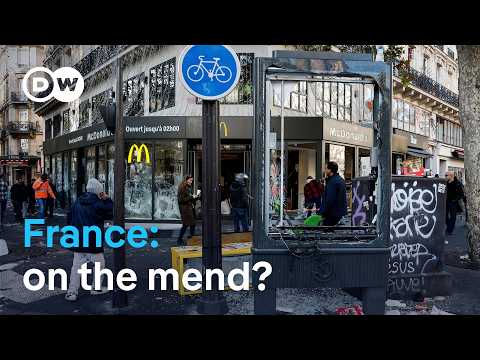
France wakes from curfews after destructive riots | DW News
0
林宜悉 posted on 2026/10/20Curious about the tension in France? This report breaks down how the government is struggling to balance public safety and rising living costs, giving you a chance to practice sophisticated news vocabulary like 'flashpoints' and 'mounting pressure' in a real-world context.
Learn this video on the APP!
The VoiceTube App has more in-depth practice for videos!