
accent
US /ˈækˌsɛnt/
UK /'æksent/
- Transitive Verb
- To give emphasis to (a point you are making)
- Noun
- Feature of a design, e.g. a stripe on a shirt
- Correct spoken emphasis on a part of a word
A2Moreafter all
US /ˈæftɚ ɔl/
UK /ˈɑ:ftə ɔ:l/
- Adverb
- In spite of what was expected; used to introduce a statement that supports a previous statement or explains why it was made
- Considering everything; used to indicate that something is happening or is true despite some difficulty or obstacle
- Phrase
- Despite what was expected or thought; in spite of everything.
- Taking everything into consideration; considering that.
B1Morebreak it down
US
UK
- Phrasal Verb
- To simplify something complex into smaller, more manageable parts.
- To explain something in a detailed and understandable way.
A2Morecome back
US /kʌm bæk/
UK /kʌm bæk/
- Phrasal Verb
- To reply to someone, often forcefully
- To be remembered
A1Morefeature
US /ˈfitʃɚ/
UK /'fi:tʃə(r)/
- Noun (Countable/Uncountable)
- Special report in a magazine or paper
- Distinctive or important point of something
- Transitive Verb
- To highlight or give special importance to
- To give prominence to; to present or promote as a special or important item.
A2TOEICMorefinish with
US
UK
- Phrasal Verb
- To end a relationship
A1Morefor example
US
UK
- Phrase
- As an illustration or instance.
have to
US /hæv tu/
UK /ˈhæv tə/
- Auxiliary Verb
- Must do
A1Morein different ways
US
UK
- Phrase
- Using various methods or approaches; with variety.
- In varying manners or styles; not uniformly.
A1Morein fact
US /ɪn fækt/
UK /in fækt/
- Adverb
- Used to emphasize the truth of a statement, especially one that contrasts with or contradicts something else.
- Used to introduce a more detailed or surprising piece of information.
- Phrase
- Used to emphasize the truth of a statement, especially one that is surprising or contrary to what might be expected.
C1Moreknow about
US /noʊ əˈbaʊt/
UK /nəʊ əˈbaut/
- Phrasal Verb
- To have information or understanding of a subject or situation.
look at
US /lʊk æt/
UK /luk æt/
- Phrasal Verb
- To use your eyes to focus on something
- To focus your eyes on something carefully
A1Moreon to
US /ɑn tu/
UK /ɔn tu:/
- Preposition
- Toward something; forward
- Aware of someone's activities.
- Adjective
- Aware of someone's deception or illegal activities.
A1Morepronunciation
US /prəˌnʌnsiˈeʃən/
UK /prəˌnʌnsiˈeɪʃn/
- Noun (Countable/Uncountable)
- How a word is said; how a word sounds
- The manner in which someone utters a word.
B1Moresound right
US
UK
- Intransitive Verb
- To seem correct or accurate.
spell
US /spɛl/
UK /spel/
- Transitive Verb
- To lead to future trouble
- To be able to write (or say) the letters of a word
- Noun (Countable/Uncountable)
- Making some magic happen; form of words to do this
- Period of time; time when an action is being done
A2Morestandard
US /ˈstændəd/
UK /'stændəd/
- Noun
- Official unit of measuring something
- Principle of behaving in a moral way
- Adjective
- Being the accepted normal level of quality
- (Of a language) being the most accepted in a place
A2TOEICMoretake away from
US /tek əˈwe frʌm/
UK /teik əˈwei frɔm/
- Phrasal Verb
- To reduce the positive effect or value of something.
- To remove or detract from a particular quality or fact.
A1Moretalking about
US
UK
- Phrasal Verb
- To discuss a particular topic.
- To be constantly mentioning or bringing up a subject.
A1Morethumbs up
US
UK
- Noun
- A gesture of approval or agreement, indicated by holding a fist with the thumb extended upwards.
- A positive rating or vote on social media or online platforms.
- Noun (plural)
- Multiple gestures of approval or agreement made by extending the thumbs upward.
A1Moretongue
US /tʌŋ/
UK /tʌŋ/
- Noun
- Long, thin part of (e.g. shoe under the laces)
- Meat from the mouth of an animal, cooked as food
- Transitive Verb
- To using your mouth to produce musical notes
- To use your mouth to touch something
A2Moreup there
US /ʌp ðɛr/
UK /ʌp ðɛə/
- Adverb
- In or to a higher place or position; far away.
- In heaven.
A1Moreused to
US /juzd tu/
UK /ˈju:st tə/
- Adjective
- Did regularly before, but don't do now
- Auxiliary Verb
- Have done before, but do not do now
A1Morevowel
US /ˈvaʊəl/
UK /ˈvaʊəl/
- Countable Noun
- A speech sound; a, e , it, o, u and sometimes y
B1Morework at
US /wɚk æt/
UK /wə:k æt/
- Phrasal Verb
- To have a job at a particular place or organization.
- To make an effort to improve something.
A1Morework on
US /wɚk ɑn/
UK /wə:k ɔn/
- Phrasal Verb
- To devote effort to improve or develop something
- To try to persuade or influence someone.
A1More
Vocabulary
- look at: To use your eyes to focus on something
- up there: In or to a higher place or position; far away.
- have to: Must do
- work on: To devote effort to improve or develop something
- talking about: To discuss a particular topic.
- in fact: Used to emphasize the truth of a statement, especially one that contrasts with or contradicts something else.
- finish with: To end a relationship
- know about: To have information or understanding of a subject or situation.
- on to: Toward something; forward
- break it down: To simplify something complex into smaller, more manageable parts.
- used to: Did regularly before, but don't do now
- come back: To reply to someone, often forcefully
- in different ways: Using various methods or approaches; with variety.
- take away from: To reduce the positive effect or value of something.
- sound right: To seem correct or accurate.
- work at: To have a job at a particular place or organization.
- for example: As an illustration or instance.
- after all: In spite of what was expected; used to introduce a statement that supports a previous statement or explains why it was made
- thumbs up: A gesture of approval or agreement, indicated by holding a fist with the thumb extended upwards.
- accent: To give emphasis to (a point you are making)
- pronunciation: How a word is said; how a word sounds
- feature: Special report in a magazine or paper
- tongue: Long, thin part of (e.g. shoe under the laces)
- hard: Difficult to do; difficult to understand
- sound: Sensible, dependable and reliable
- standard: Official unit of measuring something
- English: Language of the UK, USA, Nigeria and elsewhere
- word: Unit of language that has a meaning
- hear: To be aware of sound; to perceive with the ear
- british: Concerning the culture and people of British
- laugh: To make a happy sound when something is funny
- spell: To lead to future trouble
- vowel: A speech sound; a, e , it, o, u and sometimes y
- listen: To carefully consider what someone is saying
Get the full experience in the app
Learn anywhere with detailed sentence and usage analysis
01:03
She took a brave step forward, leaving behind her comfort zone to chase her dreams.
Vocabulary
- brave
adj. Having courage
- comfort zone
phr. A familiar situation where one feels safe
Explanation
a brave step is a noun phrase, where brave is an adjective modifying the noun step, meaning "a courageous step".
forward is an adverb modifying step, meaning "ahead".
The whole phrase serves as the object, answering the "what" of took (verb) — she took a brave step forward.
Get the full experience in the app
Look up words anytime with pronunciation, part of speech, and usage
brave
US/brev/
UK/breɪv/
adj.Brave
v.t.To bravely face
A2 Elementary
Get the full experience in the app
Practice speaking anytime and get instant pronunciation feedback
Try this speaking exercise.
Try practicing with this sentence.
80
8 Tips for British English Pronunciation
0
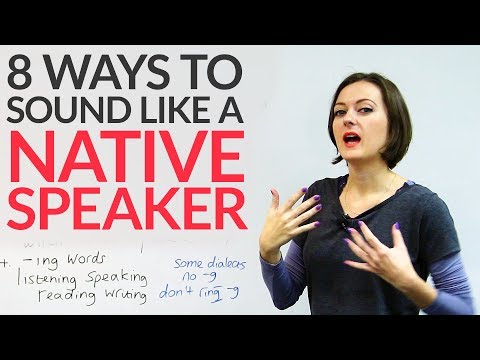
徐列頞 posted on 2015/07/08Want to sound more like a native Brit? This video breaks down 8 essential tips for mastering British English pronunciation, from tricky ED and ING endings to the subtle schwa and TH sounds. You'll pick up practical skills that make your daily conversations clearer and more confident!
Learn this video on the APP!
The VoiceTube App has more in-depth practice for videos!