
context
US /ˈkɑnˌtɛkst/
UK /ˈkɒntekst/
- Noun (Countable/Uncountable)
- Set of facts surrounding a person or event
- The circumstances that form the setting for an event, statement, or idea, and in terms of which it can be fully understood and assessed.
A2Moredepartment
US /dɪˈpɑ:rtmənt/
UK /dɪˈpɑ:tmənt/
- Noun
- Division of a larger part or organization
A2TOEICMoreeat up
US /it ʌp/
UK /i:t ʌp/
- Phrasal Verb
- To eat all of something
- To use a large amount of something, especially money or time.
A1Moreengineering
US /ˌendʒɪˈnɪrɪŋ/
UK /ˌendʒɪˈnɪərɪŋ/
- Uncountable Noun
- The practical application of science to industry
B1Moregot to
US /ɡɑt tu/
UK /gɔt tu:/
- Verb (Transitive/Intransitive)
- To arrive at some place
- To have the opportunity or permission to do something
- Phrasal Verb
- To appeal to the emotions of; move
- To finally begin to start something after a delay
A1Morelab
US /læb/
UK /læb/
- Noun (Countable/Uncountable)
- Short for 'laboratory'
B1Moreligament
US /ˈlɪɡəmənt/
UK /ˈlɪgəmənt/
- Noun
- Band of tissue that connects body parts
C1Moremechanical
US /mɪˈkænɪkəl/
UK /məˈkænɪkl/
- Adjective
- Done without thought or feeling; automatic
- Using or concerning machines
B1Moreoccur
US /əˈkɚ/
UK /əˈkɜ:(r)/
- Intransitive Verb
- To come to pass or to happen
- To be found to exist; to be present.
A2TOEICMoreoveruse
US /ˌovɚˈjuz/
UK /ˌəʊvə'ju:z/
- Uncountable Noun
- Use of an object too often or too extensively
- Transitive Verb
- To use something too often or too extensively
B2Moreprevent
US /prɪˈvɛnt/
UK /prɪ'vent/
- Transitive Verb
- To stop something from happening or existing
A2TOEICMoreresearch
US /rɪˈsɚtʃ, ˈriˌsɚtʃ/
UK /rɪ'sɜ:tʃ/
- Verb (Transitive/Intransitive)
- To study in order to discover new ideas and facts
- To study the market relating to marketing products and services.
- Noun (Countable/Uncountable)
- Study done to discover new ideas and facts
- A particular area or topic of study.
A2TOEICMorerush
US /rʌʃ/
UK /rʌʃ/
- Verb (Transitive/Intransitive)
- To attack someone suddenly in a group
- To perform or finish with speed and urgency
- Noun (Countable/Uncountable)
- Actions performed or finishes with speed, urgency
- State of hurried action
A2TOEICMorescience
US /ˈsaɪəns/
UK /'saɪəns/
- Uncountable Noun
- Study of the physical world, based on facts
A2TOEICMoreshut
US /ʃʌt/
UK /ʃʌt/
- Intransitive Verb
- To stop being open for business
- Transitive Verb
- To close something, e.g. a door
A2Moreshut up
US /ʃʌt ʌp/
UK /ʃʌt ʌp/
- Phrasal Verb
- To close something, e.g. a shop
- To (cause someone to) be silent or not speak
- Interjection
- An expression of disbelief or surprise
A2Morestress
US / strɛs/
UK /stres/
- Transitive Verb
- To emphasize one or more parts of a word, sentence
- To put pressure on something or someone
- Noun (Countable/Uncountable)
- Emphasis on part of a word or sentence
- Pressure on something or someone
A2TOEICMoresuch as
US /sʌtʃ æz/
UK /sʌtʃ æz/
- Preposition
- For example; like
A1Moretissue
US /ˈtɪʃu/
UK /ˈtɪʃu:/
- Noun (Countable/Uncountable)
- Substance formed by cells of living thing; flesh
- Kind of thin, light paper used to pack objects
A2Morevariety
US /vəˈraɪɪti/
UK /və'raɪətɪ/
- Noun
- Particular type of thing or person
- The quality or state of being different or diverse; the absence of uniformity, sameness, or monotony.
A2TOEICMorework in
US /wɚk ɪn/
UK /wə:k in/
- Phrasal Verb
- To make an opening for something in your schedule
- To fit person/thing into a schedule or sequence
A1More
Vocabulary
- such as: For example; like
- work in: To make an opening for something in your schedule
- shut up: To close something, e.g. a shop
- eat up: To eat all of something
- got to: To arrive at some place
- context: Set of facts surrounding a person or event
- variety: Particular type of thing or person
- stress: To emphasize one or more parts of a word, sentence
- research: To study in order to discover new ideas and facts
- prevent: To stop something from happening or existing
- occur: To come to pass or to happen
- tissue: Substance formed by cells of living thing; flesh
- rush: To attack someone suddenly in a group
- science: Study of the physical world, based on facts
- shut: To stop being open for business
- include: To make someone, something part of a group
- start: First time or place that a thing exists; beginning
- understand: To know the meaning of language, what someone says
- interested: Having had your attention taken; curious
- case: Container used to carry things, e.g. clothes
- work: The product of some artistic or literary endeavor
- mechanical: Done without thought or feeling; automatic
- strong: (Of tea or beer) dark or thick
- bone: Hard piece of your body that holds your muscles
- lab: Short for 'laboratory'
- department: Division of a larger part or organization
- ligament: Band of tissue that connects body parts
- study: To focus on learning something usually at school
- osteoporosis: Medical condition that weakens bones, causing them to break easily
- run: To depart or travel according to a schedule
- engineering: The practical application of science to industry
- talk: Style of speaking
- animal: A living creature that is not a plant or person
- slow: Lacking activity, busyness or excitement
- eat: To put food in your mouth
- overuse: Use of an object too often or too extensively
Get the full experience in the app
Learn anywhere with detailed sentence and usage analysis
01:03
She took a brave step forward, leaving behind her comfort zone to chase her dreams.
Vocabulary
- brave
adj. Having courage
- comfort zone
phr. A familiar situation where one feels safe
Explanation
a brave step is a noun phrase, where brave is an adjective modifying the noun step, meaning "a courageous step".
forward is an adverb modifying step, meaning "ahead".
The whole phrase serves as the object, answering the "what" of took (verb) — she took a brave step forward.
Get the full experience in the app
Look up words anytime with pronunciation, part of speech, and usage
brave
US/brev/
UK/breɪv/
adj.Brave
v.t.To bravely face
A2 Elementary
Get the full experience in the app
Practice speaking anytime and get instant pronunciation feedback
Try this speaking exercise.
Try practicing with this sentence.
80
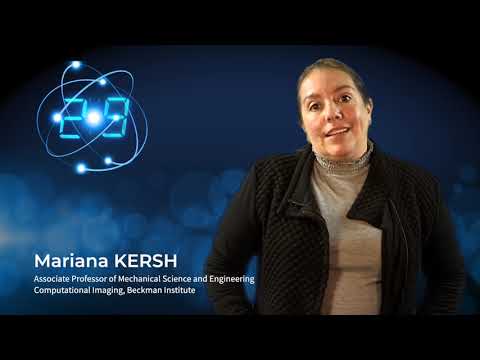
60 Second Science: Mariana Kersh on tissue biomechanics
0
Vivien posted on 2026/09/10Ever wondered what makes bones and ligaments strong? Dive into the fascinating world of tissue biomechanics with Mariana Kersh as she explains how scientists study these crucial parts of our bodies. You'll pick up some great vocabulary related to health, injury prevention, and even animal athletes!
Learn this video on the APP!
The VoiceTube App has more in-depth practice for videos!