
absorb
US /əbˈsɔrb, -ˈzɔrb/
UK /əb'sɔ:b/
- Transitive Verb
- To take up all attention / energy of something
- To take in a liquid; soak up
B1TOEICMoreadmit
US /ædˈmɪt/
UK /əd'mɪt/
- Transitive Verb
- To acknowledge that something is true or right
- To allow someone to enter
A2TOEICMoreas one
US
UK
- Adverb
- Acting or moving together at the same time.
- In complete agreement or unity.
- Phrase
- With a single voice or opinion; unanimously.
- In perfect harmony or unison.
A1Morebasically
US /ˈbesɪkəli,-kli/
UK /ˈbeɪsɪkli/
- Adverb
- Used before you explain something simply, clearly
- In essence; when you consider the most important aspects of something.
A2Morebully
US /ˈbʊli/
UK /'bʊlɪ/
- Noun (Countable/Uncountable)
- a person who habitually seeks to harm or intimidate those whom they perceive as vulnerable
- A person who uses superior strength or influence to intimidate others.
- Verb (Transitive/Intransitive)
- seek to harm, intimidate, or coerce (someone perceived as vulnerable)
B2Moreby now
US /baɪ naʊ/
UK /bai nau/
- Phrase
- At the present time or already; before the present.
A2Morecalm
US /kɑm/
UK /kɑ:m/
- Adjective
- Without wind or storm; quiet; peaceful
- Relaxed and not worried or angry
- Verb (Transitive/Intransitive)
- To make or become relaxed and not worried or angry
A2Morecalm down
US /kɑm daʊn/
UK /kɑ:m daun/
- Phrasal Verb
- To make or become relaxed after being stressed
A2Moreclose off
US
UK
- Phrasal Verb
- To block or obstruct an entrance, passage, or area.
- To isolate oneself emotionally or socially.
A2Morecome back
US /kʌm bæk/
UK /kʌm bæk/
- Phrasal Verb
- To reply to someone, often forcefully
- To be remembered
A1Morecontact
US /ˈkɑnˌtækt/
UK /'kɒntækt/
- Adjective
- Touching or feeling something
- Noun (Countable/Uncountable)
- Touching or feeling something
- Object that allows electricity to run through it
A2Morecool off
US /kul ɔf/
UK /ku:l ɔf/
- Phrasal Verb
- To become cooler.
- To become calm after being angry or excited.
A2Morecraziness
US /'kreɪzɪnəs/
UK /'kreɪzɪnəs/
- Uncountable Noun
- Insanity; strangeness
B2Morecurse
US /kɚs/
UK /kɜ:s/
- Verb (Transitive/Intransitive)
- To use offensive language when angry; swear
- Noun
- Act to cause trouble to others
- A word or phrase used to express anger or annoyance.
B1Moredepress
US /dɪˈprɛs/
UK /dɪ'pres/
- Transitive Verb
- To make someone feel sad or miserable
- To push something down
B2Moredwell
US /dwɛl/
UK /dwel/
- Intransitive Verb
- To live in a certain place
- To think or talk a lot about something, especially something unpleasant.
B1TOEICMoreemotional
US /ɪˈmoʃənəl/
UK /ɪˈməʊʃənl/
- Adjective
- Causing, feeling, or appealing to the emotions
- Relating to or characterized by emotion
A2Moreexpression
US /ɪkˈsprɛʃən/
UK /ɪk'spreʃn/
- Noun (Countable/Uncountable)
- Act of making your thoughts and feelings known
- Group of words that have a specific meaning
A2TOEICMorefall apart
US /fɔl əˈpɑrt/
UK /fɔ:l əˈpɑ:t/
- Phrasal Verb
- To suffer a nervous breakdown
- To break into pieces; stop functioning
A1Morefalling apart
US
UK
- Phrasal Verb
- To suffer a nervous breakdown
- To break into pieces; stop functioning
A1Morefamiliar
US /fəˈmɪljɚ/
UK /fəˈmɪliə(r)/
- Adjective
- Well-known or easily recognized
- Having a good knowledge of something.
- Noun
- A close friend or associate.
- (In folklore) a spirit, often in animal form, believed to attend and serve a witch.
A2TOEICMorefor example
US
UK
- Phrase
- As an illustration or instance.
get out of
US /ɡɛt aʊt ʌv/
UK /ɡet aut ɔv/
- Phrasal Verb
- To leave or escape responsibilities, troubles
- To leave a small, enclosed vehicle
A1Morego away
US /ɡo əˈwe/
UK /ɡəu əˈwei/
- Phrasal Verb
- To go on vacation
- To leave; depart.
A1Morego on
US /ɡo ɑn/
UK /ɡəu ɔn/
- Phrasal Verb
- To continue doing something
- To happen (usually negative)
- Interjection
- Used to encourage someone
A1Morego out
US /ɡo aʊt/
UK /ɡəu aut/
- Phrase
- To leave a building (e.g. a house)
- Phrasal Verb
- (Of a fire) to burn out; be extinguished
- Go out of fashion to stop being fashionable
A1Moregoing on
US /ˈɡoɪŋ ɑn/
UK /ˈgəʊɪŋ ɔn/
- Phrasal Verb
- To continue doing something
- To happen (usually negative)
A1Moregrammar
US /ˈɡræmɚ/
UK /ˈgræmə(r)/
- Uncountable Noun
- Book describing the syntactic rules of a language
- Rules explaining how words are used in a language
B1Morehave to
US /hæv tu/
UK /ˈhæv tə/
- Auxiliary Verb
- Must do
A1Morehold on
US /hold ɑn/
UK /həuld ɔn/
- Phrasal Verb
- To wait for someone (e.g. on a phone call)
- To wait for a short time.
A1Morein mind
US /ɪn maɪnd/
UK /in maind/
- Phrase
- Being aware of or considering something.
- To remember or consider something.
A2Morein order to
US /ɪn ˈɔrdɚ tu/
UK /in ˈɔ:də tu:/
- Preposition
- For the purpose of; with the aim of.
- Phrase
- In a specific sequence or arrangement.
- With the aim of; for the purpose of.
C1Morein particular
US /ɪn pɚˈtɪkjəlɚ/
UK /in pəˈtikjulə/
- Phrase
- Specifically; especially.
- Detailed or precise.
A1Morein the past
US
UK
- Phrase
- During a former period of time; previously.
A1Morein writing
US
UK
- Phrase
- Expressed or presented in written form, rather than spoken.
- Officially recorded in a written document, especially for legal purposes.
A1Moreinsult
US /ɪnˈsʌlt/
UK /ɪn'sʌlt/
- Transitive Verb
- To disrespect someone by being rude or impolite
- Noun (Countable/Uncountable)
- Act of disrespecting by being rude or impolite
B1TOEICMorelash
US /læʃ/
UK /læʃ/
- Countable Noun
- Small hairs that grow above and below your eyes
- A quick hit with a narrow stick or whip
- Transitive Verb
- To hit something violently or forcefully
- To tie something in place tightly
B2Morelash out
US /læʃ aʊt/
UK /læʃ aut/
- Phrasal Verb
- To suddenly attempt to hit someone or something.
- To criticize someone angrily.
A1Morelook at
US /lʊk æt/
UK /luk æt/
- Phrasal Verb
- To use your eyes to focus on something
- To focus your eyes on something carefully
A1Moremake some noise
US
UK
- Intransitive Verb
- To create a loud sound, often to show excitement or approval.
A1Moremelt down
US /mɛlt daʊn/
UK /melt daun/
- Verb (Transitive/Intransitive)
- To heat a solid material, especially metal, until it becomes liquid.
- Intransitive Verb
- To lose control of one's emotions; to become overwhelmed or hysterical.
A1Moremental
US /ˈmɛntl/
UK /ˈmentl/
- Adjective
- Concerning the mind
A2TOEICMorenative
US /ˈnetɪv/
UK /ˈneɪtɪv/
- Noun (Countable/Uncountable)
- Someone from or born in a specific country
- Original inhabitant, e.g. before others
- Adjective
- Caused by natural ability; innate
A2Moreon to
US /ɑn tu/
UK /ɔn tu:/
- Preposition
- Toward something; forward
- Aware of someone's activities.
- Adjective
- Aware of someone's deception or illegal activities.
A1Moreout of it
US /aʊt ʌv ɪt/
UK /aut ɔv it/
- Adjective
- Unconscious or not completely alert; dazed or confused.
- Not able to think clearly or react quickly; not with it.
A1Morephrasal
US
UK
- Adjective
- Concerning or consisting of a phrase
B1Moreprocess
US /ˈprɑsˌɛs, ˈproˌsɛs/
UK /prə'ses/
- Transitive Verb
- To organize and use data in a computer
- To deal with official forms in the way required
- Noun (Countable/Uncountable)
- Dealing with official forms in the way required
- Set of changes that occur slowly and naturally
A2TOEICMorepull yourself together
US
UK
- Phrasal Verb
- To calm down and regain control of your emotions
A1Moreput out
US /pʊt aʊt/
UK /put aut/
- Phrasal Verb
- To publish, e.g. a book
- To cause someone to be troubled or inconvenienced
A1Moreput through
US /pʊt θru/
UK /put θru:/
- Phrasal Verb
- To connect someone to the number he or she wants
A1Morequiz
US /kwɪz/
UK /kwɪz/
- Noun (Countable/Uncountable)
- A game in which players answer questions on topics
- Brief spoken or written test, given to students
- Transitive Verb
- To ask a person many questions about something
B1Morerage
US /reɪdʒ/
UK /reɪdʒ/
- Uncountable Noun
- Strong or violent anger
- Intransitive Verb
- To act or speak with strong or violent anger
- To move violently, like a storm
B1Morereaction
US /riˈækʃən/
UK /rɪ'ækʃn/
- Noun
- Bodily response to a drug or something eaten
- Feeling or action in response to something
A2Moreregular
US /ˈrɛɡjəlɚ/
UK /ˈregjələ(r)/
- Adjective
- Having an equal amount of space or time in between
- Occurring or being done frequently
- Noun (Countable/Uncountable)
- Customers who frequently visit a place
- Soldier who has a permanent job in the army
A2TOEICMoresection
US / ˈsɛkʃən/
UK /'sekʃn/
- Noun (Countable/Uncountable)
- A part of a whole
- Specific group of people from a larger group
- Transitive Verb
- To divide something into smaller parts
B1TOEICMoreshut down
US /ʃʌt daʊn/
UK /ʃʌt daun/
- Phrasal Verb
- To close an operating system, e.g. on a computer
- To stop a factory/machine from operating
- Transitive Verb
- To deactivate a nuclear reactor.
- To turn off a computer or other electronic device.
A2Moreslam
US /slæm/
UK /slæm/
- Transitive Verb
- To criticize sharply
- To shut with a lot of force, making a loud noise
- Noun
- Act or sound of closing a door, etc. violently
B1Moresnap
US /snæp/
UK /snæp/
- Verb (Transitive/Intransitive)
- To close your mouth quickly like biting something
- To break something dry and thin, e.g. a branch
- Countable Noun
- An informal word for a photograph
B1Moresnap out of
US /snæp aʊt ʌv/
UK /snæp aut ɔv/
- Phrasal Verb
- To stop experiencing a negative feeling or state.
C2Moresocialize
US /ˈsoʃəˌlaɪz/
UK /'səʊʃəlaɪz/
- Intransitive Verb
- To spend time with people; go out and make friends
- To spend time with people; go out and make friends
- Transitive Verb
- To teach people acceptable cultural behaviors
- To organize or control (something) according to socialist principles.
B2Morestay in
US /ste ɪn/
UK /stei in/
- Phrasal Verb
- To remain inside one's home.
- Intransitive Verb
- To remain as an inpatient in a hospital.
storm out
US /stɔrm aʊt/
UK /stɔ:m aut/
- Phrasal Verb
- To leave a place angrily and noisily.
A1Moreswear
US /swɛr/
UK /sweə(r)/
- Intransitive Verb
- To say bad or impolite words to someone
- Transitive Verb
- To make a serious promise to do something
B1Moreswear at
US
UK
- Phrasal Verb
- To use offensive language to or about (someone).
A1Moresync
US /sɪŋk/
UK /sɪŋk/
- Noun
- Short for 'synchronization'
C1Moretip
US /tɪp/
UK /tɪp/
- Transitive Verb
- To pour or move something from a place, container
- To give extra money for good service
- Noun
- End point of e.g. a pencil or finger
- Extra money given for good service
A2Moretune out
US /tun aʊt/
UK /tju:n aut/
- Phrasal Verb
- To stop paying attention to something; ignore
A1Moreupset
US /ʌpˈsɛt/
UK /ʌpˈset/
- Adjective
- (Of stomach, etc.) not functioning well; sick
- Troubled, worried, or angry
- Transitive Verb
- To turn upside down or on its side
- To trouble, worry, or anger someone
A2Moreused to
US /juzd tu/
UK /ˈju:st tə/
- Adjective
- Did regularly before, but don't do now
- Auxiliary Verb
- Have done before, but do not do now
A1Moreverbal
US /ˈvɚbəl/
UK /ˈvə:bəl/
- Adjective
- Concerning verbs
- Using speech, rather than being written
- Noun
- Word that is made from a verb
B1Morevocabulary
US /voˈkæbjəˌlɛri/
UK /və'kæbjələrɪ/
- Uncountable Noun
- Words that have to do with a particular subject
- The words that a person knows
B1TOEICMorewake up
US /wek ʌp/
UK /weik ʌp/
- Phrasal Verb
- To stop sleeping
- To become fully aware and alert to a situation.
A1Morewander
US /ˈwɑ:ndə(r)/
UK /ˈwɒndə(r)/
- Intransitive Verb
- To move through a place with no particular purpose
- To move through a place with no particular purpose
A2TOEICMorezone
US /zoʊn/
UK /zəʊn/
- Noun
- Area of space designated for a particular use
- Transitive Verb
- To divide an area for a particular reason
B1Morezone out
US
UK
- Phrasal Verb
- To stop paying attention and start daydreaming or thinking about other things.
B1More
Vocabulary
- lash out: To suddenly attempt to hit someone or something.
- shut down: To close an operating system, e.g. on a computer
- go on: To continue doing something
- on to: Toward something; forward
- for example: As an illustration or instance.
- zone out: To stop paying attention and start daydreaming or thinking about other things.
- tune out: To stop paying attention to something; ignore
- melt down: To heat a solid material, especially metal, until it becomes liquid.
- pull yourself together: To calm down and regain control of your emotions
- snap out of: To stop experiencing a negative feeling or state.
- out of it: Unconscious or not completely alert; dazed or confused.
- cool off: To become cooler.
- come back: To reply to someone, often forcefully
- by now: At the present time or already; before the present.
- in the past: During a former period of time; previously.
- put through: To connect someone to the number he or she wants
- used to: Did regularly before, but don't do now
- put out: To publish, e.g. a book
- in particular: Specifically; especially.
- swear at: To use offensive language to or about (someone).
- look at: To use your eyes to focus on something
- go out: To leave a building (e.g. a house)
- have to: Must do
- going on: To continue doing something
- make some noise: To create a loud sound, often to show excitement or approval.
- close off: To block or obstruct an entrance, passage, or area.
- as one: Acting or moving together at the same time.
- fall apart: To suffer a nervous breakdown
- falling apart: To suffer a nervous breakdown
- in mind: Being aware of or considering something.
- stay in: To remain inside one's home.
- storm out: To leave a place angrily and noisily.
- hold on: To wait for someone (e.g. on a phone call)
- wake up: To stop sleeping
- go away: To go on vacation
- get out of: To leave or escape responsibilities, troubles
- calm down: To make or become relaxed after being stressed
- in order to: For the purpose of; with the aim of.
- in writing: Expressed or presented in written form, rather than spoken.
- process: To organize and use data in a computer
- mental: Concerning the mind
- expression: Act of making your thoughts and feelings known
- basically: Used before you explain something simply, clearly
- native: Someone from or born in a specific country
- vocabulary: Words that have to do with a particular subject
- familiar: Well-known or easily recognized
- emotional: Causing, feeling, or appealing to the emotions
- insult: To disrespect someone by being rude or impolite
- admit: To acknowledge that something is true or right
- calm: Without wind or storm; quiet; peaceful
- absorb: To take up all attention / energy of something
- brain: To strike someone forcefully on the head
- rage: Strong or violent anger
- mean: Average of a set of numbers
- regular: Having an equal amount of space or time in between
- tip: To pour or move something from a place, container
- upset: (Of stomach, etc.) not functioning well; sick
- grammar: Book describing the syntactic rules of a language
- section: A part of a whole
- swear: To say bad or impolite words to someone
- contact: Touching or feeling something
- reaction: Bodily response to a drug or something eaten
- snap: To close your mouth quickly like biting something
- curse: To use offensive language when angry; swear
- wander: To move through a place with no particular purpose
- quiz: A game in which players answer questions on topics
- mind: To be bothered or upset by something
- dwell: To live in a certain place
- fall: Season after summer and before winter; Autumn
- leave: To go away from; depart
- slam: To criticize sharply
- verbal: Concerning verbs
- bully: a person who habitually seeks to harm or intimidate those whom they perceive as vulnerable
- place: To put someone in a particular type of situation
- phrasal: Concerning or consisting of a phrase
- sync: Short for 'synchronization'
- control: A device designed to operate a machine
- storm: To act violently or angrily
- preposition: Word such as 'at' 'on' etc. showing position/time
- zone: Area of space designated for a particular use
- verb: Word that expresses an action or state
- pull: Act of breathing in smoke, as from a pipe
- person: Man, woman or child
- understand: To know the meaning of language, what someone says
- area: Amount of measured space
- think: To have an idea about something without certainty
- lash: Small hairs that grow above and below your eyes
- socialize: To spend time with people; go out and make friends
- depress: To make someone feel sad or miserable
- craziness: Insanity; strangeness
Get the full experience in the app
Learn anywhere with detailed sentence and usage analysis
01:03
She took a brave step forward, leaving behind her comfort zone to chase her dreams.
Vocabulary
- brave
adj. Having courage
- comfort zone
phr. A familiar situation where one feels safe
Explanation
a brave step is a noun phrase, where brave is an adjective modifying the noun step, meaning "a courageous step".
forward is an adverb modifying step, meaning "ahead".
The whole phrase serves as the object, answering the "what" of took (verb) — she took a brave step forward.
Get the full experience in the app
Look up words anytime with pronunciation, part of speech, and usage
brave
US/brev/
UK/breɪv/
adj.Brave
v.t.To bravely face
A2 Elementary
Get the full experience in the app
Practice speaking anytime and get instant pronunciation feedback
Try this speaking exercise.
Try practicing with this sentence.
80
0
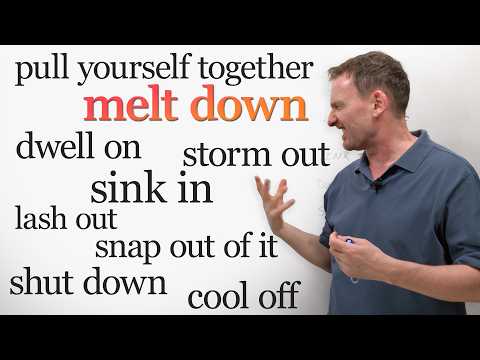
林宜悉 posted on 2026/08/25Ever wondered how to express intense emotions in English? This video dives into 12 essential phrasal verbs like 'lash out,' 'shut down,' and 'melt down' that native speakers use all the time to describe reactions to good or bad news. You'll learn exactly when and how to use these powerful phrases to sound more natural and understand everyday conversations better!
Learn this video on the APP!
The VoiceTube App has more in-depth practice for videos!