Vocabulary
- for example: As an illustration or instance.
- have to: Must do
- look at: To use your eyes to focus on something
- in writing: Expressed or presented in written form, rather than spoken.
- talking about: To discuss a particular topic.
- by accident: Without intending to; unintentionally.
- going on: To continue doing something
- come back: To reply to someone, often forcefully
- come before: To happen or exist earlier in time than something else.
- for certain: Definitely; without a doubt.
- look for: To try to find a thing or person that is lost
- by nature: Inherently; by one's character or disposition.
- on the other hand : Considering a different aspect of the matter; alternatively.
- in jail: Imprisoned; confined in a jail or prison.
- in mind: Being aware of or considering something.
- inside of: Within; in the inner part of.
- move into: To start living in a new house or building
- not limited to: Including something but also allowing other things; not restricted to.
- take out: To apply for and get a license
- sound right: To seem correct or accurate.
- figure out: To understand the behavior of someone
- feel for: To have sympathy for someone; to empathize with someone's situation.
- like anything: Used to emphasize strong intensity or effort.
- think of: To look on as (being something specific); consider
- in the middle of: In the central part or point of something.
- for the best: Resulting in the most positive or beneficial outcome, even if it's difficult or painful in the short term.
- as soon as: In a short time after (something happens)
- get back to: To get in contact with someone again
- be: Being
- situation: Place, position or area that something is in
- feel: To be aware of or experience an emotion, sensation
- word: Unit of language that has a meaning
- insecure: Lacking confidence or certainty about yourself
- lot: What happens to a person in life from chance; fate
- verb: Word that expresses an action or state
- correct: Being suitable and appropriate for an occasion
- adjective: A word that describes a noun, e.g. happy
- noun: The subject or object of a sentence
- dictionary: Book with the spellings and meanings of many words
- accident: Sudden unplanned event causing damage, injury etc.
- uncomfortable: Not being relaxed; worried about something
- discomfort: To cause to feel uncomfortable or not at ease
- careful: Trying not to make mistakes; working slowly
Get the full experience in the app
Learn anywhere with detailed sentence and usage analysis
01:03
She took a brave step forward, leaving behind her comfort zone to chase her dreams.
Vocabulary
- brave
adj. Having courage
- comfort zone
phr. A familiar situation where one feels safe
Explanation
a brave step is a noun phrase, where brave is an adjective modifying the noun step, meaning "a courageous step".
forward is an adverb modifying step, meaning "ahead".
The whole phrase serves as the object, answering the "what" of took (verb) — she took a brave step forward.
Get the full experience in the app
Look up words anytime with pronunciation, part of speech, and usage
brave
US/brev/
UK/breɪv/
adj.Brave
v.t.To bravely face
A2 Elementary
Get the full experience in the app
Practice speaking anytime and get instant pronunciation feedback
Try this speaking exercise.
Try practicing with this sentence.
80
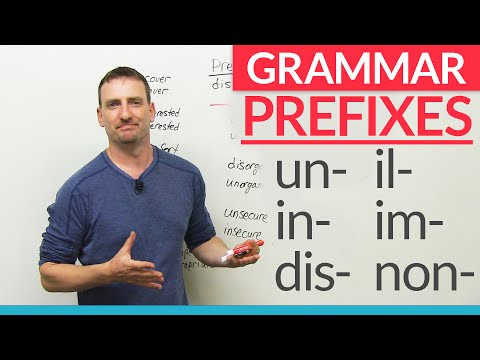
English Grammar: Negative Prefixes - "un", "dis", "in", "im", "non"
0
Chris posted on 2015/02/18Ever get confused between 'un-' and 'dis-'? This video breaks down how to use negative prefixes like "un", "dis", "in", and "im" correctly to avoid common mistakes. You'll pick up essential vocabulary and boost your writing skills with this super clear grammar lesson!
Learn this video on the APP!
The VoiceTube App has more in-depth practice for videos!