
administration
US / ædˌmɪnɪˈstreʃən/
UK /ədˌmɪnɪˈstreɪʃn/
- Uncountable Noun
- Act of giving e.g. medicine to a patient
- The work of running something, e.g. a business
B1TOEICMoreafter all
US /ˈæftɚ ɔl/
UK /ˈɑ:ftə ɔ:l/
- Adverb
- In spite of what was expected; used to introduce a statement that supports a previous statement or explains why it was made
- Considering everything; used to indicate that something is happening or is true despite some difficulty or obstacle
- Phrase
- Despite what was expected or thought; in spite of everything.
- Taking everything into consideration; considering that.
B1Moreagainst you
US
UK
- Preposition
- In opposition to you.
- Expressing disagreement or disapproval of you.
A2Moreall over the place
US
UK
- Phrase
- In a state of disorder; scattered everywhere.
- In many different locations; widely distributed.
- Adjective
- Mentally or emotionally disorganized; confused or erratic.
A1Moreat the moment
US
UK
- Adverb
- At this time; now
A1Morebe with
US /bi wɪð/
UK /bi: wið/
- Phrasal Verb
- To accompany someone; to be in someone's presence.
- To support someone's opinion or cause.
A1Moreblunt
US /blʌnt/
UK /blʌnt/
- Adjective
- Without a sharp edge or point
- Speaking directly; without trying to be polite or kind
- Transitive Verb
- To make dull or lessen the sharpness of something
B1Morebombing
US /ˈbɑ:mɪŋ/
UK /ˈbɒmɪŋ/
- Transitive Verb
- To attack with explosives
- To cover a surface with graffiti
- Noun (Countable/Uncountable)
- Dropping, attacking or throwing of bombs
- The act of covering a surface with graffiti
B1Moreborder
US /ˈbɔrdɚ/
UK /'bɔ:də(r)/
- Verb (Transitive/Intransitive)
- To be right next to another country or state
- To form the edge of something
- Noun
- Outer part or edge of something
- Line separating one country, state from another
A2TOEICMorecollapse
US /kəˈlæps/
UK /kə'læps/
- Verb (Transitive/Intransitive)
- To fold (e.g. a stroller) down to make it smaller
- To suddenly fall down or break apart into pieces
- Noun
- The sudden failure of a structure or system.
- The sudden failure of a bodily organ or function.
B1Morecondition
US /kənˈdɪʃən/
UK /kənˈdɪʃn/
- Transitive Verb
- To improve something to make it better
- To cause to behave automatically in a certain way
- Noun (Countable/Uncountable)
- Disease or other medical problem
- The state of living you are in, e.g. good health
A2Morecurrency
US /ˈkɚrənsi, ˈkʌr-/
UK /'kʌrənsɪ/
- Uncountable Noun
- Widespread acceptance
- Money system that a country uses
B1Morecut off
US /kʌt ɔf/
UK /kʌt ɔf/
- Phrasal Verb
- To end a process, e.g. a phone call
- To cut the end of something
- Transitive Verb
- To isolate or prevent access to a place or person.
- To interrupt someone while they are speaking.
A1Moreeconomic
US /ˌɛkəˈnɑmɪk, ˌikə-/
UK /ˌi:kəˈnɒmɪk/
- Adjective
- Concerning trade, industry, and money
- Financially worthwhile; profitable.
- Noun
- A system relating to economics
- A factor relating to economics
A2Moreeffort
US /ˈɛfət/
UK /ˈefət/
- Uncountable Noun
- Amount of work used trying to do something
- A conscious exertion of power; a try.
A2TOEICMoreequation
US /ɪˈkweʒən, -ʃən/
UK /ɪˈkweɪʒn/
- Noun (Countable/Uncountable)
- Mathematical statement showing things to be equal
- Complex set of different facts, ideas or issues
B1Morefinancial
US /faɪˈnænʃ(ə)l/
UK /faɪˈnænʃl/
- Adjective
- Involving money
- Relating to investments.
- Countable Noun
- A person who provides advice on financial matters.
A2TOEICMorefor the foreseeable
US /fɚ ðə fɔrˈsiəbəl/
UK /fə ðə fɔ:ˈsi:əbl/
- other
- Referring to a time period that can be predicted or expected in the near future.
B2Moreforcibly
US /ˈfɔ:rsəbli/
UK /ˈfɔ:səbli/
- Adverb
- Using physical strength, power, or violence
B1Moregenerally
US /ˈdʒɛnərəli/
UK /ˈdʒenrəli/
- Adverb
- Usually; as a rule; by, to or for most people
A2Moregrand
US /ɡrænd/
UK /ɡrænd/
- Adjective
- A counter for 1000 of something
- Great in amount, number or size
A2Moreguerrilla
US /ɡəˈrɪlə/
UK /gəˈrɪlə/
- Noun
- Person fighting for a political cause
B2Morehave to
US /hæv tu/
UK /ˈhæv tə/
- Auxiliary Verb
- Must do
A1Moreimpact
US /ˈɪmˌpækt/
UK /'ɪmpækt/
- Noun
- A striking effect or result to hit with force
- Act or force of one thing hitting something else
- Verb (Transitive/Intransitive)
- To hit or strike someone or something with force
- To have a strong effect on someone or something.
A2TOEICMorein mind
US /ɪn maɪnd/
UK /in maind/
- Phrase
- Being aware of or considering something.
- To remember or consider something.
A2Morein particular
US /ɪn pɚˈtɪkjəlɚ/
UK /in pəˈtikjulə/
- Phrase
- Specifically; especially.
- Detailed or precise.
A1Morein the way
US /ɪn ði we/
UK /in ðə wei/
- Phrase
- Obstructing someone or something; hindering progress.
- Stored or placed so as to be available or ready when needed.
A1Morelead to
US /lid tu/
UK /li:d tu:/
- Phrasal Verb
- To result in some action
- Verb (Transitive/Intransitive)
- To have something as a consequence or result.
A1Morelook at
US /lʊk æt/
UK /luk æt/
- Phrasal Verb
- To use your eyes to focus on something
- To focus your eyes on something carefully
A1Moreminister
US /ˈmɪnɪstɚ/
UK /'mɪnɪstə(r)/
- Noun
- An official who heads a government department
- Person who performs Christian services
A2Moreneutralize
US /ˈnu:trəlaɪz/
UK /ˈnju:trəlaɪz/
- Transitive Verb
- To remove or take away a threat
B2Morenoose
US /nus/
UK /nu:s/
- Countable Noun
- Rope tied in a loop to go around an animal's neck
C1Moreof course
US /ʌv kɔː(r)s/
UK /ɔv kɔː(r)s/
- Adverb
- Sure ; Certainly
- Phrase
- For sure; certainly
A2Moreoutside of
US /aʊtˈsaɪd ʌv/
UK /ˌautˈsaid ɔv/
- Preposition
- Located or situated beyond the boundaries or confines of something.
- Beyond the scope, range, or limits of something.
A1Moreplan on
US /plæn ɑn/
UK /plæn ɔn/
- Phrasal Verb
- To intend to do something; to expect to do something.
A1Morepotentially
US /pəˈtɛnʃəlɪ/
UK /pə'tenʃəlɪ/
- Adverb
- That could happen or become reality
B1Morepressure
US /ˈprɛʃɚ/
UK /'preʃə(r)/
- Noun (Countable/Uncountable)
- Anxiety caused by difficult problems
- Force, weight when pressing against a thing
- Transitive Verb
- To apply force to something
- To persuade or force someone to do something
A2TOEICMoreregime
US /reˈʒim, rɪ-/
UK /reɪˈʒi:m/
- Noun
- A system of management; a form of government
B1Moreregion
US /ˈridʒən/
UK /'ri:dʒən/
- Noun (Countable/Uncountable)
- Part of a country, of the world, area, etc.
- A part of the body
A2TOEICMoreregional
US /ˈridʒənəl/
UK /ˈri:dʒənl/
- Adjective
- Of a particular area, not the whole of a country
- Characteristic of a particular region.
B1Moreremain
US /rɪˈmen/
UK /rɪˈmeɪn/
- Intransitive Verb
- To be left behind; to continue to exist
- To stay in a place when other people have gone
A2TOEICMoreresult
US /rɪˈzʌlt/
UK /rɪ'zʌlt/
- Noun
- Something produced through tests or experiments
- Final score of a competition, election or game
- Intransitive Verb
- To be the outcome of other causes and effects
- To happen or exist as a consequence of something.
A2Moresevere
US /səˈvɪr/
UK /sɪ'vɪə(r)/
- Adjective
- Very bad; harsh
- (Of clothes, etc.) plain; simple; not decorated
A2TOEICMorestrait
US /stret/
UK /streɪt/
- Noun
- Channel joining large bodies of water
C2Moresuccess
US /səkˈsɛs/
UK /sək'ses/
- Uncountable Noun
- Achievement of a desired purpose or goal
- A successful person; one who achieved their aims
A2TOEICMoreterritory
US /ˈtɛrɪˌtɔri, -ˌtori/
UK /'terətrɪ/
- Noun (Countable/Uncountable)
- Area of land defended by an animal
- Area of particular knowledge or experience
B1TOEICMorethink about
US /θɪŋk əˈbaʊt/
UK /θiŋk əˈbaut/
- Phrasal Verb
- To consider something carefully.
- To remember or call to mind.
A1More
Vocabulary
- in mind: Being aware of or considering something.
- lead to: To result in some action
- in particular: Specifically; especially.
- think about: To consider something carefully.
- in the way: Obstructing someone or something; hindering progress.
- be with: To accompany someone; to be in someone's presence.
- after all: In spite of what was expected; used to introduce a statement that supports a previous statement or explains why it was made
- plan on: To intend to do something; to expect to do something.
- all over the place: In a state of disorder; scattered everywhere.
- look at: To use your eyes to focus on something
- at the moment: At this time; now
- cut off: To end a process, e.g. a phone call
- of course: Sure ; Certainly
- for the foreseeable: Referring to a time period that can be predicted or expected in the near future.
- outside of: Located or situated beyond the boundaries or confines of something.
- have to: Must do
- against you: In opposition to you.
- effort: Amount of work used trying to do something
- impact: A striking effect or result to hit with force
- potentially: That could happen or become reality
- severe: Very bad; harsh
- territory: Area of land defended by an animal
- pressure: Anxiety caused by difficult problems
- financial: Involving money
- currency: Widespread acceptance
- collapse: To fold (e.g. a stroller) down to make it smaller
- condition: To improve something to make it better
- remain: To be left behind; to continue to exist
- generally: Usually; as a rule; by, to or for most people
- regime: A system of management; a form of government
- region: Part of a country, of the world, area, etc.
- result: Something produced through tests or experiments
- administration: Act of giving e.g. medicine to a patient
- grand: A counter for 1000 of something
- lead: Wire for electricity, computer, etc.; cable
- equation: Mathematical statement showing things to be equal
- mind: To be bothered or upset by something
- blunt: Without a sharp edge or point
- lot: What happens to a person in life from chance; fate
- border: To be right next to another country or state
- place: To put someone in a particular type of situation
- important: Having power or authority
- kind: In a caring and helpful manner
- continue: To do something without stopping, or after pausing
- economic: Concerning trade, industry, and money
- support: To give assistance or advice to someone
- minister: An official who heads a government department
- government: Group of people and system that rule a nation
- point: An item to be discussed
- middle: Place that is halfway between two things
- success: Achievement of a desired purpose or goal
- worse: Comparative of 'bad'; more bad
- great: Very good; better than before
- find: To become aware of something that is happening
- remember: To give someone a gift, e.g. birthday, wedding
- strait: Channel joining large bodies of water
- regional: Of a particular area, not the whole of a country
- neutralize: To remove or take away a threat
- forcibly: Using physical strength, power, or violence
- guerrilla: Person fighting for a political cause
- bombing: To attack with explosives
- noose: Rope tied in a loop to go around an animal's neck
Get the full experience in the app
Learn anywhere with detailed sentence and usage analysis
01:03
She took a brave step forward, leaving behind her comfort zone to chase her dreams.
Vocabulary
- brave
adj. Having courage
- comfort zone
phr. A familiar situation where one feels safe
Explanation
a brave step is a noun phrase, where brave is an adjective modifying the noun step, meaning "a courageous step".
forward is an adverb modifying step, meaning "ahead".
The whole phrase serves as the object, answering the "what" of took (verb) — she took a brave step forward.
Get the full experience in the app
Look up words anytime with pronunciation, part of speech, and usage
brave
US/brev/
UK/breɪv/
adj.Brave
v.t.To bravely face
A2 Elementary
Get the full experience in the app
Practice speaking anytime and get instant pronunciation feedback
Try this speaking exercise.
Try practicing with this sentence.
80
0
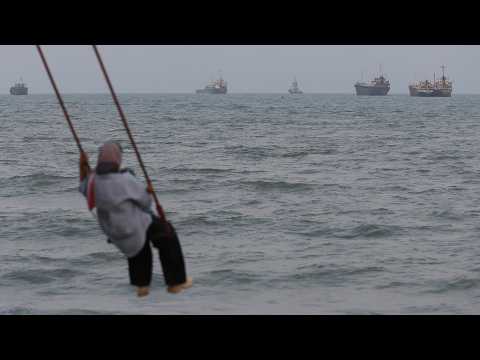
林宜悉 posted on 2026/08/22Ever wonder if sanctions really work? This insightful discussion dives into the complex world of international sanctions against Iran, exploring their potential impact on the country's regional network and the effectiveness of 'tightening the screws.' You'll gain a deeper understanding of geopolitical strategy and pick up key vocabulary related to economic pressure and international relations.
Learn this video on the APP!
The VoiceTube App has more in-depth practice for videos!