
as opposed to
US
UK
- Preposition
- In contrast to; rather than.
- Instead of; in place of.
A1Morecome up with
US /kʌm ʌp wɪð/
UK /kʌm ʌp wið/
- Phrasal Verb
- To think of an idea or solution; produce
A1Morefor example
US
UK
- Phrase
- As an illustration or instance.
go on
US /ɡo ɑn/
UK /ɡəu ɔn/
- Phrasal Verb
- To continue doing something
- To happen (usually negative)
- Interjection
- Used to encourage someone
A1Morehave to
US /hæv tu/
UK /ˈhæv tə/
- Auxiliary Verb
- Must do
A1Morelook at
US /lʊk æt/
UK /luk æt/
- Phrasal Verb
- To use your eyes to focus on something
- To focus your eyes on something carefully
A1Morenegative
US /ˈnɛɡətɪv/
UK /'neɡətɪv/
- Noun
- The opposite to a positive electrical charge
- In grammar, containing words such as 'no' or 'not'
- Adjective
- Being harmful, unwanted or unhelpful
- In mathematics, being less than zero
A2Moreopinion
US /əˈpɪnjən/
UK /əˈpɪnjən/
- Noun
- Court judge's statement why a decision was made
- A person's thoughts on a topic
A2TOEICMoresugar
US /ˈʃʊɡɚ/
UK /ˈʃʊgə(r)/
- Uncountable Noun
- Substance which the body stores or uses for energy
- White sweet substance used to make foods sweeter
- Countable Noun
- Amount of sugar contained in a small spoon
A2Moretiny
US /ˈtaɪni/
UK /'taɪnɪ/
- Adjective
- Very, very small
A2More
Vocabulary
- for example: As an illustration or instance.
- go on: To continue doing something
- come up with: To think of an idea or solution; produce
- have to: Must do
- look at: To use your eyes to focus on something
- as opposed to: In contrast to; rather than.
- people: Persons sharing culture, country, background, etc.
- negative: The opposite to a positive electrical charge
- sentence: (Of a judge) to decide the punishment of
- good: Proper, appropriate or right
- learn: To get knowledge or skills by study or experience
- tiny: Very, very small
- opinion: Court judge's statement why a decision was made
- English: Language of the UK, USA, Nigeria and elsewhere
- lot: What happens to a person in life from chance; fate
- bad: Not good; wrong
- noun: The subject or object of a sentence
- money: Coins or notes we use to pay for things
- hate: To have a very strong feeling of dislike for
- sugar: Substance which the body stores or uses for energy
- teach: To help someone learn or do something
Get the full experience in the app
Learn anywhere with detailed sentence and usage analysis
01:03
She took a brave step forward, leaving behind her comfort zone to chase her dreams.
Vocabulary
- brave
adj. Having courage
- comfort zone
phr. A familiar situation where one feels safe
Explanation
a brave step is a noun phrase, where brave is an adjective modifying the noun step, meaning "a courageous step".
forward is an adverb modifying step, meaning "ahead".
The whole phrase serves as the object, answering the "what" of took (verb) — she took a brave step forward.
Get the full experience in the app
Look up words anytime with pronunciation, part of speech, and usage
brave
US/brev/
UK/breɪv/
adj.Brave
v.t.To bravely face
A2 Elementary
Get the full experience in the app
Practice speaking anytime and get instant pronunciation feedback
Try this speaking exercise.
Try practicing with this sentence.
80
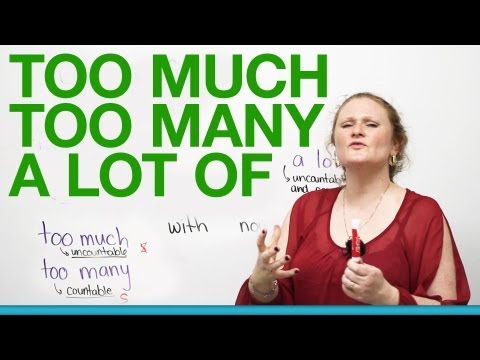
Basic English Grammar - TOO MUCH, TOO MANY, A LOT OF
0
稲葉白兎 posted on 2015/05/25Ever get confused between 'too much' and 'too many'? This video breaks down exactly when to use them with countable and uncountable nouns, plus 'a lot of'! You'll pick up essential grammar tips to avoid common mistakes and sound more natural in everyday conversations.
Learn this video on the APP!
The VoiceTube App has more in-depth practice for videos!