
along with
US /əˈlɔŋ wɪð/
UK /əˈlɔŋ wið/
- Preposition
- In addition to; together with.
- Adverb
- In company or together with someone or something.
- Including; in addition to.
A2Moreapart from
US /əˈpɑrt frʌm/
UK /əˈpɑ:t frɔm/
- Preposition
- Except for; not considering
- In addition to; as well as
approach
US /əˈprəʊtʃ/
UK /ə'prəʊtʃ/
- Verb (Transitive/Intransitive)
- To get close to reaching something or somewhere
- To request someone to do something specific
- Noun (Countable/Uncountable)
- Means of reaching a place, often a road or path
- Request of someone with a specific goal in mind
A2TOEICMoreas soon as
US /æz sun æz/
UK /æz su:n æz/
- Phrase
- In a short time after (something happens)
- Without any delay; immediately
- Conjunction
- At the moment that, or immediately after.
A1Moreask for permission
US
UK
- Verb (Transitive/Intransitive)
- To request authorization or consent to do something.
B1Moreat a time
US /æt e taɪm/
UK /æt ə taim/
- Phrase
- Separately; one by one
- Simultaneously; together
A1Moreat least
US /æt list/
UK /æt li:st/
- Adverb
- As a minimum
- Not less than
- Phrase
- No less than; at the minimum
- Used to indicate that something is positive in a bad situation.
C2Moreat speed
US
UK
- Phrase
- Moving quickly.
A1Moreattention
US /əˈtɛnʃən/
UK /əˈtenʃn/
- Noun (Countable/Uncountable)
- Taking notice of someone or something
- Noun
- (Soldiers) Standing with straight backs
A2TOEICMoreautomatically
US /ˌɔtəˈmætɪkl:ɪ/
UK /ˌɔ:tə'mætɪklɪ/
- Adverb
- In a way not requiring control by a person
B1Moreback into
US /bæk ˈɪntu/
UK /bæk ˈɪntuː/
- Phrasal Verb
- To drive a vehicle backwards into a space or area.
- To accidentally collide with something while moving backwards.
A1Morebeep
US /bip/
UK /bi:p/
- Noun
- Short high sound such as that made by a car horn
- Intransitive Verb
- To make a sharp high sound like that of a car horn
C1Moreblock
US /blɑk/
UK /blɒk/
- Noun (Countable/Uncountable)
- Solid piece of material used for building
- A piece of wood, chocolate etc.
- Transitive Verb
- To stop from going forward or making progress
- To obstruct or prevent the movement or passage of.
A2Morebox in
US /bɑks ɪn/
UK /bɒks ɪn/
- other
- To trap or prevent movement by surrounding closely.
B2Morebreak in
US /brek ɪn/
UK /breik in/
- Phrasal Verb
- To wear new (shoes, etc.) to make them comfortable
- To interrupt someone's conversation, task
- Verb (Transitive/Intransitive)
- To interrupt a conversation or activity.
- To wear something new until it becomes comfortable.
A1Morebutton
US /ˈbʌtn/
UK /'bʌtn/
- Noun (Countable/Uncountable)
- Small round piece material used to fasten clothing
- Switch activated by pressing
- Transitive Verb
- To fasten e.g. a shirt, coat
- To suppress or restrain (feelings, etc.).
A2TOEICMorecarriage
US /ˈkærɪdʒ/
UK /ˈkærɪdʒ/
- Noun (Countable/Uncountable)
- Vehicle on wheels, usually pulled by a horse
- A separate section of a train for passengers.
B1Morecarry on
US /ˈkæri ɑn/
UK /ˈkæri ɔn/
- Phrasal Verb
- To engage in an activity, e.g. a conversation
- To continue or keep doing something
- Verb (Transitive/Intransitive)
- To continue doing something
A1Morecircuit
US /ˈsɜ:rkɪt/
UK /ˈsɜ:kɪt/
- Noun
- An area where cars race in a circle
- Route for journey all the way around a place
- Intransitive Verb
- To complete a journey all the way round an area
B1Morecouple
US /ˈkʌpəl/
UK /'kʌpl/
- Transitive Verb
- To join something to something else
- (Two animals) to engage in sexual relations
- Noun (Countable/Uncountable)
- Two people in a romantic relationship
- Two of something; two people; a pair
A2Moredeal with
US /dil wɪð/
UK /di:l wið/
- Verb (Transitive/Intransitive)
- To buy or sell goods or services.
- Phrasal Verb
- To take action to solve a problem or manage a situation.
- To be about; concern.
A1Morediagram
US /ˈdaɪəˌɡræm/
UK /'daɪəɡræm/
- Noun
- A drawing intended to explain how something works
- Transitive Verb
- To show or explain something by drawing a picture
B1Moredirection
US /dɪˈrɛkʃən, daɪ-/
UK /də'rekʃn/
- Noun (Countable/Uncountable)
- When someone tells people what to do
- Describes the way you are going, e.g. North
A2TOEICMoredown the line
US /daʊn ði laɪn/
UK /daun ðə lain/
- Phrase
- At a later time; in the future.
- Completely; entirely; all the way.
- Adjective
- In agreement or accordance with something.
A1Moreeasy enough
US
UK
- Phrase
- Sufficiently easy; not too difficult.
- Acceptable or satisfactory in its ease.
A2Moreecho
US /'ekoʊ/
UK /'ekəʊ/
- Intransitive Verb
- (Of a place) to be filled with repeating sounds
- (Of a sound) to be repeated
- Noun (Countable/Uncountable)
- Repetition of sounds after bouncing off something
- A repetition of events or circumstances
B1Moreepisode
US /ˈɛpɪˌsod/
UK /'epɪsəʊd/
- Noun
- One separate event in a series of events
- Show which is part of a larger story
B1TOEICMoreget a look
US
UK
- Intransitive Verb
- To have the opportunity to see something.
A1Morego back to
US /ɡo bæk tu/
UK /ɡəu bæk tu:/
- Phrasal Verb
- To return to a starting point
A1Morego past
US
UK
- Phrasal Verb
- To move beyond a particular place or point.
- To exceed a time limit or expected duration.
A1Moregoing on
US /ˈɡoɪŋ ɑn/
UK /ˈgəʊɪŋ ɔn/
- Phrasal Verb
- To continue doing something
- To happen (usually negative)
A1Moregot to
US /ɡɑt tu/
UK /gɔt tu:/
- Verb (Transitive/Intransitive)
- To arrive at some place
- To have the opportunity or permission to do something
- Phrasal Verb
- To appeal to the emotions of; move
- To finally begin to start something after a delay
A1Moregrade
US /ɡred/
UK /ɡreɪd/
- Transitive Verb
- To give a road the required angle of slope
- To determine the level or quality of something
- Noun
- Level or quality of something e.g. a diamond
- Mark that shows the quality of a student's work
B1TOEICMoregreen light
US /ɡrin laɪt/
UK /ɡri:n lait/
- Phrase
- Noun
- Permission to proceed with a project or plan.
- A green traffic signal indicating permission to proceed.
A1Morehave to
US /hæv tu/
UK /ˈhæv tə/
- Auxiliary Verb
- Must do
A1Morehook
US /hʊk/
UK /hʊk/
- Noun (Countable/Uncountable)
- Bent tool used to catch fish or to hang things on
- The start of a story which catches your interest
- Transitive Verb
- To make a bent or curved shape
- To catch your interest completely
B1Morein a minute
US
UK
- Phrase
- Very soon; in a short amount of time.
- Within the duration of one minute.
A1Morein charge
US /ɪn tʃɑrdʒ/
UK /in tʃɑ:dʒ/
- Adverb
- To be responsible for
A1Morein fact
US /ɪn fækt/
UK /in fækt/
- Adverb
- Used to emphasize the truth of a statement, especially one that contrasts with or contradicts something else.
- Used to introduce a more detailed or surprising piece of information.
- Phrase
- Used to emphasize the truth of a statement, especially one that is surprising or contrary to what might be expected.
C1Morein half
US /ɪn hæf/
UK /in hɑ:f/
- Adverb
- Divided into two equal parts.
- Partially; to some extent.
A1Morein real life
US /ɪn ˈriəl laɪf/
UK /in riəl laif/
- Phrase
- In the physical world; not online or in a fictional setting.
- Actually; genuinely; not made up or fictional.
A2Morein reverse
US /ɪn rɪˈvɚs/
UK /in riˈvə:s/
- Adverb
- In the opposite direction.
- In the opposite order.
- Phrase
- Moving or operating backwards.
- With the sequence inverted.
B2Morein terms of
US
UK
- Phrase
- With regard to; concerning a particular aspect.
A1Morein the future
US /ɪn ði ˈfjutʃɚ/
UK /in ðə ˈfju:tʃə/
- Phrase
- At a later time; in times to come.
A1Morein the middle of
US
UK
- Phrase
- In the central part or point of something.
- Engaged or occupied with something.
A2Morein the world
US /ɪn ði wɜrld/
UK /in ðə wɜː(r)ld/
- Phrase
- Used to emphasize a question expressing surprise, confusion, disbelief
- Used to indicate the extent or degree of something, often in a superlative sense
A1Morein theory
US /ɪn ˈθiəri/
UK /in ˈθiəri/
- Adverb
- According to the stated ideas or principles
- Phrase
- According to the theoretical possibilities rather than actual practice.
B2Morein touch
US /ɪn tʌtʃ/
UK /in tʌtʃ/
- Adjective
- Having contact or communication with someone.
- Aware of or informed about something.
B1Morein use
US /ɪn juz/
UK /in ju:z/
- Adjective
- Being used at the present time.
A2Moreinfrastructure
US /ˈɪnfrəˌstrʌktʃɚ/
UK /'ɪnfrəstrʌktʃə(r)/
- Uncountable Noun
- Basic necessary equipment for a country or region
- The underlying framework or system of an organization.
B1Moreinstead of
US /ɪnˈstɛd ʌv/
UK /inˈsted ɔv/
- Preposition
- When one thing is replaced by another
- Adverb
- As a substitute or alternative.
A1Morelamp
US /læmp/
UK /læmp/
- Noun (Countable/Uncountable)
- Device to produce light, using electricity/oil/gas
- A source of illumination.
- Transitive Verb
- To illuminate with or as if with a lamp.
B1Morelever
US /ˈlɛvɚ, ˈlivɚ/
UK /'li:və(r)/
- Countable Noun
- A handle that one pulls to operate a machine
- Transitive Verb
- To move something with a strong bar made of metal
B2TOEICMorelight on
US /laɪt ɑn/
UK /lait ɔn/
- Phrasal Verb
- To illuminate something.
- To discover something unexpectedly.
- Adjective
- Gentle or delicate in the use of something.
A1Morelock out
US /lɑk aʊt/
UK /lɔk aut/
- Phrasal Verb
- To prevent someone from entering a place by locking the door.
- To exclude workers from their place of work until they agree to certain conditions.
look at
US /lʊk æt/
UK /luk æt/
- Phrasal Verb
- To use your eyes to focus on something
- To focus your eyes on something carefully
A1Morelook to
US
UK
- Phrasal Verb
- Be looking to. be planning to (do something)
- To expect someone to do something for you; rely on
A1Morelooking out
US
UK
- Phrasal Verb
- To take care and watch something carefully
- To be careful; to be vigilant
- Intransitive Verb
- To be careful or vigilant
A1Moremechanical
US /mɪˈkænɪkəl/
UK /məˈkænɪkl/
- Adjective
- Done without thought or feeling; automatic
- Using or concerning machines
B1Moremove to
US /muv tu/
UK /mu:v tu:/
- Phrasal Verb
- To change the place where you live or work.
- Verb (Transitive/Intransitive)
- To proceed to the next stage or action.
A2Morenebula
US /ˈnɛbjələ/
UK /ˈnebjələ/
- Noun (Countable/Uncountable)
- Cloud of dust and gas in outer space
C1Morenerd
US /nɚd/
UK /nɜ:d/
- Noun (Countable/Uncountable)
- Intelligent but single-minded expert in a field
- A person who is extremely enthusiastic about and knowledgeable about a particular subject, especially one of technical or scientific nature.
C2Morenext door
US /nɛkst dɔr/
UK /nekst dɔ:/
- Adverb
- Living in the house next to the one mentioned
A1Morenick
US /nɪk/
UK /nɪk/
- Noun
- Person's name
- Scratches caused by accidentally knocking
- Transitive Verb
- To make a scratch in
- To steal
B2Moreof course
US /ʌv kɔː(r)s/
UK /ɔv kɔː(r)s/
- Adverb
- Sure ; Certainly
- Phrase
- For sure; certainly
A2Moreof use
US /ʌv jus/
UK /əv ju:s/
- other
- Having practical value; useful or helpful.
B1Moreon the ground
US
UK
- Phrase
- Located on the surface of the earth.
- Present and available in a particular place, especially to deal with a situation.
on the line
US /ɑn ði laɪn/
UK /ɔn ðə lain/
- Phrase
- At risk; in a situation where something could be lost.
- Having a great deal of responsibility.
A1Moreon the rail
US /ɑn ðə reɪl/
UK /ɒn ðə reɪl/
- other
- Positioned close to the inside rail in racing or sports.
A2Moreon the way
US /ɑn ði we/
UK /ɔn ðə wei/
- Phrase
- During the journey to a particular place.
A1Moreon to
US /ɑn tu/
UK /ɔn tu:/
- Preposition
- Toward something; forward
- Aware of someone's activities.
- Adjective
- Aware of someone's deception or illegal activities.
A1Moreout of use
US /aʊt əv jus/
UK /aut əv ju:s/
- other
- No longer used or functional; obsolete.
A2Moreout there
US /aʊt ðɛr/
UK /aut ðɛə/
- Adverb
- In or to a place that is far away
- Existing in the universe
- Adjective
- Unconventional; strange; avant-garde
- Existing or available.
A1Morepermission
US /pɚˈmɪʃən/
UK /pəˈmɪʃn/
- Noun (Countable/Uncountable)
- Right to do something as allowed by another
- Formal authorization from an authority.
A2Morephysical
US /ˈfɪzɪkəl/
UK /ˈfɪzɪkl/
- Countable Noun
- Health check at the doctors' or hospital
- Adjective
- Concerning the body of a person
- Concerning things that can be seen or touched
A2Morephysical connection
US
UK
- Noun
- A tangible link or bond between two or more things.
- A hardware-based link between computing devices or networks.
B2Morephysically
US /ˈfɪzɪkəlɪ/
UK /'fɪzɪklɪ/
- Adverb
- In a manner related to the body
- Concerning reality or the laws of nature
A2Morerail
US /rel/
UK /reɪl/
- Intransitive Verb
- To complain or object forcefully
- Noun (Countable/Uncountable)
- Long thin piece of metal, wood as part of a fence
- One of two metal tracks along which a train runs
B1TOEICMoreright in front
US
UK
- Phrase
- Directly ahead; in a position immediately before someone or something.
- In a position where something is easily visible or obvious.
A2Moreroute
US /rut, raʊt/
UK /ru:t/
- Noun (Countable/Uncountable)
- Way to get from one place to another place; path
- Path or way that people often use
- Transitive Verb
- To send along a particular path or way
A2TOEICMorerun back
US /rʌn bæk/
UK /rʌn bæk/
- Phrasal Verb
- To come back
A1Moresection
US / ˈsɛkʃən/
UK /'sekʃn/
- Noun (Countable/Uncountable)
- A part of a whole
- Specific group of people from a larger group
- Transitive Verb
- To divide something into smaller parts
B1TOEICMoreset up
US /sɛt ʌp/
UK /set ʌp/
- Phrasal Verb
- To make arrangements for something; establish
- Verb (Transitive/Intransitive)
- To arrange or prepare something for use.
- To start a business, organization, etc.
A1Moresetting off
US
UK
- Phrasal Verb
- To start a journey
- To cause something to explode or start working.
A1Moreshow up
US /ʃo ʌp/
UK /ʃəu ʌp/
- Phrasal Verb
- To arrive or be seen at a place, e.g. a party
- To be noticeably better than (someone else)
A1Moresignal
US /ˈsɪɡnəl/
UK /'sɪɡnəl/
- Verb (Transitive/Intransitive)
- To be evidence/an indication something will happen
- To make a noise or motion to tell someone to start
- Noun (Countable/Uncountable)
- Evidence or an indication something will happen
- Movement of a hand or other means to send messages
A2Moresimulation
US /ˌsɪmjəˈleʃən/
UK /ˌsɪmjuˈleɪʃn/
- Noun
- A copying method to study the real world
B1TOEICMoreslow down
US /slo daʊn/
UK /sləu daun/
- Phrasal Verb
- To reduce the speed
- To become less active or busy.
A1Morespeak to
US /spik tu/
UK /spi:k tu:/
- Verb (Transitive/Intransitive)
- To address or communicate with someone.
- To indicate or suggest something; to be relevant to.
A1Morespecific
US /spɪˈsɪfɪk/
UK /spəˈsɪfɪk/
- Adjective
- Precise; particular; just about that thing
- Concerning one particular thing or kind of thing
A2Morestuff
US /stʌf/
UK /stʌf/
- Uncountable Noun
- Generic description for things, materials, objects
- Transitive Verb
- To push material inside something, with force
B1Moretechnique
US /tɛkˈnik/
UK /tekˈni:k/
- Noun (Countable/Uncountable)
- Way of doing by using special knowledge or skill
- The skill or ability to do something well.
A2TOEICMoretrack
US /træk/
UK /træk/
- Transitive Verb
- To use marks to follow a wild animal
- To move a certain way/follow a particular course
- Noun
- A circular course for running
- Course or way someone takes, e.g. in education
A2TOEICMoreup there
US /ʌp ðɛr/
UK /ʌp ðɛə/
- Adverb
- In or to a higher place or position; far away.
- In heaven.
A1Morewait for
US /wet fɔr/
UK /weit fɔ:/
- Phrasal Verb
- To wait until someone comes, or something happens
A1Morewith it
US /wɪð ɪt/
UK /wið it/
- Adjective
- Intelligent, alert, and up-to-date.
- Understanding and knowledgeable about current trends or information.
A1Morework in
US /wɚk ɪn/
UK /wə:k in/
- Phrasal Verb
- To make an opening for something in your schedule
- To fit person/thing into a schedule or sequence
A1Moreworth
US /wɚθ/
UK /wɜ:θ/
- Noun (Countable/Uncountable)
- the financial, practical or moral value of somebody/something
- having a particular value, especially in money
- Adjective
- Having a specified value.
A2More
Vocabulary
- have to: Must do
- up there: In or to a higher place or position; far away.
- wait for: To wait until someone comes, or something happens
- got to: To arrive at some place
- on the line: At risk; in a situation where something could be lost.
- set up
- in the world: Used to emphasize a question expressing surprise, confusion, disbelief
- on the ground: Located on the surface of the earth.
- along with: In addition to; together with.
- on to: Toward something; forward
- at a time: Separately; one by one
- with it: Intelligent, alert, and up-to-date.
- on the way: During the journey to a particular place.
- green light
- of course: Sure ; Certainly
- in the middle of: In the central part or point of something.
- in charge: To be responsible for
- apart from: Except for; not considering
- physical connection: A tangible link or bond between two or more things.
- light on: To illuminate something.
- at least: As a minimum
- at speed: Moving quickly.
- break in: To wear new (shoes, etc.) to make them comfortable
- show up: To arrive or be seen at a place, e.g. a party
- right in front: Directly ahead; in a position immediately before someone or something.
- in fact: Used to emphasize the truth of a statement, especially one that contrasts with or contradicts something else.
- easy enough: Sufficiently easy; not too difficult.
- in a minute: Very soon; in a short amount of time.
- lock out: To prevent someone from entering a place by locking the door.
- in touch: Having contact or communication with someone.
- slow down: To reduce the speed
- ask for permission: To request authorization or consent to do something.
- in real life: In the physical world; not online or in a fictional setting.
- speak to: To address or communicate with someone.
- looking out: To take care and watch something carefully
- move to: To change the place where you live or work.
- as soon as: In a short time after (something happens)
- in use: Being used at the present time.
- carry on: To engage in an activity, e.g. a conversation
- go past: To move beyond a particular place or point.
- on the rail: Positioned close to the inside rail in racing or sports.
- of use: Having practical value; useful or helpful.
- out of use: No longer used or functional; obsolete.
- in half: Divided into two equal parts.
- deal with
- look at: To use your eyes to focus on something
- get a look: To have the opportunity to see something.
- instead of: When one thing is replaced by another
- next door: Living in the house next to the one mentioned
- in terms of
- work in: To make an opening for something in your schedule
- box in: To trap or prevent movement by surrounding closely.
- in reverse: In the opposite direction.
- run back: To come back
- out there: In or to a place that is far away
- in the future: At a later time; in times to come.
- going on: To continue doing something
- down the line: At a later time; in the future.
- look to: Be looking to. be planning to (do something)
- go back to: To return to a starting point
- back into: To drive a vehicle backwards into a space or area.
- in theory: According to the stated ideas or principles
- setting off: To start a journey
- stuff: Generic description for things, materials, objects
- specific: Precise; particular; just about that thing
- episode: One separate event in a series of events
- approach: To get close to reaching something or somewhere
- physical: Health check at the doctors' or hospital
- technique: Way of doing by using special knowledge or skill
- infrastructure: Basic necessary equipment for a country or region
- track: To use marks to follow a wild animal
- permission: Right to do something as allowed by another
- worth: the financial, practical or moral value of somebody/something
- automatically: In a way not requiring control by a person
- physically: In a manner related to the body
- direction: When someone tells people what to do
- attention: Taking notice of someone or something
- section: A part of a whole
- nerd: Intelligent but single-minded expert in a field
- board: Surface for posting or showing information
- couple: To join something to something else
- route: Way to get from one place to another place; path
- lot: What happens to a person in life from chance; fate
- signal: To be evidence/an indication something will happen
- place: To put someone in a particular type of situation
- british: Concerning the culture and people of British
- learn: To get knowledge or skills by study or experience
- control: A device designed to operate a machine
- system: Set of organized, planned ideas that work together
- block: Solid piece of material used for building
- button: Small round piece material used to fasten clothing
- catch: Amount of something that has been caught
- crash: To damage an object by causing it to hit something
- detail: Small part of something; tiny fact
- modern: Of the present time; up to date; contemporary
- point: An item to be discussed
- wrong: Action that is harmful, unjust or illegal
- hook: Bent tool used to catch fish or to hang things on
- head: To hit a ball with your head in a game
- fail: To be unsuccessful in passing a class or exam
- circuit: An area where cars race in a circle
- simulation: A copying method to study the real world
- carriage: Vehicle on wheels, usually pulled by a horse
- echo: (Of a place) to be filled with repeating sounds
- grade: To give a road the required angle of slope
- diagram: A drawing intended to explain how something works
- rail: To complain or object forcefully
- mechanical: Done without thought or feeling; automatic
- lamp: Device to produce light, using electricity/oil/gas
- lever: A handle that one pulls to operate a machine
- nick: Person's name
- beep: Short high sound such as that made by a car horn
- nebula: Cloud of dust and gas in outer space
Get the full experience in the app
Learn anywhere with detailed sentence and usage analysis
01:03
She took a brave step forward, leaving behind her comfort zone to chase her dreams.
Vocabulary
- brave
adj. Having courage
- comfort zone
phr. A familiar situation where one feels safe
Explanation
a brave step is a noun phrase, where brave is an adjective modifying the noun step, meaning "a courageous step".
forward is an adverb modifying step, meaning "ahead".
The whole phrase serves as the object, answering the "what" of took (verb) — she took a brave step forward.
Get the full experience in the app
Look up words anytime with pronunciation, part of speech, and usage
brave
US/brev/
UK/breɪv/
adj.Brave
v.t.To bravely face
A2 Elementary
Get the full experience in the app
Practice speaking anytime and get instant pronunciation feedback
Try this speaking exercise.
Try practicing with this sentence.
80
0
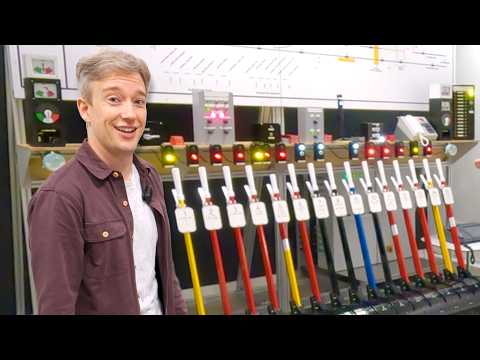
林宜悉 posted on 2026/06/08Ever wonder how trains manage to avoid crashing? This video takes you behind the scenes to explore the ingenious "fail-safe" systems, like mechanical interlocks and track circuits, that have kept trains running safely for over a century! You'll pick up fascinating vocabulary related to railway signalling and understand the clever engineering that makes it all work.
Learn this video on the APP!
The VoiceTube App has more in-depth practice for videos!