Vocabulary
- sift through: To examine something very carefully in order to find something important or useful.
- measure up: To be good enough; to meet the required standard.
- zero in: To focus on a target
- burn out: To overwork to mental or physical exhaustion
- sign off: To end communications, e.g. by radio
- have to: Must do
- weigh in: To be weighed before a sports event to check you are not over a certain weight
- wrap up: To complete something, such as a film or project
- brush up: To improve your knowledge, skill, or memory of
- draw up: To create a formal document
- in on: To be involved in a secret or plan.
- in with: Fashionable or popular at the moment.
- iron out: To get rid of problems that prevent progress
- branch out: To expand or diversify one's interests or activities.
- for example: As an illustration or instance.
- in business: Actively operating as a commercial enterprise.
- look at: To use your eyes to focus on something
- dive in: To start doing something with a lot of enthusiasm.
- of course: Sure ; Certainly
- with it: Intelligent, alert, and up-to-date.
- at some point: At an unspecified time, usually in the future.
- look for: To try to find a thing or person that is lost
- stay up: To not go to bed until late
- up top: In or at the highest position or location.
- physical things: Tangible objects that can be touched or seen; material items.
- toe in: To turn the toes inward when standing or moving.
- on paper: In theory or as a plan, but not necessarily in reality.
- go on: To continue doing something
- in charge: To be responsible for
- go ahead: To start an activity; start doing, working etc.
- come back: To reply to someone, often forcefully
- subscribe: To regularly pay to receive a service
- context: Set of facts surrounding a person or event
- physical: Health check at the doctors' or hospital
- basically: Used before you explain something simply, clearly
- experiment: Test performed to assess new ideas or theories
- wrap: Piece of clothing worn loosely on the shoulders
- rid: To cause to no longer have (pest, problem)
- contribute: To be a factor in causing something to happen
- academic: Concerning education, schools, universities, etc.
- measure: Plan to achieve a desired result
- permission: Right to do something as allowed by another
- bit: Device put in a horse's mouth to control it
- presentation: Act of giving a formal talk about something
- casual: Being careless or having little thought or effort
- contract: To become ill as a result of getting a disease
- authority: The power to give orders to people
- draw: To attract attention to someone or something
- signature: Something that represents a person's work or style
- dive: Restaurant, bar or club with a bad reputation
- appointment: Job, position or duty that is offered to a person
- energy: Physical or mental strength
- aim: Act of pointing something at a target
- minor: Not so large in size; not important or valuable
- target: A goal or amount you are trying to achieve
- company: Good feeling from being with someone else
- commonly: Typically, normally; not unusually
- channel: Long hole dug in the ground, e.g. to move water
- sign: Indication that something exists or will happen
- phrasal: Concerning or consisting of a phrase
- sift: To look through and remove less valuable things
- preposition: Word such as 'at' 'on' etc. showing position/time
- language: Words or signs used to communicate messages
- proposal: Act of asking someone to marry you
- melt: To disappear or to go away
- verb: Word that expresses an action or state
- perfect: So good it cannot be improved
- quit: To leave a job
- person: Man, woman or child
- business: A company formed for making profit
- burn: To destroy with fire
- understand: To know the meaning of language, what someone says
- flour: Powder made from a grain used in cooking
- iron: Heavy metal device heated to smooth clothes
- meet: To provide something that is necessary
- comb: Small, toothed tool to tidy your hair
- toe: One of the five parts at the end of your foot
- collocation: Grouping of words frequently occurring together
- authorize: To officially or legally allow or give permission
- shack: Small often wooden building that is not well made
- paperwork: Work involving handling papers, forms, letters etc.
- idiomatic: Concerning idioms
Get the full experience in the app
Learn anywhere with detailed sentence and usage analysis
01:03
She took a brave step forward, leaving behind her comfort zone to chase her dreams.
Vocabulary
- brave
adj. Having courage
- comfort zone
phr. A familiar situation where one feels safe
Explanation
a brave step is a noun phrase, where brave is an adjective modifying the noun step, meaning "a courageous step".
forward is an adverb modifying step, meaning "ahead".
The whole phrase serves as the object, answering the "what" of took (verb) — she took a brave step forward.
Get the full experience in the app
Look up words anytime with pronunciation, part of speech, and usage
brave
US/brev/
UK/breɪv/
adj.Brave
v.t.To bravely face
A2 Elementary
Get the full experience in the app
Practice speaking anytime and get instant pronunciation feedback
Try this speaking exercise.
Try practicing with this sentence.
80
Stop Being Casual: 15 English Phrasal Verbs to Sound Professional at Work
0
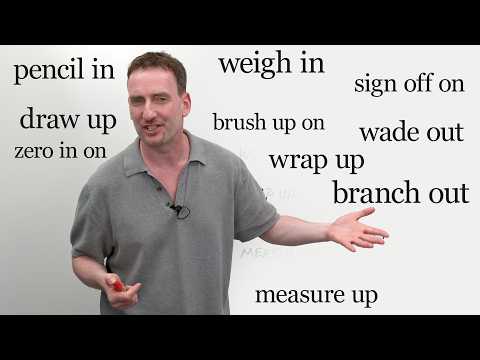
林宜悉 posted on 2026/05/22Tired of sounding too casual at work? This video is your secret weapon, packed with 15 essential phrasal verbs that will instantly boost your professional English! You'll learn practical, advanced vocabulary to communicate with confidence in meetings and everyday office situations.
Learn this video on the APP!
The VoiceTube App has more in-depth practice for videos!