
accurate
US /ˈækjərɪt/
UK /ˈækjərət/
- Adjective
- With no mistake or error; Correct
A2Moreactual
US /ˈæktʃuəl/
UK /ˈæktʃuəl/
- Adjective
- Real or existing in fact, not imagined; real
- Current; existing at the present time.
A2TOEICMoreany sort of
US
UK
- Determiner
- Any kind of; any type of
- Phrase
- Somewhat; to some extent
A2Moreas for
US /æz fɔr/
UK /æz fɔ:/
- Preposition
- Concerning; regarding.
- Phrase
- Used to introduce a new topic or aspect of a subject.
A1Moreat some point
US /æt sʌm pɔɪnt/
UK /æt sʌm pɔint/
- Phrase
- At an unspecified time, usually in the future.
A1Moreat the moment
US
UK
- Adverb
- At this time; now
A1Moreaverage height
US
UK
- Noun
- The typical or normal height.
- The sum of a list of heights divided by the number of heights in the list.
B1Morebased on
US
UK
- Phrasal Verb
- To use something as the foundation or starting point for something else.
- Preposition
- Using something as the main idea or foundation.
- Relying on something as evidence or justification.
A1Moreblink
US /blɪŋk/
UK /blɪŋk/
- Verb (Transitive/Intransitive)
- To close and open one or both of the eyes rapidly
- To shine with a flickering light.
- Noun
- A quick shutting and opening of the eye.
- A brief flash of light.
B1Moreblur
US /blɚ/
UK /blɜ:(r)/
- Transitive Verb
- To make something unclear or out of focus
- To dull the distinction between things
B2Morebriefing
US /ˈbrifɪŋ/
UK /ˈbri:fɪŋ/
- Transitive Verb
- To give information and instructions in a meeting
- Noun
- Giving information and instructions for a meeting
B2TOEICMoreby itself
US /baɪ ɪtˈsɛlf/
UK /bai itˈself/
- Adverb
- Alone; without help or assistance.
- Without any external influence or aid.
A2Morecampus
US /ˈkæmpəs/
UK /'kæmpəs/
- Noun (plural)
- Grounds of an institution, e.g. a university
- Noun
- The grounds and buildings of a university or college.
- The grounds of a college or school.
B1Morecardiac
US /ˈkɑ:rdiæk/
UK /ˈkɑ:diæk/
- Adjective
- Concerning the heart
B2Morecare for
US /kɛr fɔr/
UK /kɛə fɔ:/
- Phrasal Verb
- To want or desire a thing
- To look after someone who is ill, old, or very young.
A1Morecavity
US /ˈkævɪti/
UK /ˈkævəti/
- Noun
- Hole or empty space, especially in a tooth
- Hole in a tooth
B2Morechest
US /tʃɛst/
UK /tʃest/
- Noun (Countable/Uncountable)
- Strong, lidded container for storing things
- Front of the body between neck and stomach
A2Moreclose up
US /kloz ʌp/
UK /kləuz ʌp/
- Countable Noun
- A photograph or film shot taken of a subject at close range.
- Adverb
- To move nearer to someone or something.
A1Morecomplexity
US /kəmˈplɛksɪti/
UK /kəm'pleksətɪ/
- Uncountable Noun
- State of having many parts and not being simple
- A factor or element that makes something complicated.
B1Moredeal with
US /dil wɪð/
UK /di:l wið/
- Verb (Transitive/Intransitive)
- To buy or sell goods or services.
- Phrasal Verb
- To take action to solve a problem or manage a situation.
- To be about; concern.
A1Moredepending on
US
UK
- Phrasal Verb
- To rely on for support (financial or emotional)
- Influenced or determined by.
- Preposition
- Subject to; contingent on
- Relying on someone or something for support or assistance.
A2Moredespite the fact
US
UK
- Preposition
- In spite of; notwithstanding.
- Conjunction
- Even though; although.
A2Morediabetic
US /ˌdaɪəˈbɛtɪk/
UK /ˌdaɪəˈbetɪk/
- Adjective
- Concerning diabetes; suffering from diabetes
- Noun
- A person who has diabetes.
B2Moredispose of
US /dɪˈspoz ʌv/
UK /disˈpəuz ɔv/
- Phrasal Verb
- To get rid of something, especially by throwing it away.
- To deal with something quickly and effectively.
A1Moreemergency
US /ɪˈmɚdʒənsi/
UK /ɪ'mɜ:dʒənsɪ/
- Noun (Countable/Uncountable)
- Sudden event needing an immediate action
- A medical condition manifesting itself by acute symptoms of sufficient severity such that the absence of immediate medical attention could reasonably be expected to result in placing the patient's health in serious jeopardy.
- Adjective
- Used in an emergency; for use when something dangerous happens.
- Designed for use in an emergency.
A2TOEICMoreepisode
US /ˈɛpɪˌsod/
UK /'epɪsəʊd/
- Noun
- One separate event in a series of events
- Show which is part of a larger story
B1TOEICMorefacial
US /ˈfeʃəl/
UK /'feɪʃl/
- Noun (Countable/Uncountable)
- Treatment to improve condition of the skin of face
- Adjective
- Concerning or on the face
B2Morefigure out
US /ˈfɪɡjɚ aʊt/
UK /ˈfiɡə aut/
- Phrasal Verb
- To understand the behavior of someone
- To think through logically to find a solution
- Verb (Transitive/Intransitive)
- To understand or find an answer to something.
- To find a solution to a problem or understand something.
A1Morefor example
US
UK
- Phrase
- As an illustration or instance.
for someone
US /fɚ ˈsʌmwʌn/
UK /fə ˈsʌmwʌn/
- other
- On behalf of or intended for a particular person.
A1Morefor the best
US
UK
- Phrase
- Resulting in the most positive or beneficial outcome, even if it's difficult or painful in the short term.
- Hoping for a positive outcome.
A1Morefreak
US /friːk/
UK /friːk/
- Adjective
- (Of weather, etc.) unusual; unpredictable; amazing
- Noun
- A person, animal, or event that is physically abnormal, very unusual, or unlike others.
- A person with an unusual appearance or behaviour.
B2Morefreak out
US /frik aʊt/
UK /fri:k aut/
- Phrasal Verb
- To react or behave in a wild or irrational way
- To become very anxious, upset, or afraid; to panic.
- Intransitive Verb
- To experience or display extreme emotions, such as fear or panic.
- To have a very disturbing and frightening experience caused by taking drugs.
B2Morefreeze up
US /friz ʌp/
UK /fri:z ʌp/
- Phrasal Verb
- (of a machine or part) to stop working because of ice or cold
- To become unable to move or act, usually because of fear or nervousness
B1Moregoing on
US /ˈɡoɪŋ ɑn/
UK /ˈgəʊɪŋ ɔn/
- Phrasal Verb
- To continue doing something
- To happen (usually negative)
A1Moregoo
US /ɡu/
UK /gu:/
- Uncountable Noun
- Any thick sticky unpleasant substance
C1Moregore
US /ɡɔr/
UK /ɡɔ:(r)/
- Transitive Verb
- To wound by attacking with a knife, sharp horn etc.
C2Moregot to
US /ɡɑt tu/
UK /gɔt tu:/
- Verb (Transitive/Intransitive)
- To arrive at some place
- To have the opportunity or permission to do something
- Phrasal Verb
- To appeal to the emotions of; move
- To finally begin to start something after a delay
A1Morehand it out
US /hænd ɪt aʊt/
UK /hænd ɪt aʊt/
- other
- To distribute something to several people by hand.
B1Morehave to
US /hæv tu/
UK /ˈhæv tə/
- Auxiliary Verb
- Must do
A1Moreheal
US /hi:l/
UK /hi:l/
- Verb (Transitive/Intransitive)
- To recover from or forget a bad experience
- To make or become healthy or well again
B1Morein depth
US /ɪn dɛpθ/
UK /in depθ/
- Adverb
- Thoroughly and carefully; in detail.
in general
US /ɪn ˈdʒɛnərəl/
UK /in ˈdʒenərəl/
- Phrase
- Typically; usually; on the whole.
- Not specific or detailed; broadly.
- Adjective
- Not detailed or specific; overall.
C2Morein hospital
US /ɪn ˈhɑspɪtl/
UK /ɪn ˈhɒspɪtl/
- other
- Admitted to a hospital for treatment.
A2Morein real life
US /ɪn ˈriəl laɪf/
UK /in riəl laif/
- Phrase
- In the physical world; not online or in a fictional setting.
- Actually; genuinely; not made up or fictional.
A2Morein reality
US /ɪn riˈælɪti/
UK /in riˈæliti/
- Phrase
- Actually; in fact; truly.
B2Morein school
US /ɪn skul/
UK /ɪn sku:l/
- other
- Attending an educational institution.
A1MoreIn the event of
US
UK
- Phrase
- If something happens, especially something undesirable
A1Morein the hospital
US /ɪn ðə ˈhɑspɪtəl/
UK /in ðə ˈhɒspɪtəl/
- Preposition
- Located inside a hospital receiving medical care.
A1Morein the moment
US
UK
- Phrase
- At the present time; now.
- Spontaneously; without prior planning or consideration.
A1Morein the west
US
UK
- Phrase
- Located in or towards the west.
- Located in the western part of a country or region.
A1Morein the world
US /ɪn ði wɜrld/
UK /in ðə wɜː(r)ld/
- Phrase
- Used to emphasize a question expressing surprise, confusion, disbelief
- Used to indicate the extent or degree of something, often in a superlative sense
A1Morein time
US /ɪn taɪm/
UK /in taim/
- Adverb
- Eventually; after a period of time.
- Not late; with enough time to spare.
- Phrase
- Eventually; before it is too late.
- According to the scheduled time; punctual.
A1Morein with
US /ɪn wɪð/
UK /in wið/
- Phrase
- Fashionable or popular at the moment.
- Having influence or favor with someone.
- Phrasal Verb
- To introduce or bring something new into a system or organization.
A1Moreinfection
US /ɪnˈfɛkʃən/
UK /ɪnˈfekʃn/
- Noun
- (Computers) Having a computer virus
- Making or becoming sick with a bacteria/virus
A2Moreintense
US /ɪnˈtɛns/
UK /ɪn'tens/
- Adjective
- Very strong, great or extreme in degree
- Experiencing or showing great force or strength; extreme.
A2TOEICMoreinvasive
US /ɪnˈvesɪv/
UK /ɪnˈveɪsɪv/
- Adjective
- Entering the body, etc. in a destructive way
- Tending to spread aggressively; intrusive.
C1Morelimb
US /lɪm/
UK /lɪm/
- Noun (Countable/Uncountable)
- Leg, arm, branch or wing
- Part of something that extends out over an area
B1Morelittle else
US
UK
- Pronoun
- Almost nothing more; very few other things.
- Phrase
- Almost nothing else is important.
- Almost no other options or possibilities.
A1Morelook around
US /lʊk əˈraʊnd/
UK /luk əˈraund/
- Phrasal Verb
- To explore a place; search for something.
A1Moremannequin
US /ˈmænɪkɪn/
UK /ˈmænɪkɪn/
- Countable Noun
- Woman who wears clothes to display fashions
C1Moremove to
US /muv tu/
UK /mu:v tu:/
- Phrasal Verb
- To change the place where you live or work.
- Verb (Transitive/Intransitive)
- To proceed to the next stage or action.
A2Moremy eye
US /ˈmaɪ aɪ/
UK /ˈmaɪ ai/
- other
- Used to express disbelief or skepticism.
B2Morenebula
US /ˈnɛbjələ/
UK /ˈnebjələ/
- Noun (Countable/Uncountable)
- Cloud of dust and gas in outer space
C1Moreof course
US /ʌv kɔː(r)s/
UK /ɔv kɔː(r)s/
- Adverb
- Sure ; Certainly
- Phrase
- For sure; certainly
A2Moreon camera
US /ɑn ˈkæmərə/
UK /ɔn ˈkæmərə/
- Adverb
- While being filmed or recorded.
- Adjective
- Having qualities that make one appear good or effective when filmed.
A1Moreon the inside
US /ɑn ði ɪnˈsaɪd/
UK /ɔn ðə inˈsaid/
- Phrase
- Having a position of authority or influence within an organization or system.
- In prison; incarcerated.
- Adjective
- Possessing secret or confidential information.
A1Moreon the road
US /ɑn ði rəʊd/
UK /ɔn ðə roʊd/
- Phrase
- Traveling, especially as part of a tour or journey.
- Making progress; advancing towards a goal.
- Idiom
- Making progress towards a goal or achievement.
A1Moreother than
US
UK
- Preposition
- Except for; apart from.
- Conjunction
- Different from.
A1Moreout of it
US /aʊt ʌv ɪt/
UK /aut ɔv it/
- Adjective
- Unconscious or not completely alert; dazed or confused.
- Not able to think clearly or react quickly; not with it.
A1Moreout there
US /aʊt ðɛr/
UK /aut ðɛə/
- Adverb
- In or to a place that is far away
- Existing in the universe
- Adjective
- Unconventional; strange; avant-garde
- Existing or available.
A1Moreover the top
US /ˈovɚ ði tɑp/
UK /ˈəuvə ðə tɔp/
- Adjective
- More than what is considered normal or suitable; exaggerated.
- So extreme that it is offensive.
- Adverb
- To an excessive degree; excessively.
A1Moreover to
US
UK
- Preposition
- Used to hand over to someone else to speak
- The responsibility is now yours
pass from
US
UK
- Phrasal Verb
- To be transferred or transmitted from one person or thing to another.
- To be inherited or bequeathed from one person to another.
A1Morepatient
US /ˈpeʃənt/
UK /'peɪʃnt/
- Adjective
- Not getting annoyed when things take a long time
- Bearing or enduring pain or trials without complaint; exhibiting forbearance.
- Countable Noun
- Person who receives medical treatment or care
A2Morepick up on
US
UK
- Phrasal Verb
- To notice or become aware of something that is not obvious.
- To learn something by watching or listening to other people.
A1Morepull back
US /pʊl bæk/
UK /pul bæk/
- Phrasal Verb
- To move to a safer area; retreat
A1Morepulse
US /pʌls/
UK /pʌls/
- Noun (Countable/Uncountable)
- Regular beating of a heart
- A single vibration or short burst of sound, light, electricity, or other energy.
- Verb (Transitive/Intransitive)
- To beat in a rhythm
- To emit or produce in pulses.
B1Morepump
US /pʌmp/
UK /pʌmp/
- Verb (Transitive/Intransitive)
- To make liquid or gas flow in a particular direction
- To make water/other liquid move using a machine
- Noun
- A device more moving liquids
- Light woman's shoe
B1Morereaction
US /riˈækʃən/
UK /rɪ'ækʃn/
- Noun
- Bodily response to a drug or something eaten
- Feeling or action in response to something
A2Morerealistic
US /ˌriəˈlɪstɪk/
UK /ˌri:əˈlɪstɪk/
- Adjective
- Looks or appears real; like things really are
- Having or showing a practical awareness of things as they are
A2Morerepresentative
US /ˌrɛprɪˈzɛntətɪv/
UK /ˌreprɪˈzentətɪv/
- Noun
- Typical example of a particular category
- Politician who acts on behalf of the people
- Adjective
- Acting or speaking for other people
- Typical of a particular group or thing
A2TOEICMorerequire
US /rɪˈkwaɪr/
UK /rɪ'kwaɪə(r)/
- Transitive Verb
- To demand that someone does something
- To need to do something, to make it necessary
A2TOEICMoreround about
US /raʊnd əˈbaʊt/
UK /raund əˈbaut/
- Adverb
- Approximately; about.
- Preposition
- All around; surrounding.
A2Moreset up
US /sɛt ʌp/
UK /set ʌp/
- Phrasal Verb
- To make arrangements for something; establish
- Verb (Transitive/Intransitive)
- To arrange or prepare something for use.
- To start a business, organization, etc.
A1Moresetting off
US
UK
- Phrasal Verb
- To start a journey
- To cause something to explode or start working.
A1Moresimulate
US /ˈsɪmjəˌlet/
UK /'sɪmjʊleɪt/
- Transitive Verb
- To copy something or look or behave like it
B1TOEICMoresimulation
US /ˌsɪmjəˈleʃən/
UK /ˌsɪmjuˈleɪʃn/
- Noun
- A copying method to study the real world
B1TOEICMoreslightly
US /ˈslaɪtli/
UK /ˈslaɪtli/
- Adverb
- Only a little
B1Morespecialist
US /ˈspɛʃəlɪst/
UK /'speʃəlɪst/
- Noun
- Person who works in one specific area or field
B1Morestart in
US /stɑrt ɪn/
UK /stɑ:t in/
- Phrasal Verb
- To begin a job or activity.
A1Morestuff
US /stʌf/
UK /stʌf/
- Uncountable Noun
- Generic description for things, materials, objects
- Transitive Verb
- To push material inside something, with force
B1Moresyndrome
US /ˈsɪnˌdrom/
UK /'sɪndrəʊm/
- Noun
- A group of signs and symptoms of a disease
B1Moretake over
US /tek ˈovɚ/
UK /teik ˈəuvə/
- Phrasal Verb
- To gain control of (a company) from someone else
- To assume control or possession of something.
A1Moretaken over
US
UK
- Phrasal Verb
- To gain control of (a company) from someone else
- To gain control of something.
A1Moretend
US /tɛnd/
UK /tend/
- Intransitive Verb
- To move or act in a certain manner
- Transitive Verb
- To take care of
A2Morethink of
US /θɪŋk ʌv/
UK /θiŋk ɔv/
- Phrasal Verb
- To look on as (being something specific); consider
- To consider or remember something.
- Verb (Transitive/Intransitive)
- To imagine or call something to mind
A1Moreto do with
US
UK
- Phrasal Verb
- To be about something; concern
A1Moreto let
US /tu lɛt/
UK /tu let/
- Preposition
- Indicates that a property is available for rent.
A2Moretoddler
US /ˈtɑdlɚ/
UK /ˈtɒdlə(r)/
- Countable Noun
- Young child learning to walk
C2Moretwist
US /twɪst/
UK /twɪst/
- Verb (Transitive/Intransitive)
- To turn something in a circular direction
- To turn in a curving direction e.g. road or path
- Noun (Countable/Uncountable)
- Turn or spiral curve in a path or road
- Bend or sudden change of direction
A2Moreuncanny
US /ʌnˈkæni/
UK /ʌn'kænɪ/
- Adjective
- So keen and perceptive as to seem supernatural
B2Moreurine
US /ˈjʊrən/
UK /ˈjʊərɪn/
- Uncountable Noun
- Yellow liquid waste from the body
C1Moreused to
US /juzd tu/
UK /ˈju:st tə/
- Adjective
- Did regularly before, but don't do now
- Auxiliary Verb
- Have done before, but do not do now
A1Moreversion
US /ˈvɚʒən, -ʃən/
UK /ˈvə:ʃən/
- Noun
- Different way that someone interprets something
- New or different form of something
A2TOEICMorevery much so
US
UK
- Phrase
- To a great extent; indeed
- Used to emphasize a previous statement
A2Morewake up
US /wek ʌp/
UK /weik ʌp/
- Phrasal Verb
- To stop sleeping
- To become fully aware and alert to a situation.
A1Moreward
US /wɔ:rd/
UK /wɔ:d/
- Proper Noun
- Person's name
- Noun
- Child legally protected and cared for by a court
- Section or part of a town or city
B1Morewound
US /waʊnd/
UK /waʊnd/
- Transitive Verb
- To rotate a part of say a watch to make it work
- To hurt someone emotionally
- Noun (Countable/Uncountable)
- Sadness or displeasure caused by a bad memory
- Physical injury, especially that suffered in war
A2Moreyes and no
US
UK
- Phrase
- An ambivalent or uncertain answer; a response that is neither a clear affirmation nor a clear denial.
- A situation with both positive and negative aspects; a qualified affirmation.
A1More
Vocabulary
- have to: Must do
- of course: Sure ; Certainly
- on camera: While being filmed or recorded.
- other than: Except for; apart from.
- freak out: To react or behave in a wild or irrational way
- based on: To use something as the foundation or starting point for something else.
- going on: To continue doing something
- deal with
- at the moment: At this time; now
- for someone: On behalf of or intended for a particular person.
- in with: Fashionable or popular at the moment.
- over to: Used to hand over to someone else to speak
- out there: In or to a place that is far away
- close up: A photograph or film shot taken of a subject at close range.
- as for: Concerning; regarding.
- on the road: Traveling, especially as part of a tour or journey.
- start in: To begin a job or activity.
- in the west: Located in or towards the west.
- despite the fact: In spite of; notwithstanding.
- dispose of: To get rid of something, especially by throwing it away.
- look around: To explore a place; search for something.
- care for: To want or desire a thing
- on the inside: Having a position of authority or influence within an organization or system.
- yes and no: An ambivalent or uncertain answer; a response that is neither a clear affirmation nor a clear denial.
- to let: Indicates that a property is available for rent.
- take over: To gain control of (a company) from someone else
- to do with: To be about something; concern
- freeze up: (of a machine or part) to stop working because of ice or cold
- hand it out: To distribute something to several people by hand.
- my eye: Used to express disbelief or skepticism.
- in the hospital: Located inside a hospital receiving medical care.
- depending on: To rely on for support (financial or emotional)
- average height: The typical or normal height.
- round about: Approximately; about.
- move to: To change the place where you live or work.
- for example: As an illustration or instance.
- in hospital: Admitted to a hospital for treatment.
- in general: Typically; usually; on the whole.
- In the event of: If something happens, especially something undesirable
- at some point: At an unspecified time, usually in the future.
- got to: To arrive at some place
- used to: Did regularly before, but don't do now
- for the best: Resulting in the most positive or beneficial outcome, even if it's difficult or painful in the short term.
- pick up on: To notice or become aware of something that is not obvious.
- think of: To look on as (being something specific); consider
- any sort of: Any kind of; any type of
- in the world: Used to emphasize a question expressing surprise, confusion, disbelief
- taken over: To gain control of (a company) from someone else
- very much so: To a great extent; indeed
- in depth: Thoroughly and carefully; in detail.
- figure out: To understand the behavior of someone
- in reality: Actually; in fact; truly.
- setting off: To start a journey
- little else: Almost nothing more; very few other things.
- set up
- pull back: To move to a safer area; retreat
- out of it: Unconscious or not completely alert; dazed or confused.
- in the moment: At the present time; now.
- in school: Attending an educational institution.
- over the top: More than what is considered normal or suitable; exaggerated.
- wake up: To stop sleeping
- by itself: Alone; without help or assistance.
- in time: Eventually; after a period of time.
- in real life: In the physical world; not online or in a fictional setting.
- pass from: To be transferred or transmitted from one person or thing to another.
- stuff: Generic description for things, materials, objects
- episode: One separate event in a series of events
- intense: Very strong, great or extreme in degree
- slightly: Only a little
- tend: To move or act in a certain manner
- accurate: With no mistake or error; Correct
- version: Different way that someone interprets something
- freak: (Of weather, etc.) unusual; unpredictable; amazing
- bit: Device put in a horse's mouth to control it
- realistic: Looks or appears real; like things really are
- brain: To strike someone forcefully on the head
- syndrome: A group of signs and symptoms of a disease
- require: To demand that someone does something
- reaction: Bodily response to a drug or something eaten
- actual: Real or existing in fact, not imagined; real
- chest: Strong, lidded container for storing things
- urine: Yellow liquid waste from the body
- emergency: Sudden event needing an immediate action
- infection: (Computers) Having a computer virus
- patient: Not getting annoyed when things take a long time
- uncanny: So keen and perceptive as to seem supernatural
- toddler: Young child learning to walk
- heal: To recover from or forget a bad experience
- wound: To rotate a part of say a watch to make it work
- notice: To become aware by sight, touch, or hearing
- moment: Very short or brief period of time
- twist: To turn something in a circular direction
- invasive: Entering the body, etc. in a destructive way
- arrest: To attract someone's attention and hold interest
- cardiac: Concerning the heart
- kind: In a caring and helpful manner
- complexity: State of having many parts and not being simple
- representative: Typical example of a particular category
- detail: Small part of something; tiny fact
- facial: Treatment to improve condition of the skin of face
- campus: Grounds of an institution, e.g. a university
- blink: To close and open one or both of the eyes rapidly
- blur: To make something unclear or out of focus
- wrong: Action that is harmful, unjust or illegal
- pull: Act of breathing in smoke, as from a pipe
- pack: Bag carried on the back of donkey, etc.
- simulate: To copy something or look or behave like it
- pump: To make liquid or gas flow in a particular direction
- cavity: Hole or empty space, especially in a tooth
- simulation: A copying method to study the real world
- pulse: Regular beating of a heart
- limb: Leg, arm, branch or wing
- ward: Person's name
- transgender: Involving a partial or full reversal of gender
- real: Actually existing or happening, not imagined
- train: Line of people, animals moving the same direction
- life: All the living things e.g. animals, plants, humans
- ride: Machine at an amusement park for riding on for fun
- specialist: Person who works in one specific area or field
- briefing: To give information and instructions in a meeting
- goo: Any thick sticky unpleasant substance
- mannequin: Woman who wears clothes to display fashions
- diabetic: Concerning diabetes; suffering from diabetes
- nebula: Cloud of dust and gas in outer space
- gore: To wound by attacking with a knife, sharp horn etc.
Get the full experience in the app
Learn anywhere with detailed sentence and usage analysis
01:03
She took a brave step forward, leaving behind her comfort zone to chase her dreams.
Vocabulary
- brave
adj. Having courage
- comfort zone
phr. A familiar situation where one feels safe
Explanation
a brave step is a noun phrase, where brave is an adjective modifying the noun step, meaning "a courageous step".
forward is an adverb modifying step, meaning "ahead".
The whole phrase serves as the object, answering the "what" of took (verb) — she took a brave step forward.
Get the full experience in the app
Look up words anytime with pronunciation, part of speech, and usage
brave
US/brev/
UK/breɪv/
adj.Brave
v.t.To bravely face
A2 Elementary
Get the full experience in the app
Practice speaking anytime and get instant pronunciation feedback
Try this speaking exercise.
Try practicing with this sentence.
80
0
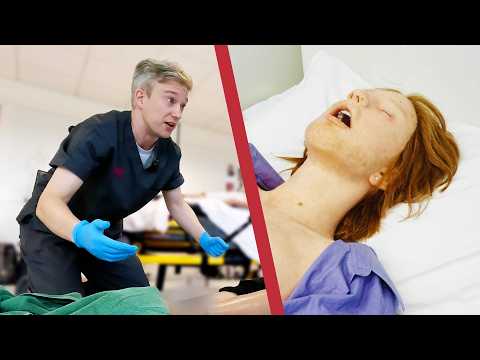
林宜悉 posted on 2026/05/21Ever wondered what goes on behind the scenes at a medical training facility? This video takes you inside a hyper-realistic hospital simulation ward at Sheffield Hallam University, where you'll see incredible moulage techniques used to create lifelike injuries and illnesses. You'll pick up vocabulary related to healthcare and patient care, and get a fascinating look at how future medical professionals are trained!
Learn this video on the APP!
The VoiceTube App has more in-depth practice for videos!