
above all
US /əˈbʌv ɔl/
UK /əˈbʌv ɔ:l/
- Phrase
- Most importantly; more than anything else.
A1Moreachieve
US /əˈtʃiv/
UK /ə'tʃi:v/
- Transitive Verb
- To succeed in doing good, usually by working hard
- To succeed in reaching a particular goal, status, or standard, often after effort or perseverance.
A2TOEICMoreafter the fact
US /ˈæftɚ ðə fækt/
UK /ˈɑ:ftə ðə fækt/
- other
- Happening or known later than the actual event.
B1Moreaid
US /ed/
UK /eɪd/
- Transitive Verb
- To help others and provide things
- Noun (Countable/Uncountable)
- Action of giving help to others
- Money or help given to those who need it
A2TOEICMoreall the things
US
UK
- Pronoun
- Everything; all items or aspects
- Determiner
- Every item or object being considered or discussed.
A1Morealong with
US /əˈlɔŋ wɪð/
UK /əˈlɔŋ wið/
- Preposition
- In addition to; together with.
- Adverb
- In company or together with someone or something.
- Including; in addition to.
A2Moreanything other than
US
UK
- Phrase
- Except for; not including
- Different from; not
apart from
US /əˈpɑrt frʌm/
UK /əˈpɑ:t frɔm/
- Preposition
- Except for; not considering
- In addition to; as well as
around the world
US /əˈraʊnd ði wɜrld/
UK /əˈraund ðə wɜː(r)ld/
- Phrase
- In or to many countries.
- In various places throughout the world.
A2Moreas a result of
US
UK
- Phrase
- Because of something; owing to.
A1Moreat a time
US /æt e taɪm/
UK /æt ə taim/
- Phrase
- Separately; one by one
- Simultaneously; together
A1Moreat least
US /æt list/
UK /æt li:st/
- Adverb
- As a minimum
- Not less than
- Phrase
- No less than; at the minimum
- Used to indicate that something is positive in a bad situation.
C2Moreat risk
US
UK
- Phrase
- In danger; likely to be harmed
at sea
US /æt si/
UK /æt si:/
- Phrase
- Adjective
- Confused; not knowing what to do.
A1Moreat some point
US /æt sʌm pɔɪnt/
UK /æt sʌm pɔint/
- Phrase
- At an unspecified time, usually in the future.
A1Moreat the end of the day
US
UK
- Phrase
- Ultimately; when everything else is considered.
- After a day's work or activities.
A1Moreback to normal
US
UK
- Adjective
- Returned to the usual or expected state or condition.
- Phrase
- In the usual or ordinary way; as things were before.
A2Moreback up
US /bæk ʌp/
UK /bæk ʌp/
- Phrasal Verb
- To save a copy of your computer data
- To confirm the truth of what someone says
A1Morebear out
US /bɛr aʊt/
UK /bɛə aut/
- Phrasal Verb
- (Of facts) to confirm the truth of
- To be proven correct about something
A2Morebeing driven by
US
UK
- Participle
- Currently being motivated or controlled by a particular factor or force.
A2Morebite in
US /baɪt ɪn/
UK /baɪt ɪn/
- other
- To interrupt someone while they are speaking.
B2Moreblockade
US /blɑ:ˈkeɪd/
UK /blɒˈkeɪd/
- Transitive Verb
- To block or impede the movement of people, objects
- Noun
- Arrangement that blocks or impedes movement
B2Moreblow
US /blo/
UK /bləʊ/
- Verb (Transitive/Intransitive)
- To move something using air
- To make air come quickly out of your mouth
- Noun
- Something that causes you difficulty or sadness
- Act of making air come out of your mouth
A2Moreblow up
US /blo ʌp/
UK /bləu ʌp/
- Phrasal Verb
- To suddenly become angry
- To put air in something, e.g. a tire or balloon
- Verb (Transitive/Intransitive)
- To explode; to be destroyed by an explosion.
A2Morebreak out
US /brek aʊt/
UK /breik aut/
- Phrasal Verb
- To isolate some information from other data
A1Moreby and large
US /baɪ ənd lɑrdʒ/
UK /bai ænd lɑ:dʒ/
- Phrase
- Generally; on the whole; mostly.
- Taking everything into consideration; all things considered.
A2Morecall on
US /kɔl ɑn/
UK /kɔ:l ɔn/
- Phrasal Verb
- To order or ask someone to do a specific activity
- To visit someone
A1Morecome for
US /kʌm fɔr/
UK /kʌm fɔ:/
- Phrasal Verb
- To arrive to collect someone or something.
- To attack someone.
A1Morecome from
US /kʌm frʌm/
UK /kʌm frɔm/
- Phrasal Verb
- To have as your native country or city
A1Morecome up
US /kʌm ʌp/
UK /kʌm ʌp/
- Phrasal Verb
- To come closer to someone; approach
- (Of sun) to rise into the sky in the morning
A1Morecome up with
US /kʌm ʌp wɪð/
UK /kʌm ʌp wið/
- Phrasal Verb
- To think of an idea or solution; produce
A1Morecome upon
US /kʌm əˈpɑn/
UK /kʌm əˈpɔn/
- Phrasal Verb
- To accidentally find; discover something
A1Morecommercial
US /kəˈmɚʃəl/
UK /kəˈmə:ʃəl/
- Noun
- Radio or television advertisement
- Adjective
- A notice, picture, or film telling people about a product, job, or service.
- Designed for or primarily concerned with financial success.
B1Moreconcern about
US
UK
- Intransitive Verb
- To worry about something.
B2Morecongress
US /ˈkɑŋɡrɪs/
UK /'kɒŋɡres/
- Noun (Countable/Uncountable)
- Meeting of elected or appointed representatives
- Proper Noun
- American governing body of elected representatives
B1Morecoordinate with
US
UK
- Phrasal Verb
- To work together efficiently and harmoniously with someone or a group to achieve a common goal.
deal with
US /dil wɪð/
UK /di:l wið/
- Verb (Transitive/Intransitive)
- To buy or sell goods or services.
- Phrasal Verb
- To take action to solve a problem or manage a situation.
- To be about; concern.
A1Moredefensive
US /dɪˈfɛnsɪv/
UK /dɪˈfensɪv/
- Adjective
- Protecting something, yourself from attack
B1Morediplomatic
US /ˌdɪpləˈmætɪk/
UK /ˌdɪpləˈmætɪk/
- Adjective
- Concerning formal relationships between countries
- Not being offensive
B1Moreeconomic
US /ˌɛkəˈnɑmɪk, ˌikə-/
UK /ˌi:kəˈnɒmɪk/
- Adjective
- Concerning trade, industry, and money
- Financially worthwhile; profitable.
- Noun
- A system relating to economics
- A factor relating to economics
A2Moreeconomic collapse
US
UK
- Noun
- A severe and prolonged downturn in economic activity.
B1Moreend in
US /ɛnd ɪn/
UK /end in/
- Phrasal Verb
- To have something as the final result.
fertilizer
US /ˈfɚtlˌaɪzɚ/
UK /ˈfɜ:təlaɪzə(r)/
- Noun (Countable/Uncountable)
- Substance added to soil to help plants grow
- A specific type or brand of fertilizer.
B1TOEICMorefight back
US /faɪt bæk/
UK /fait bæk/
- Phrasal Verb
- To make your point more strongly against opponent
A1Morefigure out
US /ˈfɪɡjɚ aʊt/
UK /ˈfiɡə aut/
- Phrasal Verb
- To understand the behavior of someone
- To think through logically to find a solution
- Verb (Transitive/Intransitive)
- To understand or find an answer to something.
- To find a solution to a problem or understand something.
A1Morefor example
US
UK
- Phrase
- As an illustration or instance.
for sure
US /fɔr ʃʊr/
UK /fɔ: ʃuə/
- Adverb
- Definitely; certainly; without a doubt.
- Used to emphasize a statement.
- Interjection
- An expression of strong agreement or affirmation.
A2Morefor that matter
US /fɔr ðæt ˈmætɚ/
UK /fɔ: ðæt ˈmætə/
- Phrase
- Used to emphasize that something is true or likely to happen, or to introduce a related point.
- Used to introduce a statement that supports or strengthens a previous statement.
A2Morefor the foreseeable
US /fɚ ðə fɔrˈsiəbəl/
UK /fə ðə fɔ:ˈsi:əbl/
- other
- Referring to a time period that can be predicted or expected in the near future.
B2Morefor the world
US /fɚ ðə wɝld/
UK /fə ðə wɜ:ld/
- other
- Used to emphasize something would never happen.
B2Moreforeign
US /ˈfɔ:rən/
UK /ˈfɒrən/
- Adjective
- Being of a different place or country
- Strange; different from ones found at home
A2TOEICMorefrankly
US /ˈfræŋkli/
UK /ˈfræŋkli/
- Adverb
- Speaking honestly and directly
- Used to express disagreement or mild disapproval.
B2Morefreedom
US /ˈfridəm/
UK /'fri:dəm/
- Uncountable Noun
- State of being free, not being controlled
B1Morefury
US /ˈfjʊri/
UK /'fjʊərɪ/
- Uncountable Noun
- Rage; violent anger
B2Moreget back to
US /ɡɛt bæk tu/
UK /ɡet bæk tu:/
- Phrasal Verb
- To get in contact with someone again
- To return to someone or something; to respond at a later time.
A1Moreget past
US /ɡɛt pæst/
UK /ɡet pɑːst/
- Phrasal Verb
- To overcome an obstacle or difficulty.
- To move beyond someone or something that is blocking your way.
A1Moreget through
US /ɡɛt θru/
UK /ɡet θru:/
- Phrasal Verb
- To arrive at the end of or finish something
- To succeed in contacting someone by phone
A1Moregive up
US /ɡɪv ʌp/
UK /ɡiv ʌp/
- Phrasal Verb
- To lose hope or admit defeat
- To decide to not start to try solving a problem
A1Morego after
US /ɡo ˈæftɚ/
UK /ɡəu ˈɑ:ftə/
- Phrasal Verb
- To chase or pursue something
A1Morego ahead
US /ɡo əˈhɛd/
UK /ɡəu əˈhed/
- Phrasal Verb
- To start an activity; start doing, working etc.
- To give permission to do something
- Intransitive Verb
- To start or proceed with something
- To proceed despite potential obstacles or doubts.
A1Moregoal
US /ɡol/
UK /ɡəʊl/
- Noun (Countable/Uncountable)
- Something you try to do or achieve; an aim
- (Sports) net into which you put a ball to score
A2TOEICMoregoing on
US /ˈɡoɪŋ ɑn/
UK /ˈgəʊɪŋ ɔn/
- Phrasal Verb
- To continue doing something
- To happen (usually negative)
A1Moregot to
US /ɡɑt tu/
UK /gɔt tu:/
- Verb (Transitive/Intransitive)
- To arrive at some place
- To have the opportunity or permission to do something
- Phrasal Verb
- To appeal to the emotions of; move
- To finally begin to start something after a delay
A1Morehave to
US /hæv tu/
UK /ˈhæv tə/
- Auxiliary Verb
- Must do
A1Morehold on
US /hold ɑn/
UK /həuld ɔn/
- Phrasal Verb
- To wait for someone (e.g. on a phone call)
- To wait for a short time.
A1Morehostage
US /ˈhɑstɪdʒ/
UK /'hɒstɪdʒ/
- Countable Noun
- Person held prisoner to get a demand satisfied
B2Morehumanitarian
US /hju:ˌmænɪˈteriən/
UK /hju:ˌmænɪˈteəriən/
- Noun
- Person who tries to help those in a crisis
- Adjective
- Concerned with or seeking to promote human welfare.
B2Morein charge
US /ɪn tʃɑrdʒ/
UK /in tʃɑ:dʒ/
- Adverb
- To be responsible for
A1Morein conjunction with
US /ɪn kənˈdʒʌŋkʃən wɪð/
UK /in kənˈdʒʌŋkʃən wið/
- Phrase
- Together with; along with
A1Morein hiding
US /ɪn ˈhaɪdɪŋ/
UK /ɪn ˈhaɪdɪŋ/
- other
- Trying to avoid being found or caught.
B2Morein order to
US /ɪn ˈɔrdɚ tu/
UK /in ˈɔ:də tu:/
- Preposition
- For the purpose of; with the aim of.
- Phrase
- In a specific sequence or arrangement.
- With the aim of; for the purpose of.
C1Morein terms of
US
UK
- Phrase
- With regard to; concerning a particular aspect.
A1Morein the black
US /ɪn ði blæk/
UK /in ðə blæk/
- Adjective
- Operating with a profit; not in debt.
- Phrase
- Having a positive balance; out of debt.
A1Morein the end
US /ɪn ði ɛnd/
UK /in ðə end/
- Phrase
- Finally; after a period of time or series of events.
- Ultimately; as the final result or consequence.
A1Morein the future
US /ɪn ði ˈfjutʃɚ/
UK /in ðə ˈfju:tʃə/
- Phrase
- At a later time; in times to come.
A1Morein the green
US /ɪn ðə ˈɡrin/
UK /in ðə ˈɡri:n/
- other
- Having a financial profit or gain.
- On the putting surface of a golf course.
B2Morein the middle of
US
UK
- Phrase
- In the central part or point of something.
- Engaged or occupied with something.
A2Morein the past
US
UK
- Phrase
- During a former period of time; previously.
A1Morein the red
US
UK
- Adjective
- Operating at a loss; in debt.
- Phrase
- Having overdrawn money from a bank account.
A1Morein the way
US /ɪn ði we/
UK /in ðə wei/
- Phrase
- Obstructing someone or something; hindering progress.
- Stored or placed so as to be available or ready when needed.
A1Morein the world
US /ɪn ði wɜrld/
UK /in ðə wɜː(r)ld/
- Phrase
- Used to emphasize a question expressing surprise, confusion, or disbelief.
- Used to indicate the extent or degree of something, often in a superlative sense.
A1Morein time
US /ɪn taɪm/
UK /in taim/
- Adverb
- Eventually; after a period of time.
- Not late; with enough time to spare.
- Phrase
- Eventually; before it is too late.
- According to the scheduled time; punctual.
A1Morein total
US /ɪn ˈtotl/
UK /in ˈtəutəl/
- Phrase
- Completely; with everything added together.
A1Morein touch
US /ɪn tʌtʃ/
UK /in tʌtʃ/
- Adjective
- Having contact or communication with someone.
- Aware of or informed about something.
B1Moreinside of
US /ɪnˈsaɪd ʌv/
UK /inˈsaid ɔv/
- Preposition
- Within; in the inner part of.
- Within a certain period of time.
A1Moreinterest of
US
UK
- Phrase
- For the benefit or advantage of someone or something.
- A feeling of wanting to know or learn about something or someone.
- Noun
- A legal share or right in something.
A1Moreinvolve
US /ɪnˈvɑlv/
UK /ɪn'vɒlv/
- Transitive Verb
- To have or be included as a part of something
- To cause (a person or group) to take part in an event or activity.
A2TOEICMoreknow about
US /noʊ əˈbaʊt/
UK /nəʊ əˈbaut/
- Phrasal Verb
- To have information or understanding of a subject or situation.
lead to
US /lid tu/
UK /li:d tu:/
- Phrasal Verb
- To result in some action
- Verb (Transitive/Intransitive)
- To have something as a consequence or result.
A1Moreleave aside
US /liv əˈsaɪd/
UK /li:v əˈsaid/
- Phrasal Verb
- To ignore something for the moment
B2Morelook for
US /lʊk fɔr/
UK /luk fɔ:/
- Phrasal Verb
- To try to find a thing or person that is lost
- To expect or anticipate something.
A1Morematerial
US /məˈtɪriəl/
UK /məˈtɪəriəl/
- Noun (Countable/Uncountable)
- Cloth; fabric
- Supplies or data needed to do a certain thing
- Adjective
- Relevant; (of evidence) important or significant
- Belonging to the world of physical things
A2Moremeet with
US /mit wɪð/
UK /mi:t wið/
- Phrasal Verb
- To have a meeting with someone in order to discuss something.
- To encounter or experience something, often something negative.
military
US /ˈmɪlɪˌtɛri/
UK /'mɪlətrɪ/
- Noun
- Army or armed forces
- Adjective
- Concerning the army or navy
B1Moremove to
US /muv tu/
UK /mu:v tu:/
- Phrasal Verb
- To change the place where you live or work.
- Verb (Transitive/Intransitive)
- To proceed to the next stage or action.
A2Moremultiple
US /ˈmʌltəpəl/
UK /ˈmʌltɪpl/
- Adjective
- Having or involving more than one of something
- Having or involving several parts, elements, or members.
- Countable Noun
- Number produced by multiplying a smaller number
- A number of identical circuit elements connected in parallel or series.
B1Morenavy
US /ˈnevi/
UK /ˈneɪvi/
- Noun (Countable/Uncountable)
- Very dark shade of blue
- Armed force consisting of ships, sailors etc.
B1Morenegotiation
US /nɪˌɡoʃiˈeʃən/
UK /nɪˌgəʊʃiˈeɪʃn/
- Uncountable Noun
- A formal discussion to reach an agreement
B1Morenews outlet
US
UK
- Noun (Countable/Uncountable)
- A media organization that disseminates news, such as a newspaper, magazine, television network, or website.
C2Morenext to
US /nɛkst tu/
UK /nekst tu:/
- Preposition
- Being located along side another
- In comparison with
- Adverb
- Almost; nearly
A1Morenuclear
US /ˈnukliɚ, ˈnju-/
UK /ˈnju:kliə(r)/
- Adjective
- Concerning or involving the center of an atom
A2Moreof course
US /ʌv kɔː(r)s/
UK /ɔv kɔː(r)s/
- Adverb
- Sure ; Certainly
- Phrase
- For sure; certainly
A2Moreoff the face of the earth
US /ɔf ðə feɪs əv ði ɝθ/
UK /ɒf ðə feɪs əv ðə ɜ:θ/
- other
- To vanish completely and become impossible to find.
B2Moreon behalf of
US /ɑn bɪˈhæf ʌv/
UK /ɔn biˈhɑ:f ɔv/
- Phrase
- As the representative of someone
- Acting as a representative of.
B1Moreon board
US /ɑn bɔrd/
UK /ɔn bɔ:d/
- Phrase
- Being on a ship, plane, or other vehicle
- Adverb
- On or in a ship, aircraft, train, or other vehicle
A1Moreon earth
US /ɑn ɚθ/
UK /ɔn ə:θ/
- Phrase
- Used to emphasize a question expressing surprise or anger.
- Used to emphasize that something is not possible or will not happen.
A1Moreon hold
US /ɑn hold/
UK /ɔn həuld/
- Adjective
- Temporarily delayed or suspended.
- Adverb
- Waiting to be connected on a telephone call.
A2Moreon television
US /ɑn ˈtɛləvɪʒən/
UK /ɒn ˈtelɪvɪʒən/
- other
- Appearing or broadcast on TV.
A2Moreon the point of
US /ɑn ðə ˈpɔɪnt ʌv/
UK /ɒn ðə ˈpɔɪnt ɒv/
- other
- About to do something very soon.
B2Moreon the table
US /ɑn ði ˈtebəl/
UK /ɔn ðə ˈteibl/
- Phrase
- Located on the surface of a table.
- Available for consideration or discussion.
A1Moreon to
US /ɑn tu/
UK /ɔn tu:/
- Preposition
- Toward something; forward
- Aware of someone's activities.
- Adjective
- Aware of someone's deception or illegal activities.
A1Moreoperation
US /ˌɑpəˈreʃən/
UK /ˌɒpəˈreɪʃn/
- Noun (Countable/Uncountable)
- Business or company, or its activities
- Functioning; use
A2TOEICMoreother places
US
UK
- Phrase
- Different locations or areas
other than
US
UK
- Preposition
- Except for; apart from.
- Conjunction
- Different from.
A1Moreout there
US /aʊt ðɛr/
UK /aut ðɛə/
- Adverb
- In or to a place that is far away
- Existing in the universe
- Adjective
- Unconventional; strange; avant-garde
- Existing or available.
A1Moreoverwhelming majority
US
UK
- Phrase
- A very large majority; a majority that is so large as to be almost unanimous.
C1Morepass on
US
UK
- Phrasal Verb
- A polite way of saying 'to die'
A1Morepiracy
US /ˈpaɪrəsi/
UK /ˈpaɪrəsi/
- Uncountable Noun
- Act of robbing a plane or ship
- The unauthorized copying and distribution of copyrighted material.
- Transitive Verb
- Act of copying or selling a product illegally
B2Morepope
US /pop/
UK /pu:p/
- Proper Noun
- Bishop of Rome and the head of the Catholic Church
B2Morepresident
US /ˈprɛzɪdənt,-ˌdɛnt/
UK /ˈprezɪdənt/
- Noun
- Person in charge of a country, or organization
- The highest-ranking executive in a corporation or organization.
A2TOEICMorepressure
US /ˈprɛʃɚ/
UK /'preʃə(r)/
- Noun (Countable/Uncountable)
- Anxiety caused by difficult problems
- Force, weight when pressing against a thing
- Transitive Verb
- To apply force to something
- To persuade or force someone to do something
A2TOEICMorerally behind
US /ˈræli bɪˈhaɪnd/
UK /ˈræli biˈhaɪnd/
- other
- To show strong support for a person, cause, or team.
B2Moreregime
US /reˈʒim, rɪ-/
UK /reɪˈʒi:m/
- Noun
- A system of management; a form of government
B1Morereligious
US /rɪˈlɪdʒəs/
UK /rɪˈlɪdʒəs/
- Adjective
- Following the rules and beliefs of a faith
- Relating to or manifesting faithful devotion to an acknowledged ultimate reality or deity.
B1Morerely on
US /rɪˈlaɪ ɑn/
UK /riˈlai ɔn/
- Phrasal Verb
- To depend on someone or something
A2Moreresult
US /rɪˈzʌlt/
UK /rɪ'zʌlt/
- Noun
- Something produced through tests or experiments
- Final score of a competition, election or game
- Intransitive Verb
- To be the outcome of other causes and effects
- To happen or exist as a consequence of something.
A2Moreright for
US
UK
- Adjective
- Suitable or appropriate for a particular person, purpose, or situation.
- Correct or most appropriate.
A1Moreright next to
US
UK
- Preposition
- Immediately adjacent to; in very close proximity to.
- Figuratively very close to; on the verge of.
A1Morerun by
US
UK
- Phrasal Verb
- To be managed or controlled by someone or a group.
- To show or tell something to someone briefly to get their opinion or approval.
A1Moreset up
US /sɛt ʌp/
UK /set ʌp/
- Phrasal Verb
- To make arrangements for something; establish
- Verb (Transitive/Intransitive)
- To arrange or prepare something for use.
- To start a business, organization, etc.
A1Moreship out
US /ʃɪp aʊt/
UK /ʃip aut/
- Phrasal Verb
- To send goods by ship or other means of transport.
- To leave a place, especially to go to war.
A2Moreshipping
US /ˈʃɪpɪŋ/
UK /ˈʃɪpɪŋ/
- Transitive Verb
- To transport goods by boat, truck or plane
- To want two fictional characters to be in a romantic relationship.
- Uncountable Noun
- Business of transporting goods or orders to places
- The transport of goods, especially by sea or air.
B1TOEICMoreshoot down
US /ʃut daʊn/
UK /ʃu:t daun/
- Phrasal Verb
- To make plane fall from sky by shooting rockets
A2Moreshut
US /ʃʌt/
UK /ʃʌt/
- Intransitive Verb
- To stop being open for business
- Transitive Verb
- To close something, e.g. a door
A2Moreshut down
US /ʃʌt daʊn/
UK /ʃʌt daun/
- Phrasal Verb
- To close an operating system, e.g. on a computer
- To stop a factory/machine from operating
- Transitive Verb
- To deactivate a nuclear reactor.
- To turn off a computer or other electronic device.
A2Moresign off
US /saɪn ɔf/
UK /sain ɔf/
- Phrasal Verb
- To end communications, e.g. by radio
A1Moresit down
US /sit daʊn/
UK /sit daun/
- Phrasal Verb
- To take a seat
A1Morestand up to
US /stænd ʌp tu/
UK /stænd ʌp tu:/
- Phrasal Verb
- To resist or fight someone who is being aggressive
A1Morestrait
US /stret/
UK /streɪt/
- Noun
- Channel joining large bodies of water
C2Morestrand
US /strænd/
UK /strænd/
- Countable Noun
- Long part of a rope, someone's hair, etc.
- Transitive Verb
- To cause to be stuck or trapped somewhere
B2Moresuch as
US /sʌtʃ æz/
UK /sʌtʃ æz/
- Preposition
- For example; like
A1Moresuffice
US /səˈfaɪs/
UK /səˈfaɪs/
- Intransitive Verb
- To be enough to do something
B2TOEICMoretake against
US /teɪk əˈɡenst/
UK /teɪk əˈɡenst/
- other
- To develop a dislike or hostility toward someone.
B2Moretaken over
US
UK
- Phrasal Verb
- To gain control of (a company) from someone else
- To gain control of something.
A1Moretalk about it
US /tɔk əˈbaʊt ɪt/
UK /tɔ:k əˈbaut it/
- Verb (Transitive/Intransitive)
- To discuss a particular subject.
A1Moretalking about
US
UK
- Phrasal Verb
- To discuss a particular topic.
- To be constantly mentioning or bringing up a subject.
A1Morethink about
US /θɪŋk əˈbaʊt/
UK /θiŋk əˈbaut/
- Phrasal Verb
- To consider something carefully.
- To remember or call to mind.
A1Morethink on
US
UK
- Phrasal Verb
- To consider something carefully before making a decision.
A1Morethreat to
US
UK
- Phrase
- A person or thing likely to cause damage or danger.
- A statement of an intention to inflict pain, injury, damage, or other hostile action on someone in retribution for or opposition to something done or not done.
B2Moreto death
US /tu dɛθ/
UK /tu: deθ/
- Phrase
- Extremely; to a great degree
- Until death
B1Moreto do with
US
UK
- Phrasal Verb
- To be about something; concern
A1Moreto let
US /tu lɛt/
UK /tu let/
- Preposition
- Indicates that a property is available for rent.
A2Moreto some extent
US /tu sʌm ɪkˈstɛnt/
UK /tu: sʌm iksˈtent/
- Phrase
- Partially; not completely.
A1Moretopic
US /ˈtɑpɪk/
UK /'tɒpɪk/
- Noun (Countable/Uncountable)
- Subject or issue people talk or write about
A2TOEICMoreultimately
US /ˈʌltəmɪtli/
UK /ˈʌltɪmətli/
- Adverb
- Done or considered as the final and most important
- Fundamentally; at the most basic level.
B1TOEICMoreunacceptable
US /ˌʌnɪkˈsɛptəbəl, -æk-/
UK /ˌʌnəkˈseptəbl/
- Adjective
- Not being or behaving in the correct or right way
B1Moreunder no circumstances
US
UK
- Phrase
- Absolutely not; in no situation.
B2Moreupdate on
US
UK
- Verb (Transitive/Intransitive)
- To provide the latest information about something.
B1Moreused to
US /juzd tu/
UK /ˈju:st tə/
- Adjective
- Did regularly before, but don't do now
- Auxiliary Verb
- Have done before, but do not do now
A1Morewind up
US //ˈwaɪndˌʌp//
UK //ˈwaɪndˌʌp//
- Phrasal Verb
- To be brought to a state of great tension
- To close or finalize something
- Verb (Transitive/Intransitive)
- To arrive or end up in a particular state, situation, or place, especially unintentionally.
- To bring something to an end; to conclude or finish something.
A1Morewith it
US /wɪð ɪt/
UK /wið it/
- Adjective
- Intelligent, alert, and up-to-date.
- Understanding and knowledgeable about current trends or information.
A1Morewith regards to
US
UK
- Phrase
- Concerning; relating to; about.
A1Morework out
US /wɚk aʊt/
UK /wə:k aut/
- Phrasal Verb
- To find a way to do something, by thinking
A1More
Vocabulary
- have to: Must do
- go ahead: To start an activity; start doing, working etc.
- around the world: In or to many countries.
- in the world: Used to emphasize a question expressing surprise, confusion, or disbelief.
- talking about: To discuss a particular topic.
- got to: To arrive at some place
- blow up: To suddenly become angry
- call on: To order or ask someone to do a specific activity
- shut down: To close an operating system, e.g. on a computer
- think about: To consider something carefully.
- in the red: Operating at a loss; in debt.
- to do with: To be about something; concern
- as a result of: Because of something; owing to.
- get back to: To get in contact with someone again
- apart from: Except for; not considering
- used to: Did regularly before, but don't do now
- going on: To continue doing something
- in the green: Having a financial profit or gain.
- deal with
- hold on: To wait for someone (e.g. on a phone call)
- inside of: Within; in the inner part of.
- out there: In or to a place that is far away
- at least: As a minimum
- to let: Indicates that a property is available for rent.
- come up: To come closer to someone; approach
- threat to: A person or thing likely to cause damage or danger.
- shoot down: To make plane fall from sky by shooting rockets
- along with: In addition to; together with.
- give up: To lose hope or admit defeat
- lead to: To result in some action
- for example: As an illustration or instance.
- in order to: For the purpose of; with the aim of.
- under no circumstances: Absolutely not; in no situation.
- for that matter: Used to emphasize that something is true or likely to happen, or to introduce a related point.
- to some extent: Partially; not completely.
- after the fact: Happening or known later than the actual event.
- in touch: Having contact or communication with someone.
- in the end: Finally; after a period of time or series of events.
- with it: Intelligent, alert, and up-to-date.
- in the black: Operating with a profit; not in debt.
- concern about: To worry about something.
- in the past: During a former period of time; previously.
- go after: To chase or pursue something
- at the end of the day: Ultimately; when everything else is considered.
- right next to: Immediately adjacent to; in very close proximity to.
- next to: Being located along side another
- talk about it: To discuss a particular subject.
- at sea
- for sure: Definitely; certainly; without a doubt.
- at risk: In danger; likely to be harmed
- overwhelming majority: A very large majority; a majority that is so large as to be almost unanimous.
- ship out: To send goods by ship or other means of transport.
- in the middle of: In the central part or point of something.
- stand up to: To resist or fight someone who is being aggressive
- above all: Most importantly; more than anything else.
- in total: Completely; with everything added together.
- bear out: (Of facts) to confirm the truth of
- wind up: To be brought to a state of great tension
- bite in: To interrupt someone while they are speaking.
- in conjunction with: Together with; along with
- come for: To arrive to collect someone or something.
- get past: To overcome an obstacle or difficulty.
- right for: Suitable or appropriate for a particular person, purpose, or situation.
- for the world: Used to emphasize something would never happen.
- economic collapse: A severe and prolonged downturn in economic activity.
- back up: To save a copy of your computer data
- all the things: Everything; all items or aspects
- in hiding: Trying to avoid being found or caught.
- come up with: To think of an idea or solution; produce
- end in: To have something as the final result.
- figure out: To understand the behavior of someone
- in charge: To be responsible for
- meet with: To have a meeting with someone in order to discuss something.
- leave aside: To ignore something for the moment
- to death: Extremely; to a great degree
- at some point: At an unspecified time, usually in the future.
- pass on: A polite way of saying 'to die'
- take against: To develop a dislike or hostility toward someone.
- fight back: To make your point more strongly against opponent
- by and large: Generally; on the whole; mostly.
- for the foreseeable: Referring to a time period that can be predicted or expected in the near future.
- look for: To try to find a thing or person that is lost
- get through: To arrive at the end of or finish something
- move to: To change the place where you live or work.
- set up
- update on: To provide the latest information about something.
- on hold: Temporarily delayed or suspended.
- being driven by: Currently being motivated or controlled by a particular factor or force.
- on the table: Located on the surface of a table.
- of course: Sure ; Certainly
- in time: Eventually; after a period of time.
- break out
- know about: To have information or understanding of a subject or situation.
- on to: Toward something; forward
- rely on: To depend on someone or something
- think on: To consider something carefully before making a decision.
- taken over: To gain control of (a company) from someone else
- with regards to: Concerning; relating to; about.
- run by: To be managed or controlled by someone or a group.
- anything other than: Except for; not including
- other than: Except for; apart from.
- in the way: Obstructing someone or something; hindering progress.
- on board: Being on a ship, plane, or other vehicle
- rally behind: To show strong support for a person, cause, or team.
- such as: For example; like
- at a time: Separately; one by one
- come upon: To accidentally find; discover something
- interest of: For the benefit or advantage of someone or something.
- on behalf of: As the representative of someone
- news outlet: A media organization that disseminates news, such as a newspaper, magazine, television network, or website.
- come from: To have as your native country or city
- coordinate with: To work together efficiently and harmoniously with someone or a group to achieve a common goal.
- other places: Different locations or areas
- on television: Appearing or broadcast on TV.
- sign off: To end communications, e.g. by radio
- off the face of the earth: To vanish completely and become impossible to find.
- work out
- back to normal: Returned to the usual or expected state or condition.
- sit down: To take a seat
- on earth: Used to emphasize a question expressing surprise or anger.
- in the future: At a later time; in times to come.
- in terms of
- on the point of: About to do something very soon.
- ultimately: Done or considered as the final and most important
- material: Cloth; fabric
- multiple: Having or involving more than one of something
- achieve: To succeed in doing good, usually by working hard
- position: Person's opinion or attitude about something
- frankly: Speaking honestly and directly
- pressure: Anxiety caused by difficult problems
- commercial: Radio or television advertisement
- military: Army or armed forces
- state: Region within a country, with its own government
- regime: A system of management; a form of government
- address: Exact street location of a place
- congress: Meeting of elected or appointed representatives
- involve: To have or be included as a part of something
- result: Something produced through tests or experiments
- aid: To help others and provide things
- blow: To move something using air
- religious: Following the rules and beliefs of a faith
- accept: To agree to receive or take something offered
- topic: Subject or issue people talk or write about
- economy: Using money, resources in a careful, effective way
- project: To predict what will happen in the future
- diplomatic: Concerning formal relationships between countries
- foreign: Being of a different place or country
- goal: Something you try to do or achieve; an aim
- normal: Standard or regular way of doing something
- lot: What happens to a person in life from chance; fate
- hostage: Person held prisoner to get a demand satisfied
- president: Person in charge of a country, or organization
- system: Set of organized, planned ideas that work together
- allow: To admit the validity or truth of something
- continue: To do something without stopping, or after pausing
- economic: Concerning trade, industry, and money
- act: To behave in a certain way
- fertilizer: Substance added to soil to help plants grow
- government: Group of people and system that rule a nation
- program: To make someone act or think in a certain way
- humanitarian: Person who tries to help those in a crisis
- point: An item to be discussed
- operation: Business or company, or its activities
- shut: To stop being open for business
- nuclear: Concerning or involving the center of an atom
- fury: Rage; violent anger
- strait: Channel joining large bodies of water
- negotiation: A formal discussion to reach an agreement
- defensive: Protecting something, yourself from attack
- strand: Long part of a rope, someone's hair, etc.
- freedom: State of being free, not being controlled
- suffice: To be enough to do something
- pope: Bishop of Rome and the head of the Catholic Church
- unacceptable: Not being or behaving in the correct or right way
- blockade: To block or impede the movement of people, objects
- piracy: Act of robbing a plane or ship
- navy: Very dark shade of blue
- shipping: To transport goods by boat, truck or plane
Get the full experience in the app
Learn anywhere with detailed sentence and usage analysis
01:03
She took a brave step forward, leaving behind her comfort zone to chase her dreams.
Vocabulary
- brave
adj. Having courage
- comfort zone
phr. A familiar situation where one feels safe
Explanation
a brave step is a noun phrase, where brave is an adjective modifying the noun step, meaning "a courageous step".
forward is an adverb modifying step, meaning "ahead".
The whole phrase serves as the object, answering the "what" of took (verb) — she took a brave step forward.
Get the full experience in the app
Look up words anytime with pronunciation, part of speech, and usage
brave
US/brev/
UK/breɪv/
adj.Brave
v.t.To bravely face
A2 Elementary
Get the full experience in the app
Practice speaking anytime and get instant pronunciation feedback
Try this speaking exercise.
Try practicing with this sentence.
80
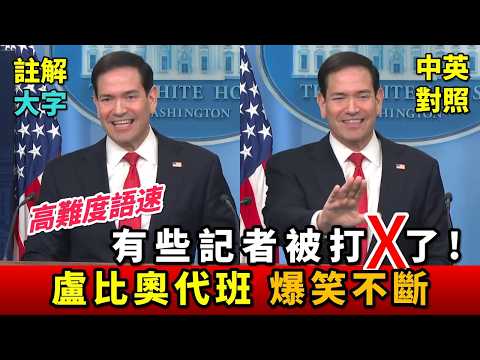
實戰練英文|盧比奧 代班主持簡報會,歡笑跟地獄梗一樣多:天殺的媒體,座位圖上我都有打 X,而你們還無法承受我的DJ NAME!|Karoline 請假去|中英對照、長文註解
0
P posted on 2026/05/14Ever wondered what goes on during a high-stakes press briefing? This video dives into a real-world scenario where a stand-in host navigates tough questions about a critical international incident. You'll pick up key phrases for discussing global politics and military operations, like 'freedom of navigation' and 'defensive operation'!
Learn this video on the APP!
The VoiceTube App has more in-depth practice for videos!