Vocabulary
- for example: As an illustration or instance.
- for all intensive purposes: Misheard or misspoken form of 'for all intents and purposes'.
- come from: To have as your native country or city
- pick up on: To notice or become aware of something that is not obvious.
- at the same time: Simultaneously; at the identical moment.
- same time: Occurring simultaneously or at the same point in time.
- at the most: No more than; maximum amount or degree.
- regardless of
- for all intents and purposes: In every practical sense; effectively.
- for now: Temporarily; for the present time.
- go on: To continue doing something
- in terms of
- going on: To continue doing something
- move back: To retreat or withdraw from a position.
- think of: To look on as (being something specific); consider
- no doubts: Certainly; without question (plural form).
- think about: To consider something carefully.
- first come, first served: People are served or helped in the order they arrive.
- in fact: Used to emphasize the truth of a statement, especially one that contrasts with or contradicts something else.
- inside of: Within; in the inner part of.
- make some noise: To create a loud sound, often to show excitement or approval.
- in point: Relevant; pertinent
- come back: To reply to someone, often forcefully
- situation: Place, position or area that something is in
- expression: Act of making your thoughts and feelings known
- trauma: A very severe or upsetting experience
- basically: Used before you explain something simply, clearly
- native: Someone from or born in a specific country
- realize: To become aware of or understand mentally
- trick: To fool someone in order to obtain a result
- negative: The opposite to a positive electrical charge
- common: Area in a city or town that is open to everyone
- sense: Certain mental feeling or emotion
- appetite: Feeling of hunger or desire for something
- purpose: Reason for which something is done; aim; goal
- prominent: Being important or well known
- butt: (Informal) fleshy part of your body you sit on
- bit: Device put in a horse's mouth to control it
- generally: Usually; as a rule; by, to or for most people
- judge: Person who decides on the results of a contest
- complete: To finish or reach the end of doing something
- accept: To agree to receive or take something offered
- serve: To act in a particular position or office
- project: To predict what will happen in the future
- mind: To be bothered or upset by something
- correct: Being suitable and appropriate for an occasion
- slight: Small (amount, quality)
- monetary: Concerning a country's economic system
- intensive: Needing great effort for a short period of time
- stomach: Place in the body where food is processed
- bother: To cause problems, concerns or worry for someone
- lot: What happens to a person in life from chance; fate
- comfortable: Having more than enough e.g. money for your needs
- sharp: Person's name
- adjective: A word that describes a noun, e.g. happy
- piece: A counter in a board game
- usage: Amount something is used
- point: An item to be discussed
- wrong: Action that is harmful, unjust or illegal
- person: Man, woman or child
- slate: To strongly criticize someone usually in public
- bud: Small part of a plant that will be a flower
- refresh: To refill a person's glass with a drink
- bum: (Slang) the part of the body on which you sit
- nip: Sharp cold feeling
- patriot: Person who loves and defends their own country
- hunger: Strong desire or need
- incorrectly: In a way that is incorrect or wrong
- bead: Small round thing made from stone, glass, liquid
- depreciate: To decrease in price or value
- hyphen: A dash put between words, e.g. wide-bodied
- magician: Someone who performs magic tricks
Get the full experience in the app
Learn anywhere with detailed sentence and usage analysis
01:03
She took a brave step forward, leaving behind her comfort zone to chase her dreams.
Vocabulary
- brave
adj. Having courage
- comfort zone
phr. A familiar situation where one feels safe
Explanation
a brave step is a noun phrase, where brave is an adjective modifying the noun step, meaning "a courageous step".
forward is an adverb modifying step, meaning "ahead".
The whole phrase serves as the object, answering the "what" of took (verb) — she took a brave step forward.
Get the full experience in the app
Look up words anytime with pronunciation, part of speech, and usage
brave
US/brev/
UK/breɪv/
adj.Brave
v.t.To bravely face
A2 Elementary
Get the full experience in the app
Practice speaking anytime and get instant pronunciation feedback
Try this speaking exercise.
Try practicing with this sentence.
80
0
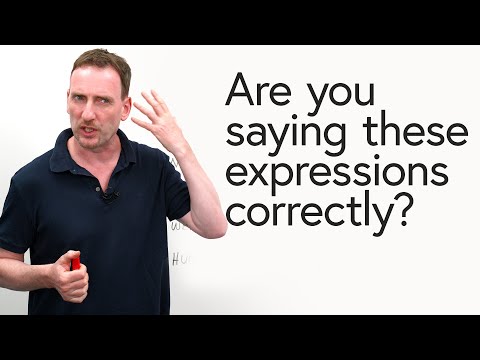
林宜悉 posted on 2026/04/01Think you know your English expressions? You might be surprised to learn that even native speakers often get these 14 common phrases wrong! Adam from engVid breaks down the correct usage and origins, helping you sound more natural and avoid embarrassing mistakes.
Learn this video on the APP!
The VoiceTube App has more in-depth practice for videos!