
basically
US /ˈbesɪkəli,-kli/
UK /ˈbeɪsɪkli/
- Adverb
- Used before you explain something simply, clearly
- In essence; when you consider the most important aspects of something.
A2Morebear
US /bɛr/
UK /bɛː/
- Transitive Verb
- To accept (responsibilities or duties)
- To give birth to a child; to produce fruit
- Countable Noun
- Large brown animal with fur that lives in forests
- Someone who expects stock market to fall
A2Moreburden
US /ˈbɚdn/
UK /'bɜ:dn/
- Transitive Verb
- To weigh down with a load; impose a task upon
- Noun (Countable/Uncountable)
- Something difficult to do, manage, or accept
- Something that is carried with difficulty; an oppressive load.
B1Moreceremony
US /ˈsɛrəˌmoni/
UK /'serəmənɪ/
- Noun (Countable/Uncountable)
- Special social or religious event
- Rigidly formal way of behaving
B1Morecharge
US /tʃɑrdʒ/
UK /tʃɑ:dʒ/
- Verb (Transitive/Intransitive)
- To run quickly toward someone to attack them
- To ask for money as a price for a service or goods
- Noun (Countable/Uncountable)
- An attack by running quickly toward someone
- A price for a service or goods
A2Morecheck out
US /tʃɛk aʊt/
UK /tʃek aut/
- Phrase
- Phrasal Verb
- To find out information about something
- To take books out of a library
A1Moreclassify
US /ˈklæsəˌfaɪ/
UK /'klæsɪfaɪ/
- Transitive Verb
- To arrange things into groups of similar items
- To keep some information secret from the public
B2Morecomplain
US /kəmˈplen/
UK /kəmˈpleɪn/
- Verb (Transitive/Intransitive)
- To say something is wrong and should be changed
- To make a formal accusation or charge.
B1Morecomplaint
US /kəmˈplent/
UK /kəmˈpleɪnt/
- Noun (Countable/Uncountable)
- Saying something is wrong and should be changed
- Official charge against a person by the police
B1Moredeal with
US /dil wɪð/
UK /di:l wið/
- Verb (Transitive/Intransitive)
- To buy or sell goods or services.
- Phrasal Verb
- To take action to solve a problem or manage a situation.
- To be about; concern.
A1Moredivision
US /dɪˈvɪʒən/
UK /dɪ'vɪʒn/
- Noun (Countable/Uncountable)
- How many times a number is contained in another
- One part of an organization
B1TOEICMoreemotional
US /ɪˈmoʃənəl/
UK /ɪˈməʊʃənl/
- Adjective
- Causing, feeling, or appealing to the emotions
- Relating to or characterized by emotion
A2Moreexpression
US /ɪkˈsprɛʃən/
UK /ɪk'spreʃn/
- Noun (Countable/Uncountable)
- Act of making your thoughts and feelings known
- Group of words that have a specific meaning
A2TOEICMorefoot the bill
US /fʊt ði bɪl/
UK /fut ðə bil/
- Phrase
- To pay a bill
- Verb (Transitive/Intransitive)
- To pay for something, typically the entire cost.
A1Morefor example
US
UK
- Phrase
- As an illustration or instance.
for now
US /fɔr naʊ/
UK /fɔ: nau/
- Phrase
- Temporarily; for the present time.
- In the short term; for the immediate future.
A1Morefunction
US /ˈfʌŋkʃən/
UK /'fʌŋkʃn/
- Noun
- Social event, or party such as a wedding
- Mathematical operation used in calculations
- Intransitive Verb
- To serve a certain purpose or role
- To be operating, working or achieving its purpose
A2TOEICMorehand over
US /hænd ˈovɚ/
UK /hænd ˈəuvə/
- Phrasal Verb
- To give into the possession or control of another
A1Morehave to
US /hæv tu/
UK /ˈhæv tə/
- Auxiliary Verb
- Must do
A1Morein business
US /ɪn ˈbɪznɪs/
UK /in ˈbiznis/
- Phrase
- Actively operating as a commercial enterprise.
- Having a commercial partnership or association.
A1Morein charge
US /ɪn tʃɑrdʒ/
UK /in tʃɑ:dʒ/
- Adverb
- To be responsible for
A1Morein red
US /ɪn rɛd/
UK /in red/
- Phrase
- Marked or written using the colour red.
- Adjective
- Operating at a financial loss; in debt.
in the past
US
UK
- Phrase
- During a former period of time; previously.
A1Morelook at
US /lʊk æt/
UK /luk æt/
- Phrasal Verb
- To use your eyes to focus on something
- To focus your eyes on something carefully
A1Morenegative
US /ˈnɛɡətɪv/
UK /'neɡətɪv/
- Noun
- The opposite to a positive electrical charge
- In grammar, containing words such as 'no' or 'not'
- Adjective
- Being harmful, unwanted or unhelpful
- In mathematics, being less than zero
A2Morenext to
US /nɛkst tu/
UK /nekst tu:/
- Preposition
- Being located along side another
- In comparison with
- Adverb
- Almost; nearly
A1Moreobject
US /ˈɑbdʒɪkt/
UK /'ɒbdʒɪkt/
- Noun (Countable/Uncountable)
- Something you can see or touch, but is not alive
- Goal or purpose of a particular plan or activity
- Verb (Transitive/Intransitive)
- To disagree; to protest against an idea or plan
- To state one's reason for disagreement
A2TOEICMoreof course
US /ʌv kɔː(r)s/
UK /ɔv kɔː(r)s/
- Adverb
- Sure ; Certainly
- Phrase
- For sure; certainly
A2Moreopinion
US /əˈpɪnjən/
UK /əˈpɪnjən/
- Noun
- Court judge's statement why a decision was made
- A person's thoughts on a topic
A2TOEICMorepleasant
US /ˈplɛzənt/
UK /'pleznt/
- Adjective
- Causing a good feeling
- Having an agreeable or attractive personality.
B1Morepurchase
US
UK
- Transitive Verb
- To buy something; to get by paying money for it
- Noun (Countable/Uncountable)
- Something that you bought
- Strong hold on something; grip
A2TOEICMorequiz
US /kwɪz/
UK /kwɪz/
- Noun (Countable/Uncountable)
- A game in which players answer questions on topics
- Brief spoken or written test, given to students
- Transitive Verb
- To ask a person many questions about something
B1Morereality
US /riˈælɪti/
UK /rɪ'ælətɪ/
- Noun (Countable/Uncountable)
- What is true, as opposed to what is imagined
- The state of things as they actually exist, rather than as they may appear or might be imagined.
A2Morerepresent
US /ˌrɛprɪˈzɛnt/
UK /ˌreprɪ'zent/
- Transitive Verb
- To depict art objects, figures, scenes; to portray
- To show or describe something in a particular way
A2TOEICMoreresponsibility
US /rɪˌspɑnsəˈbɪlɪti/
UK /rɪˌspɒnsə'bɪlətɪ/
- Noun (Countable/Uncountable)
- Job, task or thing you are expected to look after
- A thing to be done because it is morally correct
A2Morestomach
US /ˈstʌmək/
UK /'stʌmək/
- Noun
- Place in the body where food is processed
- Verb (Transitive/Intransitive)
- to be able to accept something unpleasant
A2Moretake on
US /tek ɑn/
UK /teik ɔn/
- Phrasal Verb
- To acquire a new characteristic
- To accept a new responsibility, role
A1Moretalking about
US
UK
- Phrasal Verb
- To discuss a particular topic.
- To be constantly mentioning or bringing up a subject.
A1Moretense
US /tɛns/
UK /tens/
- Noun
- The use of grammar to state the time things happen
- Adjective
- Unable to relax; feeling nervous or stressed
- Stretched tight and stiff
A2TOEICMoreto hand
US
UK
- Transitive Verb
- To give or pass something to someone using your hand.
- To offer assistance or help.
A1Moreunpleasant
US /ʌnˈplɛzənt/
UK /ʌnˈpleznt/
- Adjective
- Causing a bad feeling in people
- Disagreeable or offensive in behavior or manner.
B1Moreunsure
US /ʌnˈʃʊr, -ˈʃə:r/
UK /ˌʌnˈʃʊə(r)/
- Adjective
- Lacking confidence or certainty
- Lacking confidence in your own words or actions
B1Moreunusual
US /ʌnˈjuʒuəl/
UK /ʌnˈju:ʒuəl/
- Adjective
- Being rare or uncommon; not ordinary; strange
- Remarkable or interesting because different from or better than others.
B1Moreviolence
US /ˈvaɪələns/
UK /ˈvaɪələns/
- Uncountable Noun
- Strong physical force of nature
- Use of physical force to harm someone
B1Morewith it
US /wɪð ɪt/
UK /wið it/
- Adjective
- Intelligent, alert, and up-to-date.
- Understanding and knowledgeable about current trends or information.
A1More
Vocabulary
- foot the bill: To pay a bill
- have to: Must do
- for example: As an illustration or instance.
- deal with
- next to: Being located along side another
- hand over: To give into the possession or control of another
- in business: Actively operating as a commercial enterprise.
- in charge: To be responsible for
- with it: Intelligent, alert, and up-to-date.
- to hand: To give or pass something to someone using your hand.
- look at: To use your eyes to focus on something
- take on: To acquire a new characteristic
- talking about: To discuss a particular topic.
- in the past: During a former period of time; previously.
- in red: Marked or written using the colour red.
- of course: Sure ; Certainly
- check out
- for now: Temporarily; for the present time.
- situation: Place, position or area that something is in
- expression: Act of making your thoughts and feelings known
- basically: Used before you explain something simply, clearly
- negative: The opposite to a positive electrical charge
- doubt: Not being sure of something; lack of certainty
- express: To send something by fast mail
- represent: To depict art objects, figures, scenes; to portray
- emotional: Causing, feeling, or appealing to the emotions
- opinion: Court judge's statement why a decision was made
- reality: What is true, as opposed to what is imagined
- burden: To weigh down with a load; impose a task upon
- function: Social event, or party such as a wedding
- mean: Average of a set of numbers
- tense: The use of grammar to state the time things happen
- deal: To cope with something - usually troubles
- pleasant: Causing a good feeling
- purchase: To buy something; to get by paying money for it
- charge: To run quickly toward someone to attack them
- decision: Choice made after thinking; final judgment
- account: An advantage
- board: Surface for posting or showing information
- introduce: To open an essay to set the scene
- subject: The person, thing, or idea that is being discussed, described, or studied.
- accept: To agree to receive or take something offered
- lead: Wire for electricity, computer, etc.; cable
- quiz: A game in which players answer questions on topics
- responsibility: Job, task or thing you are expected to look after
- leave: To go away from; depart
- object: Something you can see or touch, but is not alive
- violence: Strong physical force of nature
- bear: To accept (responsibilities or duties)
- company: Good feeling from being with someone else
- stomach: Place in the body where food is processed
- division: How many times a number is contained in another
- ceremony: Special social or religious event
- continue: To do something without stopping, or after pausing
- unpleasant: Causing a bad feeling in people
- unusual: Being rare or uncommon; not ordinary; strange
- complain: To say something is wrong and should be changed
- classify: To arrange things into groups of similar items
- complaint: Saying something is wrong and should be changed
- unsure: Lacking confidence or certainty
Get the full experience in the app
Learn anywhere with detailed sentence and usage analysis
01:03
She took a brave step forward, leaving behind her comfort zone to chase her dreams.
Vocabulary
- brave
adj. Having courage
- comfort zone
phr. A familiar situation where one feels safe
Explanation
a brave step is a noun phrase, where brave is an adjective modifying the noun step, meaning "a courageous step".
forward is an adverb modifying step, meaning "ahead".
The whole phrase serves as the object, answering the "what" of took (verb) — she took a brave step forward.
Get the full experience in the app
Look up words anytime with pronunciation, part of speech, and usage
brave
US/brev/
UK/breɪv/
adj.Brave
v.t.To bravely face
A2 Elementary
Get the full experience in the app
Practice speaking anytime and get instant pronunciation feedback
Try this speaking exercise.
Try practicing with this sentence.
80
0
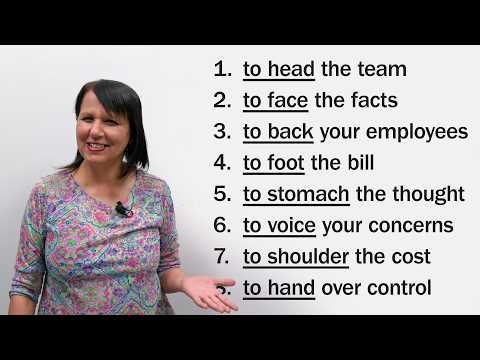
Susan posted on 2026/03/23Did you know you can use body parts like 'head' and 'hand' as verbs in English? This fun lesson shows you exactly how to use these common body nouns in everyday and business situations, boosting your vocabulary and making your English sound more natural!
Learn this video on the APP!
The VoiceTube App has more in-depth practice for videos!