
administration
US / ædˌmɪnɪˈstreʃən/
UK /ədˌmɪnɪˈstreɪʃn/
- Uncountable Noun
- Act of giving e.g. medicine to a patient
- The work of running something, e.g. a business
B1TOEICMoreamendment
US /əˈmɛndmənt/
UK /əˈmendmənt/
- Noun (Countable/Uncountable)
- A change, addition, or improvement to something
B1Moreanalysis
US /əˈnælɪsɪs/
UK /əˈnæləsɪs/
- Uncountable Noun
- Careful study to better understand something
B1TOEICMoreangle
US /ˈæŋɡəl/
UK /ˈæŋgl/
- Noun
- Place where two lines or surfaces meet
B1TOEICMoreappear at
US
UK
- Phrasal Verb
- To be present in a specific place or event.
B1Moreapproach
US /əˈprəʊtʃ/
UK /ə'prəʊtʃ/
- Verb (Transitive/Intransitive)
- To get close to reaching something or somewhere
- To request someone to do something specific
- Noun (Countable/Uncountable)
- Means of reaching a place, often a road or path
- Request of someone with a specific goal in mind
A2TOEICMoreat large
US /æt lɑrdʒ/
UK /æt lɑ:dʒ/
- Adjective
- (of a person or animal, especially one that is dangerous) not captured; free.
A2Moreat least
US /æt list/
UK /æt li:st/
- Adverb
- As a minimum
- Not less than
- Phrase
- No less than; at the minimum
- Used to indicate that something is positive in a bad situation.
C2Moreat odds
US /æt ɑdz/
UK /æt ɔdz/
- Phrase
- In a state of conflict or disagreement
- Adjective
- In a state of disagreement or conflict.
- Inconsistent or incompatible.
B1Morebackpack
US /ˈbækˌpæk/
UK /'bækpæk/
- Countable Noun
- Bag carried by a strap on your back or shoulder
- Intransitive Verb
- To travel very lightly carrying your things
B2Morebeanie
US /ˈbini/
UK /ˈbi:ni/
- Countable Noun
- Small round close fitting hat
C2Morebeing with
US
UK
- Phrasal Verb
- Accompanying someone; being in someone's presence.
- Supporting someone's opinion or cause.
- Verb (Transitive/Intransitive)
- Accompanying someone; spending time with someone.
- Supporting someone; agreeing with someone.
A1Moreblare
US /bler/
UK /bleə(r)/
- Intransitive Verb
- (Of a radio, etc.) to make a very loud sound
C2Moreborder
US /ˈbɔrdɚ/
UK /'bɔ:də(r)/
- Verb (Transitive/Intransitive)
- To be right next to another country or state
- To form the edge of something
- Noun
- Outer part or edge of something
- Line separating one country, state from another
A2TOEICMorebreakdown
US /ˈbrekˌdaʊn/
UK /'breɪkdaʊn/
- Noun
- When normal activity or behavior stops
B1TOEICMorecitizen
US /ˈsɪtɪzən/
UK /'sɪtɪzn/
- Noun (Countable/Uncountable)
- Person who belongs to and has rights in a country
- A person who is a member of a community.
B1Morecollapse
US /kəˈlæps/
UK /kə'læps/
- Verb (Transitive/Intransitive)
- To fold (e.g. a stroller) down to make it smaller
- To suddenly fall down or break apart into pieces
- Noun
- The sudden failure of a structure or system.
- The sudden failure of a bodily organ or function.
B1Morecourt
US /kɔrt, kort/
UK /kɔ:t/
- Transitive Verb
- To act in a way to shows you wish to marry someone
- To encourage dangerous behavior
- Noun
- Place king or queen meet people, makes laws etc.
- Place where legal cases are decided
A2TOEICMoredetain
US /dɪˈten/
UK /dɪ'teɪn/
- Transitive Verb
- To keep someone somewhere, e.g. in jail
B2Moredisarm
US /dɪsˈɑ:rm/
UK /dɪsˈɑ:m/
- Transitive Verb
- To take away the weapons of
B2Moreescalate
US /ˈɛskəˌlet/
UK /ˈeskəleɪt/
- Verb (Transitive/Intransitive)
- To increase in size, intensity, or scope
- To become much worse or more severe
B2Moreessentially
US /ɪˈsenʃəli/
UK /ɪˈsenʃəli/
- Adverb
- Basically; (said when stating the basic facts)
- Used to emphasize the basic truth or fact of a situation.
A2Morefederal
US /ˈfɛdərəl, ˈfɛdrəl/
UK /'fedərəl/
- Adjective
- Consisting of several united states
- Relating to a system of government in which power is divided between a central authority and constituent political units.
- Proper Noun
- The central banking system of the United States.
B1Morefirearm
US /ˈfaɪrˌɑrm/
UK /ˈfaɪərɑ:m/
- Countable Noun
- Small weapon that you fire
B2Morefirst shot
US
UK
- Noun
- The first attempt at doing something.
- The first opportunity to do something.
footage
US /ˈfʊtɪdʒ/
UK /ˈfʊtɪdʒ/
- Uncountable Noun
- A certain amount of film or video of something
- The length or amount of something measured in feet.
B2Moreframe
US /frem/
UK /freɪm/
- Transitive Verb
- To make a person that is not guilty appear guilty
- To put say or write something in a careful way
- Noun (Countable/Uncountable)
- Structure that holds a picture or photo
- A person's body shape determined by their skeleton
A2TOEICMoregoing on
US /ˈɡoɪŋ ɑn/
UK /ˈgəʊɪŋ ɔn/
- Phrasal Verb
- To continue doing something
- To happen (usually negative)
A1Morehave it both ways
US /hæv ɪt boʊθ weɪz/
UK /hæv ɪt bəʊθ weɪz/
- other
- To try to enjoy two opposing things at the same time.
B2Morehave to
US /hæv tu/
UK /ˈhæv tə/
- Auxiliary Verb
- Must do
A1Moreimmigration
US /ˌɪmɪˈɡreɪʃn/
UK /ˌɪmɪˈgreɪʃn/
- Uncountable Noun
- Process of moving your home to a new country
- The number of people immigrating to a country during a specific period.
B1Morein charge
US /ɪn tʃɑrdʒ/
UK /in tʃɑ:dʒ/
- Adverb
- To be responsible for
A1Morein fact
US /ɪn fækt/
UK /in fækt/
- Adverb
- Used to emphasize the truth of a statement, especially one that contrasts with or contradicts something else.
- Used to introduce a more detailed or surprising piece of information.
- Phrase
- Used to emphasize the truth of a statement, especially one that is surprising or contrary to what might be expected.
C1Morein itself
US /ɪn ɪtˈsɛlf/
UK /in itˈself/
- Phrase
- Considered alone or without reference to anything else; intrinsically.
- Essentially; by its very nature.
in particular
US /ɪn pɚˈtɪkjəlɚ/
UK /in pəˈtikjulə/
- Phrase
- Specifically; especially.
- Detailed or precise.
A1Morein the black
US /ɪn ði blæk/
UK /in ðə blæk/
- Adjective
- Operating with a profit; not in debt.
- Phrase
- Having a positive balance; out of debt.
A1Moreinstead of
US /ɪnˈstɛd ʌv/
UK /inˈsted ɔv/
- Preposition
- When one thing is replaced by another
- Adverb
- As a substitute or alternative.
A1Moreinteract
US /ˌɪntɚˈækt/
UK /ˌɪntər'ækt/
- Intransitive Verb
- To talk or do things with each other
A2Moreinvestigation
US /ɪnˌvɛstɪˈɡeʃən/
UK /ɪnˌvestɪ'ɡeɪʃn/
- Noun (Countable/Uncountable)
- Search for information about something
B1Moreinvolve
US /ɪnˈvɑlv/
UK /ɪn'vɒlv/
- Transitive Verb
- To have or be included as a part of something
- To cause (a person or group) to take part in an event or activity.
A2TOEICMorejump in
US
UK
- Phrasal Verb
- To enter a vehicle quickly.
- To interrupt a conversation.
lead up to
US /lid ʌp tu/
UK /li:d ʌp tu:/
- Phrasal Verb
- To prepare the way for; to serve as an introduction to.
A1Morelook at
US /lʊk æt/
UK /luk æt/
- Phrasal Verb
- To use your eyes to focus on something
- To focus your eyes on something carefully
A1Moremake of
US /mek ʌv/
UK /meik ɔv/
- Phrasal Verb
- To understand or have an opinion about something
- To create or produce something from a particular material
A1Moremultiple
US /ˈmʌltəpəl/
UK /ˈmʌltɪpl/
- Adjective
- Having or involving more than one of something
- Having or involving several parts, elements, or members.
- Countable Noun
- Number produced by multiplying a smaller number
- A number of identical circuit elements connected in parallel or series.
B1Moreodd
US /ɑd/
UK /ɒd/
- Adjective
- Being unmatched with someone or something
- Being a number not able to be divided by two
A2Moreoff of
US /ɔf ʌv/
UK /ɔf ɔv/
- Preposition
- From a position on something; down from.
A1Moreon the ground
US
UK
- Phrase
- Located on the surface of the earth.
- Present and available in a particular place, especially to deal with a situation.
patrol
US /pəˈtrol/
UK /pə'trəʊl/
- Noun (Countable/Uncountable)
- Person or group who checks an area is safe
- Verb (Transitive/Intransitive)
- To survey an area to maintain safety and order
B1Morepile
US /paɪl/
UK /paɪl/
- Noun (Countable/Uncountable)
- Large amount of something
- Group of things one on top of another
- Verb (Transitive/Intransitive)
- (E.g. of problems) to increase; get more or worse
- To place things on top of each other; to heap up.
B1TOEICMorepile on
US
UK
- Verb (Transitive/Intransitive)
- To add a large amount of something.
- To increase or accumulate rapidly.
- Phrasal Verb
- To criticize someone severely, especially when they are already in a difficult situation.
- To add a lot of something, especially food.
A1Morepose
US /poʊz/
UK /pəʊz/
- Verb (Transitive/Intransitive)
- To be or exist as (a problem, threat etc.)
- To suggest an idea, question or solution
- Noun
- False behavior to gain respect or liking
B1TOEICMorepush back
US /pʊʃ bæk/
UK /puʃ bæk/
- Phrasal Verb
- To force someone to withdraw or retreat
- Verb (Transitive/Intransitive)
- To resist or oppose something.
- To move something to a later time or date; to postpone.
A1Morerather than
US
UK
- Adverb
- More exactly; more correctly
- Preferably; instead
- Preposition
- Instead of
A1Moreresist
US /rɪˈzɪst/
UK /rɪ'zɪst/
- Verb (Transitive/Intransitive)
- To not be affected by e.g. a force or an effect
- To fight or prevent something from happening
A2TOEICMorering out
US /rɪŋ aʊt/
UK /riŋ aut/
- Phrasal Verb
- To sound loudly and clearly.
- To shout or call out loudly.
A2Morescatter
US /ˈskætɚ/
UK /'skætə(r)/
- Verb (Transitive/Intransitive)
- To throw or move into various different directions
- Transitive Verb
- To place or leave things in various places
B2Morescene
US /sin/
UK /si:n/
- Noun
- Incident where someone behaves angrily, badly
- View that looks like a picture
A2TOEICMoresecurity
US /sɪˈkjʊrɪti/sə'kjurətɪ/
UK /sɪ'kjʊərətɪ/
- Noun
- Department in a company in charge of protection
- Financial document, like stocks, bonds and notes
A2TOEICMoreslander
US /ˈslændə(r)/
UK /ˈslɑ:ndə(r)/
- Uncountable Noun
- Words falsely spoken that damage a reputation
- Transitive Verb
- To say things to try to damage someone reputation
C1TOEICMorestatement
US / ˈstetmənt/
UK /ˈsteɪtmənt/
- Noun (Countable/Uncountable)
- Record of activity in a bank account over time
- Act or process of saying something formally
A2TOEICMorestrike
US /straɪk/
UK /straɪk/
- Transitive Verb
- To hit something
- To remove or erase.
- Noun (Countable/Uncountable)
- A punch or hit
- Fact of not hitting the ball when playing baseball
A2TOEICMoresuspect
US /səˈspɛkt/
UK /sə'spekt/
- Noun
- Person thought to have committed a crime
- Transitive Verb
- To consider someone is the one guilty of a crime
- To doubt or lack trust
A2TOEICMoretalking about
US
UK
- Phrasal Verb
- To discuss a particular topic.
- To be constantly mentioning or bringing up a subject.
A1Moreto do with
US
UK
- Phrasal Verb
- To be about something; concern
A1Moreunwind
US
UK
- Transitive Verb
- To reverse something that has been twisted/turned
B2Morevehicle
US /ˈvi:hɪkl/
UK /ˈvi:əkl/
- Noun (Countable/Uncountable)
- Machine (such as a car) used to carry things
- Means of expressing, showing, or achieving
A2TOEICMoreveteran
US /ˈvɛtərən/
UK /'vetərən/
- Noun (Countable/Uncountable)
- Person experienced through long service
- A person who has served in the military, especially during a war.
- Adjective
- Experienced through long service or practice
B2Morevictim
US /ˈvɪktɪm/
UK /ˈvɪktɪm/
- Noun
- Person/thing affected by an unpleasant event
- Person feeling helpless in times of bad luck
B1TOEICMoreworrisome
US /ˈwɚrisəm, ˈwʌr-/
UK /ˈwʌrisəm/
- Adjective
- Not reassuring; tending to cause anxiety
C2More
Vocabulary
- at least: As a minimum
- going on: To continue doing something
- appear at: To be present in a specific place or event.
- at odds: In a state of conflict or disagreement
- lead up to: To prepare the way for; to serve as an introduction to.
- instead of: When one thing is replaced by another
- off of: From a position on something; down from.
- on the ground: Located on the surface of the earth.
- ring out: To sound loudly and clearly.
- first shot: The first attempt at doing something.
- in the black: Operating with a profit; not in debt.
- being with: Accompanying someone; being in someone's presence.
- at large: (of a person or animal, especially one that is dangerous) not captured; free.
- in particular: Specifically; especially.
- have to: Must do
- look at: To use your eyes to focus on something
- in fact: Used to emphasize the truth of a statement, especially one that contrasts with or contradicts something else.
- pile on: To add a large amount of something.
- in charge: To be responsible for
- to do with: To be about something; concern
- jump in: To enter a vehicle quickly.
- make of: To understand or have an opinion about something
- have it both ways: To try to enjoy two opposing things at the same time.
- talking about: To discuss a particular topic.
- rather than: More exactly; more correctly
- push back: To force someone to withdraw or retreat
- in itself: Considered alone or without reference to anything else; intrinsically.
- sort: To organize things by putting them into groups
- essentially: Basically; (said when stating the basic facts)
- approach: To get close to reaching something or somewhere
- multiple: Having or involving more than one of something
- situation: Place, position or area that something is in
- scene: Incident where someone behaves angrily, badly
- strike: To hit something
- interact: To talk or do things with each other
- odd: Being unmatched with someone or something
- statement: Record of activity in a bank account over time
- victim: Person/thing affected by an unpleasant event
- collapse: To fold (e.g. a stroller) down to make it smaller
- pile: Large amount of something
- draw: To attract attention to someone or something
- suspect: Person thought to have committed a crime
- resist: To not be affected by e.g. a force or an effect
- court: To act in a way to shows you wish to marry someone
- state: Region within a country, with its own government
- frame: To make a person that is not guilty appear guilty
- federal: Consisting of several united states
- veteran: Person experienced through long service
- security: Department in a company in charge of protection
- footage: A certain amount of film or video of something
- involve: To have or be included as a part of something
- administration: Act of giving e.g. medicine to a patient
- create: To make, cause, or bring into existence
- ground: To break (coffee, etc.) into tiny bits with machine
- vehicle: Machine (such as a car) used to carry things
- stage: To organize an event to gain public interest
- moment: Very short or brief period of time
- escalate: To increase in size, intensity, or scope
- analysis: Careful study to better understand something
- investigation: Search for information about something
- border: To be right next to another country or state
- unwind: To reverse something that has been twisted/turned
- bring: To take or go with someone to a place
- point: An item to be discussed
- citizen: Person who belongs to and has rights in a country
- scatter: To throw or move into various different directions
- amendment: A change, addition, or improvement to something
- breakdown: When normal activity or behavior stops
- person: Man, woman or child
- pose: To be or exist as (a problem, threat etc.)
- immigration: Process of moving your home to a new country
- patrol: Person or group who checks an area is safe
- interesting: Taking your attention; making you want to know
- problem: Something difficult to deal with or causes trouble
- angle: Place where two lines or surfaces meet
- hear: To be aware of sound; to perceive with the ear
- people: Persons sharing culture, country, background, etc.
- detain: To keep someone somewhere, e.g. in jail
- backpack: Bag carried by a strap on your back or shoulder
- disarm: To take away the weapons of
- slander: Words falsely spoken that damage a reputation
- beanie: Small round close fitting hat
- firearm: Small weapon that you fire
- worrisome: Not reassuring; tending to cause anxiety
- blare: (Of a radio, etc.) to make a very loud sound
Get the full experience in the app
Learn anywhere with detailed sentence and usage analysis
01:03
She took a brave step forward, leaving behind her comfort zone to chase her dreams.
Vocabulary
- brave
adj. Having courage
- comfort zone
phr. A familiar situation where one feels safe
Explanation
a brave step is a noun phrase, where brave is an adjective modifying the noun step, meaning "a courageous step".
forward is an adverb modifying step, meaning "ahead".
The whole phrase serves as the object, answering the "what" of took (verb) — she took a brave step forward.
Get the full experience in the app
Look up words anytime with pronunciation, part of speech, and usage
brave
US/brev/
UK/breɪv/
adj.Brave
v.t.To bravely face
A2 Elementary
Get the full experience in the app
Practice speaking anytime and get instant pronunciation feedback
Try this speaking exercise.
Try practicing with this sentence.
80
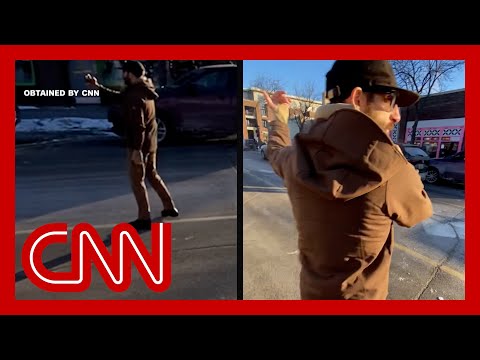
What videos reveal about the lead-up to Alex Pretti’s killing
0
林宜悉 posted on 2026/01/26Dive into the intense events leading up to Alex Pretti's killing with this CNN analysis! You'll get a deep look at cell phone footage from multiple angles, helping you understand complex topics like immigration enforcement and use of force while picking up some advanced vocabulary.
Learn this video on the APP!
The VoiceTube App has more in-depth practice for videos!