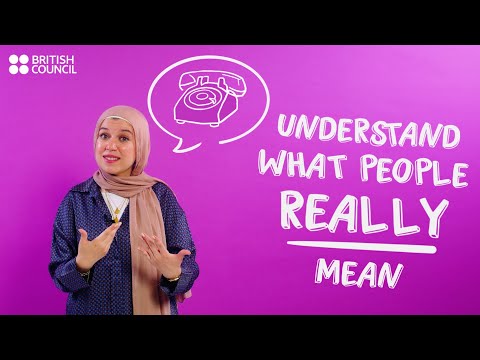

between the lines
US
UK
- Phrase
- To understand the hidden meaning or intention in something.
A1Morechilly
US /ˈtʃɪli/
UK /'tʃɪlɪ/
- Adjective
- Slightly cold
- Cold; unfeeling; lacking in warmth
B1Moreclarification
US /ˌklærəfəˈkeʃən/
UK /ˌklærəfɪ'keɪʃn/
- Uncountable Noun
- Act or process of making a liquid clear
- Act of explaining to make it easier to understand
B1Morecome from
US /kʌm frʌm/
UK /kʌm frɔm/
- Phrasal Verb
- To have as your native country or city
A1Morecommunication
US /kəˌmjunɪˈkeʃən/
UK /kəˌmju:nɪ'keɪʃn/
- Noun (Countable/Uncountable)
- Talking to people; giving information to people
- The process of conveying information, ideas, or feelings through language or other means.
A2Morecommunicator
US /kəˈmjunɪˌketɚ/
UK /kəˈmju:nɪkeɪtə(r)/
- Noun
- Person expressing ideas, thoughts and feelings
B1Morecondition
US /kənˈdɪʃən/
UK /kənˈdɪʃn/
- Transitive Verb
- To improve something to make it better
- To cause to behave automatically in a certain way
- Noun (Countable/Uncountable)
- Disease or other medical problem
- The state of living you are in, e.g. good health
A2Moreconfuse
US /kənˈfjuz/
UK /kənˈfju:z/
- Transitive Verb
- To make something unclear or hard to understand
- To mistake one person or thing for another.
A2Moreconversation
US /ˌkɑnvɚˈseʃən/
UK /ˌkɒnvəˈseɪʃn/
- Uncountable Noun
- Talking with other people; discussion or chat
- General communication or interaction.
A2Morecultural
US /ˈkʌltʃərəl/
UK /ˈkʌltʃərəl/
- Adjective
- Of a particular society's customs and beliefs
- Of arts, music, literature, theater
A2Moreculture
US /ˈkʌltʃɚ/
UK /'kʌltʃə(r)/
- Noun (Countable/Uncountable)
- Beliefs and customs of a particular group
- The customs, beliefs, art, and all the other things that a group of people share and consider important.
- Transitive Verb
- To grow cells, tissues, bacteria, etc. in a controlled environment.
A2Moredecode
US /ˌdi:ˈkoʊd/
UK /ˌdi:ˈkəʊd/
- Transitive Verb
- To translate from code into the plain text
B2Moredirect
US /dɪˈrɛkt, daɪ-/
UK /də'rekt/
- Transitive Verb
- To tell someone in a very clear way to do something
- To show the way by conducting or leading
- Adverb
- Coming straight from something
A2TOEICMoredive
US /daɪv/
UK /daɪv/
- Noun (Countable/Uncountable)
- Restaurant, bar or club with a bad reputation
- Rapid fall through air
- Intransitive Verb
- To swim deep under water with an air supply
- To rapid fall through air
B1Moredive in
US
UK
- Phrasal Verb
- To start doing something with a lot of enthusiasm.
- Intransitive Verb
- To jump into water headfirst.
A1Moreface to face
US /fes tu fes/
UK /feis tu: feis/
- Adverb
- (Meeting) while looking at someone
A1Morefor example
US
UK
- Phrase
- As an illustration or instance.
implication
US /ˌɪmplɪˈkeʃən/
UK /ˌɪmplɪ'keɪʃn/
- Noun (Countable/Uncountable)
- Possible effects, results from an action or event
- A conclusion that can be drawn from something although it is not explicitly stated.
B2TOEICMorein mind
US /ɪn maɪnd/
UK /in maind/
- Phrase
- Being aware of or considering something.
- To remember or consider something.
A2Morein person
US /ɪn ˈpɜːrsn/
UK /in ˈpɜːsn/
- Adverb
- Physically present; not by proxy or remotely.
- Face-to-face; not through electronic communication.
A1Moreindirect
US /ˌɪndɪˈrɛkt, -daɪ-/
UK /ˌɪndəˈrekt/
- Adjective
- Being not directly connected to or caused by
- Having a path that is not straight or direct
B1Morejacket
US /ˈdʒækɪt/
UK /'dʒækɪt/
- Countable Noun
- Light, thin coat worn over a shirt or top
- Outer covering that fits over and protects it
A2Morelook at
US /lʊk æt/
UK /luk æt/
- Phrasal Verb
- To use your eyes to focus on something
- To focus your eyes on something carefully
A1Moremessage
US /ˈmɛsɪdʒ/
UK /'mesɪdʒ/
- Noun (Countable/Uncountable)
- Main idea or theme in a story, book, or film
- Piece of information that is told/given to someone
- Transitive Verb
- To communicate using text
A2TOEICMoremini
US /ˈmɪni/
UK /'mɪnɪ/
- Noun
- Small British car
- A very short skirt
- Prefix
- Small
B1Moreon the phone
US
UK
- Phrase
- Talking on the telephone.
- Adjective
- Using a phone, especially a mobile phone.
A1Morephone
US /foʊn/
UK /fəʊn/
- Verb (Transitive/Intransitive)
- To talk to someone using a telephone
- Noun
- Machine used to talk to someone who is far away
A2TOEICMorephysically
US /ˈfɪzɪkəlɪ/
UK /'fɪzɪklɪ/
- Adverb
- In a manner related to the body
- Concerning reality or the laws of nature
A2Moreread between the lines
US /rid bɪˈtwin ðə laɪnz/
UK /ri:d bɪˈtwi:n ðə laɪnz/
- other
- To understand the hidden or implied meaning not explicitly stated.
B2Morerelationship
US /rɪˈleʃənˌʃɪp/
UK /rɪˈleɪʃnʃɪp/
- Noun (Countable/Uncountable)
- Connection between two or more people or things
- Way people interact or live with each other
A2TOEICMorescenario
US /səˈner.i.oʊ/
UK /sɪˈnɑː.ri.əʊ/
- Noun
- An imagined sequence of events in a plan/project
B1Moreserene
US /səˈrin/
UK /səˈri:n/
- Adjective
- Very calm or peaceful
B2Moreshare
US /ʃɛr/
UK /ʃeə(r)/
- Noun (Countable/Uncountable)
- Part-ownership in a property, business or company
- Part of a company you own, shown by a certificate
- Transitive Verb
- To divide something between two or more people
- To allow others to use your things equally
A2TOEICMorespeak to
US /spik tu/
UK /spi:k tu:/
- Verb (Transitive/Intransitive)
- To address or communicate with someone.
- To indicate or suggest something; to be relevant to.
A1Morestruggle
US /ˈstrʌɡəl/
UK /'strʌɡl/
- Verb (Transitive/Intransitive)
- To try very hard to do something difficult
- To fight or struggle violently
- Noun (Countable/Uncountable)
- Strong efforts made to do something difficult
- A difficult or challenging situation or task
A2Morestuffy
US /ˈstʌfi/
UK /'stʌfɪ/
- Adjective
- (Nose) blocked
- Old fashioned; sticking to the rules; too formal
C1Moretip
US /tɪp/
UK /tɪp/
- Transitive Verb
- To pour or move something from a place, container
- To give extra money for good service
- Noun
- End point of e.g. a pencil or finger
- Extra money given for good service
A2Moreused to
US /juzd tu/
UK /ˈju:st tə/
- Adjective
- Did regularly before, but don't do now
- Auxiliary Verb
- Have done before, but do not do now
A1More
Vocabulary
- on the phone: Talking on the telephone.
- look at: To use your eyes to focus on something
- between the lines: To understand the hidden meaning or intention in something.
- read between the lines: To understand the hidden or implied meaning not explicitly stated.
- dive in: To start doing something with a lot of enthusiasm.
- face to face: (Meeting) while looking at someone
- in person: Physically present; not by proxy or remotely.
- speak to: To address or communicate with someone.
- for example: As an illustration or instance.
- used to: Did regularly before, but don't do now
- come from: To have as your native country or city
- in mind: Being aware of or considering something.
- struggle: To try very hard to do something difficult
- scenario: An imagined sequence of events in a plan/project
- conversation: Talking with other people; discussion or chat
- expect: To believe something is probably going to happen
- sentence: (Of a judge) to decide the punishment of
- imagine: To think creatively about; form mental picture of
- relationship: Connection between two or more people or things
- bit: Device put in a horse's mouth to control it
- mean: Average of a set of numbers
- condition: To improve something to make it better
- tip: To pour or move something from a place, container
- state: Region within a country, with its own government
- direct: To tell someone in a very clear way to do something
- physically: In a manner related to the body
- dive: Restaurant, bar or club with a bad reputation
- mind: To be bothered or upset by something
- text: To send a message by phone or other device
- secret: Kept hidden from others; Known only to a few people
- culture: Beliefs and customs of a particular group
- communication: Talking to people; giving information to people
- lot: What happens to a person in life from chance; fate
- learn: To get knowledge or skills by study or experience
- serene: Very calm or peaceful
- prefer: To like something better than something else
- clarification: Act or process of making a liquid clear
- language: Words or signs used to communicate messages
- implication: Possible effects, results from an action or event
- afraid: Worried that something bad will happen; scared
- turn: To become (a particular age)
- share: Part-ownership in a property, business or company
- cultural: Of a particular society's customs and beliefs
- confuse: To make something unclear or hard to understand
- chilly: Slightly cold
- decode: To translate from code into the plain text
- message: Main idea or theme in a story, book, or film
- stuffy: (Nose) blocked
- indirect: Being not directly connected to or caused by
- phone: To talk to someone using a telephone
- communicator: Person expressing ideas, thoughts and feelings
- jacket: Light, thin coat worn over a shirt or top
- mini: Small British car
Get the full experience in the app
Learn anywhere with detailed sentence and usage analysis
01:03
She took a brave step forward, leaving behind her comfort zone to chase her dreams.
Vocabulary
- brave
adj. Having courage
- comfort zone
phr. A familiar situation where one feels safe
Explanation
a brave step is a noun phrase, where brave is an adjective modifying the noun step, meaning "a courageous step".
forward is an adverb modifying step, meaning "ahead".
The whole phrase serves as the object, answering the "what" of took (verb) — she took a brave step forward.
Get the full experience in the app
Look up words anytime with pronunciation, part of speech, and usage
brave
US/brev/
UK/breɪv/
adj.Brave
v.t.To bravely face
A2 Elementary
Get the full experience in the app
Practice speaking anytime and get instant pronunciation feedback
Try this speaking exercise.
Try practicing with this sentence.
80
How to read between the lines in English – a Mini English Lesson
0
Minjane posted on 2026/01/25Ever feel like you're missing the real message in conversations? This video breaks down how to 'read between the lines' in English, a super useful skill for understanding what people *really* mean! You'll learn practical tips for decoding context, relationships, and cultural cues, so you can communicate with more confidence.
Learn this video on the APP!
The VoiceTube App has more in-depth practice for videos!