Vocabulary
- warm up: To gently exercise muscles before doing sport
- for example: As an illustration or instance.
- in particular: Specifically; especially.
- hard to say: Difficult to know or predict; uncertain.
- in terms of
- have to: Must do
- got to: To arrive at some place
- go back to: To return to a starting point
- level with: To be honest and straightforward with someone; to tell someone the truth.
- discipline: Instruction and practice to teach obedience
- approach: To get close to reaching something or somewhere
- process: To organize and use data in a computer
- context: Set of facts surrounding a person or event
- ridiculous: Funny or foolish; deserving to be laughed at
- tough: (Of food) difficult to chew or bite through
- vital: Needed to support life; essential
- trait: A particular characteristic that can produce a particular type of behavior
- strategy: Careful plan or method for achieving a goal
- situation: Place, position or area that something is in
- repetition: When something occurs again
- impact: A striking effect or result to hit with force
- therapy: Treatment to help cure an illness
- aware: Knowing or feeling that something exists
- expect: To believe something is probably going to happen
- achieve: To succeed in doing good, usually by working hard
- capable: Being able to do something very well; proficient
- research: To study in order to discover new ideas and facts
- humble: Being lower in quality or status
- cue: Word or action in a play to tell an actor to speak
- valuable: Being useful or important
- therapist: Person skilled in a particular type of therapy
- huge: Very very large
- swear: To say bad or impolite words to someone
- apply: To spread a substance or liquid over a surface
- value: Importance you attach to something
- literacy: Fact of having knowledge of a particular subject
- interest: Best or most advantageous thing for someone
- respond: To answer something or someone
- agency: Business that provides some service for others
- autism: Disorder that prevents normal communication
- strange: Unusual or odd; surprising because unexpected
- suggest: To mention something that could be done; propose
- development: Act or process of growing bigger or more advanced
- trace: To make an outline to determine a shape
- verbal: Concerning verbs
- diagnose: To determine the cause of an illness or problem
- lot: What happens to a person in life from chance; fate
- important: Having power or authority
- determination: Will to achieve a goal despite difficulties
- kind: In a caring and helpful manner
- stand: To be a candidate in an election
- great: Very good; better than before
- front: Behavior not showing a person's true feelings
- hard: Difficult to do; difficult to understand
- instill: To give a quality by example or teaching
- think: To have an idea about something without certainty
- autistic: Suffering from autism
- feather: One of the many light soft things on a bird's body
- cusp: Pointed part where two curves meet, e.g. in arches
- cognitively: With regard to cognition
- illiterate: Having no knowledge of a particular subject
- normalize: To make something normal or regular
- phd: Advanced university degree; Doctor of Philosophy
- phonic: Of speech sounds, e.g. when teaching reading
Get the full experience in the app
Learn anywhere with detailed sentence and usage analysis
01:03
She took a brave step forward, leaving behind her comfort zone to chase her dreams.
Vocabulary
- brave
adj. Having courage
- comfort zone
phr. A familiar situation where one feels safe
Explanation
a brave step is a noun phrase, where brave is an adjective modifying the noun step, meaning "a courageous step".
forward is an adverb modifying step, meaning "ahead".
The whole phrase serves as the object, answering the "what" of took (verb) — she took a brave step forward.
Get the full experience in the app
Look up words anytime with pronunciation, part of speech, and usage
brave
US/brev/
UK/breɪv/
adj.Brave
v.t.To bravely face
A2 Elementary
Get the full experience in the app
Practice speaking anytime and get instant pronunciation feedback
Try this speaking exercise.
Try practicing with this sentence.
80
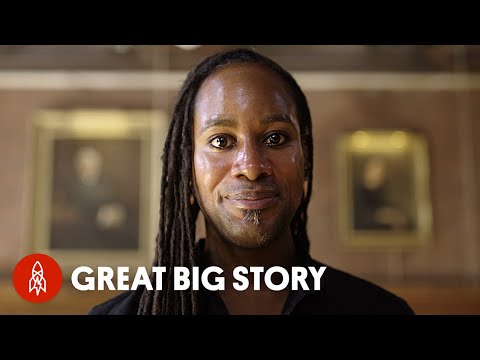
The Cambridge Professor Who Learned To Read At 18
0
林宜悉 posted on 2025/11/20Can you imagine learning to read for the first time at 18? This incredible story of Cambridge Professor Jason Arday, who overcame autism and developmental delays, is truly inspiring! You'll pick up advanced vocabulary and gain cultural depth while hearing about his amazing PhD journey and the power of mentorship.
Learn this video on the APP!
The VoiceTube App has more in-depth practice for videos!