Vocabulary
- turn to: To go to someone for help, advice, or information.
- blurt out: To say something suddenly and without thinking, often revealing something that should have been kept secret.
- in real life: In the physical world; not online or in a fictional setting.
- in reality: Actually; in fact; truly.
- make it worse: To aggravate a situation; to make something bad even worse.
- in areas: Located or occurring within specific regions or locations.
- instead of: When one thing is replaced by another
- grow out of: To develop or originate from something.
- on to: Toward something; forward
- go on: To continue doing something
- lead to: To result in some action
- such as: For example; like
- neurodegenerative diseases: Diseases characterized by the progressive degeneration and death of nerve cells in the brain and spinal cord.
- wear off: To disappear gradually
- no matter: Regardless of; it does not matter.
- awkward: Lacking smooth movement
- struggle: To try very hard to do something difficult
- rhythm: Pattern of events, motions, or changes
- deserve: To be worthy of, e.g. getting praise or attention
- matter: To be of great importance; to count
- impact: A striking effect or result to hit with force
- disorder: State of confusion or a lack of organization
- flip: To turn your body in the air, as in gymnastics
- common: Area in a city or town that is open to everyone
- intelligence: Collection of secret information about something
- confidence: Feeling that you can do well at something
- express: To send something by fast mail
- stress: To emphasize one or more parts of a word, sentence
- excessive: Beyond what is usual or proper
- imagine: To think creatively about; form mental picture of
- dementia: Illness characterized by loss of memory
- myth: Popular belief that is false, unsupported by fact
- stroke: When blood cannot get to brain, causing damage
- rehearse: To practice e.g. play, speech before a performance
- disrupt: To cause a disturbance in an activity in progress
- numb: Unable to feel a body part due to cold or illness
- sluggish: Slow; moving like a slug
- tongue: Long, thin part of (e.g. shoe under the laces)
- brain: To strike someone forcefully on the head
- occasionally: Not very often; sometimes; seldom
- genetic: Of, relating to, or controlled by genes
- judge: Person who decides on the results of a contest
- stumble: Failing to do something well, e.g. giving a speech
- fluency: Ability to do something well and with ease
- trap: Device used for catching animals
- interrupt: To stop something from happening for a while
- value: Importance you attach to something
- resonate: (Of ideas) to have a big impact for a long time
- grant: To admit an opinion is true but not fully agreeing
- coordinate: To match styles or colors that go well together
- stem: Long thin central part of a plant, bearing leaves
- syllable: Part of a word containing a vowel
- clutter: To fill with disorderly mess of things
- neurological: Concerning, used in or practicing neurology
- clarity: Being easy to be seen through, heard or understood
- inconsistent: Not tying together logically or with the facts
- alcohol: A colorless liquid that can catch fire (C2H5OH)
- mystery: Quality of being strange and not understood
- tease: To purposefully bother an animal
- mild: Gentle in nature or behavior
- stall: Walled area in a barn where a farm animal is kept
- altogether: All things considered
- persistence: Determination to keep doing even if it is hard
- sound: Sensible, dependable and reliable
- control: A device designed to operate a machine
- cerebral: Having or concerning ideas rather than emotions
- language: Words or signs used to communicate messages
- patience: Ability to wait without being annoyed
- onset: When something, e.g. an illness, starts; beginning
- blur: To make something unclear or out of focus
- head: To hit a ball with your head in a game
- person: Man, woman or child
- fast: In a way that is difficult to move or change
- diaphragm: Muscular membrane separating upper/lower organs
- stutter: To speak hesitatingly with repeated sounds
- time: Speed at which music is played; tempo
- hear: To be aware of sound; to perceive with the ear
- people: Persons sharing culture, country, background, etc.
- tangle: To involve in troubles that are hard to escape
- sclerosis: (Medical) process in which a soft tissue becomes hard
- aphasia: Reduced language ability due to stroke, etc.
- misplace: To put something in the wrong place
- sh: Sound people make to make someone be quiet
- ch: Abbreviation for Chapter
Get the full experience in the app
Learn anywhere with detailed sentence and usage analysis
01:03
She took a brave step forward, leaving behind her comfort zone to chase her dreams.
Vocabulary
- brave
adj. Having courage
- comfort zone
phr. A familiar situation where one feels safe
Explanation
a brave step is a noun phrase, where brave is an adjective modifying the noun step, meaning "a courageous step".
forward is an adverb modifying step, meaning "ahead".
The whole phrase serves as the object, answering the "what" of took (verb) — she took a brave step forward.
Get the full experience in the app
Look up words anytime with pronunciation, part of speech, and usage
brave
US/brev/
UK/breɪv/
adj.Brave
v.t.To bravely face
A2 Elementary
Get the full experience in the app
Practice speaking anytime and get instant pronunciation feedback
Try this speaking exercise.
Try practicing with this sentence.
80
0
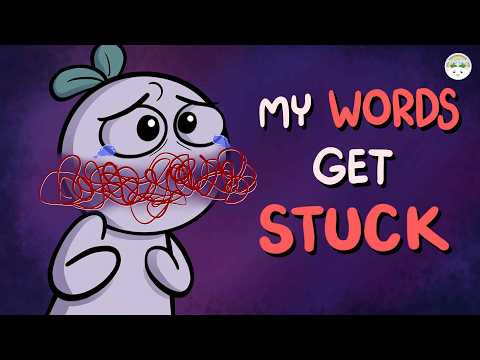
林宜悉 posted on 2025/11/01Ever wondered about the different ways people communicate? This video dives into 6 types of speech impediments, like stuttering and lisp, giving you practical insights and boosting your vocabulary with terms like 'apraxia' and 'aphasia'. It's a fantastic way to build communication confidence and understand others better!
Learn this video on the APP!
The VoiceTube App has more in-depth practice for videos!