
ad
US /æd/
UK /æd/
- Noun (Countable/Uncountable)
- Public notice or advertisement
C2TOEICMorecelebrate
US /ˈsɛləˌbret/
UK /'selɪbreɪt/
- Verb (Transitive/Intransitive)
- To observe an event or occasion, e.g. a birthday
- To lead or participate in a religious ceremony
A2Moreconformity
US /kənˈfɔ:rməti/
UK /kənˈfɔ:məti/
- Uncountable Noun
- Acting according to certain accepted standards
- Behavior that agrees with the accepted standards of a group or society.
B1Moreextremely
US /ɪk'strimlɪ/
UK /ɪkˈstri:mli/
- Adverb
- In a way that is much more than usual or expected
- Remarkably; unusually.
B1Moreflap
US /flæp/
UK /flæp/
- Uncountable Noun
- Motion or sound of something waving back and forth
- Verb (Transitive/Intransitive)
- To move something back and forth or up and down
B2Moreflat
US /flæt/
UK /flæt/
- Noun (Countable/Uncountable)
- Apartment; set of rooms for living in
- The smooth or level part of something
- Verb (Transitive/Intransitive)
- To share an apartment with someone
- To fail to produce the intended effect; to be unsuccessful or uninteresting.
A2Moregoing on
US /ˈɡoɪŋ ɑn/
UK /ˈgəʊɪŋ ɔn/
- Phrasal Verb
- To continue doing something
- To happen (usually negative)
A1Morein business
US /ɪn ˈbɪznɪs/
UK /in ˈbiznis/
- Phrase
- Actively operating as a commercial enterprise.
- Having a commercial partnership or association.
A1Moreinstead of
US /ɪnˈstɛd ʌv/
UK /inˈsted ɔv/
- Preposition
- When one thing is replaced by another
- Adverb
- As a substitute or alternative.
A1Morepoverty
US /ˈpɑvəti/
UK /ˈpɔvəti/
- Uncountable Noun
- State of being poor
- Lack of something necessary
B1Morepro
US /proʊ/
UK /prəʊ/
- Noun (Countable/Uncountable)
- Reason given in support of something
- Someone experienced and very good at something
A2Morepronounce
US /prəˈnaʊns/
UK /prə'naʊns/
- Transitive Verb
- To state something in a legal or official way
- To give your opinion or decision about something
B1Morepronunciation
US /prəˌnʌnsiˈeʃən/
UK /prəˌnʌnsiˈeɪʃn/
- Noun (Countable/Uncountable)
- How a word is said; how a word sounds
- The manner in which someone utters a word.
B1Moreproperty
US /ˈprɑpəti/
UK /'prɒpətɪ/
- Noun (Countable/Uncountable)
- Particular quality that someone or something has
- Buildings or piece of land owned by someone
A2TOEICMoreshift
US /ʃɪft/
UK /ʃɪft/
- Verb (Transitive/Intransitive)
- To change in position or direction
- To move something from one place to another
- Noun (Countable/Uncountable)
- A change in a persons plans, opinions or beliefs
- Period of work starting at a certain time
A2Morespeech
US /spitʃ/
UK /spi:tʃ/
- Uncountable Noun
- A formal talk to an audience
- Expression of ideas or opinions by talking
A2TOEICMorespell
US /spɛl/
UK /spel/
- Transitive Verb
- To lead to future trouble
- To be able to write (or say) the letters of a word
- Noun (Countable/Uncountable)
- Making some magic happen; form of words to do this
- Period of time; time when an action is being done
A2Morestress
US / strɛs/
UK /stres/
- Transitive Verb
- To emphasize one or more parts of a word, sentence
- To put pressure on something or someone
- Noun (Countable/Uncountable)
- Emphasis on part of a word or sentence
- Pressure on something or someone
A2TOEICMoresuffix
US /ˈsʌfɪks/
UK /ˈsʌfɪks/
- Noun
- Part of a word after the root, e.g. -ment, -ly
B2Moresyllable
US /ˈsɪləbəl/
UK /'sɪləbl/
- Countable Noun
- Part of a word containing a vowel
B2Morethink about
US /θɪŋk əˈbaʊt/
UK /θiŋk əˈbaut/
- Phrasal Verb
- To consider something carefully.
- To remember or call to mind.
A1Moretypical
US /ˈtɪpɪkəl/
UK /ˈtɪpɪkl/
- Adjective
- Normal; usual; expected
- Serving as a representative example of a particular type.
A2More
Vocabulary
- think about: To consider something carefully.
- going on: To continue doing something
- instead of: When one thing is replaced by another
- in business: Actively operating as a commercial enterprise.
- pronunciation: How a word is said; how a word sounds
- extremely: In a way that is much more than usual or expected
- poverty: State of being poor
- stress: To emphasize one or more parts of a word, sentence
- sentence: (Of a judge) to decide the punishment of
- property: Particular quality that someone or something has
- pronounce: To state something in a legal or official way
- shift: To change in position or direction
- flat: Apartment; set of rooms for living in
- state: Region within a country, with its own government
- typical: Normal; usual; expected
- syllable: Part of a word containing a vowel
- accept: To agree to receive or take something offered
- notice: To become aware by sight, touch, or hearing
- sound: Sensible, dependable and reliable
- spell: To lead to future trouble
- own: To have something as your property
- speech: A formal talk to an audience
- great: Very good; better than before
- celebrate: To observe an event or occasion, e.g. a birthday
- conformity: Acting according to certain accepted standards
- difference: A thing or issue that people do not agree about
- business: A company formed for making profit
- make: To arrange or prepare something e.g. dinner
- fast: In a way that is difficult to move or change
- interesting: Taking your attention; making you want to know
- case: Container used to carry things, e.g. clothes
- lesson: Something done to learn or teach something; class
- time: Speed at which music is played; tempo
- pro: Reason given in support of something
- suffix: Part of a word after the root, e.g. -ment, -ly
- flap: Motion or sound of something waving back and forth
- ad: Public notice or advertisement
Get the full experience in the app
Learn anywhere with detailed sentence and usage analysis
01:03
She took a brave step forward, leaving behind her comfort zone to chase her dreams.
Vocabulary
- brave
adj. Having courage
- comfort zone
phr. A familiar situation where one feels safe
Explanation
a brave step is a noun phrase, where brave is an adjective modifying the noun step, meaning "a courageous step".
forward is an adverb modifying step, meaning "ahead".
The whole phrase serves as the object, answering the "what" of took (verb) — she took a brave step forward.
Get the full experience in the app
Look up words anytime with pronunciation, part of speech, and usage
brave
US/brev/
UK/breɪv/
adj.Brave
v.t.To bravely face
A2 Elementary
Get the full experience in the app
Practice speaking anytime and get instant pronunciation feedback
Try this speaking exercise.
Try practicing with this sentence.
80
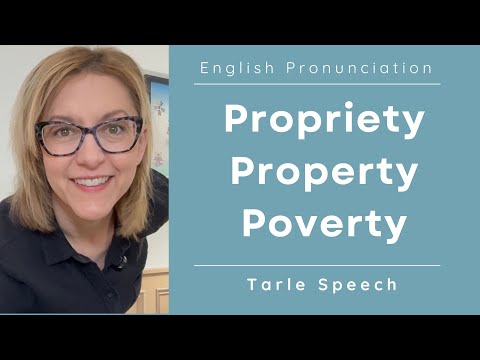
Learn to Pronounce PROPRIETY, PROPERTY, & POVERTY | American English Pronunciation #learnenglish
0
林宜悉 posted on 2025/10/07Ever mixed up 'propriety,' 'property,' and 'poverty'? This video breaks down the tricky pronunciation of these words, focusing on word stress and the 'ity' suffix. You'll master the subtle differences and sound more natural in no time!
Learn this video on the APP!
The VoiceTube App has more in-depth practice for videos!