
anchor
US /ˈæŋkɚ/
UK /'æŋkə(r)/
- Noun (Countable/Uncountable)
- Metal hook on a rope used to stop boats moving
- Person who presents a news program on TV
- Verb (Transitive/Intransitive)
- To lower an anchor to hold a boat or ship in place
- To secure firmly or fixedly; to moor.
B2TOEICMoreaside from
US /əˈsaɪd frʌm/
UK /əˈsaid frɔm/
- Phrase
A1Moreat scale
US
UK
- Phrase
- In large quantities; with significant reach or impact.
- Widely; extensively; with broad application.
A1Moreat the same time
US
UK
- Phrase
- Simultaneously; at the identical moment.
- Nevertheless; however; used to introduce a contrasting or qualifying statement.
A1Moreaugment
US /ɔɡˈmɛnt/
UK /ɔ:ɡ'ment/
- Transitive Verb
- To make something larger, stronger, more effective
B2TOEICMoreaverage
US /ˈævərɪdʒ, ˈævrɪdʒ/
UK /'ævərɪdʒ/
- Noun (Countable/Uncountable)
- Total of numbers divided by the number of items
- Transitive Verb
- To add numbers then divide by the number of items
A2TOEICMorebatch
US /bætʃ/
UK /bætʃ/
- Countable Noun
- Amount of something that is produced at one time
- A group of things made or done together
- Transitive Verb
- To combine or arrange together into a group
B2Morecollapse
US /kəˈlæps/
UK /kə'læps/
- Verb (Transitive/Intransitive)
- To fold (e.g. a stroller) down to make it smaller
- To suddenly fall down or break apart into pieces
- Noun
- The sudden failure of a structure or system.
- The sudden failure of a bodily organ or function.
B1Morecompared with
US /kəmˈpɛrd wɪð/
UK /kəmˈpeəd wið/
- Preposition
- In relation to
- Verb (Transitive/Intransitive)
- To have examined the differences or similarities between two or more things.
A1Morecontext
US /ˈkɑnˌtɛkst/
UK /ˈkɒntekst/
- Noun (Countable/Uncountable)
- Set of facts surrounding a person or event
- The circumstances that form the setting for an event, statement, or idea, and in terms of which it can be fully understood and assessed.
A2Moredefine
US /dɪˈfaɪn/
UK /dɪ'faɪn/
- Transitive Verb
- To explain the meaning of words
- To set or mark the limits of something
A2TOEICMoredense
US /dɛns/
UK /dens/
- Adjective
- Very thick and difficult to see, get through
- Hard to understand
B1TOEICMorediagonal
US /daɪˈæɡənəl/
UK /daɪˈægənl/
- Adjective
- Joining two opposite corners at an angle
- Noun
- A straight line joining two opposite corners of a square, rectangle, or other straight-sided shape.
- A diagonal pattern or design.
B2Moredimension
US /dɪˈmɛnʃən, daɪ-/
UK /daɪˈmenʃn/
- Noun (Countable/Uncountable)
- Number of planes (X, Y, Z axes) an object has
- Measurement in space, e.g. length or diameter
B1Moredistillation
US /ˌdɪstəˈleʃən/
UK /ˌdɪstɪ'leɪʃn/
- Uncountable Noun
- Production of a pure form by heating liquid
B2Moredistribution
US /ˌdɪstrəˈbjuʃən/
UK /ˌdɪstrɪˈbju:ʃn/
- Noun (Countable/Uncountable)
- Dividing or spreading out to others
- Act of sending products to stores to sell
- Adjective
- Sending products to stores to sell
B1Moredue to
US /du tu/
UK /dju: tu:/
- Preposition
- Because of; owing to
- Adjective
- Attributable to; caused by.
A1Moreembed
US /ɛmˈbɛd/
UK /ɪm'bed/
- Transitive Verb
- To place or set inside rock, etc.
- To integrate (something) into something else.
B2Moreencourage
US /ɛnˈkɚrɪdʒ, -ˈkʌr-/
UK /ɪn'kʌrɪdʒ/
- Transitive Verb
- To increase the chance of something happening
- To make someone more determined or confident
A2TOEICMoreentropy
US /ˈɛntrəpi/
UK /ˈentrəpi/
- Uncountable Noun
- Lack of order in a system
C1Moreevenly
US /ˈivənlɪ/
UK /ˈi:vnli/
- Adverb
- Equally; with advantage to both sides
- In a smooth, level or regular way
B2Moreextract
US /ɪkˈstrækt/
UK /'ekstrækt/
- Noun (Countable/Uncountable)
- Essential ingredient of a natural thing
- Part taken from a longer written work
- Transitive Verb
- To get a substance out of a plant, etc.
- To get a person to share secret information
B1TOEICMorefeature
US /ˈfitʃɚ/
UK /'fi:tʃə(r)/
- Noun (Countable/Uncountable)
- Special report in a magazine or paper
- Distinctive or important point of something
- Transitive Verb
- To highlight or give special importance to
- To give prominence to; to present or promote as a special or important item.
A2TOEICMorefor example
US
UK
- Phrase
- As an illustration or instance.
function
US /ˈfʌŋkʃən/
UK /'fʌŋkʃn/
- Noun
- Social event, or party such as a wedding
- Mathematical operation used in calculations
- Intransitive Verb
- To serve a certain purpose or role
- To be operating, working or achieving its purpose
A2TOEICMoregradually
US /ˈɡrædʒʊəlɪ/
UK /ˈgrædʒuəli/
- Adverb
- Occurring in a slow manner over a period of time
- Little by little; in a slow and progressive manner.
B1TOEICMoregrain
US /ɡren/
UK /greɪn/
- Noun (Countable/Uncountable)
- Seeds of plants used for food
- Natural pattern in something, e.g. wood
B1TOEICMorein advance
US /ɪn ædˈvæns/
UK /in ədˈvɑ:ns/
- Phrase
- Ahead of time; before something happens
- Noun
- A payment made before it is due, especially for work to be done
A2Morein other words
US
UK
- Phrase
- Stating something in a different way, often to make it clearer or more understandable.
in practice
US /ɪn ˈpræktɪs/
UK /in ˈpræktis/
- Phrase
- In reality or actual use; as opposed to in theory.
A1Moreinstead of
US /ɪnˈstɛd ʌv/
UK /inˈsted ɔv/
- Preposition
- When one thing is replaced by another
- Adverb
- As a substitute or alternative.
A1Moreintuitively
US /ɪnˈtjuɪtɪvlɪ/
UK /ɪn'tju:ɪtɪvlɪ/
- Adverb
- In a manner based on feelings rather than facts
B2Morelambda
US /'læmdə/
UK /ˈlæmdə/
- Noun
- 11th letter of the Greek alphabet
C1Morelayer
US /ˈleɚ/
UK /ˈleiə/
- Noun (Countable/Uncountable)
- One of several sheets of a material or object
- A covering of something spread over a surface.
- Transitive Verb
- To put things one on top of another
B1TOEICMorelead to
US /lid tu/
UK /li:d tu:/
- Phrasal Verb
- To result in some action
- Verb (Transitive/Intransitive)
- To have something as a consequence or result.
A1Morelook at
US /lʊk æt/
UK /luk æt/
- Phrasal Verb
- To use your eyes to focus on something
- To focus your eyes on something carefully
A1Moremass
US /mæs/
UK /mæs/
- Noun (Countable/Uncountable)
- Religious ceremony in some Christian churches
- Large amount or number of something
- Transitive Verb
- To gather people or things into a large group
B1Moremethod
US /ˈmɛθəd/
UK /'meθəd/
- Noun (Countable/Uncountable)
- (Organized and planned) way of doing something
- Orderliness of thought, arrangement, or behavior.
A2TOEICMoreminimize
US /ˈmɪnəˌmaɪz/
UK /'mɪnɪmaɪz/
- Transitive Verb
- To make something seem small or less important
B1Moreno matter
US
UK
- Conjunction
- Regardless of; it does not matter.
- Adverb
- Regardless of; it is not important
A1Moreover time
US /ˈovɚ taɪm/
UK /ˈəuvə taim/
- Phrase
- Gradually; as time passes.
- During a long period.
- Adverb
- Gradually; as time passes.
B1Morepatch
US /pætʃ/
UK /pætʃ/
- Noun
- Cover worn over an eye to protect or hide it
- Piece of ground on vegetation grows
- Transitive Verb
- To join or unite, e.g. two phone calls
- To repair hole by sewing a piece of cloth over it
B1TOEICMorepredict
US /prɪˈdɪkt/
UK /prɪ'dɪkt/
- Transitive Verb
- To guess or estimate what will or might happen
A2TOEICMorerandomly
US /'rændəmlɪ/
UK /'rændəmlɪ/
- Adverb
- With no pattern or clear purpose; by chance
B1TOEICMorerather than
US
UK
- Adverb
- More exactly; more correctly
- Preferably; instead
- Preposition
- Instead of
A1Morerequire
US /rɪˈkwaɪr/
UK /rɪ'kwaɪə(r)/
- Transitive Verb
- To demand that someone does something
- To need to do something, to make it necessary
A2TOEICMoreresult
US /rɪˈzʌlt/
UK /rɪ'zʌlt/
- Noun
- Something produced through tests or experiments
- Final score of a competition, election or game
- Intransitive Verb
- To be the outcome of other causes and effects
- To happen or exist as a consequence of something.
A2Moresame time
US
UK
- Phrase
- Occurring simultaneously or at the same point in time.
- At the identical time as before; recurring at a fixed hour.
- Noun
- An equal duration or period.
A1Morescene
US /sin/
UK /si:n/
- Noun
- Incident where someone behaves angrily, badly
- View that looks like a picture
A2TOEICMoreseparate
US /'sepəreɪt/
UK /'sepəreɪt/
- Adjective
- Being different from or unrelated to another
- Not connected; different.
- Transitive Verb
- To divide two things by being in between them
- To move things away from each other
A2TOEICMoresetup
US /ˈsɛtˌʌp/
UK /'setʌp/
- Noun
- Way something is organized or arranged
B2TOEICMorespatial
US /ˈspeʃəl/
UK /ˈspeɪʃl/
- Adjective
- About space
B1Morespecifically
US /spəˈsɪfɪkli/
UK /spəˈsɪfɪkli/
- Adverb
- As regards a particular thing; closely related to
- In a definite and clear manner.
A2Morespread
US /sprɛd/
UK /spred/
- Noun (Countable/Uncountable)
- A big meal, often laid out as a buffet
- The distance between two things
- Verb (Transitive/Intransitive)
- To place over a large area; to cover a large area
- (Of ideas, gossip) to pass to and affect others
A2TOEICMoresuch as
US /sʌtʃ æz/
UK /sʌtʃ æz/
- Preposition
- For example; like
A1Morethe following
US
UK
- Adjective
- Next in order or sequence.
- Uncountable Noun
- What is about to be said or written.
B1Moretoken
US /ˈtokən/
UK /'təʊkən/
- Noun (plural)
- Flat, round piece of material used e.g. as coins
- Noun
- Representative of a feeling
- Something representing a feeling, e.g. Gratitude
B2TOEICMoretrick
US /trɪk/
UK /trɪk/
- Transitive Verb
- To fool someone in order to obtain a result
- To playfully tease or fool to make someone laugh
- Noun (Countable/Uncountable)
- Act of trying to fool someone
- Quick or skillful way of doing something
A2Moretrivial
US /ˈtrɪviəl/
UK /'trɪvɪəl/
- Adjective
- Small; unimportant; worthless
- Easy and simple
B2TOEICMorevector
US /ˈvɛktɚ/
UK /'vektə(r)/
- Noun
- Math a quantity that has both size and direction
B2Morevisible
US /ˈvɪzəbəl/
UK /ˈvɪzəbl/
- Adjective
- Can see, easily seen or understood
B1TOEICMorevisualize
US /ˈvɪʒuəˌlaɪz/
UK /ˈvɪʒuəlaɪz/
- Transitive Verb
- To create a picture in your mind of something
B1Morewarm up
US /wɔːrm ʌp/
UK
- Phrasal Verb
- To gently exercise muscles before doing sport
A1More
Vocabulary
- look at: To use your eyes to focus on something
- for example: As an illustration or instance.
- over time: Gradually; as time passes.
- in practice: In reality or actual use; as opposed to in theory.
- instead of: When one thing is replaced by another
- no matter: Regardless of; it does not matter.
- such as: For example; like
- at the same time: Simultaneously; at the identical moment.
- same time: Occurring simultaneously or at the same point in time.
- at scale: In large quantities; with significant reach or impact.
- in advance: Ahead of time; before something happens
- the following: Next in order or sequence.
- rather than: More exactly; more correctly
- lead to: To result in some action
- warm up: To gently exercise muscles before doing sport
- due to: Because of; owing to
- in other words: Stating something in a different way, often to make it clearer or more understandable.
- aside from
- compared with: In relation to
- context: Set of facts surrounding a person or event
- trick: To fool someone in order to obtain a result
- average: Total of numbers divided by the number of items
- specifically: As regards a particular thing; closely related to
- scene: Incident where someone behaves angrily, badly
- spread: A big meal, often laid out as a buffet
- separate: Being different from or unrelated to another
- method: (Organized and planned) way of doing something
- increase: To make or become larger in size or amount
- feature: Special report in a magazine or paper
- trivial: Small; unimportant; worthless
- encourage: To increase the chance of something happening
- collapse: To fold (e.g. a stroller) down to make it smaller
- function: Social event, or party such as a wedding
- predict: To guess or estimate what will or might happen
- gradually: Occurring in a slow manner over a period of time
- similar: Nearly the same; alike
- require: To demand that someone does something
- dense: Very thick and difficult to see, get through
- define: To explain the meaning of words
- grain: Seeds of plants used for food
- extract: Essential ingredient of a natural thing
- result: Something produced through tests or experiments
- visualize: To create a picture in your mind of something
- mass: Religious ceremony in some Christian churches
- anchor: Metal hook on a rope used to stop boats moving
- layer: One of several sheets of a material or object
- randomly: With no pattern or clear purpose; by chance
- patch: Cover worn over an eye to protect or hide it
- text: To send a message by phone or other device
- distribution: Dividing or spreading out to others
- visible: Can see, easily seen or understood
- batch: Amount of something that is produced at one time
- spatial: About space
- learn: To get knowledge or skills by study or experience
- intuitively: In a manner based on feelings rather than facts
- information: Collection of facts and details about something
- detail: Small part of something; tiny fact
- dimension: Number of planes (X, Y, Z axes) an object has
- head: To hit a ball with your head in a game
- product: Item that can be bought
- minimize: To make something seem small or less important
- evenly: Equally; with advantage to both sides
- wide: Having a great distance from one side to the other
- embed: To place or set inside rock, etc.
- train: Line of people, animals moving the same direction
- knowledge: Information, understanding, or skill
- token: Flat, round piece of material used e.g. as coins
- augment: To make something larger, stronger, more effective
- add: To include as well
- center: Community place people go health or social reasons
- call: A order or request for action
- large: Big; of great size; broad, tall, wide, or fat
- entropy: Lack of order in a system
- distillation: Production of a pure form by heating liquid
- setup: Way something is organized or arranged
- diagonal: Joining two opposite corners at an angle
- vector: Math a quantity that has both size and direction
- lambda: 11th letter of the Greek alphabet
Get the full experience in the app
Learn anywhere with detailed sentence and usage analysis
01:03
She took a brave step forward, leaving behind her comfort zone to chase her dreams.
Vocabulary
- brave
adj. Having courage
- comfort zone
phr. A familiar situation where one feels safe
Explanation
a brave step is a noun phrase, where brave is an adjective modifying the noun step, meaning "a courageous step".
forward is an adverb modifying step, meaning "ahead".
The whole phrase serves as the object, answering the "what" of took (verb) — she took a brave step forward.
Get the full experience in the app
Look up words anytime with pronunciation, part of speech, and usage
brave
US/brev/
UK/breɪv/
adj.Brave
v.t.To bravely face
A2 Elementary
Get the full experience in the app
Practice speaking anytime and get instant pronunciation feedback
Try this speaking exercise.
Try practicing with this sentence.
80
0
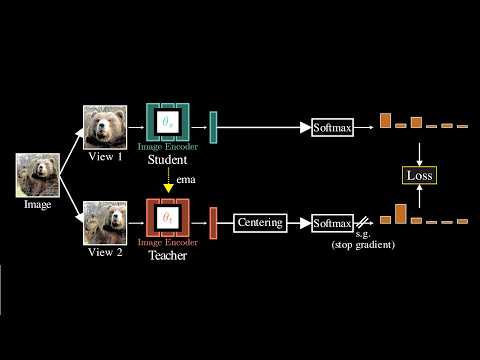
Danny Chi posted on 2025/10/01Ever wondered how computers learn to 'see' without being explicitly told what to look for? This video dives deep into DINOv3, explaining the fascinating world of self-supervised learning and contrastive learning with a focus on Vision Transformers. You'll pick up some advanced vocabulary and gain a solid understanding of cutting-edge AI research!
Learn this video on the APP!
The VoiceTube App has more in-depth practice for videos!