
advance
US /ædˈvæns/
UK /əd'vɑ:ns/
- Noun
- Forward movement by an army
- An attempt to seduce someone
- Verb (Transitive/Intransitive)
- (Of an army) to move forward
- To change or improve
A2TOEICMoreadvanced technology
US /ædˈvænst tɛkˈnɑlədʒi/
UK /ədˈvɑ:nst tekˈnɔlədʒi/
- Uncountable Noun
- Cutting-edge or highly developed technology.
- Phrase
- Technology that represents the future of innovation and development.
A2Moreall the things
US
UK
- Pronoun
- Everything; all items or aspects
- Determiner
- Every item or object being considered or discussed.
A1Moreancient
US /ˈenʃənt/
UK /'eɪnʃənt/
- Adjective
- Very old; having lived a very long time ago
- Relating to a period in history, especially in the distant past.
- Noun
- A person who lived in ancient times.
A2Moreas long as
US /æz lɔŋ æz/
UK /æz lɔŋ æz/
- Conjunction
- For the period that; provided that.
- For the length of time that
- Preposition
- On the condition that; providing that.
- Having the same length as.
A1Moreas well as
US /æz wɛl æz/
UK /æz wel æz/
- Adverb
- Also; in addition to
- Preposition
- In addition to; and also.
A1Moreassociate
US /əˈsoʊʃiˌeɪt/
UK /ə'səʊʃɪeɪt/
- Countable Noun
- Partner in professional work, e.g. in law
- Verb (Transitive/Intransitive)
- To spend time with other people; mix with
- To form a connection in your mind between things
B1TOEICMoreat least
US /æt list/
UK /æt li:st/
- Adverb
- As a minimum
- Not less than
- Phrase
- No less than; at the minimum
- Used to indicate that something is positive in a bad situation.
C2Moreat night
US /æt naɪt/
UK /æt nait/
- Phrase
- During the night; in the nighttime.
A1Moreat once
US /æt wʌns/
UK /æt wʌns/
- Adverb
- Immediately; without delay
- At the same time; simultaneously
A2Moreat the same time
US
UK
- Phrase
- Simultaneously; at the identical moment.
- Nevertheless; however; used to introduce a contrasting or qualifying statement.
A1Moreback up
US /bæk ʌp/
UK /bæk ʌp/
- Phrasal Verb
- To save a copy of your computer data
- To confirm the truth of what someone says
A1Morebear
US /bɛr/
UK /bɛː/
- Transitive Verb
- To accept (responsibilities or duties)
- To give birth to a child; to produce fruit
- Countable Noun
- Large brown animal with fur that lives in forests
- Someone who expects stock market to fall
A2Morebeast
US /bist/
UK /bi:st/
- Noun
- Ugly or terrifying animal
B1Morebiblical
US
UK
- Adjective
- Concerning the bible
- Very great and impressive
B2Morebring in
US /brɪŋ ɪn/
UK /briŋ in/
- Phrasal Verb
- To earn a certain amount of money or profits
- To add person into existing group, e.g. phone call
A1Moreby now
US /baɪ naʊ/
UK /bai nau/
- Phrase
- At the present time or already; before the present.
A2Morechoir
US /kwaɪr/
UK /'kwaɪə(r)/
- Noun (Countable/Uncountable)
- Group of people who sing together e.g. in church
- The area in a church or cathedral reserved for the clergy and choir.
B2Morechristianity
US /ˌkrɪstʃiˈænɪti, ˌkrɪsti-/
UK /ˌkrɪstiˈænəti/
- Noun (Countable/Uncountable)
- Beliefs, practices based on teachings of Jesus
- The culture and civilization associated with Christian countries.
B1Moreclaim
US /klem/
UK /kleɪm/
- Noun (Countable/Uncountable)
- To say that something is true, often without proof.
- A statement that something is true.
- Transitive Verb
- To demand or ask for something that you believe is rightfully yours.
- To take or cause the loss of (e.g., a life, property).
A2Morecome from
US /kʌm frʌm/
UK /kʌm frɔm/
- Phrasal Verb
- To have as your native country or city
A1Morecome to terms with
US
UK
- Phrase
- To accept something difficult or unpleasant.
- Verb (Transitive/Intransitive)
- To accept something unpleasant
A1Morecontext
US /ˈkɑnˌtɛkst/
UK /ˈkɒntekst/
- Noun (Countable/Uncountable)
- Set of facts surrounding a person or event
- The circumstances that form the setting for an event, statement, or idea, and in terms of which it can be fully understood and assessed.
A2Morecontribute
US /kənˈtrɪbjut/
UK /kən'trɪbju:t/
- Verb (Transitive/Intransitive)
- To be a factor in causing something to happen
- To donate, give (money) or help to something
A2Moredestroy
US /dɪˈstrɔɪ/
UK /dɪ'strɔɪ/
- Transitive Verb
- To damage so badly that something no longer exists
- To defeat someone or something easily
A2TOEICMoredevil
US /ˈdɛvəl/
UK /ˈdevl/
- Noun (Countable/Uncountable)
- A spirit said to be evil
- A very bad or cruel person.
- Transitive Verb
- To prepare (food) with hot or spicy seasonings.
B1Moredo in
US
UK
- Phrasal Verb
- To make completely tired out and exhausted
- To destroy or cause damage to someone
A1Moreever since
US /ˈɛvɚ sɪns/
UK /ˈevə sins/
- Adverb
- Continuously from a past time until now.
- Conjunction
- From the time that; because.
B2Moreexcept that
US /ɪkˈsɛpt ðæt/
UK /ikˈsept ðæt/
- Conjunction
- But; with the exception that.
A2Moreexcuse
US /ɪkˈskjuz/
UK /ɪk'skju:s/
- Transitive Verb
- To allow someone not to do (jury service, etc.)
- To explain acting in a bad or impolite manner
- Noun
- Note explaining why someone cannot do or attend
- Reason why you did or didn't do something
A2Morefiction
US /ˈfɪkʃən/
UK /ˈfɪkʃn/
- Uncountable Noun
- Made-up stories; imagined events
- False statement or account about something
B1Morefor someone
US /fɚ ˈsʌmwʌn/
UK /fə ˈsʌmwʌn/
- other
- On behalf of or intended for a particular person.
A1Morefor sure
US /fɔr ʃʊr/
UK /fɔ: ʃuə/
- Adverb
- Definitely; certainly; without a doubt.
- Used to emphasize a statement.
- Interjection
- An expression of strong agreement or affirmation.
A2Morefrom the dead
US /frəm ðə dɛd/
UK /frəm ðə ded/
- other
- Returned to life after being dead.
B2Moreget through
US /ɡɛt θru/
UK /ɡet θru:/
- Phrasal Verb
- To arrive at the end of or finish something
- To succeed in contacting someone by phone
A1Moregoing on
US /ˈɡoɪŋ ɑn/
UK /ˈgəʊɪŋ ɔn/
- Phrasal Verb
- To continue doing something
- To happen (usually negative)
A1Morehave to
US /hæv tu/
UK /ˈhæv tə/
- Auxiliary Verb
- Must do
A1Morehell
US /hɛl/
UK /hel/
- Noun (Countable/Uncountable)
- Any place of pain and suffering
- A very unpleasant or difficult experience.
A2Morehold up to
US /hoʊld ʌp tu/
UK /hould ʌp tu:/
- other
- To withstand or endure something unpleasant or difficult.
B2Moreholy
US /ˈholi/
UK /'həʊlɪ/
- Adjective
- Being good according to religious standards
- Dedicated or consecrated to God or a religious purpose; sacred.
- Interjection
- An exclamation of surprise, shock, or awe.
B1Morehome in
US /ˈhoʊm ɪn/
UK /ˈhəum ɪn/
- other
- Move or direct toward a specific target or goal.
B2Morein fact
US /ɪn fækt/
UK /in fækt/
- Adverb
- Used to emphasize the truth of a statement, especially one that contrasts with or contradicts something else.
- Used to introduce a more detailed or surprising piece of information.
- Phrase
- Used to emphasize the truth of a statement, especially one that is surprising or contrary to what might be expected.
C1Morein general
US /ɪn ˈdʒɛnərəl/
UK /in ˈdʒenərəl/
- Phrase
- Typically; usually; on the whole.
- Not specific or detailed; broadly.
- Adjective
- Not detailed or specific; overall.
C2Morein hell
US
UK
- Phrase
- In a very bad or unpleasant situation
- In the place or state of punishment of the wicked after death
B2Morein itself
US /ɪn ɪtˈsɛlf/
UK /in itˈself/
- Phrase
- Considered alone or without reference to anything else; intrinsically.
- Essentially; by its very nature.
in the middle of
US
UK
- Phrase
- In the central part or point of something.
- Engaged or occupied with something.
A2Moreinstead of
US /ɪnˈstɛd ʌv/
UK /inˈsted ɔv/
- Preposition
- When one thing is replaced by another
- Adverb
- As a substitute or alternative.
A1Morelatin
US /ˈlætn/
UK /ˈlætɪn/
- Uncountable Noun
- Ancient Roman language affecting many languages
- Adjective
- Of or typical of a Spanish-speaking culture
C2Morelegend
US /ˈlɛdʒənd/
UK /'ledʒənd/
- Noun
- List of explanations of symbols on map, etc.
- Person famous for doing something very well
B1Morelook at
US /lʊk æt/
UK /luk æt/
- Phrasal Verb
- To use your eyes to focus on something
- To focus your eyes on something carefully
A1Moremade with
US
UK
- Phrase
- Containing a particular ingredient or material.
- Created or produced using a specific tool, method, or process.
- Phrasal Verb
- To offer or provide something, often quickly or unexpectedly.
A1Moremove into
US /muv ˈɪntu/
UK /mu:v ˈɪntuː/
- Phrasal Verb
- To start living in a new house or building
- To start being involved in a new area of business or activity.
move on
US /muv ɑn/
UK /mu:v ɔn/
- Phrasal Verb
- To decide to change or go to a different place
- To start talking about something different.
A1Moreneedle
US /ˈnidl/
UK /'ni:dl/
- Countable Noun
- Part of a medical device used to inject medicine
- Very thin pointed object used in sewing
- Transitive Verb
- To upset someone by making rude or hurtful remarks
- To prick or pierce with a needle.
B1Morenext to
US /nɛkst tu/
UK /nekst tu:/
- Preposition
- Being located along side another
- In comparison with
- Adverb
- Almost; nearly
A1Moreof course
US /ʌv kɔː(r)s/
UK /ɔv kɔː(r)s/
- Adverb
- Sure ; Certainly
- Phrase
- For sure; certainly
A2Moreof itself
US /ʌv ɪtˈself/
UK /əv ɪtˈself/
- other
- Happening automatically without external cause or help.
B1Moreon behalf of
US /ɑn bɪˈhæf ʌv/
UK /ɔn biˈhɑ:f ɔv/
- Phrase
- As the representative of someone
- Acting as a representative of.
B1Moreon earth
US /ɑn ɚθ/
UK /ɔn ə:θ/
- Phrase
- Used to emphasize a question expressing surprise or anger.
- Used to emphasize that something is not possible or will not happen.
A1Moreon God
US /ɑn gɑd/
UK /ɒn gɒd/
- other
- Used to solemnly swear or emphasize truthfulness.
C1Moreon to
US /ɑn tu/
UK /ɔn tu:/
- Preposition
- Toward something; forward
- Aware of someone's activities.
- Adjective
- Aware of someone's deception or illegal activities.
A1Moreoutside of
US /aʊtˈsaɪd ʌv/
UK /ˌautˈsaid ɔv/
- Preposition
- Located or situated beyond the boundaries or confines of something.
- Beyond the scope, range, or limits of something.
A1Moreover time
US /ˈovɚ taɪm/
UK /ˈəuvə taim/
- Phrase
- Gradually; as time passes.
- During a long period.
- Adverb
- Gradually; as time passes.
B1Morepagan
US /ˈpeɡən/
UK /ˈpeɪgən/
- Countable Noun
- People who do not have a formal religion
- Adjective
- Relating to pagans or paganism.
- (dated, offensive) Uncivilized or irreligious.
B2Moreparadise
US /ˈpærəˌdaɪs, -ˌdaɪz/
UK /'pærədaɪs/
- Noun (Countable/Uncountable)
- Place with everything needed for specific activity
- Place where good people are said to go after death
B1Morepass up
US /pæs ʌp/
UK /pɑ:s ʌp/
- Phrasal Verb
- To reject an offer or suggestion
A1Morepastor
US /ˈpæstɚ/
UK /'pɑ:stə(r)/
- Noun
- Minister in charge of a Christian church or group
B2Morephysical
US /ˈfɪzɪkəl/
UK /ˈfɪzɪkl/
- Countable Noun
- Health check at the doctors' or hospital
- Adjective
- Concerning the body of a person
- Concerning things that can be seen or touched
A2Morepope
US /pop/
UK /pu:p/
- Proper Noun
- Bishop of Rome and the head of the Catholic Church
B2Morerevelation
US /ˌrɛvəˈleʃən/
UK /ˌrevəˈleɪʃn/
- Noun (Countable/Uncountable)
- Act of making something known or seen
- Showing something astonishing or enlightening
C1Morerole
US /rol/
UK /rəʊl/
- Noun
- Character played by an actor
- Part you play in an activity; job; responsibility
A2Moresabbath
US /ˈsæbəθ/
UK /ˈsæbəθ/
- Noun
- Day of rest in some religions
C1Moresame time
US
UK
- Phrase
- Occurring simultaneously or at the same point in time.
- At the identical time as before; recurring at a fixed hour.
- Noun
- An equal duration or period.
A1Moresatan
US /'seɪtn/
UK /'seɪtn/
- Proper Noun
- An evil spirit said to be in control of hell
B2Moresee in
US /si ɪn/
UK /si: in/
- Phrasal Verb
- To accompany someone to the entrance of a building or room.
A1Moreset apart
US /sɛt əˈpɑrt/
UK /set əˈpɑ:t/
- Phrasal Verb
- To distinguish someone or something as special or different.
- To reserve or allocate something for a specific purpose.
- Transitive Verb
- To save or reserve something, typically money, for a specific purpose.
A2Moreside with
US /saɪd wɪð/
UK /said wið/
- Phrasal Verb
- To support one person or group against another in a disagreement.
A2Moresilly
US /ˈsɪli/
UK /'sɪlɪ/
- Adjective
- Careless
- Acting funny or playfully
A2Moresin
US /sɪn/
UK /sɪn/
- Noun
- Act that breaks a religious law
- Intransitive Verb
- To do something that breaks a religious law
B1Morestick with
US /stɪk wɪð/
UK /stik wið/
- Phrasal Verb
- To continue to support or stay loyal to someone or something.
- To continue doing or using something; to persevere.
A1Morestraight
US /stret/
UK /streɪt/
- Adjective
- Not having curves, bends, or angles
- Not gay; heterosexual
- Adverb
- in a line; immediately; honestly and directly
- In a straight line; directly.
A2TOEICMorestretch
US /strɛtʃ/
UK /stretʃ/
- Verb (Transitive/Intransitive)
- To make your arm, leg muscles long to ease them
- To make something bigger by pulling on it
- Noun
- Making arm, leg muscles longer to ease them
- A consecutive row of things
A2TOEICMoresyndrome
US /ˈsɪnˌdrom/
UK /'sɪndrəʊm/
- Noun
- A group of signs and symptoms of a disease
B1Moretalking about
US
UK
- Phrasal Verb
- To discuss a particular topic.
- To be constantly mentioning or bringing up a subject.
A1Moretechnology
US /tɛkˈnɑlədʒi/
UK /tek'nɒlədʒɪ/
- Uncountable Noun
- Use or knowledge of science in industry etc.
- Machinery and equipment developed from scientific knowledge.
A2TOEICMoretestament
US /ˈtɛstəmənt/
UK /ˈtestəmənt/
- Noun
- Evidence or proof (usually of something good)
- A person's will, especially regarding the disposal of their property.
B1Moreto die for
US /tu daɪ fɔr/
UK /tu: dai fɔ:/
- Adjective
- Extremely desirable or enjoyable.
- Intransitive Verb
- To be willing to sacrifice one's life for someone or something.
A1Moreto the power of
US /tu ðə ˈpaʊɚ əv/
UK /tu ðə ˈpaʊə əv/
- other
- Indicating exponentiation in math; repeated multiplication.
B2Moretorture
US /ˈtɔrtʃɚ/
UK /'tɔ:tʃə(r)/
- Noun (Countable/Uncountable)
- Hurting someone to force them to give information
- Painful suffering or distress
- Transitive Verb
- To painfully hurt someone to get information
- To cause someone to suffer greatly; torment
B2Moreunder the rug
US
UK
- Idiom
- To hide something, especially something embarrassing or damaging.
A1Moreurban
US /ˈɚbən/
UK /'ɜ:bən/
- Adjective
- Concerning a city; located in a city
- Relating to the style of dress and music popular in cities.
B1TOEICMoreverse
US /vɚs/
UK /vɜ:s/
- Noun (Countable/Uncountable)
- Writing with words that rhyme or are rhythmic
- A section of writing, e.g. from the Bible
B1Moreworship
US /ˈwɚʃɪp/
UK /'wɜ:ʃɪp/
- Uncountable Noun
- Acts of respect and honor to God or a god
- Verb (Transitive/Intransitive)
- To take part in a religious service
- To show great respect towards a god or goddess
B1More
Vocabulary
- have to: Must do
- on to: Toward something; forward
- look at: To use your eyes to focus on something
- instead of: When one thing is replaced by another
- move on: To decide to change or go to a different place
- advanced technology: Cutting-edge or highly developed technology.
- going on: To continue doing something
- of course: Sure ; Certainly
- in hell: In a very bad or unpleasant situation
- come from: To have as your native country or city
- hold up to: To withstand or endure something unpleasant or difficult.
- bring in: To earn a certain amount of money or profits
- side with: To support one person or group against another in a disagreement.
- at once: Immediately; without delay
- in general: Typically; usually; on the whole.
- for sure: Definitely; certainly; without a doubt.
- talking about: To discuss a particular topic.
- to die for: Extremely desirable or enjoyable.
- from the dead: Returned to life after being dead.
- stick with: To continue to support or stay loyal to someone or something.
- for someone: On behalf of or intended for a particular person.
- get through: To arrive at the end of or finish something
- of itself: Happening automatically without external cause or help.
- see in: To accompany someone to the entrance of a building or room.
- by now: At the present time or already; before the present.
- pass up: To reject an offer or suggestion
- in itself: Considered alone or without reference to anything else; intrinsically.
- except that: But; with the exception that.
- as long as: For the period that; provided that.
- made with: Containing a particular ingredient or material.
- on behalf of: As the representative of someone
- ever since: Continuously from a past time until now.
- in the middle of: In the central part or point of something.
- back up: To save a copy of your computer data
- in fact: Used to emphasize the truth of a statement, especially one that contrasts with or contradicts something else.
- set apart: To distinguish someone or something as special or different.
- at the same time: Simultaneously; at the identical moment.
- home in: Move or direct toward a specific target or goal.
- same time: Occurring simultaneously or at the same point in time.
- move into: To start living in a new house or building
- next to: Being located along side another
- do in: To make completely tired out and exhausted
- at least: As a minimum
- at night: During the night; in the nighttime.
- outside of: Located or situated beyond the boundaries or confines of something.
- on God: Used to solemnly swear or emphasize truthfulness.
- come to terms with: To accept something difficult or unpleasant.
- on earth: Used to emphasize a question expressing surprise or anger.
- all the things: Everything; all items or aspects
- to the power of: Indicating exponentiation in math; repeated multiplication.
- over time: Gradually; as time passes.
- under the rug: To hide something, especially something embarrassing or damaging.
- as well as: Also; in addition to
- context: Set of facts surrounding a person or event
- stretch: To make your arm, leg muscles long to ease them
- physical: Health check at the doctors' or hospital
- straight: Not having curves, bends, or angles
- ancient: Very old; having lived a very long time ago
- associate: Partner in professional work, e.g. in law
- claim: To say that something is true, often without proof.
- silly: Careless
- contribute: To be a factor in causing something to happen
- syndrome: A group of signs and symptoms of a disease
- advance: Forward movement by an army
- create: To make, cause, or bring into existence
- fiction: Made-up stories; imagined events
- throw: To use your arm to make something fly in the air
- torture: Hurting someone to force them to give information
- break: To create a new record e.g. running the 100m dash
- role: Character played by an actor
- revelation: Act of making something known or seen
- urban: Concerning a city; located in a city
- fall: Season after summer and before winter; Autumn
- excuse: To allow someone not to do (jury service, etc.)
- bear: To accept (responsibilities or duties)
- destroy: To damage so badly that something no longer exists
- hell: Any place of pain and suffering
- lot: What happens to a person in life from chance; fate
- century: Period of 100 years
- single: One run in cricket or a hit baseball
- technology: Use or knowledge of science in industry etc.
- kind: In a caring and helpful manner
- pain: Strong feeling of hurt or discomfort
- worship: Acts of respect and honor to God or a god
- event: Any social gathering; occasion; planned activity
- holy: Being good according to religious standards
- pagan: People who do not have a formal religion
- legend: List of explanations of symbols on map, etc.
- perfect: So good it cannot be improved
- paradise: Place with everything needed for specific activity
- interesting: Taking your attention; making you want to know
- sin: Act that breaks a religious law
- real: Actually existing or happening, not imagined
- needle: Part of a medical device used to inject medicine
- cover: To record a different version of another song
- beast: Ugly or terrifying animal
- heart: A feeling of care for others; compassion
- verse: Writing with words that rhyme or are rhythmic
- testament: Evidence or proof (usually of something good)
- biblical: Concerning the bible
- choir: Group of people who sing together e.g. in church
- pope: Bishop of Rome and the head of the Catholic Church
- pastor: Minister in charge of a Christian church or group
- christianity: Beliefs, practices based on teachings of Jesus
- devil: A spirit said to be evil
- latin: Ancient Roman language affecting many languages
- sabbath: Day of rest in some religions
- satan: An evil spirit said to be in control of hell
Get the full experience in the app
Learn anywhere with detailed sentence and usage analysis
01:03
She took a brave step forward, leaving behind her comfort zone to chase her dreams.
Vocabulary
- brave
adj. Having courage
- comfort zone
phr. A familiar situation where one feels safe
Explanation
a brave step is a noun phrase, where brave is an adjective modifying the noun step, meaning "a courageous step".
forward is an adverb modifying step, meaning "ahead".
The whole phrase serves as the object, answering the "what" of took (verb) — she took a brave step forward.
Get the full experience in the app
Look up words anytime with pronunciation, part of speech, and usage
brave
US/brev/
UK/breɪv/
adj.Brave
v.t.To bravely face
A2 Elementary
Get the full experience in the app
Practice speaking anytime and get instant pronunciation feedback
Try this speaking exercise.
Try practicing with this sentence.
80
0
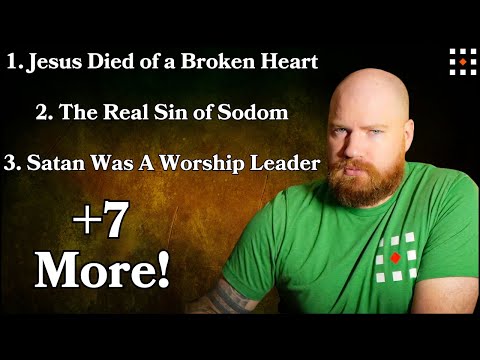
Kevin posted on 2025/08/31Ever wondered if those wild Christian stories you've heard are true? This video dives deep into 10 popular Christian urban legends, like the Mary Magdalene myth and the 'needle's eye' gate, to uncover their surprising origins and debunk the myths. You'll pick up some fascinating vocabulary related to church history and biblical interpretation along the way!
Learn this video on the APP!
The VoiceTube App has more in-depth practice for videos!