Vocabulary
- talking about: To discuss a particular topic.
- at school: Present and attending school.
- in the past: During a former period of time; previously.
- look at: To use your eyes to focus on something
- have to: Must do
- go out: To leave a building (e.g. a house)
- in writing: Expressed or presented in written form, rather than spoken.
- on the other hand : Considering a different aspect of the matter; alternatively.
- for example: As an illustration or instance.
- mix up: To put various things together so they become one
- in mind: Being aware of or considering something.
- think of: To look on as (being something specific); consider
- based on: To use something as the foundation or starting point for something else.
- as soon as: In a short time after (something happens)
- go straight: To continue in the same direction without turning.
- bear with me: Be patient with me.
- with a will: With energetic and enthusiastic effort.
- at work: Located at one's place of employment
- go together: To match well; to be harmonious or aesthetically pleasing.
- pick it up: To lift something from a surface.
- word up: An expression of agreement or acknowledgement.
- by itself: Alone; without help or assistance.
- in terms of
- of course: Sure ; Certainly
- up top: In or at the highest position or location.
- come back: To reply to someone, often forcefully
- situation: Place, position or area that something is in
- native: Someone from or born in a specific country
- structure: The way in which the parts of a system or object are arranged or organized, or a system arranged in this way
- express: To send something by fast mail
- hypothetical: Thought up, as an example; not being a real case
- sentence: (Of a judge) to decide the punishment of
- bit: Device put in a horse's mouth to control it
- function: Social event, or party such as a wedding
- mean: Average of a set of numbers
- tense: The use of grammar to state the time things happen
- direct: To tell someone in a very clear way to do something
- contrast: To compare; to show clear, obvious differences
- grammar: Book describing the syntactic rules of a language
- conclusion: End of something; finish
- attention: Taking notice of someone or something
- complete: To finish or reach the end of doing something
- introduce: To open an essay to set the scene
- reason: To think and make conclusions in a logical manner
- technically: In an exact and particular manner
- actual: Real or existing in fact, not imagined; real
- quiz: A game in which players answer questions on topics
- correct: Being suitable and appropriate for an occasion
- formal: Observing rules and procedures strictly
- slight: Small (amount, quality)
- informal: Casual; relaxed
- important: Having power or authority
- paraphrase: Summary of another person's words
- promotion: Act of advertising a product to people
- order: Religious or social group, as of nuns
- fact: Something that is known or proved to be true
- usage: Amount something is used
- clause: Part of a sentence that has its own verb
- chance: The way something happens without planning
- speech: A formal talk to an audience
- pick: Sharp tool used for breaking the ground
- verb: Word that expresses an action or state
- perfect: So good it cannot be improved
- rule: Something that is normal and usually happens
- dorm: College building with rooms that students live in
- grammatical: Conforming to the rules of syntax
- bracket: Placement of a word or words within ( ) [ or ]
- indirect: Being not directly connected to or caused by
- comma: Mark showing a pause or list in a sentence
- quotation: Written statement of the cost of something
- toefl: Test Of English as a Foreign Language
Get the full experience in the app
Learn anywhere with detailed sentence and usage analysis
01:03
She took a brave step forward, leaving behind her comfort zone to chase her dreams.
Vocabulary
- brave
adj. Having courage
- comfort zone
phr. A familiar situation where one feels safe
Explanation
a brave step is a noun phrase, where brave is an adjective modifying the noun step, meaning "a courageous step".
forward is an adverb modifying step, meaning "ahead".
The whole phrase serves as the object, answering the "what" of took (verb) — she took a brave step forward.
Get the full experience in the app
Look up words anytime with pronunciation, part of speech, and usage
brave
US/brev/
UK/breɪv/
adj.Brave
v.t.To bravely face
A2 Elementary
Get the full experience in the app
Practice speaking anytime and get instant pronunciation feedback
Try this speaking exercise.
Try practicing with this sentence.
80
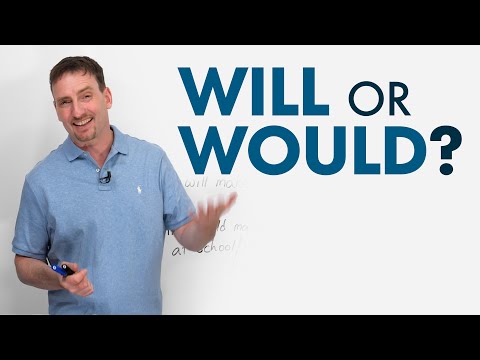
Essential English Grammar: WILL or WOULD?
0
林宜悉 posted on 2025/07/24Ever get confused between 'will' and 'would'? This video breaks down these tricky grammar points, showing you how to use them correctly in everyday conversations and even in workplace scenarios! You'll pick up essential grammar skills and avoid common mistakes, making your spoken English sound much more natural.
Learn this video on the APP!
The VoiceTube App has more in-depth practice for videos!