Vocabulary
- hold onto: To grasp or grip something tightly.
- back to normal: Returned to the usual or expected state or condition.
- lead to: To result in some action
- of course: Sure ; Certainly
- move into: To start living in a new house or building
- first up: Firstly; to begin with; the first item on a list or agenda.
- in the way: Obstructing someone or something; hindering progress.
- over time: Gradually; as time passes.
- regardless of
- in other words: Stating something in a different way, often to make it clearer or more understandable.
- on the other hand : Considering a different aspect of the matter; alternatively.
- thanks to: Because of; as a result of.
- back into: To drive a vehicle backwards into a space or area.
- at risk: In danger; likely to be harmed
- in the first place: To begin with; as the first point or consideration.
- figure out: To understand the behavior of someone
- after all: In spite of what was expected; used to introduce a statement that supports a previous statement or explains why it was made
- for example: As an illustration or instance.
- check out
- chronic: Always or often doing something, e.g. lying
- eventually: After a long time; after many attempts; in the end
- eliminate: To completely remove; to get rid of
- gross: 144 of something; twelve dozen of something
- term: Conditions applying to an agreement, contract
- tackle: To start working on a difficult problem
- crave: To have a very strong desire for something
- typically: In a normal or usual way
- completely: In every way or as much as possible
- extreme: Very great in degree
- severe: Very bad; harsh
- culprit: Person who has done something wrong or illegal
- consume: To eat, drink, buy or use up something
- consumption: The act of buying and using products
- disease: Illness that affects a person, animal, or plant
- stress: To emphasize one or more parts of a word, sentence
- research: To study in order to discover new ideas and facts
- pressure: Anxiety caused by difficult problems
- concentrate: To cause to be present in large amount or number
- increase: To make or become larger in size or amount
- cardiovascular: Concerning the heart and vessels of the body
- contract: To become ill as a result of getting a disease
- stroke: When blood cannot get to brain, causing damage
- concentration: Amount or number of something in a thing or place
- absorb: To take up all attention / energy of something
- substitute: To perform the tasks instead of someone else
- brain: To strike someone forcefully on the head
- filter: Device to remove certain types of light, sound
- excess: Amount that is more than necessary or over a limit
- vomit: Food coming back up from stomach, due to illness
- regulate: To control something with rules or laws
- challenge: An activity you wish to try that may be hard to do
- extra: More than necessary; additional
- result: Something produced through tests or experiments
- intake: Amount of something that a person's body consumes
- risk: To do something potentially dangerous or foolish
- examine: (Medical) to test to find out what is wrong
- lead: Wire for electricity, computer, etc.; cable
- diet: To eat special or less food, as to lose weight
- clarity: Being easy to be seen through, heard or understood
- kidney: Body organ that cleans blood, producing urine
- rural: Concerning the country as opposed to the city
- ingest: To eat, drink, or swallow something
- sodium: A soft, white chemical element
- swell: To feel overcome due to a strong emotion
- normal: Standard or regular way of doing something
- dehydration: The state of not having enough water
- coma: State of unconsciousness caused by injury, disease
- amplify: To increase the effect of something
- hydrate: To give or add water to something or someone
- nauseous: Feeling like you want to vomit
- potassium: A common, soft, silvery white metal with many uses
- spoiler: Bar mounted on rear of fast car to stop it lifting
- start: First time or place that a thing exists; beginning
- think: To have an idea about something without certainty
- feel: To be aware of or experience an emotion, sensation
- hormonal: Concerning or caused by hormones in the body
- add: To include as well
- people: Persons sharing culture, country, background, etc.
- age: To keep food, wine for a long time to improve it
- dehydrate: To cause (skin, body) to lose water that is needed
- thirst: Powerful desire or need for e.g. knowledge
- hypertension: Condition marked by abnormally high blood pressure
- gradient: A measure of how steep something is
Get the full experience in the app
Learn anywhere with detailed sentence and usage analysis
01:03
She took a brave step forward, leaving behind her comfort zone to chase her dreams.
Vocabulary
- brave
adj. Having courage
- comfort zone
phr. A familiar situation where one feels safe
Explanation
a brave step is a noun phrase, where brave is an adjective modifying the noun step, meaning "a courageous step".
forward is an adverb modifying step, meaning "ahead".
The whole phrase serves as the object, answering the "what" of took (verb) — she took a brave step forward.
Get the full experience in the app
Look up words anytime with pronunciation, part of speech, and usage
brave
US/brev/
UK/breɪv/
adj.Brave
v.t.To bravely face
A2 Elementary
Get the full experience in the app
Practice speaking anytime and get instant pronunciation feedback
Try this speaking exercise.
Try practicing with this sentence.
80
0
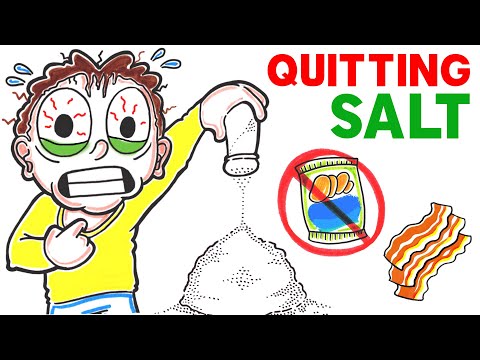
林宜悉 posted on 2025/07/18Ever wondered what happens to your body when you cut out salt? This video dives deep into the surprising effects, from blood pressure changes to electrolyte balance, and introduces you to the DASH diet. You'll pick up some fantastic advanced vocabulary and practical knowledge that's super useful for daily life!
Learn this video on the APP!
The VoiceTube App has more in-depth practice for videos!