
a couple hundred
US
UK
- Determiner
- Approximately two hundred.
- Phrase
- A small number of hundreds; more than one hundred but not many.
A2Morealong with
US /əˈlɔŋ wɪð/
UK /əˈlɔŋ wið/
- Preposition
- In addition to; together with.
- Adverb
- In company or together with someone or something.
- Including; in addition to.
A2Moreas long as
US /æz lɔŋ æz/
UK /æz lɔŋ æz/
- Conjunction
- For the period that; provided that.
- For the length of time that
- Preposition
- On the condition that; providing that.
- Having the same length as.
A1Moreas soon as
US /æz sun æz/
UK /æz su:n æz/
- Phrase
- In a short time after (something happens)
- Without any delay; immediately
- Conjunction
- At the moment that, or immediately after.
A1Moreat least
US /æt list/
UK /æt li:st/
- Adverb
- As a minimum
- Not less than
- Phrase
- No less than; at the minimum
- Used to indicate that something is positive in a bad situation.
C2Moreat once
US /æt wʌns/
UK /æt wʌns/
- Adverb
- Immediately; without delay
- At the same time; simultaneously
A2Moreat some point
US /æt sʌm pɔɪnt/
UK /æt sʌm pɔint/
- Phrase
- At an unspecified time, usually in the future.
A1Moreat the latest
US
UK
- Phrase
- No later than; by the specified deadline.
A1Moreat the same time
US
UK
- Phrase
- Simultaneously; at the identical moment.
- Nevertheless; however; used to introduce a contrasting or qualifying statement.
A1Moreback out
US /bæk aʊt/
UK /bæk aut/
- Phrasal Verb
- To say you will now not do something you promised
A1Morebased on
US
UK
- Phrasal Verb
- To use something as the foundation or starting point for something else.
- Preposition
- Using something as the main idea or foundation.
- Relying on something as evidence or justification.
A1Morebasically
US /ˈbesɪkəli,-kli/
UK /ˈbeɪsɪkli/
- Adverb
- Used before you explain something simply, clearly
- In essence; when you consider the most important aspects of something.
A2Morebreaks down
US
UK
- Phrasal Verb
- To forcibly break, destroy or make collapse
- (Machine) to stop working or become weaker
A1Morebring out
US /brɪŋ aʊt/
UK /briŋ aut/
- Phrasal Verb
- To formally introduce a girl/ woman to society
- To nurture and develop or bring out a quality
A1Morebuild up
US /bɪld ʌp/
UK /bild ʌp/
- Phrasal Verb
- To increase the amount; collect something
- To develop or increase something in stages
- Verb (Transitive/Intransitive)
- To increase or develop something gradually.
- To praise or encourage someone.
A1Morecare of
US /kɛr ʌv/
UK /kɛə ɔv/
- Preposition
- Used in an address to indicate the person who will receive the mail for someone else.
A2Morecode
US /kod/
UK /kəʊd/
- Transitive Verb
- To express information in a series of numbers
- To write a secret message using secret symbols
- Noun
- A password made of a set of letters or numbers
- Set of rules for behavior
A2Morecome from
US /kʌm frʌm/
UK /kʌm frɔm/
- Phrasal Verb
- To have as your native country or city
A1Morecome up
US /kʌm ʌp/
UK /kʌm ʌp/
- Phrasal Verb
- To come closer to someone; approach
- (Of sun) to rise into the sky in the morning
A1Moredeal with
US /dil wɪð/
UK /di:l wið/
- Verb (Transitive/Intransitive)
- To buy or sell goods or services.
- Phrasal Verb
- To take action to solve a problem or manage a situation.
- To be about; concern.
A1Moredepending on
US
UK
- Phrasal Verb
- To rely on for support (financial or emotional)
- Influenced or determined by.
- Preposition
- Subject to; contingent on
- Relying on someone or something for support or assistance.
A2Moredo in
US
UK
- Phrasal Verb
- To make completely tired out and exhausted
- To destroy or cause damage to someone
A1Moredown with
US /daʊn wɪð/
UK /daun wið/
- Adjective
- Suffering from an illness.
- Agreeable to; in favor of.
- Interjection
- An expression of opposition to something.
A1Morefigure out
US /ˈfɪɡjɚ aʊt/
UK /ˈfiɡə aut/
- Phrasal Verb
- To understand the behavior of someone
- To think through logically to find a solution
- Verb (Transitive/Intransitive)
- To understand or find an answer to something.
- To find a solution to a problem or understand something.
A1Morefit in
US /fɪt ɪn/
UK /fit in/
- Phrasal Verb
- To mix with others so you get on well with them
A2Moreflip
US /flɪp/
UK /flɪp/
- Verb (Transitive/Intransitive)
- To turn your body in the air, as in gymnastics
- To move into a different position quickly
- Noun
- Act of turning your body in the air; somersault
- Movement of something from one position to another
B2Morefor example
US
UK
- Phrase
- As an illustration or instance.
for some reason
US /fɔr sʌm ˈrizən/
UK /fɔ: sʌm ˈri:zən/
- Phrase
- For a reason that is not known or not easily explained.
A1Morefor sure
US /fɔr ʃʊr/
UK /fɔ: ʃuə/
- Adverb
- Definitely; certainly; without a doubt.
- Used to emphasize a statement.
- Interjection
- An expression of strong agreement or affirmation.
A2Morefrom the top
US /frʌm ði tɑp/
UK /frɔm ðə tɔp/
- Phrase
- From the beginning.
- From the highest point or position.
A1Moreget at
US /ɡɛt æt/
UK /ɡet æt/
- Phrasal Verb
- To criticize someone, often personally
- To imply something; hint at
A1Moreget here
US
UK
- Intransitive Verb
- To arrive at a specific location.
A1Morego ahead
US /ɡo əˈhɛd/
UK /ɡəu əˈhed/
- Phrasal Verb
- To start an activity; start doing, working etc.
- To give permission to do something
- Intransitive Verb
- To start or proceed with something
- To proceed despite potential obstacles or doubts.
A1Morego away
US /ɡo əˈwe/
UK /ɡəu əˈwei/
- Phrasal Verb
- To go on vacation
- To leave; depart.
A1Morego beyond
US /ɡo biˈɑnd/
UK /ɡəu biˈjɔnd/
- Phrasal Verb
- To do more than planned or expected; exceed
A1Moregoing on
US /ˈɡoɪŋ ɑn/
UK /ˈgəʊɪŋ ɔn/
- Phrasal Verb
- To continue doing something
- To happen (usually negative)
A1Morehave been around
US /hæv bɪn əˈraʊnd/
UK /hæv bɪn əˈraund/
- Verb (Transitive/Intransitive)
- To have a lot of experience in life.
- To have existed for a period of time.
A2Morehave to
US /hæv tu/
UK /ˈhæv tə/
- Auxiliary Verb
- Must do
A1Morein a while
US /ɪn e hwaɪl/
UK /in ə hwail/
- Phrase
- In a short period of time; soon.
- For a short period of time; soon.
A2Morein fact
US /ɪn fækt/
UK /in fækt/
- Adverb
- Used to emphasize the truth of a statement, especially one that contrasts with or contradicts something else.
- Used to introduce a more detailed or surprising piece of information.
- Phrase
- Used to emphasize the truth of a statement, especially one that is surprising or contrary to what might be expected.
C1Morein general
US /ɪn ˈdʒɛnərəl/
UK /in ˈdʒenərəl/
- Phrase
- Typically; usually; on the whole.
- Not specific or detailed; broadly.
- Adjective
- Not detailed or specific; overall.
C2Morein parallel
US /ɪn ˈpærəˌlɛl/
UK /in ˈpærəlel/
- Adverb
- Done at the same time; simultaneously.
- Adjective
- Relating to a system where multiple operations are carried out simultaneously, especially in computing.
C2Morein power
US /ɪn ˈpaʊɚ/
UK /in ˈpauə/
- Adjective
- Having control of a country or organization.
- Phrase
- During a period of holding authority or control.
B1Morein principle
US /ɪn ˈprɪnsəpəl/
UK /in ˈprinsəpl/
- Phrase
- In theory; as a general idea, though not yet in practice or detail.
C1Morein the ground
US
UK
- Phrase
- Located within or beneath the surface of the earth.
- Referring to something placed or growing in soil.
A1Morein the long run
US
UK
- Phrase
- Eventually; over a long period of time.
A1Morein the middle of
US
UK
- Phrase
- In the central part or point of something.
- Engaged or occupied with something.
A2Morein the way
US /ɪn ði we/
UK /in ðə wei/
- Phrase
- Obstructing someone or something; hindering progress.
- Stored or placed so as to be available or ready when needed.
A1Morein the world
US /ɪn ði wɜrld/
UK /in ðə wɜː(r)ld/
- Phrase
- Used to emphasize a question expressing surprise, confusion, disbelief
- Used to indicate the extent or degree of something, often in a superlative sense
A1Morein time
US /ɪn taɪm/
UK /in taim/
- Adverb
- Eventually; after a period of time.
- Not late; with enough time to spare.
- Phrase
- Eventually; before it is too late.
- According to the scheduled time; punctual.
A1Moreincredibly important
US
UK
- Adjective
- Extremely significant or crucial.
A1Moreinstead of
US /ɪnˈstɛd ʌv/
UK /inˈsted ɔv/
- Preposition
- When one thing is replaced by another
- Adverb
- As a substitute or alternative.
A1Moreknow about
US /noʊ əˈbaʊt/
UK /nəʊ əˈbaut/
- Phrasal Verb
- To have information or understanding of a subject or situation.
logical
US /ˈlɑdʒɪkəl/
UK /ˈlɒdʒɪkl/
- Adjective
- Sensible; reasonable
A2Morelook at
US /lʊk æt/
UK /luk æt/
- Phrasal Verb
- To use your eyes to focus on something
- To focus your eyes on something carefully
A1Morelook into
US /lʊk ˈɪntu/
UK /luk ˈɪntuː/
- Phrasal Verb
- To investigate or try to discover the reasons for
A1Moremake it big
US
UK
- Intransitive Verb
- To become very successful or famous.
male
US /ˈmel/
UK /meɪl/
- Adjective
- Characteristic of boys or men
- Noun
- A member of the sex that fertilizes eggs
A2Moreof course
US /ʌv kɔː(r)s/
UK /ɔv kɔː(r)s/
- Adverb
- Sure ; Certainly
- Phrase
- For sure; certainly
A2Moreon and off
US /ɑn ənd ɔf/
UK /ɔn ænd ɔf/
- Adverb
- Intermittently; not continuously.
- Adjective
- Characterized by periods of involvement and separation.
A1Moreon board
US /ɑn bɔrd/
UK /ɔn bɔ:d/
- Phrase
- Being on a ship, plane, or other vehicle
- Adverb
- On or in a ship, aircraft, train, or other vehicle
A1Moreon edge
US /ɑn ɛdʒ/
UK /ɔn edʒ/
- Adjective
- Anxious, nervous, or irritable.
- Tense and easily upset.
B1Moreon the ground
US
UK
- Phrase
- Located on the surface of the earth.
- Present and available in a particular place, especially to deal with a situation.
once in a while
US //wʌns ɪn ə waɪl//
UK
- Phrase
- Occasionally; not very often.
- Occasionally; not very often.
A2Moreother places
US
UK
- Phrase
- Different locations or areas
out of it
US /aʊt ʌv ɪt/
UK /aut ɔv it/
- Adjective
- Unconscious or not completely alert; dazed or confused.
- Not able to think clearly or react quickly; not with it.
A1Moreout of time
US /aʊt ʌv taɪm/
UK /aut ɔv taim/
- Adjective
- Having no more time available to do something.
A1Moreoutside of
US /aʊtˈsaɪd ʌv/
UK /ˌautˈsaid ɔv/
- Preposition
- Located or situated beyond the boundaries or confines of something.
- Beyond the scope, range, or limits of something.
A1Moreover time
US /ˈovɚ taɪm/
UK /ˈəuvə taim/
- Phrase
- Gradually; as time passes.
- During a long period.
- Adverb
- Gradually; as time passes.
B1Morephase
US /fez/
UK /feɪz/
- Noun
- Different stages of the moon from new to full
- Distinct part or step in a process
- Transitive Verb
- To make happen in a gradual ordered way
A2Morepoint in time
US
UK
- Noun
- A specific moment or instance when something occurs or exists.
- A significant juncture or stage in history or a sequence of events.
A1Moreread out
US /rid aʊt/
UK /ri:d aut/
- Phrasal Verb
- To read something aloud so that other people can hear it.
- Verb (Transitive/Intransitive)
- To display a particular value or measurement.
- To retrieve and display data from a storage device.
A1Moresame time
US
UK
- Phrase
- Occurring simultaneously or at the same point in time.
- At the identical time as before; recurring at a fixed hour.
- Noun
- An equal duration or period.
A1Morescale up
US //skeɪl ʌp//
UK
- Phrasal Verb
- To increase in size, number, or extent.
A1Moreseparate out
US
UK
- Phrasal Verb
- To extract or distinguish something from a mixture.
B1Moreset up
US /sɛt ʌp/
UK /set ʌp/
- Phrasal Verb
- To make arrangements for something; establish
- Verb (Transitive/Intransitive)
- To arrange or prepare something for use.
- To start a business, organization, etc.
A1Morestay in
US /ste ɪn/
UK /stei in/
- Phrasal Verb
- To remain inside one's home.
- Intransitive Verb
- To remain as an inpatient in a hospital.
surface
US /ˈsɚfəs/
UK /'sɜ:fɪs/
- Transitive Verb
- To give (road) a top layer
- Intransitive Verb
- To appear after being hidden, unseen, or unknown
- To come to the top of something; emerge
A2TOEICMoretake for example
US
UK
- Phrase
- To use as an instance or illustration.
A1Moretalking about
US
UK
- Phrasal Verb
- To discuss a particular topic.
- To be constantly mentioning or bringing up a subject.
A1Moretest out
US
UK
- Phrasal Verb
- To try something (such as a new product) to see whether it works properly or is appealing
- To try something new to see if it is effective or works well.
A1Morethink about
US /θɪŋk əˈbaʊt/
UK /θiŋk əˈbaut/
- Phrasal Verb
- To consider something carefully.
- To remember or call to mind.
A1Morethink of
US /θɪŋk ʌv/
UK /θiŋk ɔv/
- Phrasal Verb
- To look on as (being something specific); consider
- To consider or remember something.
- Verb (Transitive/Intransitive)
- To imagine or call something to mind
A1Moreto scale
US
UK
- Phrase
- In proportion; maintaining accurate relative dimensions.
- Verb (Transitive/Intransitive)
- To increase or expand proportionally.
- To climb or ascend.
B2Moreto the left
US
UK
- Phrase
- In or toward the left direction.
- Situated on the left side of.
turn around
US /tɚn əˈraʊnd/
UK /tə:n əˈraund/
- Phrasal Verb
- To change your body to the opposite direction
- To make something running badly into a success
- Verb (Transitive/Intransitive)
- To change direction so as to face the opposite way.
- To improve or cause to improve.
A1Moreturn into
US /tɚn ˈɪntu/
UK /tə:n ˈɪntuː/
- Phrasal Verb
- To change to become something else
- To change your direction to go into a place
A1Moreturn off
US
UK
- Phrasal Verb
- To make someone feel negatively about something
A1Moreturn on
US /tɚn ɑn/
UK /tə:n ɔn/
- Phrasal Verb
- To cause someone to be interested or excited
- Transitive Verb
- To activate or switch on a device or appliance.
- To suddenly attack or criticize someone.
A1Morewave
US /wev/
UK /weɪv/
- Noun (Countable/Uncountable)
- Movement of sound, air or energy
- Deep and strong emotion that is suddenly felt
- Verb (Transitive/Intransitive)
- To cause to move side to side or back and forth
A2Morework in
US /wɚk ɪn/
UK /wə:k in/
- Phrasal Verb
- To make an opening for something in your schedule
- To fit person/thing into a schedule or sequence
A1Morework on
US /wɚk ɑn/
UK /wə:k ɔn/
- Phrasal Verb
- To devote effort to improve or develop something
- To try to persuade or influence someone.
A1Morework out
US /wɚk aʊt/
UK /wə:k aut/
- Phrasal Verb
- To find a way to do something, by thinking
A1Morewrite down
US /raɪt daʊn/
UK /rait daun/
- Phrasal Verb
- To record in writing
A1More
Vocabulary
- have to: Must do
- same time: Occurring simultaneously or at the same point in time.
- of course: Sure ; Certainly
- in fact: Used to emphasize the truth of a statement, especially one that contrasts with or contradicts something else.
- at the same time: Simultaneously; at the identical moment.
- look at: To use your eyes to focus on something
- talking about: To discuss a particular topic.
- for example: As an illustration or instance.
- going on: To continue doing something
- in time: Eventually; after a period of time.
- think about: To consider something carefully.
- instead of: When one thing is replaced by another
- figure out: To understand the behavior of someone
- depending on: To rely on for support (financial or emotional)
- work on: To devote effort to improve or develop something
- scale up: To increase in size, number, or extent.
- work in: To make an opening for something in your schedule
- to scale: In proportion; maintaining accurate relative dimensions.
- based on: To use something as the foundation or starting point for something else.
- go ahead: To start an activity; start doing, working etc.
- care of: Used in an address to indicate the person who will receive the mail for someone else.
- think of: To look on as (being something specific); consider
- on edge: Anxious, nervous, or irritable.
- point in time: A specific moment or instance when something occurs or exists.
- in a while: In a short period of time; soon.
- once in a while: Occasionally; not very often.
- as long as: For the period that; provided that.
- work out
- out of it: Unconscious or not completely alert; dazed or confused.
- deal with
- in the ground: Located within or beneath the surface of the earth.
- in principle: In theory; as a general idea, though not yet in practice or detail.
- outside of: Located or situated beyond the boundaries or confines of something.
- turn into: To change to become something else
- for some reason: For a reason that is not known or not easily explained.
- have been around: To have a lot of experience in life.
- other places: Different locations or areas
- at the latest: No later than; by the specified deadline.
- in general: Typically; usually; on the whole.
- at once: Immediately; without delay
- in power: Having control of a country or organization.
- fit in: To mix with others so you get on well with them
- take for example: To use as an instance or illustration.
- stay in: To remain inside one's home.
- turn around: To change your body to the opposite direction
- go away: To go on vacation
- know about: To have information or understanding of a subject or situation.
- over time: Gradually; as time passes.
- come up: To come closer to someone; approach
- back out: To say you will now not do something you promised
- breaks down: To forcibly break, destroy or make collapse
- look into: To investigate or try to discover the reasons for
- make it big: To become very successful or famous.
- at some point: At an unspecified time, usually in the future.
- write down: To record in writing
- turn off
- in the middle of: In the central part or point of something.
- build up: To increase the amount; collect something
- to the left: In or toward the left direction.
- do in: To make completely tired out and exhausted
- come from: To have as your native country or city
- from the top: From the beginning.
- read out: To read something aloud so that other people can hear it.
- on the ground: Located on the surface of the earth.
- down with: Suffering from an illness.
- set up
- in the way: Obstructing someone or something; hindering progress.
- in parallel: Done at the same time; simultaneously.
- in the long run: Eventually; over a long period of time.
- on and off: Intermittently; not continuously.
- turn on
- out of time: Having no more time available to do something.
- in the world: Used to emphasize a question expressing surprise, confusion, disbelief
- separate out: To extract or distinguish something from a mixture.
- at least: As a minimum
- along with: In addition to; together with.
- incredibly important: Extremely significant or crucial.
- get at: To criticize someone, often personally
- a couple hundred: Approximately two hundred.
- on board: Being on a ship, plane, or other vehicle
- bring out: To formally introduce a girl/ woman to society
- go beyond: To do more than planned or expected; exceed
- as soon as: In a short time after (something happens)
- get here: To arrive at a specific location.
- test out: To try something (such as a new product) to see whether it works properly or is appealing
- for sure: Definitely; certainly; without a doubt.
- bit: Device put in a horse's mouth to control it
- time: Speed at which music is played; tempo
- basically: Used before you explain something simply, clearly
- state: Region within a country, with its own government
- flip: To turn your body in the air, as in gymnastics
- measure: Plan to achieve a desired result
- build: Your physical shape; physique
- surface: To give (road) a top layer
- control: A device designed to operate a machine
- logical: Sensible; reasonable
- phase: Different stages of the moon from new to full
- code: To express information in a series of numbers
- wave: Movement of sound, air or energy
- speaker: Electronic device for making or broadcasting sound
- male: Characteristic of boys or men
Get the full experience in the app
Learn anywhere with detailed sentence and usage analysis
01:03
She took a brave step forward, leaving behind her comfort zone to chase her dreams.
Vocabulary
- brave
adj. Having courage
- comfort zone
phr. A familiar situation where one feels safe
Explanation
a brave step is a noun phrase, where brave is an adjective modifying the noun step, meaning "a courageous step".
forward is an adverb modifying step, meaning "ahead".
The whole phrase serves as the object, answering the "what" of took (verb) — she took a brave step forward.
Get the full experience in the app
Look up words anytime with pronunciation, part of speech, and usage
brave
US/brev/
UK/breɪv/
adj.Brave
v.t.To bravely face
A2 Elementary
Get the full experience in the app
Practice speaking anytime and get instant pronunciation feedback
Try this speaking exercise.
Try practicing with this sentence.
80
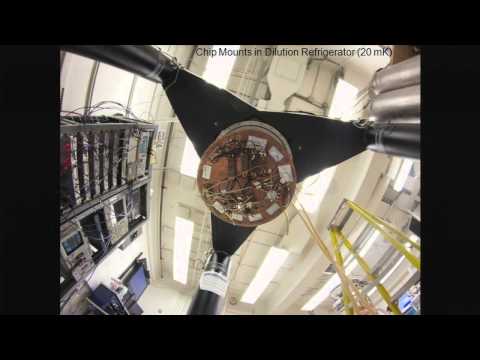
Tech Talk: John Martinis, "Design of a Superconducting Quantum Computer"
0
Daniel Yang posted on 2014/11/21Ever wondered how a quantum computer is actually built? Dive into the fascinating world of superconducting qubits with John Martinis as he explains the design of a quantum computer, covering concepts like the Xmon qubit and surface code. You'll pick up some seriously advanced vocabulary while learning about cutting-edge research!
Learn this video on the APP!
The VoiceTube App has more in-depth practice for videos!