
affect
US /əˈfɛkt/
UK /ə'fekt/
- Transitive Verb
- To cause a change in something else
- To pretend to have or feel (something).
- Noun
- (Psychology) Emotion or feeling.
A2TOEICMoreangle
US /ˈæŋɡəl/
UK /ˈæŋgl/
- Noun
- Place where two lines or surfaces meet
B1TOEICMorearound the world
US /əˈraʊnd ði wɜrld/
UK /əˈraund ðə wɜː(r)ld/
- Phrase
- In or to many countries.
- In various places throughout the world.
A2Moreas many times
US
UK
- Phrase
- As frequently as desired or needed; without limit to the number of attempts or occurrences.
A1Moreas soon as
US /æz sun æz/
UK /æz su:n æz/
- Phrase
- In a short time after (something happens)
- Without any delay; immediately
- Conjunction
- At the moment that, or immediately after.
A1Moreat school
US
UK
- Phrase
- Present and attending school.
A1Moreback down
US /bæk daʊn/
UK /bæk daun/
- Phrasal Verb
- To admit you were wrong; stop claiming
A1Moreballot
US /ˈbælət/
UK /'bælət/
- Countable Noun
- Piece of paper used for the purpose of voting
- Intransitive Verb
- To have voted in an election
B2Moreblade
US /bled/
UK /bleɪd/
- Noun
- One of several flat pieces in a fan which move air
- Sharp edge used for cutting
B1Morebreach
US /britʃ/
UK /bri:tʃ/
- Transitive Verb
- To break laws or barriers (e.g. walls)
B1TOEICMorecause
US /kɔz/
UK /kɔ:z/
- Noun
- Belief, goal or organization that people support
- Reason for
- Transitive Verb
- To make something happen; create effect or result
A2Morechallenge
US /ˈtʃæləndʒ/
UK /'tʃælɪndʒ/
- Noun (Countable/Uncountable)
- An activity you wish to try that may be hard to do
- Act of formally inviting someone to compete
- Transitive Verb
- To formally invite someone to compete at something
- To question the correctness of something
A2Morecoercion
US /koˈə:ʒən,-ʃən/
UK /kəʊ'ɜ:ʃn/
- Uncountable Noun
- Forcing people to do things by threats or the law
B2Morecount
US /kaʊnt/
UK /kaʊnt/
- Verb (Transitive/Intransitive)
- To add things together to find the total number
- To matter or be important
- Countable Noun
- Number of things added together, e.g. votes
- With the number of crimes, knockouts, as stated
A2Moredatum
US /ˈdetəm, ˈdætəm, ˈdɑtəm/
UK /ˈdeɪtəm/
- Noun
- Item of factual information
B1Moredegree
US /dɪˈɡri/
UK /dɪˈgri:/
- Noun (Countable/Uncountable)
- Amount or extent of something
- Unit for measuring temperature or angles
A2TOEICMoredemocracy
US /dɪˈmɑkrəsi/
UK /dɪ'mɒkrəsɪ/
- Noun (Countable/Uncountable)
- System of government in which everyone is equal
- Principles of social equality and respect for the individual within a society.
B1Moredemonstration
US /ˌdɛmənˈstreʃən/
UK /ˌdemənˈstreɪʃn/
- Noun
- Open showing of emotion
- Public gathering showing disagreement or support
B1TOEICMoredenial of
US
UK
- Uncountable Noun
- The act of refusing to grant or allow something requested.
- The act of stating that something is not true.
election
US /ɪˈlɛkʃən/
UK /ɪ'lekʃn/
- Noun
- Process of choosing someone by voting
B1TOEICMoreengineering
US /ˌendʒɪˈnɪrɪŋ/
UK /ˌendʒɪˈnɪərɪŋ/
- Uncountable Noun
- The practical application of science to industry
B1Moreentire
US /ɛnˈtaɪr/
UK /ɪn'taɪə(r)/
- Adjective
- Complete or full; with no part left out; whole
- Undivided; not shared or distributed.
A2TOEICMoreextremely
US /ɪk'strimlɪ/
UK /ɪkˈstri:mli/
- Adverb
- In a way that is much more than usual or expected
- Remarkably; unusually.
B1Morefeel like
US
UK
- Intransitive Verb
- To have a desire or inclination for something.
- To have a particular quality or sensation; resemble.
A1Morefill out
US /fɪl aʊt/
UK /fil aut/
- Phrasal Verb
- To become fatter
- To complete a form by adding information needed
A1Moreflip
US /flɪp/
UK /flɪp/
- Verb (Transitive/Intransitive)
- To turn your body in the air, as in gymnastics
- To move into a different position quickly
- Noun
- Act of turning your body in the air; somersault
- Movement of something from one position to another
B2Morefor certain
US /fɔr ˈsɚtn/
UK /fɔ: ˈsə:tn/
- Idiom
- Definitely; without a doubt.
- Phrase
- Without any doubt; definitely.
for example
US
UK
- Phrase
- As an illustration or instance.
get through
US /ɡɛt θru/
UK /ɡet θru:/
- Phrasal Verb
- To arrive at the end of or finish something
- To succeed in contacting someone by phone
A1Moregoes well
US
UK
- Phrasal Verb
- To happen in the way desired
- Intransitive Verb
- To be successful or satisfactory; to turn out favorably.
- To be harmonious or matching; to look good together.
A1Moregot to
US /ɡɑt tu/
UK /gɔt tu:/
- Verb (Transitive/Intransitive)
- To arrive at some place
- To have the opportunity or permission to do something
- Phrasal Verb
- To appeal to the emotions of; move
- To finally begin to start something after a delay
A1Morehave to
US /hæv tu/
UK /ˈhæv tə/
- Auxiliary Verb
- Must do
A1Morehuge
US /hjudʒ/
UK /hju:dʒ/
- Adjective
- Very very large
A2Morein case of
US /ɪn kes ʌv/
UK /in keis ɔv/
- Preposition
- If something happens; in the event of.
- If something happens.
- Conjunction
- To be prepared for something that might happen.
A1Morein practice
US /ɪn ˈpræktɪs/
UK /in ˈpræktis/
- Phrase
- In reality or actual use; as opposed to in theory.
A1Morein secret
US /ɪn ˈsiːkrət/
UK /in ˈsiːkrət/
- Phrase
- Done or kept in a way that is not known or seen by others.
B1Morein some places
US
UK
- Phrase
- In certain locations or areas, but not all.
A1Morein the first place
US
UK
- Phrase
- To begin with; as the first point or consideration.
- From the beginning; initially.
A1Morein the meantime
US /ɪn ði ˈminˌtaɪm/
UK /in ðə ˈmi:ntaim/
- Phrase
- During the time between two events; meanwhile.
A1Morein the world
US /ɪn ði wɜrld/
UK /in ðə wɜː(r)ld/
- Phrase
- Used to emphasize a question expressing surprise, confusion, disbelief
- Used to indicate the extent or degree of something, often in a superlative sense
A1Morelog into
US /lɑɡ ˈɪntu/
UK /lɒɡ ˈɪntə/
- other
- To enter credentials to access a computer system or website.
A2Moremalware
US
UK
- Noun (Countable/Uncountable)
- Software containing virus or harmful code
C2Moreno go
US
UK
- Noun
- A failure; something that does not proceed as planned.
A1Moreno matter
US
UK
- Conjunction
- Regardless of; it does not matter.
- Adverb
- Regardless of; it is not important
A1Morenot available
US /nɑt əˈveləbəl/
UK /nɔt əˈveiləbl/
- Adjective
- Not able to be used or obtained; inaccessible.
- Not present or accessible; unable to be contacted.
A1Morenumber of people
US /ˈnʌmbɚ ʌv ˈpipəl/
UK /ˈnʌmbə ɔv ˈpi:pl/
- Phrase
- The total count of individuals within a group or gathering.
- A statistical figure representing the population size or a subset thereof.
A1Moreonline
US /ˌɑ:nˈlaɪn/
UK /ˌɒnˈlaɪn/
- Adjective
- Connected to the internet
- Adverb
- Via the internet.
B1Morepolitical
US /pəˈlɪtɪkəl/
UK /pəˈlɪtɪkl/
- Adjective
- Being active or interested in government matters
- Diplomatic
A2Morepoll
US /pol/
UK /pəʊl/
- Noun (Countable/Uncountable)
- Process of gathering opinions by asking questions
- Polls where you go to cast your vote in elections
- Transitive Verb
- To ask a group of people in a vote or election
B1TOEICMoreprocess
US /ˈprɑsˌɛs, ˈproˌsɛs/
UK /prə'ses/
- Transitive Verb
- To organize and use data in a computer
- To deal with official forms in the way required
- Noun (Countable/Uncountable)
- Dealing with official forms in the way required
- Set of changes that occur slowly and naturally
A2TOEICMoreprogress
US /ˈprɑɡˌrɛs, -rəs, ˈproˌɡrɛs/
UK /'prəʊɡres/
- Verb (Transitive/Intransitive)
- To move forward or toward a place or goal
- To make progress; develop or improve.
- Uncountable Noun
- Act of moving forward
- The process of improving or developing something over a period of time.
A2TOEICMoreproperly
US /ˈprɑːpərli/
UK /ˈprɔpəlɪ/
- Adverb
- In an appropriate or correct manner
- In a way that is suitable or appropriate.
A2Morerazor
US /ˈrezɚ/
UK /ˈreɪzə(r)/
- Noun
- Tool with a sharp edge used to shave beard or hair
C1Moresecure
US /sɪˈkjʊr/
UK /sɪ'kjʊə(r)/
- Transitive Verb
- To get or achieve something with certainty
- To firmly attach something to something else
- Adjective
- Being attached to something tightly and surely
- (Place that is) locked, guarded and safe
A2TOEICMoresecurity
US /sɪˈkjʊrɪti/sə'kjurətɪ/
UK /sɪ'kjʊərətɪ/
- Noun
- Department in a company in charge of protection
- Financial document, like stocks, bonds and notes
A2TOEICMorestandpoint
US /ˈstændˌpɔɪnt/
UK /ˈstændpɔɪnt/
- Noun
- Mental position from which things are viewed
C2TOEICMoresubmit
US /səbˈmɪt/
UK /səbˈmɪt/
- Intransitive Verb
- To accept a superior force has power over you
A2TOEICMoretake back
US /tek bæk/
UK /teik bæk/
- Phrasal Verb
- To say you no longer agree with an opinion you had
- To return something you bought to the store
- Transitive Verb
- To retract or withdraw a statement or claim.
- To regain possession of something.
A1Moretake off
US /tek ɔf/
UK /teik ɔf/
- Phrasal Verb
- To remove, e.g. your clothes
- To make arrangements to be absent from work
- Verb (Transitive/Intransitive)
- To remove (an item of clothing).
- To depart; to leave.
A1Moretalking about
US
UK
- Phrasal Verb
- To discuss a particular topic.
- To be constantly mentioning or bringing up a subject.
A1Moretechnology
US /tɛkˈnɑlədʒi/
UK /tek'nɒlədʒɪ/
- Uncountable Noun
- Use or knowledge of science in industry etc.
- Machinery and equipment developed from scientific knowledge.
A2TOEICMorethink of
US /θɪŋk ʌv/
UK /θiŋk ɔv/
- Phrasal Verb
- To look on as (being something specific); consider
- To consider or remember something.
- Verb (Transitive/Intransitive)
- To imagine or call something to mind
A1Moreto let
US /tu lɛt/
UK /tu let/
- Preposition
- Indicates that a property is available for rent.
A2Moreturnout
US /ˈtə:nˌaʊt/
UK /ˈtɜ:naʊt/
- Noun
- Outward rotation of a dancer's leg from the hip
C2Morevote in
US /voʊt ɪn/
UK /vəut ɪn/
- other
- To elect someone into a position by voting.
B1Morevoter
US /ˈvotɚ/
UK /ˈvəʊtə(r)/
- Countable Noun
- Person who can vote in an election
B1More
Vocabulary
- for example: As an illustration or instance.
- have to: Must do
- vote in: To elect someone into a position by voting.
- in some places: In certain locations or areas, but not all.
- take off: To remove, e.g. your clothes
- to let: Indicates that a property is available for rent.
- back down: To admit you were wrong; stop claiming
- fill out: To become fatter
- around the world: In or to many countries.
- not available: Not able to be used or obtained; inaccessible.
- at school: Present and attending school.
- in case of: If something happens; in the event of.
- number of people: The total count of individuals within a group or gathering.
- talking about: To discuss a particular topic.
- in the world: Used to emphasize a question expressing surprise, confusion, disbelief
- no go: A failure; something that does not proceed as planned.
- log into: To enter credentials to access a computer system or website.
- in secret: Done or kept in a way that is not known or seen by others.
- take back: To say you no longer agree with an opinion you had
- as many times: As frequently as desired or needed; without limit to the number of attempts or occurrences.
- think of: To look on as (being something specific); consider
- got to: To arrive at some place
- as soon as: In a short time after (something happens)
- get through: To arrive at the end of or finish something
- feel like: To have a desire or inclination for something.
- in practice: In reality or actual use; as opposed to in theory.
- for certain: Definitely; without a doubt.
- denial of: The act of refusing to grant or allow something requested.
- goes well: To happen in the way desired
- in the meantime: During the time between two events; meanwhile.
- in the first place: To begin with; as the first point or consideration.
- no matter: Regardless of; it does not matter.
- sort: To organize things by putting them into groups
- entire: Complete or full; with no part left out; whole
- process: To organize and use data in a computer
- extremely: In a way that is much more than usual or expected
- properly: In an appropriate or correct manner
- progress: To move forward or toward a place or goal
- flip: To turn your body in the air, as in gymnastics
- imagine: To think creatively about; form mental picture of
- bit: Device put in a horse's mouth to control it
- political: Being active or interested in government matters
- affect: To cause a change in something else
- cause: Belief, goal or organization that people support
- simply: In an easy or clear manner
- democracy: System of government in which everyone is equal
- huge: Very very large
- security: Department in a company in charge of protection
- challenge: An activity you wish to try that may be hard to do
- secure: To get or achieve something with certainty
- degree: Amount or extent of something
- record: Highest or most extreme level achieved
- breach: To break laws or barriers (e.g. walls)
- poll: Process of gathering opinions by asking questions
- company: Good feeling from being with someone else
- submit: To accept a superior force has power over you
- secret: Kept hidden from others; Known only to a few people
- lot: What happens to a person in life from chance; fate
- count: To add things together to find the total number
- place: To put someone in a particular type of situation
- technology: Use or knowledge of science in industry etc.
- system: Set of organized, planned ideas that work together
- allow: To admit the validity or truth of something
- demonstration: Open showing of emotion
- election: Process of choosing someone by voting
- public: Owned by the government
- piece: A counter in a board game
- bring: To take or go with someone to a place
- ballot: Piece of paper used for the purpose of voting
- great: Very good; better than before
- blade: One of several flat pieces in a fan which move air
- coercion: Forcing people to do things by threats or the law
- razor: Tool with a sharp edge used to shave beard or hair
- angle: Place where two lines or surfaces meet
- datum: Item of factual information
- standpoint: Mental position from which things are viewed
- turnout: Outward rotation of a dancer's leg from the hip
- malware: Software containing virus or harmful code
- engineering: The practical application of science to industry
- online: Connected to the internet
- voter: Person who can vote in an election
Get the full experience in the app
Learn anywhere with detailed sentence and usage analysis
01:03
She took a brave step forward, leaving behind her comfort zone to chase her dreams.
Vocabulary
- brave
adj. Having courage
- comfort zone
phr. A familiar situation where one feels safe
Explanation
a brave step is a noun phrase, where brave is an adjective modifying the noun step, meaning "a courageous step".
forward is an adverb modifying step, meaning "ahead".
The whole phrase serves as the object, answering the "what" of took (verb) — she took a brave step forward.
Get the full experience in the app
Look up words anytime with pronunciation, part of speech, and usage
brave
US/brev/
UK/breɪv/
adj.Brave
v.t.To bravely face
A2 Elementary
Get the full experience in the app
Practice speaking anytime and get instant pronunciation feedback
Try this speaking exercise.
Try practicing with this sentence.
80
0
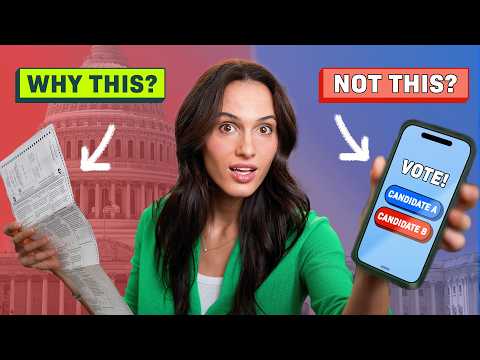
VoiceTube posted on 2024/11/05Ever wondered why casting your vote online isn't as simple as online shopping? This video dives into the fascinating world of online voting, exploring everything from election security and DDoS attacks to real-world examples like Estonia's eID system. You'll pick up advanced vocabulary and gain a deeper understanding of this complex topic!
Learn this video on the APP!
The VoiceTube App has more in-depth practice for videos!