
as a result of
US
UK
- Phrase
- Because of something; owing to.
A1Morebreak up
US /brek ʌp/
UK /breik ʌp/
- Phrase
- Phrasal Verb
- (Of party, relationship) to come to an end
- To end something, e.g. a fight
A1Morecapital
US /ˈkæpɪtl/
UK /'kæpɪtl/
- Noun
- Writing the first letter of a word in big letters
- Official main city of a country, province or state
- Adjective
- Main, or major
- (Of an offense) liable to the death penalty.
A2Morecome at
US /kʌm æt/
UK /kʌm æt/
- Phrasal Verb
- To approach someone to attack them
A1Moreemotion
US /ɪˈmoʃən/
UK /iˈməuʃən/
- Noun (Countable/Uncountable)
- A feeling such as sadness, anger or love
- A mental state that arises spontaneously rather than through conscious effort
A2Moregoing on
US /ˈɡoɪŋ ɑn/
UK /ˈgəʊɪŋ ɔn/
- Phrasal Verb
- To continue doing something
- To happen (usually negative)
A1Morehave to
US /hæv tu/
UK /ˈhæv tə/
- Auxiliary Verb
- Must do
A1Moreindependent
US /ˌɪndɪˈpɛndənt/
UK /ˌɪndɪˈpendənt/
- Adjective
- Making your own decisions; acting by yourself
- Not connected with or influenced by something else.
- Noun
- A person not connected to a political party
- Someone who is independent, especially in politics or business.
A2TOEICMorelook at
US /lʊk æt/
UK /luk æt/
- Phrasal Verb
- To use your eyes to focus on something
- To focus your eyes on something carefully
A1Moremark
US /mɑrk/
UK /mɑ:k/
- Proper Noun
- Person's name
- Transitive Verb
- To put a dirty spot or line on something
- To give a grade for homework
A2TOEICMoreof course
US /ʌv kɔː(r)s/
UK /ɔv kɔː(r)s/
- Adverb
- Sure ; Certainly
- Phrase
- For sure; certainly
A2Morepunctuation
US /ˌpʌŋktʃuˈeʃən/
UK /ˌpʌŋktʃuˈeɪʃn/
- Noun
- Marks used in piece of writing, such as ? ; and !
B2Morerun on
US /rʌn ɑn/
UK /rʌn ɔn/
- Phrasal Verb
- To continue longer than expected, e.g. a meeting
- To talk without stopping, often on the same topic
- Intransitive Verb
- To continue without a break or clear separation, especially in writing.
A1Moreseparate
US /'sepəreɪt/
UK /'sepəreɪt/
- Adjective
- Being different from or unrelated to another
- Not connected; different.
- Transitive Verb
- To divide two things by being in between them
- To move things away from each other
A2TOEICMoreshort and sweet
US /ʃɔrt ənd swit/
UK /ʃɔ:t ænd swi:t/
- Adjective
- Brief and pleasant; concise and agreeable.
- Phrase
- Direct and without unnecessary detail.
A1Moresplit up
US /splɪt ʌp/
UK /split ʌp/
- Phrasal Verb
- To break up your marriage or relationship
- To divide something into smaller parts.
- Noun
- A termination of a romantic relationship
A2Moreto the point
US /tu ði pɔɪnt/
UK /tu: ðə pɔint/
- Adjective
- Expressing something directly and without unnecessary detail.
- Phrase
- Relevant and pertinent to the matter at hand.
A2More
Vocabulary
- look at: To use your eyes to focus on something
- run on: To continue longer than expected, e.g. a meeting
- of course: Sure ; Certainly
- have to: Must do
- come at: To approach someone to attack them
- as a result of: Because of something; owing to.
- going on: To continue doing something
- break up
- split up: To break up your marriage or relationship
- to the point: Expressing something directly and without unnecessary detail.
- short and sweet: Brief and pleasant; concise and agreeable.
- thought: To have an idea about something without certainty
- period: Set amount of time during which events take place
- sentence: (Of a judge) to decide the punishment of
- question: To ask for or try to get information
- subject: The person, thing, or idea that is being discussed, described, or studied.
- separate: Being different from or unrelated to another
- capital: Writing the first letter of a word in big letters
- complete: To finish or reach the end of doing something
- put: To move or place a thing in a particular position
- emotion: A feeling such as sadness, anger or love
- verb: Word that expresses an action or state
- independent: Making your own decisions; acting by yourself
- idea: Belief, thought, suggestion, opinion or plan
- punctuation: Marks used in piece of writing, such as ? ; and !
- mark: Person's name
Get the full experience in the app
Learn anywhere with detailed sentence and usage analysis
01:03
She took a brave step forward, leaving behind her comfort zone to chase her dreams.
Vocabulary
- brave
adj. Having courage
- comfort zone
phr. A familiar situation where one feels safe
Explanation
a brave step is a noun phrase, where brave is an adjective modifying the noun step, meaning "a courageous step".
forward is an adverb modifying step, meaning "ahead".
The whole phrase serves as the object, answering the "what" of took (verb) — she took a brave step forward.
Get the full experience in the app
Look up words anytime with pronunciation, part of speech, and usage
brave
US/brev/
UK/breɪv/
adj.Brave
v.t.To bravely face
A2 Elementary
Get the full experience in the app
Practice speaking anytime and get instant pronunciation feedback
Try this speaking exercise.
Try practicing with this sentence.
80
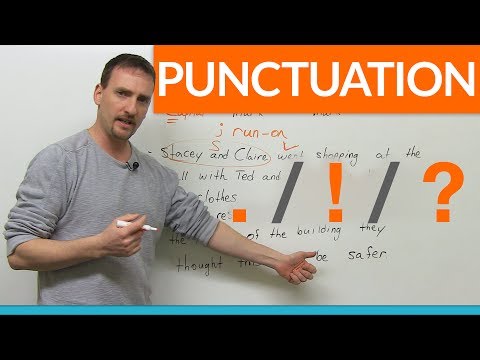
Learn Punctuation: period, exclamation mark, question mark
0
Susy posted on 2014/09/17Ever get confused about where to put a period, question mark, or exclamation mark? Adam from engVid breaks down these essential punctuation marks in a super clear way, helping you avoid those tricky run-on sentences! You'll pick up key grammar tips that make your writing shine.
Learn this video on the APP!
The VoiceTube App has more in-depth practice for videos!