
all at once
US
UK
- Adverb
- Suddenly; at the same time
- At the same time; simultaneously
- Phrase
- Suddenly; at the same time
A1Morealmost all of
US
UK
- Determiner
- Nearly the entire quantity or number of something.
- Pronoun
- Nearly every person in a group.
A1Morealong with
US /əˈlɔŋ wɪð/
UK /əˈlɔŋ wið/
- Preposition
- In addition to; together with.
- Adverb
- In company or together with someone or something.
- Including; in addition to.
A2Morearound the world
US /əˈraʊnd ði wɜrld/
UK /əˈraund ðə wɜː(r)ld/
- Phrase
- In or to many countries.
- In various places throughout the world.
A2Moreat a time
US /æt e taɪm/
UK /æt ə taim/
- Phrase
- Separately; one by one
- Simultaneously; together
A1Moreat last
US /æt læst/
UK /æt lɑ:st/
- Adverb
- Finally; after a long delay.
B1Moreat least
US /æt list/
UK /æt li:st/
- Adverb
- As a minimum
- Not less than
- Phrase
- No less than; at the minimum
- Used to indicate that something is positive in a bad situation.
C2Moreat night
US /æt naɪt/
UK /æt nait/
- Phrase
- During the night; in the nighttime.
A1Moreat once
US /æt wʌns/
UK /æt wʌns/
- Adverb
- Immediately; without delay
- At the same time; simultaneously
A2Moreat risk
US
UK
- Phrase
- In danger; likely to be harmed
at that time
US /æt ðæt taɪm/
UK /æt ðæt taim/
- Phrase
- During a specific point in the past.
A1Moreback into
US /bæk ˈɪntu/
UK /bæk ˈɪntuː/
- Phrasal Verb
- To drive a vehicle backwards into a space or area.
- To accidentally collide with something while moving backwards.
A1Moreback out
US /bæk aʊt/
UK /bæk aut/
- Phrasal Verb
- To say you will now not do something you promised
A1Moreback up
US /bæk ʌp/
UK /bæk ʌp/
- Phrasal Verb
- To save a copy of your computer data
- To confirm the truth of what someone says
A1Morebear with me
US
UK
- Phrasal Verb
- Be patient with me.
A2Morebill
US /bɪl/
UK /bɪl/
- Noun
- Plan for a new law being discussed by a government
- Sign or poster advertising something
- Transitive Verb
- To request payment by handing over an invoice
A2TOEICMorebring about
US
UK
- Phrasal Verb
- To cause to happen
A1Moreby half
US /baɪ hæf/
UK /baɪ hɑ:f/
- other
- Indicates something is at 50% or to a large but incomplete extent.
B2Morechoke up
US /tʃok ʌp/
UK /tʃəuk ʌp/
- Phrasal Verb
- To become unable to speak because you are feeling strong emotion, usually sadness.
- Intransitive Verb
- To grip a baseball bat higher up from the end to shorten the swing and gain more control.
A1Morecome back
US /kʌm bæk/
UK /kʌm bæk/
- Phrasal Verb
- To reply to someone, often forcefully
- To be remembered
A1Morecome from
US /kʌm frʌm/
UK /kʌm frɔm/
- Phrasal Verb
- To have as your native country or city
A1Morecome together
US /kʌm təˈɡɛðɚ/
UK /kʌm təˈɡeðə/
- Phrasal Verb
- To assemble or unite; to start working together.
- To form a close relationship or bond.
A1Moredemocracy
US /dɪˈmɑkrəsi/
UK /dɪ'mɒkrəsɪ/
- Noun (Countable/Uncountable)
- System of government in which everyone is equal
- Principles of social equality and respect for the individual within a society.
B1Moredraw in
US /drɔ ɪn/
UK /drɔ: in/
- Phrasal Verb
- To attract or entice someone or something.
- To involve someone in a situation, often unwillingly.
A1Moredrop out
US /drɑp aʊt/
UK /drɔp aut/
- Phrasal Verb
- To take no part in a society you disapprove of
- To quit school, a club or activity
- Intransitive Verb
- To quit a course of study or training.
A1Moreeat in
US /it ɪn/
UK /i:t ɪn/
- other
- To have a meal at home instead of going out.
A2Moreexcept for
US /ɪkˈsɛpt fɔr/
UK /ikˈsept fɔ:/
- Preposition
- Not including; excluding.
experience in
US
UK
- Phrase
- Knowledge or skill gained from doing something for a period of time.
- Exposure to or involvement in a particular activity or situation.
B1Morefeel like
US
UK
- Intransitive Verb
- To have a desire or inclination for something.
- To have a particular quality or sensation; resemble.
A1Morefeel right
US
UK
- Intransitive Verb
- To seem correct or appropriate; to give a sense of being morally or ethically sound.
A1Morefigure out
US /ˈfɪɡjɚ aʊt/
UK /ˈfiɡə aut/
- Phrasal Verb
- To understand the behavior of someone
- To think through logically to find a solution
- Verb (Transitive/Intransitive)
- To understand or find an answer to something.
- To find a solution to a problem or understand something.
A1Morefill in
US /fɪl ɪn/
UK /fil in/
- Phrasal Verb
- To put earth in e.g. a hole
- To explain the context so that someone understands
- Verb (Transitive/Intransitive)
- To write or type information in a blank space.
- To temporarily do someone else's job.
A1Morefor example
US
UK
- Phrase
- As an illustration or instance.
for myself
US /fɚ maɪˈsɛlf/
UK /fə maɪˈself/
- other
- Done for one's own benefit or use.
A1Morefor someone
US /fɚ ˈsʌmwʌn/
UK /fə ˈsʌmwʌn/
- other
- On behalf of or intended for a particular person.
A1Moregeneric
US /dʒəˈnɛrɪk/
UK /dʒə'nerɪk/
- Adjective
- Concerning a product without a brand name
- Concerning an entire class, category, or group
B2Moreget together
US /ɡɛt təˈɡɛðɚ/
UK /ɡet təˈɡeðə/
- Phrasal Verb
- To gather, or come together for some purpose
- To start a romantic relationship.
- Verb (Transitive/Intransitive)
- To meet for social or recreational purposes.
- To start a romantic relationship.
A1Morego ahead
US /ɡo əˈhɛd/
UK /ɡəu əˈhed/
- Phrasal Verb
- To start an activity; start doing, working etc.
- To give permission to do something
- Intransitive Verb
- To start or proceed with something
- To proceed despite potential obstacles or doubts.
A1Morego out
US /ɡo aʊt/
UK /ɡəu aut/
- Phrase
- To leave a building (e.g. a house)
- Phrasal Verb
- (Of a fire) to burn out; be extinguished
- Go out of fashion to stop being fashionable
A1Moregot to
US /ɡɑt tu/
UK /gɔt tu:/
- Verb (Transitive/Intransitive)
- To arrive at some place
- To have the opportunity or permission to do something
- Phrasal Verb
- To appeal to the emotions of; move
- To finally begin to start something after a delay
A1Moregrow up
US /ɡro ʌp/
UK /ɡrəu ʌp/
- Phrasal Verb
- To develop from a child into an adult
A1Morehave to
US /hæv tu/
UK /ˈhæv tə/
- Auxiliary Verb
- Must do
A1Morein a nutshell
US
UK
- Phrase
- As a summary; including the main points concisely
C2Morein business
US /ɪn ˈbɪznɪs/
UK /in ˈbiznis/
- Phrase
- Actively operating as a commercial enterprise.
- Having a commercial partnership or association.
A1Morein fact
US /ɪn fækt/
UK /in fækt/
- Adverb
- Used to emphasize the truth of a statement, especially one that contrasts with or contradicts something else.
- Used to introduce a more detailed or surprising piece of information.
- Phrase
- Used to emphasize the truth of a statement, especially one that is surprising or contrary to what might be expected.
C1Morein itself
US /ɪn ɪtˈsɛlf/
UK /in itˈself/
- Phrase
- Considered alone or without reference to anything else; intrinsically.
- Essentially; by its very nature.
in part
US /ɪn pɑrt/
UK /in pɑ:t/
- Adverb
- To some extent; partially.
A1Morein phase
US /ɪn fez/
UK /in feiz/
- Adjective
- Occurring at the same time or in a synchronized manner; having matching cycles.
- Phrase
- In agreement or harmony; working together effectively.
A1Morein school
US /ɪn skul/
UK /ɪn sku:l/
- other
- Attending an educational institution.
A1Morein terms of
US
UK
- Phrase
- With regard to; concerning a particular aspect.
A1Morein the house
US
UK
- Phrase
- Located inside a building used as a dwelling.
- Within a legislative body, such as a parliament or congress.
A1Morein the process of
US /ɪn ði ˈprɑsˌɛs ʌv/
UK /in ðə ˈprəuses ɔv/
- Phrase
- During the course of; while something is happening or being done.
A1Morein the world
US /ɪn ði wɜrld/
UK /in ðə wɜː(r)ld/
- Phrase
- Used to emphasize a question expressing surprise, confusion, disbelief
- Used to indicate the extent or degree of something, often in a superlative sense
A1Moreinstead of
US /ɪnˈstɛd ʌv/
UK /inˈsted ɔv/
- Preposition
- When one thing is replaced by another
- Adverb
- As a substitute or alternative.
A1Moreinto power
US /ˈɪntu ˈpaʊɚ/
UK /ˈɪntəʊ ˈpaʊə/
- other
- To gain political control or leadership position.
B2Morejump on
US /dʒʌmp ɑn/
UK /dʒʌmp ɔn/
- Phrasal Verb
- To criticize someone suddenly and strongly.
- To take advantage of an opportunity quickly.
A1Moreknow about
US /noʊ əˈbaʊt/
UK /nəʊ əˈbaut/
- Phrasal Verb
- To have information or understanding of a subject or situation.
last person
US
UK
- Noun
- The individual who is the final one in a sequence or group.
- The individual who is the least likely to do something or be in a particular situation.
A1Morelook after
US /lʊk ˈæftɚ/
UK /luk ˈɑ:ftə/
- Phrasal Verb
- To take care of someone or something
A1Morelook at
US /lʊk æt/
UK /luk æt/
- Phrasal Verb
- To use your eyes to focus on something
- To focus your eyes on something carefully
A1Morelook back
US /lʊk bæk/
UK /luk bæk/
- Phrasal Verb
- To think about past events
A1Moremake up
US /mek ʌp/
UK /meik ʌp/
- Phrasal Verb
- To invent or create a story
- To add up to
- Verb (Transitive/Intransitive)
- To invent a story, excuse, etc.
- To compensate for something lost, missed, or deficient.
A1Moremuch about
US /mʌtʃ əˈbaʊt/
UK /mʌtʃ əˈbaut/
- Phrase
- A lot of information or knowledge concerning something.
- To a great extent or degree regarding something; caring.
A1Morenext to
US /nɛkst tu/
UK /nekst tu:/
- Preposition
- Being located along side another
- In comparison with
- Adverb
- Almost; nearly
A1Morenutrition
US /nuˈtrɪʃən, nju-/
UK /njuˈtrɪʃn/
- Uncountable Noun
- Scientific study of the effects of foods on health
- Food and other things you eat or drink
B1Moreof course
US /ʌv kɔː(r)s/
UK /ɔv kɔː(r)s/
- Adverb
- Sure ; Certainly
- Phrase
- For sure; certainly
A2Moreon air
US /ɑn er/
UK /ɔn eə(r)/
- Adverb
- Being broadcast on radio or television.
- Adjective
- Available or accessible to the public.
A2Moreon sunday
US
UK
- Phrase
- Every Sunday; each Sunday.
- Referring to a particular Sunday.
A1Moreon television
US /ɑn ˈtɛləvɪʒən/
UK /ɒn ˈtelɪvɪʒən/
- other
- Appearing or broadcast on TV.
A2Moreon to
US /ɑn tu/
UK /ɔn tu:/
- Preposition
- Toward something; forward
- Aware of someone's activities.
- Adjective
- Aware of someone's deception or illegal activities.
A1Moreout of fashion
US /aʊt ʌv ˈfæʃən/
UK /aut ɔv ˈfæʃən/
- Adjective
- No longer fashionable or in style.
A1Moreout there
US /aʊt ðɛr/
UK /aut ðɛə/
- Adverb
- In or to a place that is far away
- Existing in the universe
- Adjective
- Unconventional; strange; avant-garde
- Existing or available.
A1Moreoutside of
US /aʊtˈsaɪd ʌv/
UK /ˌautˈsaid ɔv/
- Preposition
- Located or situated beyond the boundaries or confines of something.
- Beyond the scope, range, or limits of something.
A1Moreover to
US
UK
- Preposition
- Used to hand over to someone else to speak
- The responsibility is now yours
put out
US /pʊt aʊt/
UK /put aut/
- Phrasal Verb
- To publish, e.g. a book
- To cause someone to be troubled or inconvenienced
A1Morerate it
US
UK
- Phrasal Verb
- To give something a score or evaluation based on its quality or merit.
B1Morerather than
US
UK
- Adverb
- More exactly; more correctly
- Preferably; instead
- Preposition
- Instead of
A1Morereach down
US
UK
- Phrasal Verb
- To extend one's arm downwards in order to grasp or touch something.
- To offer help or support to someone who is in a lower position or less fortunate.
B1Morereach out
US /ritʃ aʊt/
UK /ri:tʃ aut/
- Phrasal Verb
- To attempt to communicate with someone.
- To offer help and support to someone.
B1Morereproductive health
US
UK
- Uncountable Noun
- The health of the reproductive systems and their functions and processes.
sit by
US /sit baɪ/
UK /sit bai/
- Phrasal Verb
- To do nothing while something bad is happening.
- To be positioned next to something or someone.
A1Morespend money
US /spɛnd ˈmʌni/
UK /spend ˈmʌni/
- Phrase
- To use money to buy or pay for something.
A1Moresuffer from
US /ˈsʌfɚ frʌm/
UK /ˈsʌfə frɔm/
- Intransitive Verb
- To experience pain or distress; to be badly affected by.
A1Moretake in
US
UK
- Phrasal Verb
- To allow to enter; receive as a guest
- To include or add
- Transitive Verb
- To absorb (liquid).
- To understand or comprehend something.
A1Moretalking about
US
UK
- Phrasal Verb
- To discuss a particular topic.
- To be constantly mentioning or bringing up a subject.
A1Moretelevision program
US
UK
- Noun
- A segment of content intended for broadcast on television.
A1Morethink about
US /θɪŋk əˈbaʊt/
UK /θiŋk əˈbaut/
- Phrasal Verb
- To consider something carefully.
- To remember or call to mind.
A1Morethink of
US /θɪŋk ʌv/
UK /θiŋk ɔv/
- Phrasal Verb
- To look on as (being something specific); consider
- To consider or remember something.
- Verb (Transitive/Intransitive)
- To imagine or call something to mind
A1Moreto do with
US
UK
- Phrasal Verb
- To be about something; concern
A1Moreto the core
US
UK
- Phrase
- Completely; fundamentally; in every aspect.
- To the innermost part; to the very essence or center.
A1Moreto the point
US /tu ði pɔɪnt/
UK /tu: ðə pɔint/
- Adjective
- Expressing something directly and without unnecessary detail.
- Phrase
- Relevant and pertinent to the matter at hand.
A2Moretough questions
US
UK
- Phrase
- Difficult or challenging questions that require careful consideration and honest answers.
trickle down
US /ˈtrɪkəl daʊn/
UK /ˈtrikl daun/
- Intransitive Verb
- To gradually spread or filter through from top to bottom, especially in economics, referring to the belief that tax cuts or other benefits for the wealthy will ultimately benefit the poor and middle class.
A1Moreup there
US /ʌp ðɛr/
UK /ʌp ðɛə/
- Adverb
- In or to a higher place or position; far away.
- In heaven.
A1Moreup until now
US
UK
- Phrase
- Until the present time; so far.
A1Morewhole point
US
UK
- Phrase
- The main purpose or most important aspect of something.
- The primary reason or objective.
A2Morework at
US /wɚk æt/
UK /wə:k æt/
- Phrasal Verb
- To have a job at a particular place or organization.
- To make an effort to improve something.
A1Morework in
US /wɚk ɪn/
UK /wə:k in/
- Phrasal Verb
- To make an opening for something in your schedule
- To fit person/thing into a schedule or sequence
A1Morework over
US /wɝk ˈoʊvɚ/
UK /wɜ:k ˈəuvə/
- other
- To physically attack or beat someone severely.
- To revise, review, or improve something by careful effort.
B2More
Vocabulary
- have to: Must do
- talking about: To discuss a particular topic.
- look at: To use your eyes to focus on something
- of course: Sure ; Certainly
- out there: In or to a place that is far away
- rather than: More exactly; more correctly
- in terms of
- in fact: Used to emphasize the truth of a statement, especially one that contrasts with or contradicts something else.
- in the world: Used to emphasize a question expressing surprise, confusion, disbelief
- got to: To arrive at some place
- for example: As an illustration or instance.
- on to: Toward something; forward
- in phase: Occurring at the same time or in a synchronized manner; having matching cycles.
- for someone: On behalf of or intended for a particular person.
- in itself: Considered alone or without reference to anything else; intrinsically.
- for myself: Done for one's own benefit or use.
- reach out: To attempt to communicate with someone.
- think about: To consider something carefully.
- reproductive health: The health of the reproductive systems and their functions and processes.
- at least: As a minimum
- grow up: To develop from a child into an adult
- instead of: When one thing is replaced by another
- next to: Being located along side another
- come back: To reply to someone, often forcefully
- work in: To make an opening for something in your schedule
- last person: The individual who is the final one in a sequence or group.
- drop out: To take no part in a society you disapprove of
- television program: A segment of content intended for broadcast on television.
- feel like: To have a desire or inclination for something.
- sit by: To do nothing while something bad is happening.
- choke up: To become unable to speak because you are feeling strong emotion, usually sadness.
- work over: To physically attack or beat someone severely.
- over to: Used to hand over to someone else to speak
- reach down: To extend one's arm downwards in order to grasp or touch something.
- except for: Not including; excluding.
- work at: To have a job at a particular place or organization.
- jump on: To criticize someone suddenly and strongly.
- look back: To think about past events
- around the world: In or to many countries.
- up there: In or to a higher place or position; far away.
- in business: Actively operating as a commercial enterprise.
- out of fashion: No longer fashionable or in style.
- to the core: Completely; fundamentally; in every aspect.
- in a nutshell: As a summary; including the main points concisely
- think of: To look on as (being something specific); consider
- at risk: In danger; likely to be harmed
- at that time: During a specific point in the past.
- on sunday: Every Sunday; each Sunday.
- bring about: To cause to happen
- in school: Attending an educational institution.
- rate it: To give something a score or evaluation based on its quality or merit.
- trickle down: To gradually spread or filter through from top to bottom, especially in economics, referring to the belief that tax cuts or other benefits for the wealthy will ultimately benefit the poor and middle class.
- in the process of: During the course of; while something is happening or being done.
- up until now: Until the present time; so far.
- back up: To save a copy of your computer data
- by half: Indicates something is at 50% or to a large but incomplete extent.
- whole point: The main purpose or most important aspect of something.
- look after: To take care of someone or something
- make up: To invent or create a story
- on television: Appearing or broadcast on TV.
- bear with me: Be patient with me.
- come from: To have as your native country or city
- into power: To gain political control or leadership position.
- back into: To drive a vehicle backwards into a space or area.
- at last: Finally; after a long delay.
- to the point: Expressing something directly and without unnecessary detail.
- at a time: Separately; one by one
- all at once: Suddenly; at the same time
- at once: Immediately; without delay
- come together: To assemble or unite; to start working together.
- go ahead: To start an activity; start doing, working etc.
- suffer from: To experience pain or distress; to be badly affected by.
- tough questions: Difficult or challenging questions that require careful consideration and honest answers.
- to do with: To be about something; concern
- figure out: To understand the behavior of someone
- get together: To gather, or come together for some purpose
- outside of: Located or situated beyond the boundaries or confines of something.
- back out: To say you will now not do something you promised
- put out: To publish, e.g. a book
- much about: A lot of information or knowledge concerning something.
- at night: During the night; in the nighttime.
- know about: To have information or understanding of a subject or situation.
- take in: To allow to enter; receive as a guest
- on air: Being broadcast on radio or television.
- almost all of: Nearly the entire quantity or number of something.
- in the house: Located inside a building used as a dwelling.
- eat in: To have a meal at home instead of going out.
- along with: In addition to; together with.
- go out: To leave a building (e.g. a house)
- experience in: Knowledge or skill gained from doing something for a period of time.
- in part: To some extent; partially.
- spend money: To use money to buy or pay for something.
- draw in: To attract or entice someone or something.
- fill in: To put earth in e.g. a hole
- feel right: To seem correct or appropriate; to give a sense of being morally or ethically sound.
- people: Persons sharing culture, country, background, etc.
- feel: To be aware of or experience an emotion, sensation
- question: To ask for or try to get information
- important: Having power or authority
- change: To exchange one set of clothes for another
- country: An area of land that is controlled by a government
- lot: What happens to a person in life from chance; fate
- government: Group of people and system that rule a nation
- democracy: System of government in which everyone is equal
- generic: Concerning a product without a brand name
- health: (Person, company) being in a good condition; well
- nutrition: Scientific study of the effects of foods on health
- bill: Plan for a new law being discussed by a government
- money: Coins or notes we use to pay for things
- child: A very young person, between about 2 and 15
Get the full experience in the app
Learn anywhere with detailed sentence and usage analysis
01:03
She took a brave step forward, leaving behind her comfort zone to chase her dreams.
Vocabulary
- brave
adj. Having courage
- comfort zone
phr. A familiar situation where one feels safe
Explanation
a brave step is a noun phrase, where brave is an adjective modifying the noun step, meaning "a courageous step".
forward is an adverb modifying step, meaning "ahead".
The whole phrase serves as the object, answering the "what" of took (verb) — she took a brave step forward.
Get the full experience in the app
Look up words anytime with pronunciation, part of speech, and usage
brave
US/brev/
UK/breɪv/
adj.Brave
v.t.To bravely face
A2 Elementary
Get the full experience in the app
Practice speaking anytime and get instant pronunciation feedback
Try this speaking exercise.
Try practicing with this sentence.
80
0
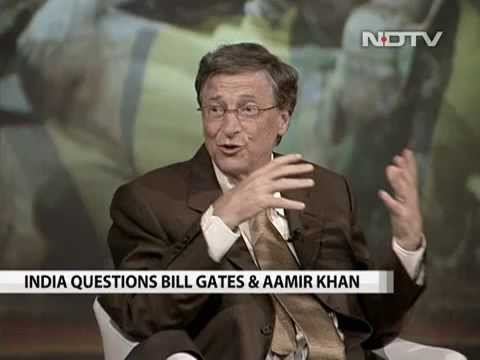
Shin-Chung Huang posted on 2014/08/04Ever wondered what happens when tech titan Bill Gates chats with Bollywood superstar Aamir Khan? This fascinating interview dives into crucial topics like vaccination and Indian healthcare, offering you a chance to pick up practical vocabulary and cultural insights. You'll get a fantastic look at real-world dialogues and learn about important social initiatives!
Learn this video on the APP!
The VoiceTube App has more in-depth practice for videos!