Vocabulary
- come from: To have as your native country or city
- no matter: Regardless of; it does not matter.
- for example: As an illustration or instance.
- on top of that: In addition to something already mentioned; furthermore.
- around the world: In or to many countries.
- regardless of
- interact with
- in the world: Used to emphasize a question expressing surprise, confusion, or disbelief.
- have to: Must do
- out there: In or to a place that is far away
- perceive: To notice or become aware of something
- conscious: Aware of what is going on around you
- mental: Concerning the mind
- recognize: To accept the truth or reality of something
- expression: Act of making your thoughts and feelings known
- immediately: Without any delay; straight away
- intelligence: Collection of secret information about something
- doubt: Not being sure of something; lack of certainty
- develop: To explain something in steps and in detail
- conversation: Talking with other people; discussion or chat
- interact: To talk or do things with each other
- fear: Unpleasant feeling caused by being aware of danger
- express: To send something by fast mail
- represent: To depict art objects, figures, scenes; to portray
- emotional: Causing, feeling, or appealing to the emotions
- complex: Group of buildings all used for the same purpose
- psychology: The study of the mind and how it affects behavior
- incorporate: To form into a company or business corporation
- prevent: To stop something from happening or existing
- implement: To start to do something you plan to do
- awareness: Having knowledge of something
- exist: To be present, alive or real
- theory: Ideas or principles that explain facts or events
- reference: A letter of recommendation, e.g. for a job
- dramatic: Gripping the attention; causing an effect
- create: To make, cause, or bring into existence
- contempt: Extreme lack of respect; strong disapproval
- gender: State of being male or female
- demographic: Group of people with similar characteristics
- important: Having power or authority
- narrator: Person or character who tells a story
- kind: In a caring and helpful manner
- control: A device designed to operate a machine
- upbeat: Being positive and cheerful
- nasal: Concerning, used for, or relating to the nose
- act: To behave in a certain way
- information: Collection of facts and details about something
- slap: To hit with the open hand or with a flat object
- wrinkle: Small folds in the skin, e.g. as a sign of age
- language: Words or signs used to communicate messages
- facial: Treatment to improve condition of the skin of face
- natural: Being as one would expect; being usual or normal
- laugh: To make a happy sound when something is funny
- disgust: Strong feeling of dislike for something
- minimal: The smallest possible; least
- universally: Applying to all people, times, places
- nationality: Being a citizen of country you live, were born in
- depress: To make someone feel sad or miserable
- robot: Machine able perform more tasks that people can
- creed: Set of beliefs/principles by which people live
- android: Robot that looks or seems human
- clamp: Something used to fasten two things together
Get the full experience in the app
Learn anywhere with detailed sentence and usage analysis
01:03
She took a brave step forward, leaving behind her comfort zone to chase her dreams.
Vocabulary
- brave
adj. Having courage
- comfort zone
phr. A familiar situation where one feels safe
Explanation
a brave step is a noun phrase, where brave is an adjective modifying the noun step, meaning "a courageous step".
forward is an adverb modifying step, meaning "ahead".
The whole phrase serves as the object, answering the "what" of took (verb) — she took a brave step forward.
Get the full experience in the app
Look up words anytime with pronunciation, part of speech, and usage
brave
US/brev/
UK/breɪv/
adj.Brave
v.t.To bravely face
A2 Elementary
Get the full experience in the app
Practice speaking anytime and get instant pronunciation feedback
Try this speaking exercise.
Try practicing with this sentence.
80
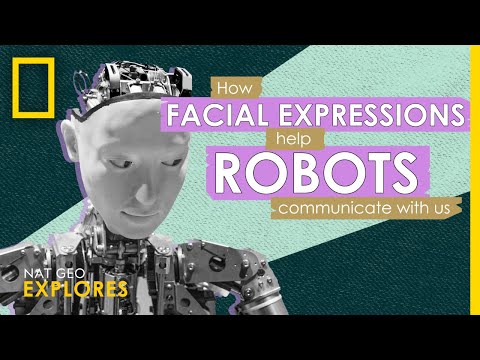
How Facial Expressions Help Robots Communicate with Us | Nat Geo Explores
0
林宜悉 posted on 2022/09/11Ever wondered if robots can understand your feelings? This fascinating video explores how facial expressions are key to human-robot communication, diving into the science behind emotions and how they're being programmed into machines! You'll pick up some advanced vocabulary and see practical examples of human-robot interaction that are straight out of science fiction.
Learn this video on the APP!
The VoiceTube App has more in-depth practice for videos!