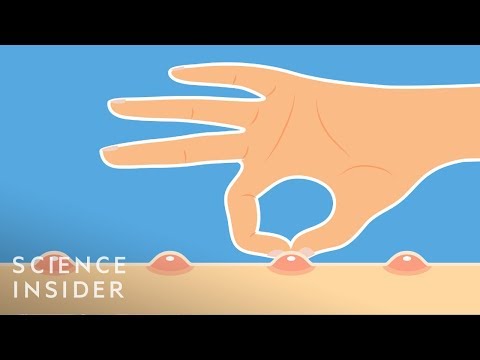

acne
US /ˈækni/
UK /ˈækni/
- Uncountable Noun
- Red spots or pimples on your face
B2Moreapproximately
US /əˈprɑksəmɪtlɪ/
UK /əˈprɒksɪmətli/
- Adverb
- Around; nearly; almost; about (a number)
A2TOEICMorebacteria
US /bækˈtɪriə/
UK /bæk'tɪərɪə/
- Noun (plural)
- The very small creatures that can cause disease
B2Moreballoon
US /bəˈlun/
UK /bəˈlu:n/
- Countable Noun
- Thin bag of rubber filled with air, used as a toy
- Large air-filled bag to carry people into the air
- Verb (Transitive/Intransitive)
- To grow larger quickly; spring up suddenly
- To travel in a large balloon
B1Morebeat
US /bit/
UK /bi:t/
- Intransitive Verb
- To move in regular motions in order to push blood
- Transitive Verb
- To strike or hit repeatedly and with great force
- To mix ingredients together with a fork or machine
A2Moredisease
US /dɪˈziz/
UK /dɪˈzi:z/
- Noun (Countable/Uncountable)
- Illness that affects a person, animal, or plant
- A disorder of structure or function in a plant, especially one caused by a pathogen.
- Transitive Verb
- To affect with disease; to corrupt or sicken.
A2TOEICMoreexpand
US /ɪkˈspænd/
UK /ɪk'spænd/
- Verb (Transitive/Intransitive)
- To make something larger in size, number, amount
A2TOEICMoreflood
US /flʌd/
UK /flʌd/
- Verb (Transitive/Intransitive)
- To quickly appear unexpectedly and in volume
- (Of liquid) to fill or cover something completely
- Noun (Countable/Uncountable)
- A quick unexpectedly volume of something
- Large number of people or things arriving at once
B1Moreinfection
US /ɪnˈfɛkʃən/
UK /ɪnˈfekʃn/
- Noun
- (Computers) Having a computer virus
- Making or becoming sick with a bacteria/virus
A2Moreinflame
US /ɪnˈflem/
UK /ɪnˈfleɪm/
- Transitive Verb
- To cause to get angry or excited
- To set on fire
B1Moreinflammation
US /ˌɪnfləˈmeʃən/
UK /ˌɪnfləˈmeɪʃn/
- Noun (Countable/Uncountable)
- Painful swelling in the body due to illness
- A condition in which a part of the body becomes reddened, swollen, hot, and often painful, especially as a reaction to injury or infection.
B2Moreinstitute
US / ˈɪnstɪˌtut, -ˌtjut/
UK /'ɪnstɪtju:t/
- Noun (Countable/Uncountable)
- Organization studying science, engineering etc.
- A short intensive course of instruction, often focusing on a specific topic.
- Transitive Verb
- To start or commence doing, e.g. a business plan
- To establish or start (a system, rule, or course of action).
A2TOEICMorelead to
US /lid tu/
UK /li:d tu:/
- Phrasal Verb
- To result in some action
- Verb (Transitive/Intransitive)
- To have something as a consequence or result.
A1Moreoccasional
US /əˈkeʒənəl/
UK /əˈkeɪʒənl/
- Adjective
- Not happening often; irregular; rare
A2Morepimple
US /ˈpɪmpəl/
UK /'pɪmpl/
- Countable Noun
- Small inflamed bump on the skin, e.g. from acne
C1Morepop
US /pɑp/
UK /pɒp/
- Verb (Transitive/Intransitive)
- To cause something to open or burst suddenly
- To go to or in a place for a brief period of time
- Noun (Countable/Uncountable)
- Sweet soda drink
- A short, sharp, explosive sound.
B2Morerelease
US /rɪ'li:s/
UK /rɪ'li:s/
- Transitive Verb
- To free someone from a responsibility or burden
- To allow a film, music etc. to be sold/distributed
- Noun
- Act of freeing someone from a duty or burden
- Introduction of a new product, film, book, etc.
A2TOEICMorerelieve
US /rɪˈliv/
UK /rɪ'li:v/
- Transitive Verb
- To make less boring by making some change
- To replace workers with others
B1Moreresist
US /rɪˈzɪst/
UK /rɪ'zɪst/
- Verb (Transitive/Intransitive)
- To not be affected by e.g. a force or an effect
- To fight or prevent something from happening
A2TOEICMoreresist the urge
US
UK
- Phrase
- To fight against a strong desire or temptation.
resolve
US /rɪˈzɑlv/
UK /rɪ'zɒlv/
- Verb (Transitive/Intransitive)
- To make a decision to do something
- To find an answer, solution to a problem/ question
- Uncountable Noun
- Firm determination to do something.
B1TOEICMoreresult
US /rɪˈzʌlt/
UK /rɪ'zʌlt/
- Noun
- Something produced through tests or experiments
- Final score of a competition, election or game
- Intransitive Verb
- To be the outcome of other causes and effects
- To happen or exist as a consequence of something.
A2Moreresult in
US /rɪˈzʌlt ɪn/
UK /riˈzʌlt in/
- Phrasal Verb
- To cause or produce as a consequence.
saint
US /sent/
UK /seɪnt/
- Noun (Countable/Uncountable)
- Person who is very good, kind or patient
- Person of exceptional holiness
B2Morescalp
US /skælp/
UK /skælp/
- Noun
- Part of the human head covered by hair
- Transitive Verb
- To sell e.g. tickets far above the original price
B2Morescar
US /skɑr/
UK /skɑ:(r)/
- Noun (Countable/Uncountable)
- Long lasting emotional pain from a bad experience
- A mark on something made by scratching it
- Transitive Verb
- To cause long lasting emotional pain
- To leave a mark on something by scratching it
B1Morespawn
US /spɔn/
UK /spɔ:n/
- Noun
- Product or result of something
- The young of some fish and animals
- Transitive Verb
- To produce something or make something happen
B2Moresqueeze
US /skwiz/
UK /skwi:z/
- Noun (Countable/Uncountable)
- Amount of liquid from firmly pressing e.g. orange
- Act of putting pressure on, as to get liquid out
- Transitive Verb
- To force or threaten someone to give you something
- To strongly compress something to get liquid out
C1Moresuffer
US / ˈsʌfɚ/
UK /'sʌfə(r)/
- Verb (Transitive/Intransitive)
- To experience pain, illness, or injury
- To allow or permit something, especially something unpleasant.
A2Moresuffer from
US /ˈsʌfɚ frʌm/
UK /ˈsʌfə frɔm/
- Intransitive Verb
- To experience pain or distress; to be badly affected by.
A1Moresurface
US /ˈsɚfəs/
UK /'sɜ:fɪs/
- Transitive Verb
- To give (road) a top layer
- Intransitive Verb
- To appear after being hidden, unseen, or unknown
- To come to the top of something; emerge
A2TOEICMoresurround
US /səˈraʊnd/
UK /səˈraʊnd/
- Transitive Verb
- To be all the way around something
- To be closely connected to and have an effect on
- Verb (Transitive/Intransitive)
- To be closely connected to and have an effect on
A2Moreswell
US /swɛl/
UK /swel/
- Intransitive Verb
- To feel overcome due to a strong emotion
- To increase in size or number larger than normal
- Uncountable Noun
- Being overcome from feeling a strong emotion
- Act of growing in size or increasing in number
B1Moretemporary
US /'tempəreri/
UK /ˈtemprəri/
- Adjective
- Continuing for a limited time; not permanent
- Noun
- A temporary worker.
A2TOEICMoreugly
US /ˈʌɡli/
UK /ˈʌgli/
- Adjective
- (E.g. of a situation) bad; likely to turn nasty
- Unpleasant to look at; not attractive
B1Moreurge
US /ɚdʒ/
UK /ɜ:dʒ/
- Noun (Countable/Uncountable)
- A strong desire for something
- Strong pressure on someone to do something
- Transitive Verb
- To drive something forward
- To ask or encourage someone to do something
A2Morewaterproof
US /ˈwɔtɚˌpruf, ˈwɑtə-/
UK /'wɔ:təpru:f/
- Adjective
- That keeps water out, as of clothes
- Resistant to water entering
- Transitive Verb
- To make resistant to water entering
C2More
Vocabulary
- lead to: To result in some action
- result in: To cause or produce as a consequence.
- suffer from: To experience pain or distress; to be badly affected by.
- resist the urge: To fight against a strong desire or temptation.
- urge: A strong desire for something
- common: Area in a city or town that is open to everyone
- squeeze: Amount of liquid from firmly pressing e.g. orange
- approximately: Around; nearly; almost; about (a number)
- bacteria: The very small creatures that can cause disease
- disease: Illness that affects a person, animal, or plant
- inflammation: Painful swelling in the body due to illness
- suffer: To experience pain, illness, or injury
- resist: To not be affected by e.g. a force or an effect
- surface: To give (road) a top layer
- release: To free someone from a responsibility or burden
- expand: To make something larger in size, number, amount
- result: Something produced through tests or experiments
- temporary: Continuing for a limited time; not permanent
- institute: Organization studying science, engineering etc.
- beat: To move in regular motions in order to push blood
- lead: Wire for electricity, computer, etc.; cable
- occasional: Not happening often; irregular; rare
- infection: (Computers) Having a computer virus
- leave: To go away from; depart
- acne: Red spots or pimples on your face
- swell: To feel overcome due to a strong emotion
- pop: To cause something to open or burst suddenly
- resolve: To make a decision to do something
- relieve: To make less boring by making some change
- pain: Strong feeling of hurt or discomfort
- scar: Long lasting emotional pain from a bad experience
- flood: To quickly appear unexpectedly and in volume
- head: To hit a ball with your head in a game
- worse: Comparative of 'bad'; more bad
- surround: To be all the way around something
- make: To arrange or prepare something e.g. dinner
- pimple: Small inflamed bump on the skin, e.g. from acne
- spawn: Product or result of something
- scalp: Part of the human head covered by hair
- area: Amount of measured space
- problem: Something difficult to deal with or causes trouble
- balloon: Thin bag of rubber filled with air, used as a toy
- dermatologist: Person who specializes in medical issues related to the skin
- people: Persons sharing culture, country, background, etc.
- saint: Person who is very good, kind or patient
- dead: Not alive
- health: (Person, company) being in a good condition; well
- call: A order or request for action
- face: To cover a surface with something like paint
- waterproof: That keeps water out, as of clothes
- ugly: (E.g. of a situation) bad; likely to turn nasty
- inflame: To cause to get angry or excited
Get the full experience in the app
Learn anywhere with detailed sentence and usage analysis
01:03
She took a brave step forward, leaving behind her comfort zone to chase her dreams.
Vocabulary
- brave
adj. Having courage
- comfort zone
phr. A familiar situation where one feels safe
Explanation
a brave step is a noun phrase, where brave is an adjective modifying the noun step, meaning "a courageous step".
forward is an adverb modifying step, meaning "ahead".
The whole phrase serves as the object, answering the "what" of took (verb) — she took a brave step forward.
Get the full experience in the app
Look up words anytime with pronunciation, part of speech, and usage
brave
US/brev/
UK/breɪv/
adj.Brave
v.t.To bravely face
A2 Elementary
Get the full experience in the app
Practice speaking anytime and get instant pronunciation feedback
Try this speaking exercise.
Try practicing with this sentence.
80
0
Amy.Lin posted on 2020/08/26Ever been tempted to pop that zit? This video dives into why you absolutely shouldn't, explaining the science behind sebaceous glands and the risks of scarring and infection! You'll pick up some great advanced vocabulary related to skin health and learn practical tips straight from dermatologist advice.
Learn this video on the APP!
The VoiceTube App has more in-depth practice for videos!