
basically
US /ˈbesɪkəli,-kli/
UK /ˈbeɪsɪkli/
- Adverb
- Used before you explain something simply, clearly
- In essence; when you consider the most important aspects of something.
A2Morebasis
US /ˈbesɪs/
UK /ˈbeɪsɪs/
- Noun
- Main ingredient or part of something
- Starting situation, fact, idea to develop from
A2TOEICMorebright
US /braɪt/
UK /braɪt/
- Adjective
- Cheerful and happy (manner)
- (Of color) light and easy to see; vivid
A2Morebrush
US /brʌʃ/
UK /brʌʃ/
- Verb (Transitive/Intransitive)
- To touch against a thing very lightly when moving
- To clean, paint, or apply something with a brush
- Noun (Countable/Uncountable)
- Quick and gentle movement
- Thing with hairs used to apply paint, etc.
A2Morecasual
US /ˈkæʒuəl/
UK /ˈkæʒuəl/
- Adjective
- Being careless or having little thought or effort
- (Of clothes, etc.) not formal; easy to wear
- Countable Noun
- A worker employed on a temporary or irregular basis.
- A job as a musician that is not regular or permanent.
A2Morecouple
US /ˈkʌpəl/
UK /'kʌpl/
- Transitive Verb
- To join something to something else
- (Two animals) to engage in sexual relations
- Noun (Countable/Uncountable)
- Two people in a romantic relationship
- Two of something; two people; a pair
A2Morediamond
US /ˈdaɪəmənd, ˈdaɪmənd/
UK /'daɪəmənd/
- Noun (Countable/Uncountable)
- Very hard colorless stone used in jewelry
A2Moredrift
US /drɪft/
UK /drɪft/
- Intransitive Verb
- (Of sand, etc.) to be blown into heaps by the wind
- (Of boats) to move without purpose on water
B1Moreeveryday people
US
UK
- Noun (plural)
- Ordinary or common people, without special status or wealth.
- People who are relatable and representative of the general population.
A1Moreexpression
US /ɪkˈsprɛʃən/
UK /ɪk'spreʃn/
- Noun (Countable/Uncountable)
- Act of making your thoughts and feelings known
- Group of words that have a specific meaning
A2TOEICMorefor example
US
UK
- Phrase
- As an illustration or instance.
found out
US
UK
- Phrasal Verb
- To learn or discover something, often after some effort.
- To become known; be revealed.
B2Morefrequency
US /ˈfrikwənsi/
UK /'fri:kwənsɪ/
- Uncountable Noun
- Number of repetitions of (radio or sound) wave
- How often something happens
B1TOEICMoreidiom
US /ˈɪdiəm/
UK /ˈɪdiəm/
- Noun
- Phrase with a special, metaphoric meaning
B2Morejacket
US /ˈdʒækɪt/
UK /'dʒækɪt/
- Countable Noun
- Light, thin coat worn over a shirt or top
- Outer covering that fits over and protects it
A2Morelook at
US /lʊk æt/
UK /luk æt/
- Phrasal Verb
- To use your eyes to focus on something
- To focus your eyes on something carefully
A1Moreon a regular basis
US //ɑn ə ˈrɛgjələr ˈbeɪsəs//
UK
- Phrase
- Happening frequently or at regular intervals.
B1Moreon the news
US
UK
- Phrase
- Reported or broadcasted as part of a news program.
A1Moreon the other hand
US
UK
- Phrase
- Considering a different aspect of the matter; alternatively.
A1Moreon the street
US /ɑn ði strit/
UK /ɔn ðə stri:t/
- Phrase
- Located on or along a public road in a town or city.
- Available or circulating, especially illegally or unofficially.
A1Morepause
US /pɔz/
UK /pɔ:z/
- Verb (Transitive/Intransitive)
- To stop doing for a while before continuing
- To temporarily interrupt the execution of a program or process.
- Noun (Countable/Uncountable)
- A temporary break before continuing
- Function on a device to stop and restart it
A2Morepink
US /pɪŋk/
UK /pɪŋk/
- Adjective
- Color made by mixing red and white
A2Morepolitician
US /ˌpɑlɪˈtɪʃən/
UK /ˌpɒləˈtɪʃn/
- Noun (Countable/Uncountable)
- Someone whose job is in politics
- A person who acts in a manipulative and devious way, typically to gain advancement in their career.
A2Morepronounce
US /prəˈnaʊns/
UK /prə'naʊns/
- Transitive Verb
- To state something in a legal or official way
- To give your opinion or decision about something
B1Morequiz
US /kwɪz/
UK /kwɪz/
- Noun (Countable/Uncountable)
- A game in which players answer questions on topics
- Brief spoken or written test, given to students
- Transitive Verb
- To ask a person many questions about something
B1Moreregular
US /ˈrɛɡjəlɚ/
UK /ˈregjələ(r)/
- Adjective
- Having an equal amount of space or time in between
- Occurring or being done frequently
- Noun (Countable/Uncountable)
- Customers who frequently visit a place
- Soldier who has a permanent job in the army
A2TOEICMorerun of the mill
US /rʌn əv ðə mɪl/
UK /rʌn əv ðə mɪl/
- other
- Ordinary, average, or common; not special or unique.
B1Moresensational
US /sɛnˈseʃənəl/
UK /senˈseɪʃənl/
- Adjective
- Causing intense interest
B2Moreshiny
US /ˈʃaɪni/
UK /ˈʃaɪni/
- Adjective
- Reflecting a lot of light; bright and smooth
- Bright because of producing light
A2Moresight
US /saɪt/
UK /saɪt/
- Transitive Verb
- To aim (a gun) at something to get your range
- To see something rare or unusual
- Noun (Countable/Uncountable)
- Things or people that one can see
- Range or distance that someone can see
A2TOEICMorestone
US /stoʊn/
UK /stəʊn/
- Noun (Countable/Uncountable)
- Hard, solid piece of rock
- Transitive Verb
- To kill as a punishment, by throwing stones at
A2Morestress
US / strɛs/
UK /stres/
- Transitive Verb
- To emphasize one or more parts of a word, sentence
- To put pressure on something or someone
- Noun (Countable/Uncountable)
- Emphasis on part of a word or sentence
- Pressure on something or someone
A2TOEICMoresyllable
US /ˈsɪləbəl/
UK /'sɪləbl/
- Countable Noun
- Part of a word containing a vowel
B2Moretalking about
US
UK
- Phrasal Verb
- To discuss a particular topic.
- To be constantly mentioning or bringing up a subject.
A1Morethink about
US /θɪŋk əˈbaʊt/
UK /θiŋk əˈbaut/
- Phrasal Verb
- To consider something carefully.
- To remember or call to mind.
A1Moretight
US /taɪt/
UK /taɪt/
- Adjective
- Showing anxiety or anger; tense
- Positioned physically close together
- Adverb
- Firmly; so it can't move
A2TOEICMoreturned out
US
UK
- Phrasal Verb
- To arrive for a public event or entertainment
- To happen to be in the end
- Transitive Verb
- To extinguish or switch off lights.
A1Moreunusual
US /ʌnˈjuʒuəl/
UK /ʌnˈju:ʒuəl/
- Adjective
- Being rare or uncommon; not ordinary; strange
- Remarkable or interesting because different from or better than others.
B1More
Vocabulary
- look at: To use your eyes to focus on something
- for example: As an illustration or instance.
- on the other hand : Considering a different aspect of the matter; alternatively.
- on the street: Located on or along a public road in a town or city.
- talking about: To discuss a particular topic.
- on a regular basis: Happening frequently or at regular intervals.
- turned out: To arrive for a public event or entertainment
- found out: To learn or discover something, often after some effort.
- run of the mill: Ordinary, average, or common; not special or unique.
- think about: To consider something carefully.
- everyday people: Ordinary or common people, without special status or wealth.
- on the news: Reported or broadcasted as part of a news program.
- day: A period of 24 hours beginning at midnight
- newspaper: Sheets of paper (or online) containing the news
- read: Person's name
- glass: Clear hard container used for drinking
- time: Speed at which music is played; tempo
- street: Road in a city with buildings and places to walk
- understand: To know the meaning of language, what someone says
- lesson: Something done to learn or teach something; class
- people: Persons sharing culture, country, background, etc.
- walk: To move with your legs at a slowish pace
- write: To compose letters and words on paper or a screen
- hand: Cards given to a player in a card game
- jacket: Light, thin coat worn over a shirt or top
- money: Coins or notes we use to pay for things
- bad: Not good; wrong
- adjective: A word that describes a noun, e.g. happy
- difference: A thing or issue that people do not agree about
- ring: A roped area in which people fight or box
- fill: To make something full
- bit: Device put in a horse's mouth to control it
- news: Broadcast on radio or TV about recent events
- tight: Showing anxiety or anger; tense
- special: Being additional or extra
- adverb: A word that modifies verbs and adjectives
- quiz: A game in which players answer questions on topics
- describe: To tell the appearance, sound, smell of something
- brush: To touch against a thing very lightly when moving
- pink: Color made by mixing red and white
- bore: To accept (responsibilities or duties)
- bright: Cheerful and happy (manner)
- common: Area in a city or town that is open to everyone
- sight: To aim (a gun) at something to get your range
- stone: Hard, solid piece of rock
- politician: Someone whose job is in politics
- plain: Obvious; clearly so, true
- casual: Being careless or having little thought or effort
- pronounce: To state something in a legal or official way
- shiny: Reflecting a lot of light; bright and smooth
- pause: To stop doing for a while before continuing
- frequency: Number of repetitions of (radio or sound) wave
- stress: To emphasize one or more parts of a word, sentence
- regular: Having an equal amount of space or time in between
- meaning: To express a particular idea or thought
- completely: In every way or as much as possible
- couple: To join something to something else
- everyday: Used or seen daily; for daily use; ordinary
- economy: Using money, resources in a careful, effective way
- diamond: Very hard colorless stone used in jewelry
- expression: Act of making your thoughts and feelings known
- idiom: Phrase with a special, metaphoric meaning
- syllable: Part of a word containing a vowel
- basis: Main ingredient or part of something
- basically: Used before you explain something simply, clearly
- drift: (Of sand, etc.) to be blown into heaps by the wind
- unusual: Being rare or uncommon; not ordinary; strange
- sensational: Causing intense interest
- realize: To become aware of or understand mentally
Get the full experience in the app
Learn anywhere with detailed sentence and usage analysis
01:03
She took a brave step forward, leaving behind her comfort zone to chase her dreams.
Vocabulary
- brave
adj. Having courage
- comfort zone
phr. A familiar situation where one feels safe
Explanation
a brave step is a noun phrase, where brave is an adjective modifying the noun step, meaning "a courageous step".
forward is an adverb modifying step, meaning "ahead".
The whole phrase serves as the object, answering the "what" of took (verb) — she took a brave step forward.
Get the full experience in the app
Look up words anytime with pronunciation, part of speech, and usage
brave
US/brev/
UK/breɪv/
adj.Brave
v.t.To bravely face
A2 Elementary
Get the full experience in the app
Practice speaking anytime and get instant pronunciation feedback
Try this speaking exercise.
Try practicing with this sentence.
80
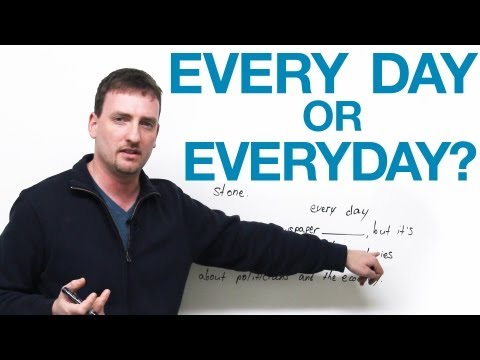
Everyday or every day?
0
VoiceTube posted on 2013/03/29Ever get confused between "everyday" and "every day"? This super practical lesson breaks down the difference between this common adjective and adverb, plus you'll even hear the subtle pronunciation contrast! You'll be using them correctly in no time and avoid those common mistakes.
Learn this video on the APP!
The VoiceTube App has more in-depth practice for videos!