
ability
US /əˈbɪlɪti/
UK /ə'bɪlətɪ/
- Noun (Countable/Uncountable)
- The power, resources or skill to do something
- A particular skill or talent.
A2TOEICMoreall wet
US /ɔl wɛt/
UK /ɔ:l wet/
- other
- Completely wrong or mistaken.
B2Moreanxiety
US /æŋˈzaɪɪti/
UK /æŋ'zaɪətɪ/
- Uncountable Noun
- A feeling of worry, nervousness, or unease about something that might happen, especially when the outcome is uncertain.
B1Moreas well as
US /æz wɛl æz/
UK /æz wel æz/
- Adverb
- Also; in addition to
- Preposition
- In addition to; and also.
A1Moreat some point
US /æt sʌm pɔɪnt/
UK /æt sʌm pɔint/
- Phrase
- At an unspecified time, usually in the future.
A1Moreautomate
US /ˈɔtəˌmet/
UK /'ɔ:təmeɪt/
- Transitive Verb
- To make automatic by using machines
B2TOEICMorecalm
US /kɑm/
UK /kɑ:m/
- Adjective
- Without wind or storm; quiet; peaceful
- Relaxed and not worried or angry
- Verb (Transitive/Intransitive)
- To make or become relaxed and not worried or angry
A2Morecalm down
US /kɑm daʊn/
UK /kɑ:m daun/
- Phrasal Verb
- To make or become relaxed after being stressed
A2Morecome up with
US /kʌm ʌp wɪð/
UK /kʌm ʌp wið/
- Phrasal Verb
- To think of an idea or solution; produce
A1Moreconquer
US /ˈkɑŋkɚ/
UK /'kɒŋkə(r)/
- Transitive Verb
- To take possession of (land, city) with an army
- To beat something difficult, e.g. a fear; overcome
B2Moredeal with
US /dil wɪð/
UK /di:l wið/
- Verb (Transitive/Intransitive)
- To buy or sell goods or services.
- Phrasal Verb
- To take action to solve a problem or manage a situation.
- To be about; concern.
A1Morefeel like
US
UK
- Intransitive Verb
- To have a desire or inclination for something.
- To have a particular quality or sensation; resemble.
A1Morefigure out
US /ˈfɪɡjɚ aʊt/
UK /ˈfiɡə aut/
- Phrasal Verb
- To understand the behavior of someone
- To think through logically to find a solution
- Verb (Transitive/Intransitive)
- To understand or find an answer to something.
- To find a solution to a problem or understand something.
A1Morefor example
US
UK
- Phrase
- As an illustration or instance.
for now
US /fɔr naʊ/
UK /fɔ: nau/
- Phrase
- Temporarily; for the present time.
- In the short term; for the immediate future.
A1Morefor some reason
US /fɔr sʌm ˈrizən/
UK /fɔ: sʌm ˈri:zən/
- Phrase
- For a reason that is not known or not easily explained.
A1Morego on
US /ɡo ɑn/
UK /ɡəu ɔn/
- Phrasal Verb
- To continue doing something
- To happen (usually negative)
- Interjection
- Used to encourage someone
A1Morehave to
US /hæv tu/
UK /ˈhæv tə/
- Auxiliary Verb
- Must do
A1Morehorrible
US /ˈhɔrəbəl, ˈhɑr-/
UK /ˈhɒrəbl/
- Adjective
- Very bad; causing annoyance, distaste or fear
A2TOEICMorein a minute
US
UK
- Phrase
- Very soon; in a short amount of time.
- Within the duration of one minute.
A1Morein fact
US /ɪn fækt/
UK /in fækt/
- Adverb
- Used to emphasize the truth of a statement, especially one that contrasts with or contradicts something else.
- Used to introduce a more detailed or surprising piece of information.
- Phrase
- Used to emphasize the truth of a statement, especially one that is surprising or contrary to what might be expected.
C1Morein order to
US /ɪn ˈɔrdɚ tu/
UK /in ˈɔ:də tu:/
- Preposition
- For the purpose of; with the aim of.
- Phrase
- In a specific sequence or arrangement.
- With the aim of; for the purpose of.
C1Morein use
US /ɪn juz/
UK /in ju:z/
- Adjective
- Being used at the present time.
A2Moreincorrectly
US /ˌɪnkə'rektlɪ/
UK /ˌɪnkə'rektlɪ/
- Adverb
- In a way that is incorrect or wrong
B1Morejudge
US /dʒʌdʒ/
UK /dʒʌdʒ/
- Noun (Countable/Uncountable)
- Person who decides on the results of a contest
- Person who has the power to make a decision
- Verb (Transitive/Intransitive)
- To reach a decision about who won a contest
- To form an opinion after careful consideration
A2TOEICMorelook at
US /lʊk æt/
UK /luk æt/
- Phrasal Verb
- To use your eyes to focus on something
- To focus your eyes on something carefully
A1Moremantra
US /ˈmæntrə/
UK /ˈmæntrə/
- Noun
- Repeated expression, as in Hindu/Buddhist prayers
C1Moremove on
US /muv ɑn/
UK /mu:v ɔn/
- Phrasal Verb
- To decide to change or go to a different place
- To start talking about something different.
A1Morenative
US /ˈnetɪv/
UK /ˈneɪtɪv/
- Noun (Countable/Uncountable)
- Someone from or born in a specific country
- Original inhabitant, e.g. before others
- Adjective
- Caused by natural ability; innate
A2Morenegative
US /ˈnɛɡətɪv/
UK /'neɡətɪv/
- Noun
- The opposite to a positive electrical charge
- In grammar, containing words such as 'no' or 'not'
- Adjective
- Being harmful, unwanted or unhelpful
- In mathematics, being less than zero
A2Morenegatively
US /ˈnɛɡətɪvlɪ/
UK /'neɡətɪvlɪ/
- Adverb
- In a harmful, unwanted or unhelpful manner
B1Morenightlife
US /ˈnaɪtˌlaɪf/
UK /ˈnaɪtlaɪf/
- Uncountable Noun
- Nighttime diversions, e.g. clubs
B2Moreon to
US /ɑn tu/
UK /ɔn tu:/
- Preposition
- Toward something; forward
- Aware of someone's activities.
- Adjective
- Aware of someone's deception or illegal activities.
A1Moreopinion
US /əˈpɪnjən/
UK /əˈpɪnjən/
- Noun
- Court judge's statement why a decision was made
- A person's thoughts on a topic
A2TOEICMorepace
US /pes/
UK /peɪs/
- Noun (Countable/Uncountable)
- Rate of speed at which something moves or happens
- Single step, often used to measure a distance
- Verb (Transitive/Intransitive)
- To set and control your speed, as in a race
- To walk with slow purposeful steps
A2Morepanic
US /ˈpænɪk/
UK /'pænɪk/
- Uncountable Noun
- Overwhelming feeling of fear and anxiety
- Intransitive Verb
- To feel sudden anxiety and fear and cannot think
B1Morepositive
US /ˈpɑzɪtɪv/
UK /ˈpɒzətɪv/
- Adjective
- Showing agreement or support for something
- Being sure about something; knowing the truth
- Noun
- A photograph in which light areas are light and dark areas are dark
A2Morepositively
US /ˈpɑ:zətɪvli/
UK /ˈpɒzətɪvli/
- Adverb
- In a manner showing agreement or support for
- Definitely or certainly
B1Morepractice
US /ˈpræktɪs/
UK /'præktɪs/
- Noun
- The office and place for legal or medical work
- Doing something many times to become better at it
- Verb (Transitive/Intransitive)
- To work as a doctor or lawyer
- To live according to the teachings of a religion
A2TOEICMorepreference
US /ˈprɛfərəns, ˈprɛfrəns/
UK /ˈprefrəns/
- Noun (Countable/Uncountable)
- Something that is liked/wanted more than another
- Special consideration or advantage given to someone or something.
A2TOEICMorepresentation
US /ˌprɛzənˈteʃən, ˌprizən-/
UK /ˌpreznˈteɪʃn/
- Noun (Countable/Uncountable)
- Act of giving a formal talk about something
- Way in which something is displayed or shown
A2Moreprove
US /pruv/
UK /pru:v/
- Transitive Verb
- To demonstrate truth by providing evidence
- To test the quality or worth of something.
- Intransitive Verb
- To turn out to be; be found to be.
A2TOEICMoreramble
US /ˈræmbəl/
UK /'ræmbl/
- Intransitive Verb
- To talk or write in an apparently purposeless way
- To take long walks in the countryside
B2Moreslip of the tongue
US /slɪp əv ðə tʌŋ/
UK /slɪp əv ðə tʌŋ/
- other
- An accidental mistake in speech.
B1Morespecific
US /spɪˈsɪfɪk/
UK /spəˈsɪfɪk/
- Adjective
- Precise; particular; just about that thing
- Concerning one particular thing or kind of thing
A2Moretalking about
US
UK
- Phrasal Verb
- To discuss a particular topic.
- To be constantly mentioning or bringing up a subject.
A1Moretemplate
US /ˈtɛmplɪt/
UK /'templeɪt/
- Noun
- Shape that is used as a pattern to make something
- Something used as a model to produce many copies
B2Morethink about
US /θɪŋk əˈbaʊt/
UK /θiŋk əˈbaut/
- Phrasal Verb
- To consider something carefully.
- To remember or call to mind.
A1Moretip
US /tɪp/
UK /tɪp/
- Transitive Verb
- To pour or move something from a place, container
- To give extra money for good service
- Noun
- End point of e.g. a pencil or finger
- Extra money given for good service
A2Moreto do with
US
UK
- Phrasal Verb
- To be about something; concern
A1Moretoefl
US /ˈtofəl/
UK /ˈtəʊfəl/
- Proper Noun
- Test Of English as a Foreign Language
B1Moretransition
US /trænˈzɪʃən, -ˈsɪʃ-/
UK /trænˈzɪʃn/
- Noun
- Change from one state, movement, place to another
- Intransitive Verb
- To change state, movement, place, or subject
B1Morevocabulary
US /voˈkæbjəˌlɛri/
UK /və'kæbjələrɪ/
- Uncountable Noun
- Words that have to do with a particular subject
- The words that a person knows
B1TOEICMorewalk around
US
UK
- Phrasal Verb
- To stroll or wander in a leisurely way.
- To move about in order to inspect something.
A2Morewith it
US /wɪð ɪt/
UK /wið it/
- Adjective
- Intelligent, alert, and up-to-date.
- Understanding and knowledgeable about current trends or information.
A1More
Vocabulary
- have to: Must do
- think about: To consider something carefully.
- look at: To use your eyes to focus on something
- to do with: To be about something; concern
- feel like: To have a desire or inclination for something.
- on to: Toward something; forward
- move on: To decide to change or go to a different place
- talking about: To discuss a particular topic.
- all wet: Completely wrong or mistaken.
- deal with
- for some reason: For a reason that is not known or not easily explained.
- at some point: At an unspecified time, usually in the future.
- in order to: For the purpose of; with the aim of.
- go on: To continue doing something
- walk around: To stroll or wander in a leisurely way.
- for example: As an illustration or instance.
- slip of the tongue: An accidental mistake in speech.
- in fact: Used to emphasize the truth of a statement, especially one that contrasts with or contradicts something else.
- in a minute: Very soon; in a short amount of time.
- figure out: To understand the behavior of someone
- as well as: Also; in addition to
- come up with: To think of an idea or solution; produce
- in use: Being used at the present time.
- for now: Temporarily; for the present time.
- with it: Intelligent, alert, and up-to-date.
- calm down: To make or become relaxed after being stressed
- anxiety: A feeling of worry, nervousness, or unease about something that might happen, especially when the outcome is uncertain.
- specific: Precise; particular; just about that thing
- panic: Overwhelming feeling of fear and anxiety
- practice: The office and place for legal or medical work
- native: Someone from or born in a specific country
- vocabulary: Words that have to do with a particular subject
- realize: To become aware of or understand mentally
- positive: Showing agreement or support for something
- negative: The opposite to a positive electrical charge
- common: Area in a city or town that is open to everyone
- conquer: To take possession of (land, city) with an army
- opinion: Court judge's statement why a decision was made
- ability: The power, resources or skill to do something
- calm: Without wind or storm; quiet; peaceful
- bit: Device put in a horse's mouth to control it
- presentation: Act of giving a formal talk about something
- brain: To strike someone forcefully on the head
- tip: To pour or move something from a place, container
- state: Region within a country, with its own government
- judge: Person who decides on the results of a contest
- nervous: Concerning the system of nerves in the body
- horrible: Very bad; causing annoyance, distaste or fear
- pace: Rate of speed at which something moves or happens
- reason: To think and make conclusions in a logical manner
- transition: Change from one state, movement, place to another
- prove: To demonstrate truth by providing evidence
- preference: Something that is liked/wanted more than another
- organize: To arrange and plan things, e.g. a party
- template: Shape that is used as a pattern to make something
- lot: What happens to a person in life from chance; fate
- learn: To get knowledge or skills by study or experience
- mantra: Repeated expression, as in Hindu/Buddhist prayers
- prefer: To like something better than something else
- detail: Small part of something; tiny fact
- language: Words or signs used to communicate messages
- point: An item to be discussed
- head: To hit a ball with your head in a game
- ramble: To talk or write in an apparently purposeless way
- negatively: In a harmful, unwanted or unhelpful manner
- automate: To make automatic by using machines
- positively: In a manner showing agreement or support for
- incorrectly: In a way that is incorrect or wrong
- nightlife: Nighttime diversions, e.g. clubs
- toefl: Test Of English as a Foreign Language
Get the full experience in the app
Learn anywhere with detailed sentence and usage analysis
01:03
She took a brave step forward, leaving behind her comfort zone to chase her dreams.
Vocabulary
- brave
adj. Having courage
- comfort zone
phr. A familiar situation where one feels safe
Explanation
a brave step is a noun phrase, where brave is an adjective modifying the noun step, meaning "a courageous step".
forward is an adverb modifying step, meaning "ahead".
The whole phrase serves as the object, answering the "what" of took (verb) — she took a brave step forward.
Get the full experience in the app
Look up words anytime with pronunciation, part of speech, and usage
brave
US/brev/
UK/breɪv/
adj.Brave
v.t.To bravely face
A2 Elementary
Get the full experience in the app
Practice speaking anytime and get instant pronunciation feedback
Try this speaking exercise.
Try practicing with this sentence.
80
0
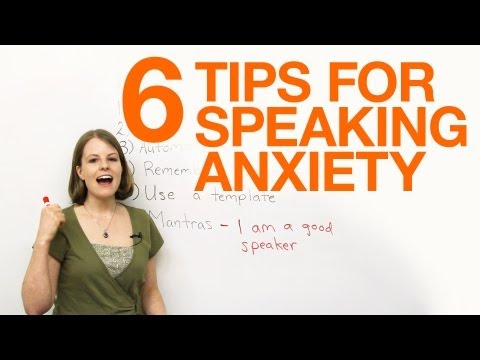
VoiceTube posted on 2021/10/31Feeling nervous before speaking in English? This video shares 6 super practical tips to help you beat speaking anxiety, perfect for IELTS and TOEFL prep! You'll learn easy breathing techniques and confidence-building strategies that you can use right away in conversations and tests.
Learn this video on the APP!
The VoiceTube App has more in-depth practice for videos!